Best way to remove a broken manifold stud?

Bobbin-Man

Well-known member
UKGSer Subscriber
Joined
Nov 2, 2011
Messages
1,645
Reaction score
30
Location
Chester
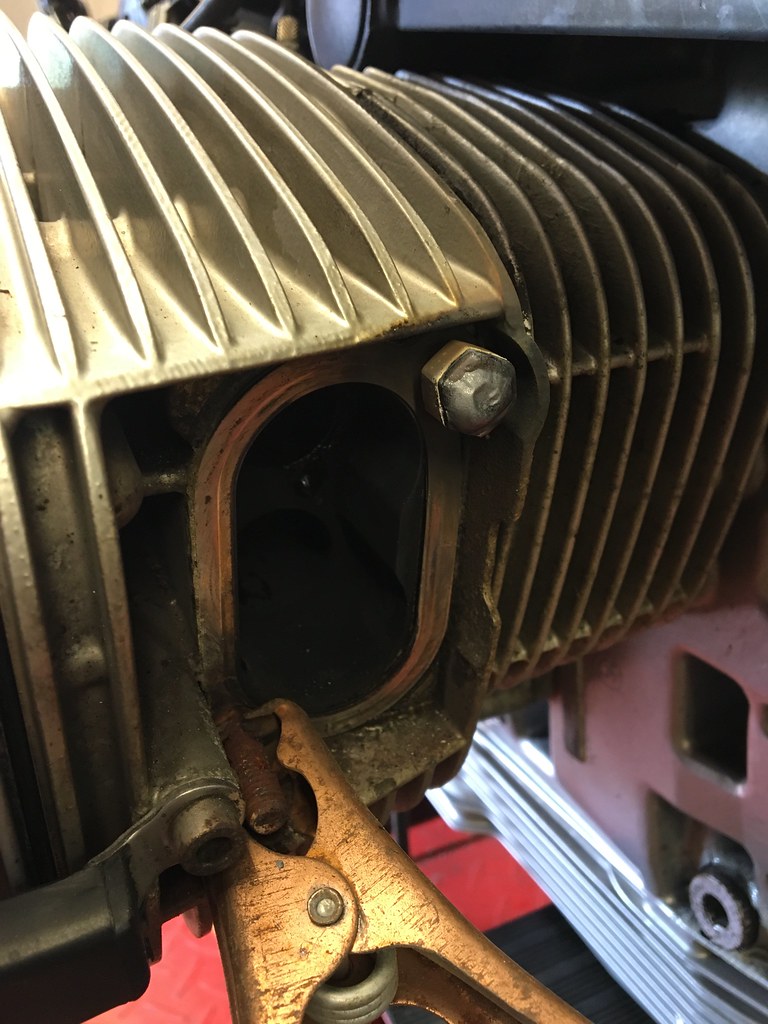
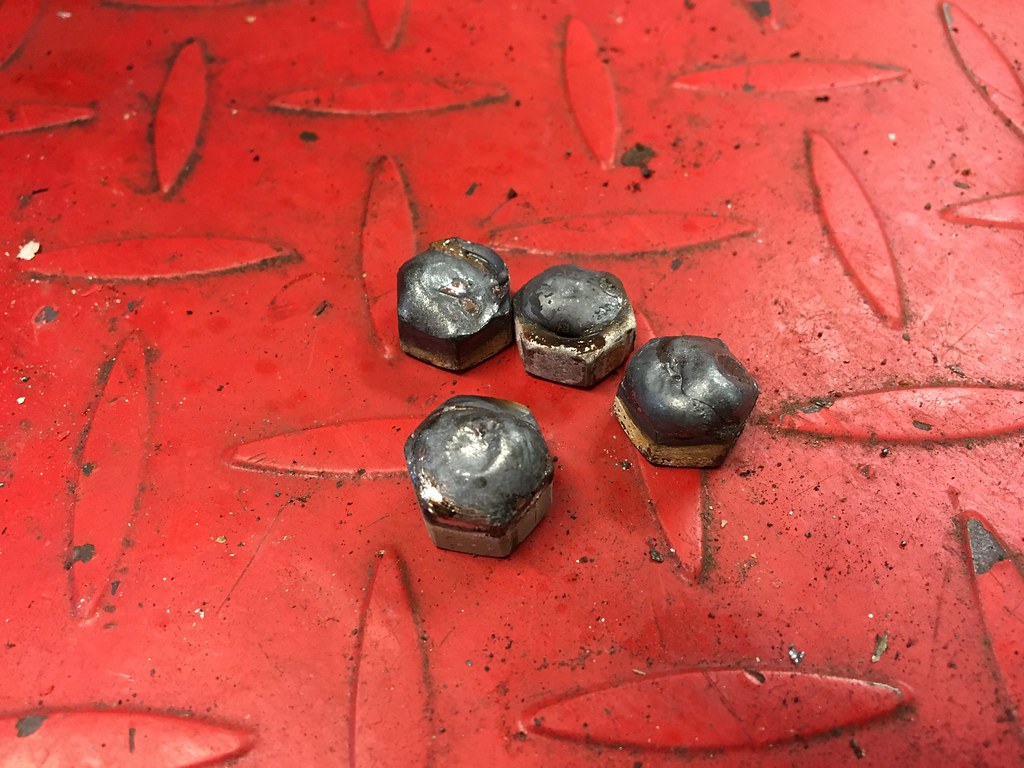
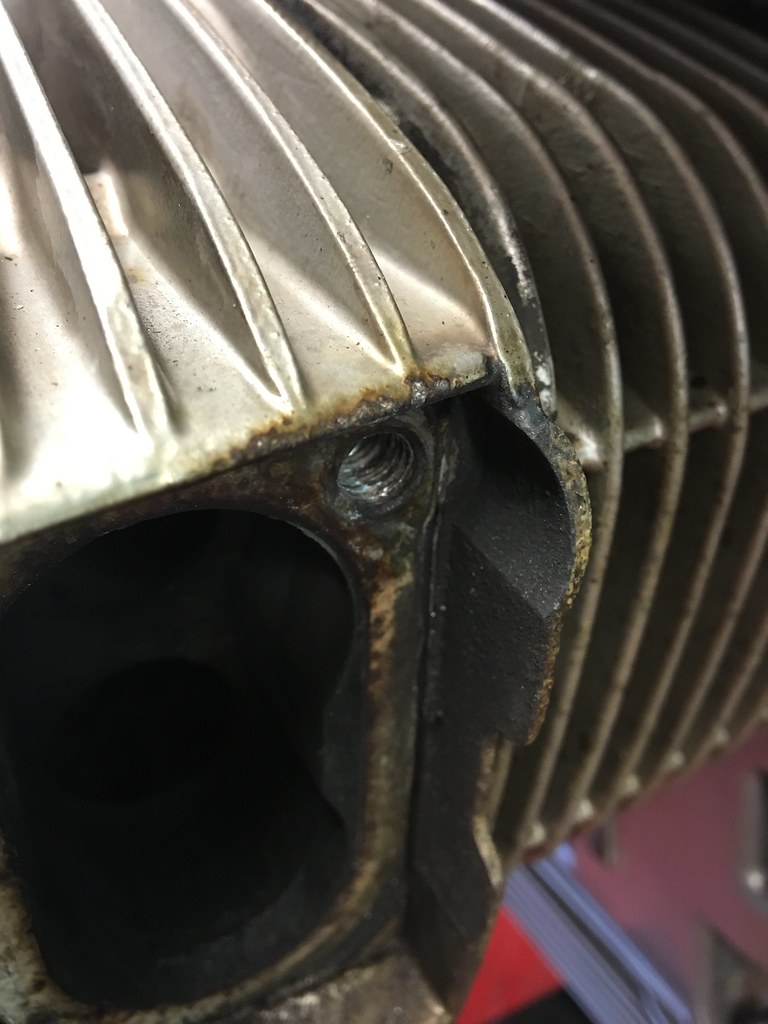
I've managed to shear off two of the four manifold studs :eek: It was inevitable I guess! Is there a recognised fix?

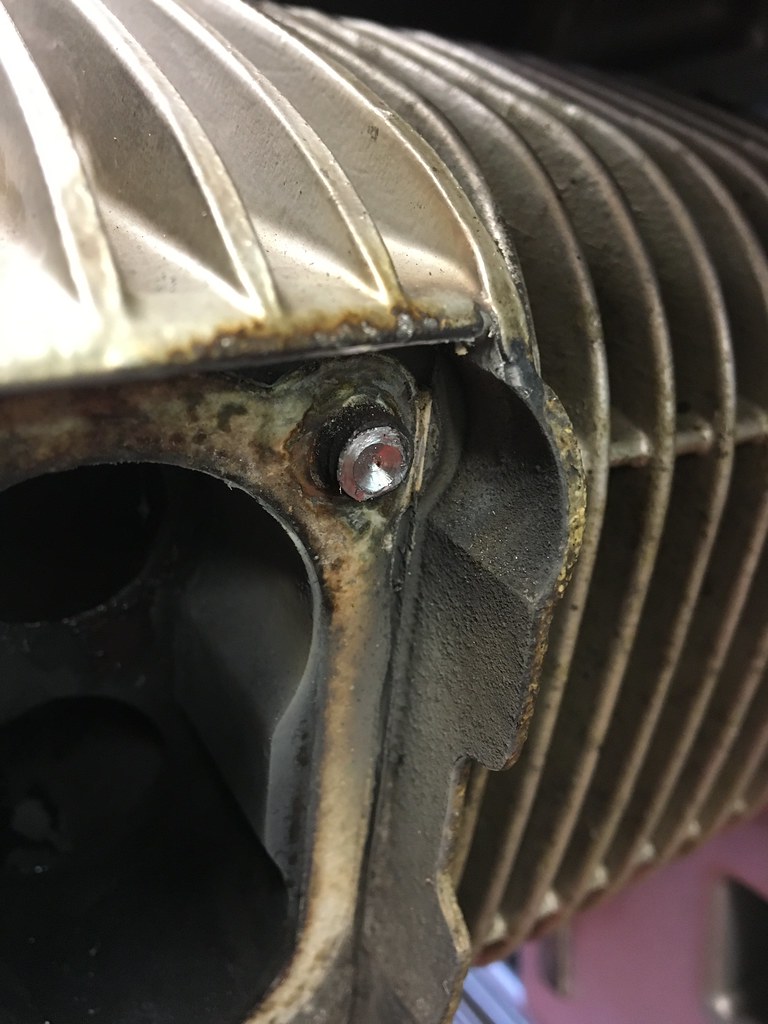
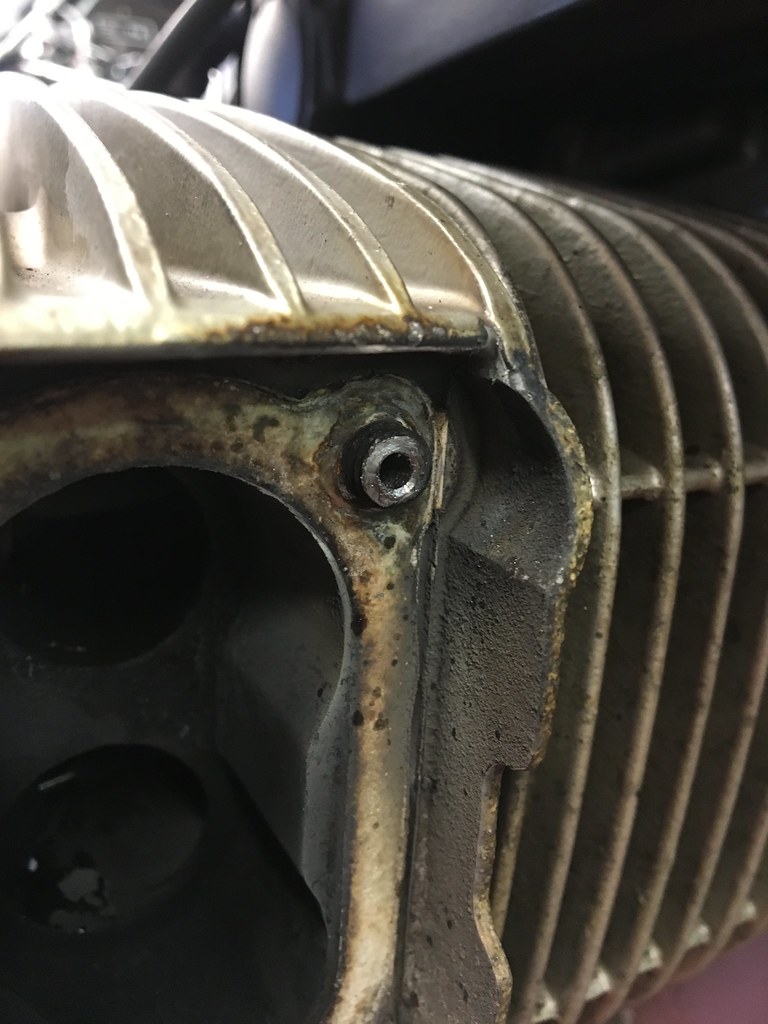
I've got just the flange thickness exposed on each so maybe 5mm ish, will something like Plus Gas have any effect releasing the studs? Or do I need to drill them out? I'll probably do all 4 at the same time, it certainly didn't take much force to shear the two that went.

Stu.
 
I've managed to shear off two of the four manifold studs :eek: It was inevitable I guess! Is there a recognised fix?

I've got just the flange thickness exposed on each so maybe 5mm ish, will something like Plus Gas have any effect releasing the studs? Or do I need to drill them out? I'll probably do all 4 at the same time, it certainly didn't take much force to shear the two that went.

Stu.

Tough one.
WD40 and heat.
Try to get them out.
Otherwise, drill and use a extractor screw set


Sent from my iPhone using Tapatalk
 
Liquid nitrogen, you can get it at plumber's merchant's or possibly B&Q.

freeze/ heat repeat.....

Thermal shock usually works, just take it slowly and gentle.... ooh er mrs.

Good luck

Sent from my SM-N910F using Tapatalk
 
A few doses of Plus Gas wont do any harm whilst you're workin out the best approach.
 
I hadn't thought about liquid nitrogen, I'd been more focused on whether to try to heat the surrounding alloy.
 
Maybe a can or two of Plus Gas over the next week might help :nenau

I've found all the parts on the Real OEM fiche, probably easiest to get my local dealer to order them, it's hardly going to cost much for studs/nuts/gaskets.
 
Gently heating surrounding area then freezing stud can often free the corrosion.

Chemist's also sell liquid nitrogen, for verruca's, which have a straw for more precise aiming !

Sent from my SM-N910F using Tapatalk
 
Thanks all. I have a nagging feeling that I'm going to need to drill them before I start in order to get a good purchase with a stud extractor.
 
Personally,I’d remove the heads and take them to someone with a nice big mill,
That way they can be set up nice and square,and drilled out properly.
By trying to drill by hand you run the risk of the drill wandering or not being straight to start with.
Once you have a broken drill bit or easyout in there you will wonder why you attempted it in the 1st place.
 
Personally,I’d remove the heads and take them to someone with a nice big mill,
That way they can be set up nice and square,and drilled out properly.
By trying to drill by hand you run the risk of the drill wandering or not being straight to start with.
Once you have a broken drill bit or easyout in there you will wonder why you attempted it in the 1st place.
Spoken like a proper engineer.

Sent from my SM-N910F using Tapatalk
 
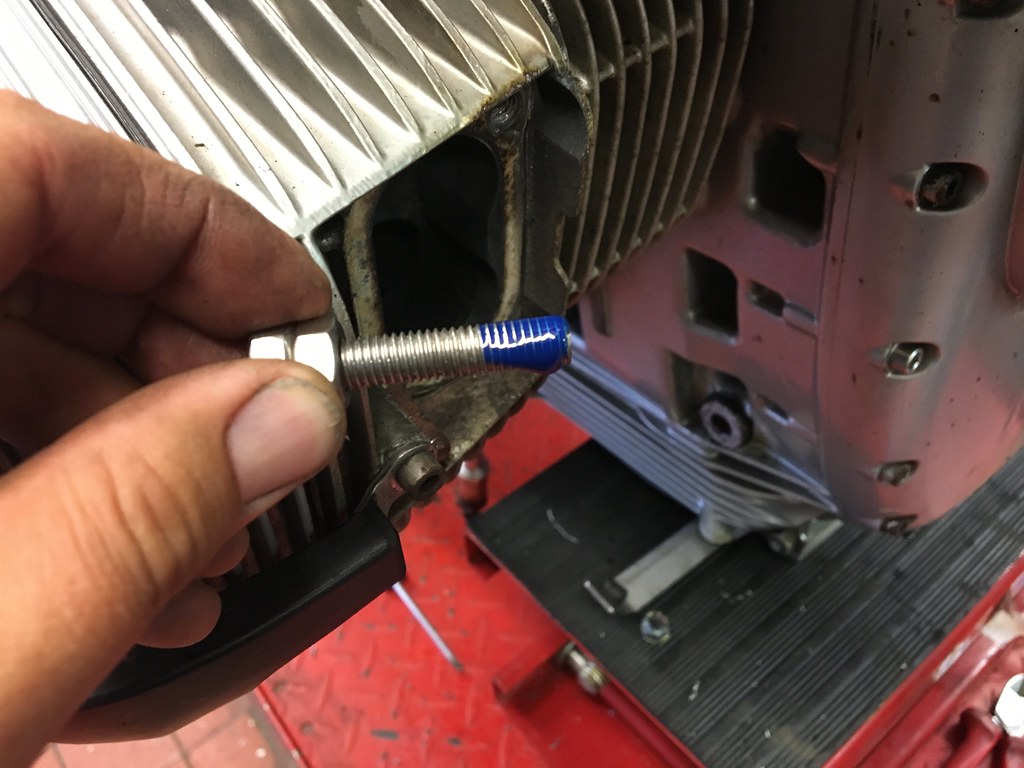
I had one of mine snap i used a good centre punch and cobalt drills nice and slow moving up the size of drills till the outer wall was thin and then wound it out then replaced then with stainless steel socket caps with acf50 on the threads to stop any reaction to the alloy


Sent from my iPhone using Tapatalk
 
Either head off and find someone with a spark eroder. If you have a mig welder build up the end of the stud with short bursts of weld till you can grip the end with other tools. The heat of the welding will also help to break the rust bond.
 
Get a nut that just fits over stud and mig weld stud/nut. Heat can help break corrosion and allows a fitted socket to remove stud.

Sent from my SM-N910F using Tapatalk

Beat me to it. There is a thread with photos on ADV rider about this. Best of luck.
 
I got very lucky!

Well that was an interesting couple of hours!

The mission - To extract the rotted exhaust stud.

I started with a bit of heat and the old 'double nut' trick ...... No chance, the stud just snapped.

However, there was still 15mm of thread showing so I would another nut on and welded it on, the hope being that the heat transferred would help release the thread, each time I just managed to snap a bit more stud off .... five times in fact :D

IMG_2101 by tunneruk, on Flickr

IMG_2102 by tunneruk, on Flickr

So, undeterred, I went back to basics and got stuck in -

IMG_2103 by tunneruk, on Flickr

IMG_2104 by tunneruk, on Flickr

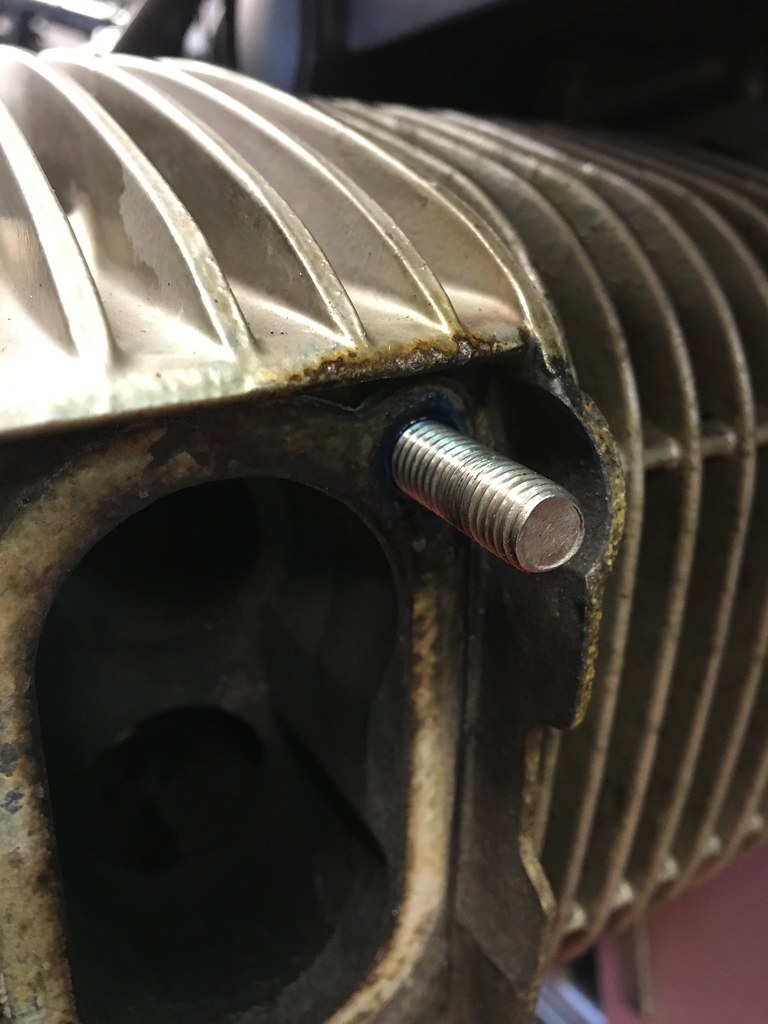
I was very lucky in that I managed to drill out the old stud and just leave a coil of thread which came out like a spring. I ran a top down the hole and wound in the new stud!

IMG_2105 by tunneruk, on Flickr

IMG_2107 by tunneruk, on Flickr

IMG_2109 by tunneruk, on Flickr

The result of this is that I've got naff all painting done today! :blast
 
Stainless studs are not always a good option. Electrolytic corrosion will have caused the original problem. It’s going to be a whole lot worse with stainless studs. The metal also creeps at high temperature so the clamping force weakens and nuts go loose.
Just fit the original spec but don’t leave them so long before checking for corrosion.
Stainless nuts will also increase the rate of zinc loss on galvanised fasteners. In the old days brass nuts were used.
 
Personally,I’d remove the heads and take them to someone with a nice big mill,
That way they can be set up nice and square,and drilled out properly.
By trying to drill by hand you run the risk of the drill wandering or not being straight to start with.
Once you have a broken drill bit or easyout in there you will wonder why you attempted it in the 1st place.

So its an 1100/rather than an 1150? If you have not been successful so far , you are not likely to be. Removing the head is not a huge job. Whip em off and avoid any further angst.
 
Has anyone here experimented with Titanium studs.

Non corrosive
Heat resistant.
Tensile strength higher than stainless steel
Not too expensive for just 4 studs.

:nenau
 
So its an 1100/rather than an 1150? If you have not been successful so far , you are not likely to be. Removing the head is not a huge job. Whip em off and avoid any further angst.

It's a 1200 Hexhead!
 
I wouldn’t consider stainless studs, the threads deform when you apply torque.


Back
Top Bottom