Wanted Camera/advice wanted. Night sky pics.

Akulaking

Well-known member
UKGSer Subscriber
Joined
Feb 8, 2016
Messages
754
Reaction score
383
Location
Leicestershire
The wife is getting into astronomy, and needs a camera to take pics of the night sky, mainly constellations. Knowing very little about photography, what would we need? SLR? Wide angle lens? At this stage something used, not too pricey would be ideal.
Any advice appreciated, or anyone got something to sell that might fit the bill?
Thanks, Chris.
 
A GoPro or similar action camera will do the job. They have a dedicated setting for night lapse footage and produce some interesting results.
I mount mine on a tiny tripod or clamp it to something so there’s no movement. Connect an external power bank so you can film all night and then either create a night lapse video or a set of stills.
 
Horses for courses, i'm afraid

Ive used an SLR for eclipses, moon shots, shooting stars, comets ,On its own and with a telescope, with varying results / good/ bad

I use a std 15-55 zoom, and a 100-300 zoom

Main things for using an SLR, the abilty to lock the shutter open (bulb) and if possible an auto or remote shutter release

And a solid tripod - you need longer exposures than normal

And then you run into the next level of problems movement of the earth ;)

let me find some shots ive dne with my SLR over the years and i,ll post them up ,

may not be for a couple of days, i'm very busy atm - prolly saturday
 
Horses for courses, i'm afraid

Ive used an SLR for eclipses, moon shots, shooting stars, comets ,On its own and with a telescope, with varying results / good/ bad

I use a std 15-55 zoom, and a 100-300 zoom

Main things for using an SLR, the abilty to lock the shutter open (bulb) and if possible an auto or remote shutter release

And a solid tripod - you need longer exposures than normal

And then you run into the next level of problems movement of the earth ;)

let me find some shots ive dne with my SLR over the years and i,ll post them up ,

may not be for a couple of days, i'm very busy atm - prolly saturday

Thanks, look forward to seeing your shots, bought a Seestar smart telescope a few weeks ago and learned a bit about field rotation. They’ve just bought out an update for equitorial mode, now got to buy a wedge to get the angle right. Got some decent results with it so far. Hoping to get a big area in the photos so would a wide angle be better than a zoom?
 
Thanks, look forward to seeing your shots, bought a Seestar smart telescope a few weeks ago and learned a bit about field rotation. They’ve just bought out an update for equitorial mode, now got to buy a wedge to get the angle right. Got some decent results with it so far. Hoping to get a big area in the photos so would a wide angle be better than a zoom?
I personally wouldn’t use a wide angle lens, i.e. something like an 18mm or even 35mm lens instead I’d opt for maybe an 85mm or 105mm full frame lens, the full frame lenses obviously being better quality and sharper than a cropped lens.
However stargazing isn’t my thing, I’ve only dabbled with nightlapses before on action cameras so I could be completely wrong re the choice of lenses.
 
I’ve a Canon 6D that no longer gets much use. It’s full frame, which is good, and I bought it for taking aurora pictures a few years ago. It’s about 10 years old but low shutter count.

I’d be looking for about £200 without a lens.
 
I’ve a Canon 6D that no longer gets much use. It’s full frame, which is good, and I bought it for taking aurora pictures a few years ago. It’s about 10 years old but low shutter count.

I’d be looking for about £200 without a lens.
Sounds interesting, could you send me a couple of pics, what is the actual shutter count, pm if you’d prefer, thanks.
 
Will do. I’m away at the moment but will check when I’m back tomorrow
 
Ok some pics i could find doing a quick scan of the NAS

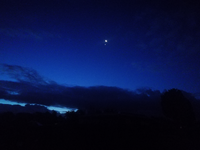
Moon & Venus 4mm focal length - PhoneMoon venus 4mm Phone.png

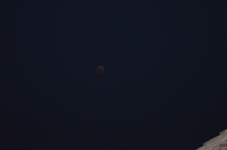
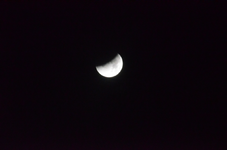
Blood moon 95mm DLSR - Nikon 5100

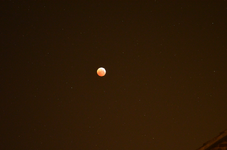
Blood moon 95 mm DLSR.png

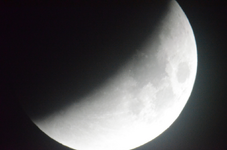
Blood moon again 95mm but longer exposure

Blood moon 1 @ 95mm.png

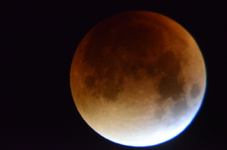
Blood moon - through a 6" telescopebm scope.png

I can get closer to the surface (you can see the craters) with a different lenses in the scope

Eclipses next
 
Last edited:
Eclipses

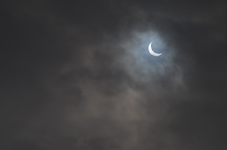
Eclipse 170mm DLSREclipse 3 170mm DSLR.png

Different Eclipse but at 300mmeclipse 300mm.png


And 2nd eclipse through the scope

Ecl1pse  scope 2.png

Comets and shooting stars next
 
I can only find comets atm,

need to hunt down the shooting star pics

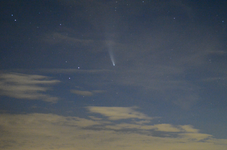
Taken at 3am and it was dark as in black , 70mm focal length 10 second exposureComet 70 mm Dlsr .png
 
Ive just picked up a 12" telescope ,

it wont give me any more magnification as such,

but allows more light to get to the eyepiece, which allows more faint objects ( nebulae) to become visible

I'm thinking of getting a telescope camera, and doing photo stacking of planets,

but to do that i need an equatorial mount, and there aint a lot around for a 12" scope


12" is the one on the far right !
 
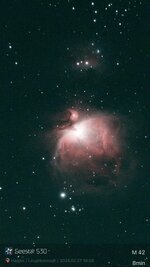
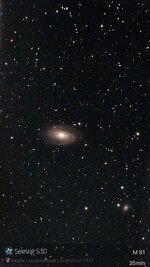
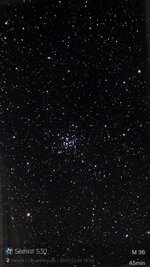
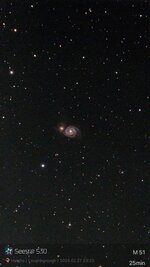
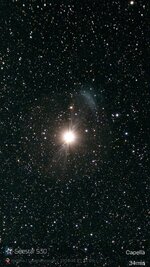
Some great pics there. The 12” scope looks huge. These are a few I took with the Seestar. Did a time lapse today of the partial eclipse. I’ll put it up here later when I get it transferred over.
Thanks for taking the time to post these pics.👍🏻Stacked_47_M 42_10.0s_LP_20250227-195843.jpegStacked_210_M 81_10.0s_IRCUT_20250227-211339.jpegStacked_266_M 36_10.0s_IRCUT_20250304-195446.jpegStacked_145_M 51_10.0s_IRCUT_20250227-232542.jpegStacked_200_Capella_10.0s_IRCUT_20250227-220504.jpeg
 
I couldn't find my eclipse filter in time to fit to the camera today, but I did see the ecipse
 
No, wanting to use a stand alone camera alongside the scope.
The problem i found with the DLSR was getting enough light into the sensor to record the image, hence the need to go for longer exposures

The next problem is data, say its a 30 second exposure, that data grabbed by the image sensor , has to be written to the memory card

It can take the same time as the exposure to write to the memory card, and that's using a 200mbs card,

If I'm doing shooting stars, its a 10 second exposure, & 10 seconds to write the data from the camera to the card,

You can get faster cards, but the limitation is how fast the camera can transfer the data from the sensor to the card

It'd a bit like going back to shooting with roll film , you try various settings and exposures , to get a window to work with

then i just set it to a timer exposure and use a remote shutter trigger to avoid camera shake and then just keep pressing the remoter trigger

then i have 100 or so pictures to go through at the end of the session , to get one or two good ones

i'm thinking of going down this route


Use this with some stacking software , the results can be very impressive
 
Last edited:
These are excellent pics guys. I’m blown away as I love star gazing but have no idea how to photograph what I see. Your chat has helped enormously.

Thank you for sharing.

Jim
 
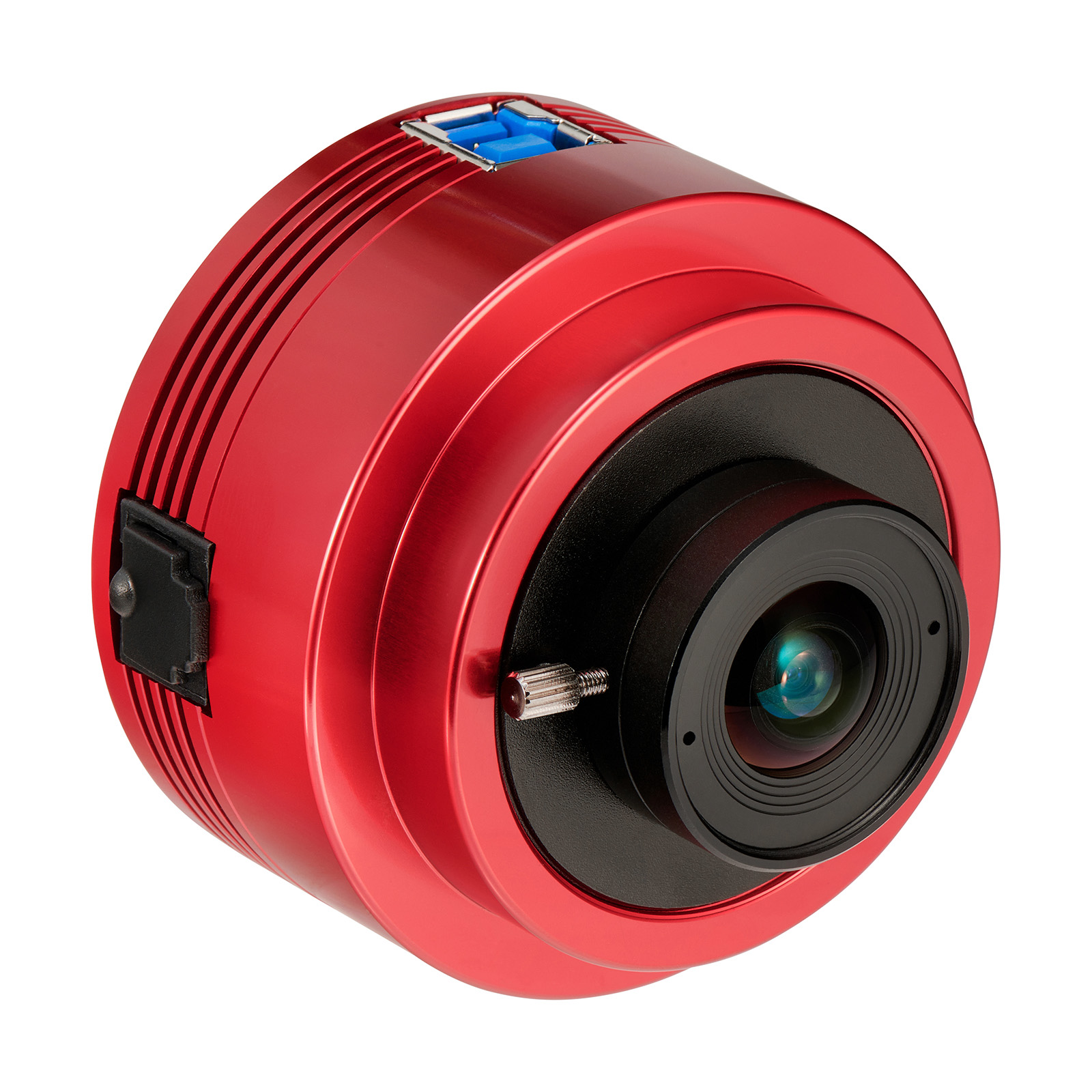
The ZWO camera looks good, does it fit on the end of the scope? ZWO make the little Seestar smart scope I’m using. That looks like an absolute game changer.
Trying to load the time lapse of the eclipse I did yesterday but can’t figure out how to add a video clip. Approx 700 frames, over 90 odd mins, one every 10 seconds, 23 seconds long. I’ll keep trying!
 
The ZWO camera looks good, does it fit on the end of the scope? ZWO make the little Seestar smart scope I’m using. That looks like an absolute game changer.
Trying to load the time lapse of the eclipse I did yesterday but can’t figure out how to add a video clip. Approx 700 frames, over 90 odd mins, one every 10 seconds, 23 seconds long. I’ll keep trying!
It fits in the secondary mirror lens tube,

Similar to how you pop in an eyepiece

then you run an usb lead to a PC and frame grab the bejesus out it

Ah just seen your scope, its not going to work with that type of scope,

its for a Dobsonian, or Newtonain scope


Back
Top Bottom