can you change taper to normal wheel bearings

Keep faffing , they are far better than conventional bearings.

In answer, yes you can, but I can't see the benefit, only the downside.
 
Keep faffing , they are far better than conventional bearings.

In answer, yes you can, but I can't see the benefit, only the downside.

I would be interested in knowing how as I need to replace my front ones on the G/S for the MOT - and I like easy as well!
 
from an idiots view with taper you need to shim and pre load as far as i know with normal you put them in and take them out ,or have i missed something and remember i am not rob farmer or have his knowledge and skill
 
Taper have much more surface area and track truer and "usually" last longer

You only do it once in a coons age and If it bothers you there are folk who specialise in it so "buy in" the expertise (in comparison to pulling your hair out and swearing at the bits for hours with no real progress)

P.S. remember to use the proper grease!

I had an eejit recently who fitted new rear wheel bearing to his son in laws Polo and did not use grease at all!!!

Recovered car and sorted it with much wailing and gnashing of teeth!
 
Bearing Grease is "usually" EP2

Being Honest (as is always best policy) I don't actually know for sure

Perhaps as Rob or Voyager? Would they be the only ones who have done a few ???
 
The data sheet below lists the correct bearing grease as Being Shell retinax A which as Jay says is an EP2 equivalent

I've ridden so many airheads that do a death shimmy across white lines and ridges in the road where the owners think its perfectly normal...it isn't! It's actually a piece of piss to shim the wheels properly. but you need a small piece of tube to fit over the wheel spindle and a small torque wrench that can work around 1 - 4 Nm. you also need a few spacers to get you in the ball park. There are loads to choose from but I've yet to come across one that isn't in the 6.7 to 6.95 mm range so worst case is buying 6 shims but if you measure your original shim and buy a couple either side of that you shouldn't be far out.

You just fit the new bearing outers. put the inners in place with the central tube and spacer. fit the spindle and the piece of tube (this simulates the width of both fork legs) and torque it up to 44Nm. Then using the torque wrench with a 19mm socket fitted find out what torque the spindle will turn at. the tolerance is 1.5Nm to 3Nm with the ideal at 2.25Nm. you then pull it all apart, grease up the bearings and put it all back together again. Make sure you use new seals for the bearings.

It sounds like its a pain in the arse but its pretty easy.

Something like this would do it. with an adapter to take a 19m socket http://www.ebay.co.uk/itm/Sealey-To...t=UK_Hand_Tools_Equipment&hash=item20eda84443

The tube to go over your spindle is 59mm (ish) long.

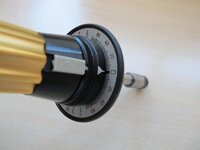
Heres the BMW info for doing it (this is the g/s front wheel) there are similar sheets for the front and rear settings for the cast wheels. The BMW torque tool is just a strain screwdriver with a readout that shows the torque value. as long as it's between 1.5 and 3 they're happy. You'll be surprised at the difference getting it right makes.

frontwheeldata077.jpg


frontwheel076.jpg


A bearing puller can be had from Cycle works (this also doubles as a swinging arm bearing puller) http://www.cycleworks.net/index.php..._id=49&zenid=b1240387443c332bb320e72b8c0c27e4


The proper factory tool for the wheel torque looks very similar to this
 

Attachments

  • torgue driver.jpg
    torgue driver.jpg
    29.4 KB · Views: 126
BMW use very large taper roller bearings in the airhead wheels so that they are capable of dealing with the extra side thrust when a sidecar is fitted.
When you are setting the preload you just lightly oil them and only pack with grease once you have set the preload.
Have a look at the links I gave you in your original post on the subject. The first link is very detailed and his method of setting the preload is very difficult to execute. The second link advises feeling the play with the wheel on which is easier, I have always used this method. Even if you overdo the preload a bit on the tight side the bearing, if kept greased, will outlast the rest of the bike (have a look at the data on the second link by the boffin from Timken).
If you read the links it appears almost every bike left BMW with the wheels incorrectly shimmed.
Castrol LM grease will be fine.
It all sounds a bit daunting if you are not mechanically inclined when you read up on it but it not too difficult really.
Good luck.
 
If you use the method where you feel the play it will more than likely be a mile out. You really need these things to be repeatable and measurable to have any chance of accuracy. When set to the factory settings the bearings feel a little tighter than you'd expect but work very well. Somebody with no experience of the wheels is never going to have a clue how they're supposed to feel. On my first airheads I used to spend £90 a wheel having the bearings changed and shimmed by an expert, they'd last 12 to 18 months and then need doing again. It turned out he did them by feel.

 
if you were in trouble on your first airheads then im screwed

I didn't have any of the specialist kit and thought the best option was to take it to the experts for convenience more than anything...an expensive learning curve. Once you realise there's a less expensive option and the informations out there then it's easier to do yourself. You'll be surprised just how poor the service and quality of work is from some of the pros. Obviously there are some really good people as well it's just a case of finding them but it comes with a financial overhead.

Don't assume I'm an expert. I don't, I've just got lots of experience on putting bikes together. there's plenty of people know a lot more than me but they choose to keep it to themselves.
 
In Oz most Auto parts shops sell Timken's own brand bearing grease which meets NLGI GC- LB standards, so any other grease which meets that standard should do.

Vincent's had a similar system for wheel bearings, and they recommended 2 thousands of an inch preload on the bearings, but I havent worked out how to translate that over to a BMW
Cycleworks sell a spacer/shim kit for the bearings for not a lot different to BMW's price for one spacer and I used that. They sell a greaser which lets you lube the bearings easily too.
I read somewhere that when you have the preload right, using the factory gear, you feel drag starting on the bearing with 20 ft lbs on the wheel nut, so I tried that system and it seems to have worked OK for me so far, for probably 140,000 km.
 
If you use the method where you feel the play it will more than likely be a mile out. You really need these things to be repeatable and measurable to have any chance of accuracy. When set to the factory settings the bearings feel a little tighter than you'd expect but work very well. Somebody with no experience of the wheels is never going to have a clue how they're supposed to feel. On my first airheads I used to spend £90 a wheel having the bearings changed and shimmed by an expert, they'd last 12 to 18 months and then need doing again. It turned out he did them by feel.

That's very true Rob, the feel method I was referring to reuires all the play to be gradually taken out and a tiny amount of preload then added. As, i'm sure you know,the taper roller is a lot more tolerent to being tight rather than loose in this application. I don't have access to special tools for setting the preload but having used this method on my old R100 it has been fine for years.
 
to be honest ive never owned a bike long enough to rack up any miles ,if i can get in two thousand a year its a miracle and to be honest when i get this finished if i can make a thousand in a year it will be a miracle so allthough the bearings will last in excess of 100,000 km /miles i wont do that in my lifetime


Back
Top Bottom