There are, I reckon, just three reasons why a clutch would slip:
- Wear of the driven plate
- Contamination of the driven plate
- Mechanical maladjustment or breakage
It's entirely possible that you could wear your clutch out in 4k miles (however, you'd have to be pretty mechanically unsympathetic to achieve that - but if you regularly slip the clutch for example by using it to hold the bike on a hill or feeding the clutch in against high engine revs everytime you change gear, you could have worn it out!). The only solution is to have the bike apart and install a new clutch.
I don't know much about the 1200 specifically, but oil contamination is by no means unknown on earlier models. It requires very little oil to shag the clutch. I certainly wouldn't be worrying about the gearbox oil level in this scenario. Again the only answer is to have the bike apart and replace both the clutch
and the first motion shaft oil seal.
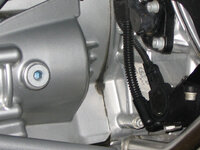
Mechanical problems within the clutch itself are unlikely (but not impossible). Best course is to check that the clutch lever is fully released and that there is nothing interfering with the release arm or slave cylinder. If the pressure plate has broken, again, you'll have to fit new.
If you're going on a tour with a suspect clutch (don't!), it is essential that you look after it. When a clutch slips for any reason, the friction plate heats up. The wear on the friction plate is exponentially higher when it is hot compared when with at normal operating temperature. So if it's slipping, wick down the power asap until the clutch bites again. Then treat it with kid gloves until it has cooled down. You might get home that way!
Greg





 ).
). 

