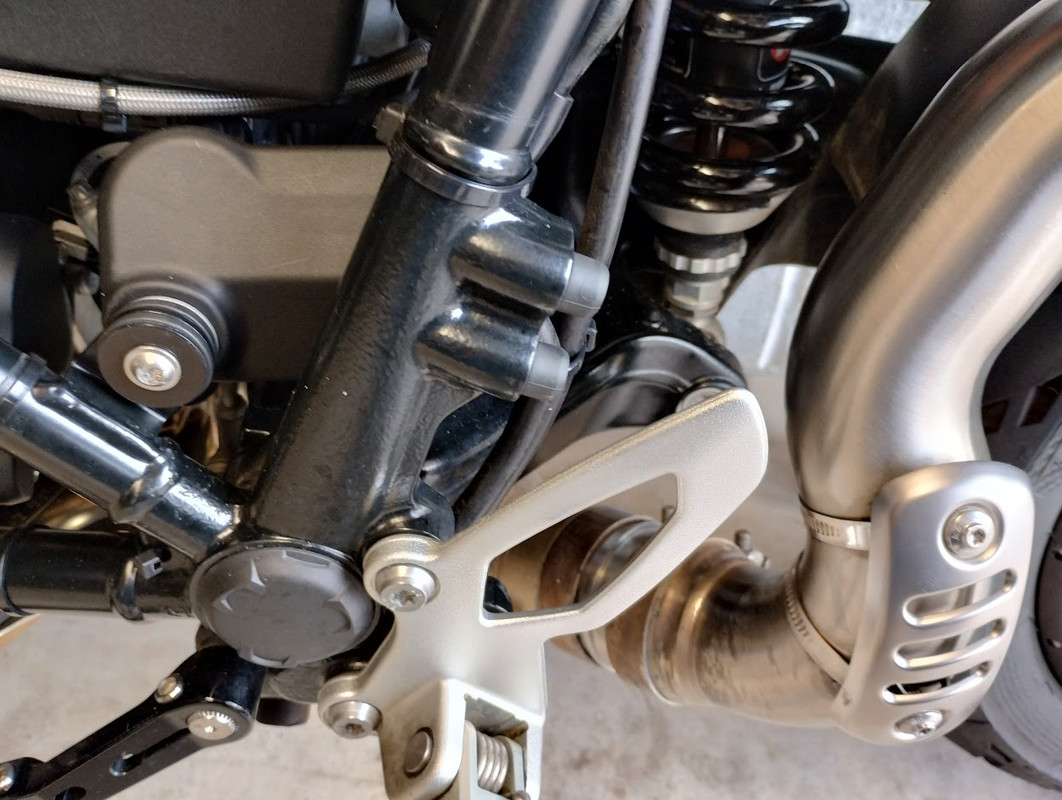
Flappy valve ? i dont get it

Yamaha's EXUP valve on the FZR1000s
The Exup valve was Yamahas attempt to alter the exhaust configuration to improve engine flexibility and power delivery characteristics etc.
I can’t remember exactly but when the valve was operated it changed the exhaust system from a 4 - 4 - 1 with longer headers (better for low/midrange power) to 4 -2 - 1 for a theoretical increase in high-end power so it is quite different to the crude, choking, butterfly valve arrangement in our bikes.
 
It is for noise reduction purposes - its been proven to be seen operating at the exact engine and road speed required for the bike to pass the EU drive-by noise test, this is why it`s open at idle and increased throttle openings/road speeds because under those conditions there is no requirement for the exhaust`s volume to be reduced.
And what is this `back pressure`?
`Back pressure` is a myth. There is no such thing or a requirement for an engine to have `back pressure`.
Exhaust gas velocity is the key to efficient engine design and without getting into too much detail the characteristics of exhaust design that determine that is such things as header length/diameter and general flow/dynamics.
Generally what happens is squids fit huge silencers or innapropriately-sized exhaust pipes on their vehicles and notice a drop in performance - this is not due to a lack of `back pressure` but a reduction in exhaust gas velocity and the related cylinder scavenging effect.
Not true..

I agree that for peak power, you want no back pressure. And no, you don't need it on a four stroke. But BMW use this as a way to effect the torque at low RPM. And with emissions tests. Back pressure manipulation is important when creating torque.. Scavenging effect. gas velocity etc.

DB at certain revs !! Perhaps. They sounds louder with them than without IMO. I know for a FACT that the flap is also designed for engine noise asthetics. If it works or not is debatable.

The engine management on these bikes is incredibly complicated and clever. Cleverer than I am to describe it in detail. I'm not an engine designer. But I'm talked to enough

I've literally sat in lectures at BMW's Motorrad academy describing how it works. Although my memory is hazy as it was a very boring lecture.
 
Last edited:
I know for a FACT that the flap is also designed for engine noise asthetics. If it works or not is debatable.

it sure does work - takes a bike that sounded OK and makes it awful - and with a particularly silly idle fart, than annoys everyone, not just the rider
 
It’s a piece of crap. Most people will be unaware of its failure unless they have access to a fault code reader as it doesn’t give any visible fault indication on the 1200. So be wary of it.

In my case it was making all those normal sounds on start up etc, but when I interrogated it with the GS911, I had numerous occurrences of it faulting.

When I did a visual, it was stuck fast at half closed, and took some effort to move the flap in any direction. So I removed both the valve and the control box. I still get the fault codes of course, but at least I now know why… :D


I think Healtech make a gizmo to spoof the controller, about £40 If I remember right…

 
If you unhook the cables or remove the control box it throws up exactly the same fault code so no point in leaving the control box on ( just extra weight).
I have the Healtech gizmo fitted to remove the fault code just in case it is making the ECU do something that I am not aware of. :D
 
The start fast idle / is to warm the cat to operating temperature - once its there it drops the revs
How would it know? there's no sensor connected to it.
I removed my cat just a month after buying my bike.
How would it decide if mine is hot enough.
 
On my R9T Scrambler just unhooking the cables from the controller was all that was needed - no fault codes.

Must be different software in the ECU to the twin cam GS.
I first removed the cables and the GS911 threw up a code, so I cleared the fault code and unplugged the controller and it came up with the same code, tried everything so resorted to the Healtech unit and now the GS911 does not throw up any fault codes.
 
Must be different software in the ECU to the twin cam GS.
I first removed the cables and the GS911 threw up a code, so I cleared the fault code and unplugged the controller and it came up with the same code, tried everything so resorted to the Healtech unit and now the GS911 does not throw up any fault codes.

Must plug in my GS911 to check - nothing shows on the dash.
 
Must be different software in the ECU to the twin cam GS.
I first removed the cables and the GS911 threw up a code, so I cleared the fault code and unplugged the controller and it came up with the same code, tried everything so resorted to the Healtech unit and now the GS911 does not throw up any fault codes.
The Lc units post a fault on the Kombi - the air oil units only post a fault in the zfe , so only seen by a GS911
no biggy on a pre LC and the fact you can replace the flappy is a big bonus over the LC's

I did a recalibrate over the weekend, lets see how the next early morning start is :)
 
If you want to disconnect yours, you must leave the module plugged into the bike. Your bike WILL KNOW it's unplugged and flag a code up. Remove the cables from the module unless you want to leave them dangling.

If you get a fault code when you've removed the cables when it's plugged in, then your module is already broken. They break because they constantly trying to move a seized exhaust flap. The motor eventually burns out.

I've dealt with tons of these !
 
If you unhook the cables or remove the control box it throws up exactly the same fault code so no point in leaving the control box on ( just extra weight).
I have the Healtech gizmo fitted to remove the fault code just in case it is making the ECU do something that I am not aware of. :D

If you want to disconnect yours, you must leave the module plugged into the bike. Your bike WILL KNOW it's unplugged and flag a code up. Remove the cables from the module unless you want to leave them dangling.

If you get a fault code when you've removed the cables when it's plugged in, then your module is already broken. They break because they constantly trying to move a seized exhaust flap. The motor eventually burns out.

I've dealt with tons of these !
Mine is still turning 😁
 
can some one who bought the 50 quid error fix dongle - please measure the resistance of the dongle

its likely just a 25p 47k ohm metal film resistor connecting two pins - faking an electric motor's resistance
 
I will try that sometime but suspect there is a little more too it, you could measure the impedance of your motor.
If it was that simple when the motor is plugged in without cables connected an error code appeared in the ecu, It was suggested that the motor was faulty.
At the time the bike had done 12 K miles and everything looked good, only removed as a full Remus system fitted. No fault codes with cables connected.
I suspect there is feedback to the ecu.
 
It is for noise reduction purposes - its been proven to be seen operating at the exact engine and road speed required for the bike to pass the EU drive-by noise test, this is why it`s open at idle and increased throttle openings/road speeds because under those conditions there is no requirement for the exhaust`s volume to be reduced.
And what is this `back pressure`?
`Back pressure` is a myth. There is no such thing or a requirement for an engine to have `back pressure`.
Exhaust gas velocity is the key to efficient engine design and without getting into too much detail the characteristics of exhaust design that determine that is such things as header length/diameter and general flow/dynamics.
Generally what happens is squids fit huge silencers or innapropriately-sized exhaust pipes on their vehicles and notice a drop in performance - this is not due to a lack of `back pressure` but a reduction in exhaust gas velocity and the related cylinder scavenging effect.

Does a closed valve not aid quicker cat warm up?
 
994c8ab929eb11e064195288a9aea462.jpg


Anyone tried these mine keeps faulting and almost seized up


Sent from my iPhone using Tapatalk Pro
 
I was going to start another thread, but incredibly this thread has reappeared and is top of my feed.

So I'll try my question here.

Does anyone know of the little servo motor has a pre-set amount of rotation when operating at start up (rotated from wide open to fully closed at start up). Or, does it measure load on the motor, therefore stops rotating when the butterfly has reached it's hard stop inside the tube?

I ask because I have just fitted an almost brand new flappy valve off an RT9 and for reasons I'm not clear of yet, the cables seem to have a lot of slack - but doesn't seem to prevent the valve running through the check cycle at start-up.

ps. I bought this because on refitting the serviced rear shock, with the silencer etc off, I thought I'd just check that valve again. Sure enough. It's jammed - open thankfully.

Sent from my SM-S908B using Tapatalk
 
Last edited:
Its not a DB killer. It's there to increase back pressure at low revs and to make your exhaust tone "more pleasurable". And arguably, it helps with emmissions tests.

It's default position is open. I've seen HUNDREDS of seized flaps. And they have always been seized open.

There should be a fair bit of free play in the cables. Adjusted at the flat under the plastic cover. You can remove the cables and see if the flat moves easily by hand. It should be very easy to move and snap back under it's spring pressure.
I can second all this info. My old valve/butterfly will turn, if you fight it. The 'new' one just flips up and down with light pressure from you finger. Obviously with the cable disconnected!

Sent from my SM-S908B using Tapatalk
 
Last edited:


Back
Top Bottom