Sold Garrard 401 Skeletal Plinth

Status
Please reply by conversation.

Morety

Well-known member
UKGSer Subscriber
Joined
Oct 22, 2018
Messages
1,678
Reaction score
709
Location
Dursley
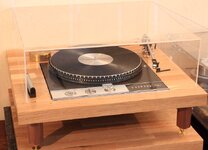
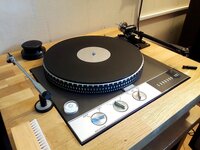
Garrard 401 custom plinth, by RFC. Much sought after!

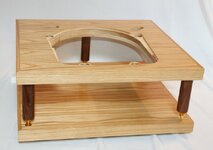
These are recognised as one of the most elegant and better performing skeletal plinths. This is a high quality solid Oak and Walnut version which I've been using for some years but still looks as good as new. To replace this now wouldn't be far shy of £1000.

It is unuisual that instead of coupling the 401 motor chassis to the plinth, it isolated it using 4 hemispherical sorbothane hemispheres, which is an extremely effective way of isolating the tonearm mount from unwanted vibrations. The end result is that this enabled me for the first time to hear what my 401 was truly capable of, simply brilliant sound quality uplift over more conventional designs.

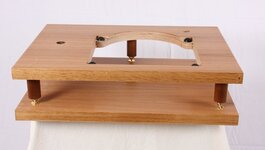
It is made of 40mm thick premium Oak block board, lovely hand turned walnut support legs which attached to the to the base via a tripod arrangement making it very easy to level using the adjustable gold plated cones. The underside of the bottom plinth has 4nr sorbothane feet which are constrained by a gold plated band (possibly brass?) further enhancing isolation from unwanted vibration.

I am including the 5mm thick acrylic arm board which is cut for all Rega/Origin Live arms and any others with a 222mm spindle to pivot mounting arrangement but this can be swapped out for any other armboard of your choice although the hole may need re-cutting or slotting to accommodate longer arms. This suits most 9 inch arms (9.5 effective length).

It placed the motor chassis almost flush with the top of the plinth, adding to the elegance.

Although I'd prefer collection I'm also happy to courier as the legs are internally threaded and can be removed for packing.

Lovely durable hardwax oil finish in great overall condition.

Grab a bargain.....£475 ono

Only selling as I am having a larger two arm plinth being constructed. Please note, TT and arms NOT included.
 

Attachments

  • Garrard.jpg
    Garrard.jpg
    126.9 KB · Views: 146
  • _MG_5484.JPG
    _MG_5484.JPG
    58.9 KB · Views: 143
  • _MG_7461.JPG
    _MG_7461.JPG
    39.7 KB · Views: 138
Great decks, these were the preferred turntables of the Radio 1 DJs in the early days due to their excellent reproduction.
 
a seriously elegant piece .. wasted on my auditory nerves :rolleyes:
 
The 401 is possibly one of the greatest classic TT's from the UK. It was widely used as a transcription turntable, along with the EMT decks, by the BBC for radio broadcasts and was engineered to last.

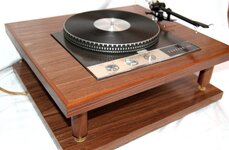
There's a company run by Ray Clarke in Wakefield who specialises in these (Classic Turntable Company) and he's dedicated years to developing improved spindles and bearings plus idler wheel's and other parts for these and the earlier 301's. Once done, they're up there performance wise with the most modern decks at £30K plus, which is good going for a design originating in the 1960's and built in Swindon at the Garrard works (mine is a 1972 vintage and has been used weekly ever since then). Whilst I specialise in loudspeaker design, I really appreciate some of the classic designs to come out of the UK, including Garrards and Radford valve amplifiers (very advanced for the day). The plinth above is one of my own creations and without my knowledge, was shortlisted in the top 10 "elegance in industrial design" awards in the USA a few years ago. I produced a few of these, including two arm plinth versions. Some are pictured below.

Sad to see this go. It was my prototype original but I've been working jointly with a talented engineer on a new design using constrained damping layers and precision cnc manufactured twin arm mounts which hopefully will be with me in a few months.
 

Attachments

  • _MG_8619.JPG
    _MG_8619.JPG
    42.4 KB · Views: 93
  • IMG_2092.JPG
    IMG_2092.JPG
    219.6 KB · Views: 88
  • Turntable Plinths.jpg
    Turntable Plinths.jpg
    32 KB · Views: 96
Soooo, it’s a bit of wood then ?

What I don’t understand, is what it does ?
 
I should have bought, years ago a Garrard 401 with a SME arm and Shure Cartridge. A classic combination. It was housed in a basic SME plinth (the wood bit...) and lid. The chap showed me his original receipts and the 401 motor unit was £25 new from Currys in 1972. A lot different from the prices of today.
One upgrade was to install into a better plinth. Just like a bike or a car, get the chassis right and the rest improve as a consequence. This plinth is an excellent basis for a 401 and tonearm.
 
I re read it.
IIUC using this separates the turntable vibration from the pick up arm which is the bit mounted on the wooden bit.
Still not certain I understand
 
I re read it.
IIUC using this separates the turntable vibration from the pick up arm which is the bit mounted on the wooden bit.
Still not certain I understand

It's a plinth inside of which fits a Garrard 401 turntable. That turntable has a large AC motor underslung on the chassis plate which drives via a system of idler wheels whicvh in turn engage on the inside rim of the platter upon which a record is placed. The motor, together with idler wheel and spindle vibrations caused when the motor spins up can transmit those vibrations to the plinth upon which the record player is fixed, and thereby to the tone arm (pick up arm containing the cartridge and stylus) which affects sound quality. This plinth design effectively isolates the tonearm from those vibrations and ensures a far higher sound quality than more traditional plinths that these record players were commonly sold with. For something which looks so simple, it's actually a calculated and tested design which works really well and it takes a fair bit of precision to make the cut outs, isolating supports and accurate spacing for the tonearm board (the bit that the tonearm is attached to). It also ensures good ventilation of the drive motor which gets quite hot in operation.
 
It's a plinth inside of which fits a Garrard 401 turntable. That turntable has a large AC motor underslung on the chassis plate which drives via a system of idler wheels whicvh in turn engage on the inside rim of the platter upon which a record is placed. The motor, together with idler wheel and spindle vibrations caused when the motor spins up can transmit those vibrations to the plinth upon which the record player is fixed, and thereby to the tone arm (pick up arm containing the cartridge and stylus) which affects sound quality. This plinth design effectively isolates the tonearm from those vibrations and ensures a far higher sound quality than more traditional plinths that these record players were commonly sold with. For something which looks so simple, it's actually a calculated and tested design which works really well and it takes a fair bit of precision to make the cut outs, isolating supports and accurate spacing for the tonearm board (the bit that the tonearm is attached to). It also ensures good ventilation of the drive motor which gets quite hot in operation.

Thank you for that. Being a tight Yorkshireman, I’d have bought a belt drive turntable and basked in the warm glow of saving money
🤣
 
I see there still selling snake oil :D

Spikes,
Squash balls,
Grooved mains plugs,
Contact cleaner,
Gold interconnects,
One way patch leads,
OFC Copper speaker wire ,
48 Strand wire,
96 strand wire,
Bi cabling ,
Oxygen free cable crimping
Banana plugs
99% Oxygen free speaker cable
Lead shot damping

The list goes on and on
 
Yes, a lot of snake oil still floating about with the gullible buying into this crap. I'm definitely NOT a snake oil salesman, I'm an acoustician and speaker designer specialising in what does work...ie science used in place of belief in magic fairy dust.
 
I used to fall for it, Now i have the same speakers i bought 35 years ago , i wont be changing then any time soon either :)
 
I'm still using my Monitor Audio R252 speakers I bought in the 80s and my AR Legend Turntable.
 
I am looking for some new loudspeakers. Stand mount and need to be extremely revealing and detailed in the presence and treble frequencies. Kudos Titan 505 sort of thing...
 
Plinth sold now.

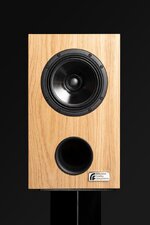
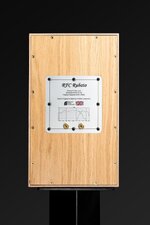
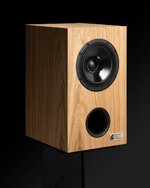
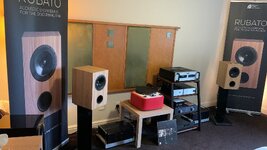
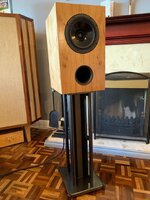
I have ONE pair of RFC Rubato coaxial high quality stand mount speakers also now available. New and unused. These were made up as my extra demo set but never used.

Full specs online but I have attached the flier for them here. £2,000
 

Attachments

Surely the end result must depend on the listener hearing ability?.
 
As with any speaker, the results depend on partnering amplifier, the room itself and someone hard of hearing/damaged hearing will usually have lowered sensitivity above 6-10 KHz. The Rubatos are easy to place, very unfussy due to their polar response being smooth before drop off at 30 degrees either side of axis (so fewer first reflections from side walls) and are very accurate on axis. They're easy to drive having a sensitivity of 90dB/1w/1m into 8 Ohms and are a benign load. What is remarkable is the sound stage these can throw up which belies their size as does the genuine extension to 40Hz in room. They're a fabulous, exceptionally high quality loudspeaker constructed from 18mm veneered birch ply, internally braced and damped with a very high quality crossover which was the result of many months R&D. To buy a speaker of this quality that can approach their performance from any other main manufacturer would be double their asking price. Kore Recording Studios have two pairs of these, which replaced some very expensive monitoring speakers. Happy to demo here if anyone is interested.
 

Attachments

  • RFC Rubato_22.jpg
    RFC Rubato_22.jpg
    77.1 KB · Views: 22
  • RFC Rubato_23.jpg
    RFC Rubato_23.jpg
    75.6 KB · Views: 21
  • RFC Rubato_13.jpg
    RFC Rubato_13.jpg
    79.2 KB · Views: 21
  • Cranage 2024.jpg
    Cranage 2024.jpg
    278.5 KB · Views: 18
  • Rubato9.jpg
    Rubato9.jpg
    134.4 KB · Views: 24
Status
Please reply by conversation.


Back
Top Bottom