Gas canister refilling

Obviously do the gas transfer in an extremely well ventilated area and give it 5 mins before you light it. Don’t want you losing yer eyebrows! :D
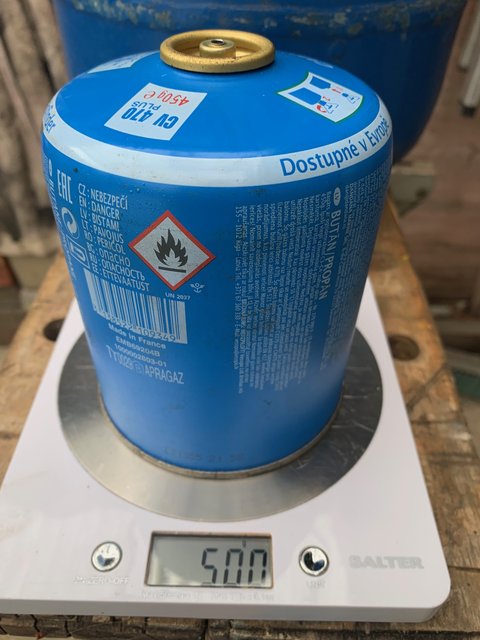
Don’t forget to weigh your FULL gas tins before you start using them. Write it on the bottom with a permanent marker pen. That way you’ll know how much to re fill. :thumb2
DONT OVERFILL THEM!
How long do you vent yours for?

I’ve refilled mine already as per included instructions. All worked well, but I’ve vented mine to long I think, as that is the only bit in the instructions that does not clearly state how long to do it for.

Refilled it in the garden, eyebrows are still intact :D
 
How long do you vent yours for?

I’ve refilled mine already as per included instructions. All worked well, but I’ve vented mine to long I think, as that is the only bit in the instructions that does not clearly state how long to do it for.

Refilled it in the garden, eyebrows are still intact :D
I normally start of with about 10 seconds, then put a bit of liquid gas over, then disconnect the small one and weigh it. If it needs more in I vent it for another 10 seconds, reconnect, and transfer a bit more liquid. I keep doing that until I hit the target weight ( or slightly under ) with the small one. :thumb2
 
Reading through this thread is interesting and has given me ideas...
But, i see that most examples of refilling seem to be from one small canister to another small canister - what`s the point of that unless you`re really, really paring down the weight/space and the smaller canister is prefered? Or is it that the transfer from one particular can to another is cheaper, but how much is really being saved, a quid or two...?

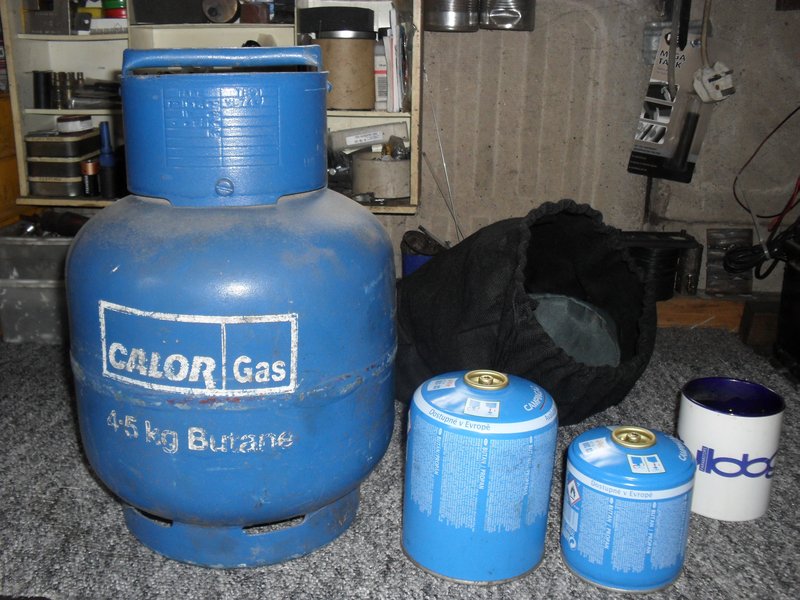
Anyway, i`ve got this 4.5kg Butane cylinder in my garage (knew it would come in handy some day) and i`d like to refill the Campingaz canisters which are nearly ten quid a go for the large one from some places.

Do-able you think, but how?

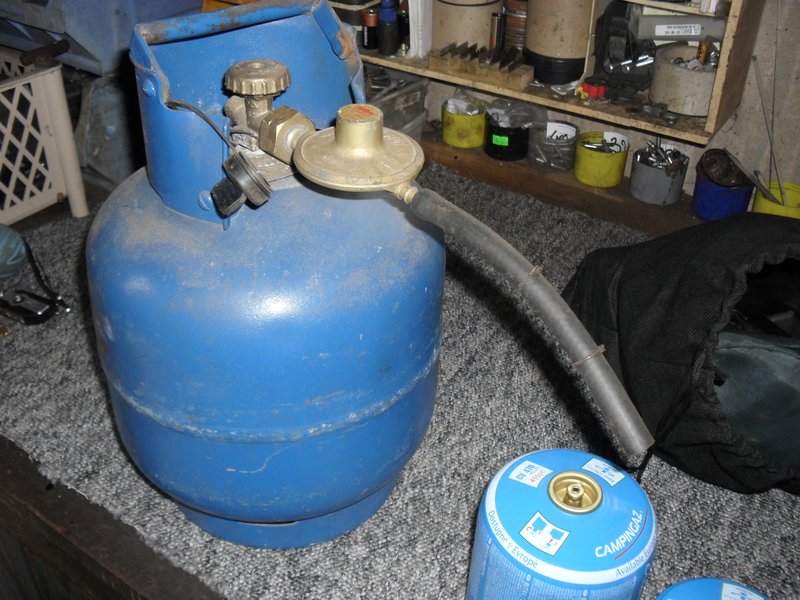
I reckon it can be done but i`ll just need an adapter to link the larger bottle hose to the smaller bore hose of the stove then use the stoves` regulator to fix it to the canister and fill it `in reverse`. What could go wrong........


...what`s the point of that ... ? Or is it that the transfer from one particular can to another is cheaper, but how much is really being saved, a quid or two...?
⬆️THIS ⬆️

Here is an example, v this smaller alternative.

You sure can refill a large canister as per first link from a smaller canister in the second link. But it wouldn't make any financial sense.
If I go away for a weekend camping trip, then a 100g canister* of ISO-Butane gas will do me just fine to make something to eat and to build water for a brew or two.

* said canister does fit inside my jetfoil with all of the supplied accessories to.

You can also refill ISO-Butane Canisters (like those in above link) with a much cheaper Butane gas. Why would you do that you might ask? Well...
  • A: it is much cheaper, working out to be around £4.50 per 1000g v ISO-Butane at £8.90 per 1000g.
  • B: unless you are camping in sub-zero temperatures, then there simply is no reason really to buy Iso-Butane gas ( which will turn into liquid at around -12ºc)
  • C: Butane Gas will be perfectly fine to use above 0ºc
  • D: You can refill your 500g ISO-Butane Canister with x 2 and a bit Butane cans. Resulting in a cost of just over £2.20*

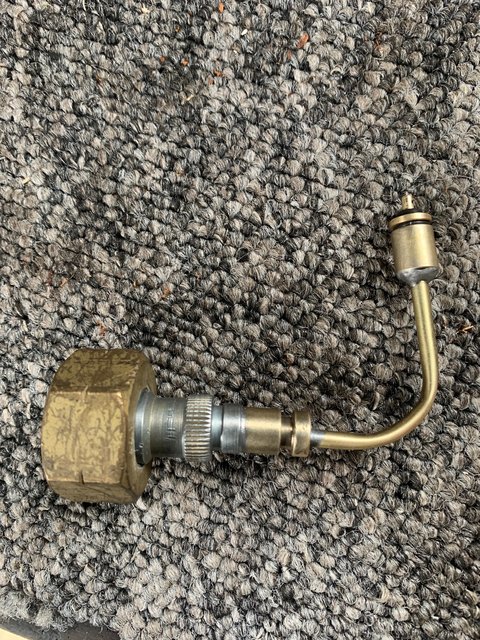
*you will need to get this adaptor set though.Cheaper variants are available too.


PS: Placing your large canister in the sunshine while tyour small canister in the freezer for 20 minutes, will help to draw the gas vapour into a cold can turning it into liquid.
 
what`s the point of that unless you`re really, really paring down the weight/space
So you can do this. But a LOT cheaper than buying the small ones! IMG_5233.jpegIMG_4187.jpegA small gas tin lasts about 3-4 days camping but is blooming expensive. It’s just a cost effective way of refilling them. The bigger gas tins are a lot heavier and don’t fit inside the metal boiling cup.
 
I"d worry about what pressure is in the large one and whether the little cans are able to take it.... seems a wee bit risky :nenau
Is it REALLY worth it??
 
I"d worry about what pressure is in the large one and whether the little cans are able to take it.... seems a wee bit risky :nenau
Is it REALLY worth it??
The vapour pressure is the same, providing the gas in use is not changed for something else, eg butane for butane, propane for propane etc.

An understanding of Charles’ Law and Boyles’ Law is worth having.

The risks are mixing gasses, causing a partial pressure situation where the overall pressure is the sum of both differing gas pressures (Daltons Law), or overfilling, where the vapour space is insufficient to allow for evaporation/expansion, thus making a bomb.

A rule of thumb is never to exceed 80% cylinder volume as liquid.

As a licensed refrigeration engineer, the thought of people filling their own canisters without any formal training using a Chinese adapter is a little concerning.
 
Last edited:
The vapour pressure is the same, providing the gas in use is not changed for something else, eg butane for butane, propane for propane etc.

An understanding of Charles’ Law and Boyles’ Law is worth having.

The risks are mixing gasses, causing a partial pressure situation where the overall pressure is the sum of both differing gas pressures (Daltons Law), or overfilling, where the vapour space is insufficient to allow for evaporation/expansion, thus making a bomb.

A rule of thumb is never to exceed 80% cylinder volume as liquid.

As a licensed refrigeration engineer, the thought of people filling their own canisters without any formal training using a Chinese adapter is a little concerning.
Japanese in my instance :D

As long as you do not exceed the printed weight excluding the weight of the can, then I see no reason why there be any problems. Providing the can being filled is in good working order, not dented or otherwise deformed.

For example a small 100g rated can does weigh somewhere in the region of 98-102g when empty, the capacity of a gas within must not exceed the printed weight of 100g, thus making the total weigh of ~200g.

As Udders has pointed out. Weigh your empty can and make a note of that weigh on the bottom of the can. then fill it up to the printed weigh on the can plus the weigh of the can it self.
Do not refill the cans inside the house would be my advice. Instead take them into the garden.
 
Japanese in my instance :D

As long as you do not exceed the printed weight excluding the weight of the can, then I see no reason why there be any problems. Providing the can being filled is in good working order, not dented or otherwise deformed.

For example a small 100g rated can does weigh somewhere in the region of 98-102g when empty, the capacity of a gas within must not exceed the printed weight of 100g, thus making the total weigh of ~200g.

As Udders has pointed out. Weigh your empty can and make a note of that weigh on the bottom of the can. then fill it up to the printed weigh on the can plus the weigh of the can it self.
Do not refill the cans inside the house would be my advice. Instead take them into the garden.
No, not quite what I said.
I said weigh a FULL NEW gas tin. That way you aren’t guessing the amount to fill it to.
 
the thought of people filling their own canisters without any formal training using a Chinese adapter is a little concerning.
The process is a very safe and simple one. You certainly don’t need professional training.
 
I"d worry about what pressure is in the large one and whether the little cans are able to take it.... seems a wee bit risky :nenau
Is it REALLY worth it??
Yes. There’s no risk as long as where you do it is well ventilated.
 
I finally got around to doing this little project today and i think it was successful.
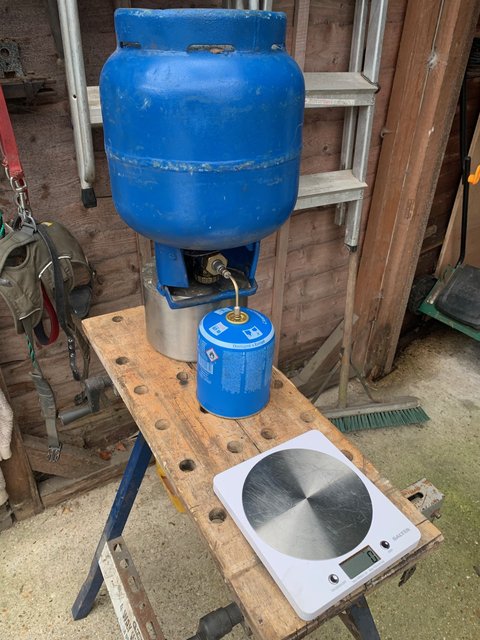
I bought one of these adapters and then made a `link pipe` up to attach it to my 4.5Kg Butane bottle.
The filling process was a lot slower than i was expecting but sure enough the weight of the cannister rose after a few minutes of being connected. The liquified gas from the donor bottle dribbles down under gravity.
I stopped at 500g but since Googling i think i could have put more in, the weight of a full CV470 seems to be 710g.


....just in time for some winter freezeup rallies....
 
Pop the small canister in the freezer for half an hour or so, it will fill much much quicker.
 
So what is the cost saving?
Of refilling a used small canister
Those CV470`s are nine quid each!
Filling them myself this way i will save up to £4.50 per year!

It`s not about the money saving, it`s about the convinience of not having to detour and go shopping whilst on route etc searching for gas and doing it yerself for feck all and `beating the system`!!
I had the large Butane gas cylinder doing nothing for years in the garage, i might as well use it.


Back
Top Bottom