Imminent trip - what is mandatory ?

Is a return date mandatory as I generally book a one way crossing and stay until I feel like coming home .
 
I would have thought as long as the duration was less than 30 days it would be ok.
 
I would have thought as long as the duration was less than 30 days it would be ok.

What you think and reality are not the same.

Put simply….

Most conventional off-the-shelf, travel policies have a condition vis-a-vis the maximum time period away of typically 30 days. If you have no pre-determined return date, the holiday must, by default, be open ended. Your own post says as much:

… I generally book a one way crossing and stay until I feel like coming home .

Congratulations, you have just broken a very simple to understand condition * of the contract; your claim is very probably denied, leaving you (very possibly) with no leg to stand on….. and potentially an eye-wateringly large bill for you to pay or mess for your nearest and dearest to sort out, should you be as unfortunate enough to have died on your sun-bed.

Open ended or ‘long period’ Travel policies are available. Anyone wanting to have the flexibility of returning back home, ‘as and when they feel like it’, should buy one.


* It’s not in the small print; the favourite bleat of those who haven’t bothered to read (or understand) anything, relying instead on what their mate says.
 
Last edited:
Is a return date mandatory as I generally book a one way crossing and stay until I feel like coming home .
We’ve done it that way for more than 10 years. Never had any problems with it.
This year in May was the first time we have booked a return as we’re now using the North Sea ferry from Hull and the return was much cheaper than singles. We did have the option to change the return dats for a small fee.
 
We’ve done it that way for more than 10 years. Never had any problems with it.

Booking one way tickets is fine, indeed bods used to recommend it as a cheap way of crossing, until the operators got wise to the cunning wheeze.

Thankfully, over the 10 years, you’ve presumably not had a significant Travel insurance claim, sufficient for the insurer to question the validity of your Travel policy, assuming that is you had one.
 
So it would be best to buy a return ticket and then alter the return date with the crossing company
 
So it would be best to buy a return ticket and then alter the return date with the crossing company
Probably the best way in light of insurance companies for some reason wanting a return booking?? Very strange idea. In reality we can only stay 90 days in any 180 days. Why the need for a return ticket I don’t know? Unless of course someone is making money from this.
 
Probably the best way in light of insurance companies for some reason wanting a return booking?? Very strange idea. In reality we can only stay 90 days in any 180 days. Why the need for a return ticket I don’t know? Unless of course someone is making money from this.
Pretty sure that technically you need a return ticket or proof of onward travel to visit a Schengen country (& possibly others) as having one is a condition of the 90/180 rule. Not that I've ever been asked for one. Not sure that this is one of the things that will be checked when EES/ETIAS eventually go live.
 
in light of insurance companies for some reason wanting a return booking??

For some reason….. It is very simple:

Having no return ticket must, by default, mean the holiday is open ended. What else can it possibly mean?

The Travel insurance policy (it’s a contract of indemnity) most bods buy, limits an individual holiday to a duration of a maximum of 30 days. It therefore follows that ‘open ended’ is an unknown period and, as confirmed by the courts, is deemed to breach the thirty day condition.
 
Last edited:
So it would be best to buy a return ticket and then alter the return date with the crossing company

Yes, you could perhaps do that, providing:

A. The total number of days did not exceed the 30 (or however many) days stipulated in your Travel insurance.

B. You hadn’t, as some do, bought your policy to cover a specific period, matching that of your outward journey and your (fake) return date. You’d have to get your policy amended (probably at a cost) or, possibly have to buy a new policy, again at a cost.

Either way, you are buggering around, when you could be out, hooning your awesome.

Easier still, just buy a policy which suits your gay and carefree lifestyle, untroubled by the eye of ‘The man’…. Or, fuck it, just do without insurance at all. It’s not compulsory for most destinations and many here don’t bother, not least as they have never needed it and it’s a rip-off.
 
For some reason….. It is very simple:

Having no return ticket must, by default, mean the holiday is open ended. What else can it possibly mean?

The Travel insurance policy ( it’s a contract) most bods buy, limits an individual holiday to a duration of a maximum of 30 days. It therefore follows that ‘open ended’ is an unknown period and, as confirmed by the courts, is deemed to breach the thirty day condition.
Just how does a holiday become open ended by not buying a return ticket at the time of buying a single? One may be expecting to be away for a month but decided to come back after a week. The holiday cannot under the current rules be open ended. The maximum stay is 90 days in any 180, again this is not open ended but is enshrined in EU law that we are not allowed to stay in the EU beyond 90 days. There is no way anyone could call that open ended. Open ended means the person could be away for the rest of their lives. Clearly under EU rules this is not the case.
My policy is for a maximum of 90 days. Which is in accordance with the rules if visiting the EU. The policy underwriter is surely aware of the rules too. Having a return ticket makes no difference to my maximum stay within the EU. If I was going to a country where I was allowed and wanted to stay longer I would get a longer travel insurance policy.
 
Just how does a holiday become open ended by not buying a return ticket at the time of buying a single? One may be expecting to be away for a month but decided to come back after a week. The holiday cannot under the current rules be open ended. The maximum stay is 90 days in any 180, again this is not open ended but is enshrined in EU law that we are not allowed to stay in the EU beyond 90 days. There is no way anyone could call that open ended. Open ended means the person could be away for the rest of their lives. Clearly under EU rules this is not the case.
My policy is for a maximum of 90 days. Which is in accordance with the rules if visiting the EU. The policy underwriter is surely aware of the rules too. Having a return ticket makes no difference to my maximum stay within the EU. If I was going to a country where I was allowed and wanted to stay longer I would get a longer travel insurance policy.
Surely what you, I or anyone else thinks is logical is totally irrelevant? The only thing that counts is the contract that someone agrees to when they take out their travel insurance. If it says you should have a return ticket then travelling without one invalidates the insurance. Now everyone is totally free to take the risk and ignore what's in the insurance conditions *but* if things go wrong and a claim has to be made there's a risk that the insurance won't pay. Your risk assessment, your choice.
 
Just how does a holiday become open ended by not buying a return ticket at the time of buying a single? One may be expecting to be away for a month but decided to come back after a week….. My policy is for a maximum of 90 days.

YOUR policy allows 90 days duration. Great, super. Other policies stipulate 30 or some other number of days. Do not, as many here do, assume that all policies are the same. Do check though that your makes no stipulation about return tickets, as a pre-condition to cover.

The policy has nothing to do with EU regulations post Brexit, not least as you can have a policy which covers say America, Australia, Japan or Outer Mongolia, where you never touch an EU country at all.

On second thoughts. Do whatever you like.
 
Last edited:
I have an policy with my credit card, for travel insurance, which doesn’t require I tell them where or when I’m going. Same with my car insurance policy, or at least one of them.

All different, I guess,
 
I have an policy with my credit card, for travel insurance, which doesn’t require I tell them where or when I’m going. Same with my car insurance policy, or at least one of them.

All different, I guess,

They are all (or very many of them) different.

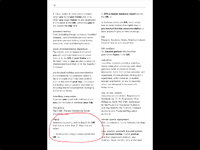
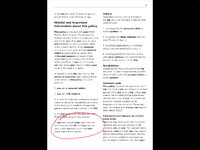
Here are the relevant pieces from my HSBC Travel insurance, free with my bank account:

IMG_1018.jpegIMG_1020.jpegIMG_1019.jpeg

Now, of course, some here will swear that the policy breaks EU law. They are talking drivel.
 
Last edited:


Back
Top Bottom