Is there something different about this bike that makes it less visible???

Whilst there is plenty of evidence about car drivers, there is overwhelming (which I accurately estimate to be plenty more than plenty) that there are lots of dull witted bikers about. Most of them will blame everyone but themselves for their mishaps, probably right up to the point of death. The pool is seemingly inexhaustible, which is great news for bike sales.

why do some people get cars pulling out on them repeatedly and have regular near misses? others can go years between such incidents. i just can't fathom it at all :nenau

personally, i can't help thinking frequency might be narrowed down to spike amongst the perma-nervous dayglo bedecked types.
 
Average riders riding newer and quicker machines more spiritedly perhaps?
 
blind drivers?

in my limited experience a driver waiting at a junction will lok at their exit then along the road to left or right. their eyes alight on the largest vehicle coming towards them but they do not scan all the way from the junction to the biggest vehicle. just my opinion as to why bikers are not seen.
 
I disagree

Lights off is the future:thumby:

With the increase in cars, vans and trucks with bright LED DRLs you may not be far off the point: The idea of lights on in daytime was that bikes would stand out, but if almost every other vehicle sports lights the "advantage" is lost...

:rob

PS: EDIT: I believe Austria made daytime headlights compulsory for all vehicles a few years back, and whilst car v car collisions reduced car v every other road user went up and they repealed the law.
Anyone able to confirm or tell me I'm talking bollocks?
 
........
PS: EDIT: I believe Austria made daytime headlights compulsory for all vehicles a few years back, and whilst car v car collisions reduced car v every other road user went up and they repealed the law.
Anyone able to confirm or tell me I'm talking bollocks?

You're talking bollox :rob

Haven't a clue about the Austria stuff though :P

Andres
 
Cagers, how quaint :)

I guess you never drive a car ?

I like to think that as a car driving biker I am more "bike aware" than most "car only drivers" and although you can't be certain that the cager you are chastising isn't a biker there is an element of satisfaction in calling him names when he cuts you up. I bet most of us have said the same at some time. :green gri
 
Try this;
take a finger. point it up. now move it towards from your face.
Now hold it at arms length. Move it side to side.it
Now look back at this text and do the same - digit up, towards you and side to side - so it's in peripheral vision.
Which movement is more noticeable?

Sideways.

The finger is your Bike.
Your view is the perspective of a drivers view from a side junction.
it's way easier to note lateral /sideways movement than 'head on'.
That's why some drivers cannot judge the distance of an oncoming Bike or headlight even more so, as it projects its beam ahead of the Bike - confusing the brains means of distance judgement.
Sometimes I'll change my line slightly approaching a junction, just to improve a potential escape route :rolleyes: but also the very act of doing so might grab their otherwise inattentive brain.

i thang queue. :)
 
in my limited experience a driver waiting at a junction will lok at their exit then along the road to left or right. their eyes alight on the largest vehicle coming towards them but they do not scan all the way from the junction to the biggest vehicle. just my opinion as to why bikers are not seen.

That and that they (bikers) overtake through junctions.... And moan that some blind cager pulls out or across. "I mean, how blind and thick are these fecking people?" Is the rant most often heard.... Quite who the 'people' referred to are is, of course, open to some debate.
 
Try this;
take a finger. point it up. now move it towards from your face.
Now hold it at arms length. Move it side to side.it
Now look back at this text and do the same - digit up, towards you and side to side - so it's in peripheral vision.
Which movement is more noticeable?

Sideways.

The finger is your Bike.
Your view is the perspective of a drivers view from a side junction.
it's way easier to note lateral /sideways movement than 'head on'.
That's why some drivers cannot judge the distance of an oncoming Bike or headlight even more so, as it projects its beam ahead of the Bike - confusing the brains means of distance judgement.
Sometimes I'll change my line slightly approaching a junction, just to improve a potential escape route :rolleyes: but also the very act of doing so might grab their otherwise inattentive brain.

i thang queue. :)

I concur, I induce a slight weave when approaching a vehicle waiting at a junction. When I am in my car in waiting at a junction to pull out I give a thumbs up to the biker to let them know I have seen them. Really effective in 30 and 40 mph zones. Maybe everyone should adopt this !
P
 
Re the LRD drl on the new LC GS, I though a good idea would be to be able to modulate the light ( like the push bike LED lights which seem to be very noticeable).

Thought of this while watching a video of an LC which was in front of me and the rear light appears flickering due to the FPS of the vid. :nenau
 
They look, their eyes see but the brain does not register the object.

It's how sight works. Do a Bikesafe course and you'll find out all about it, even excluding wide A-pillar blind spots it's truly not their fault, it's physiology and something we have to live with.

Having said that the DLR issue does seem to be a significant contributor.
 
At the end of the day, we're disturbed because we can't nail down factors beyond our control.
Maybe, trying to get beyond the irrationality of this will give us all more peace of mind. Arguments that 'every vehicle putting it's lights on will diminish our visibility as an exclusive group' solve nothing.

1. There are road users who make the effort to look for us, focus on us, and react appropriately.
2. There are also road users who look for us, but - due to a multitude of factors - don't see us.
3. There are also road users who are unaware of anything beyond the end of their own noses.
There is also a large element of luck involved in which of the three we'll encounter on any given day. Any biker who wants to stay alive will make only one firm assumption: that every single road user they encounter falls into category 3.

We have limited control over the slings and arrows of outrageous fortune. If you are paranoid and risk-aversive, the saddle of a motorcycle is not the place for you. Wrap yourself in cotton wool, drink only distilled water, and never leave the house.
You'll be totally safe, but your quality of life won't be for much. :thumb
 
Im hitting the big five "0" in a couple of months and have been riding bikes since i were 16. I do a lot of driving for a living and always look out for motorcycles but if im honest ive pulled out of a junction into the path of a bike once and gave a stupid im a dickhead wave. I would reckon theres probably been another half dozen or so nearly pulled out on a bike situations and its always been because i just have'nt seen them. Its just so easily done. I bet a lot of us have........ its a terrible feeling. Nobody pulls out on something they can see.. Do they?. P.s. one or two of these have been because they were riding far to fast in town/residential areas.
 
A Posts


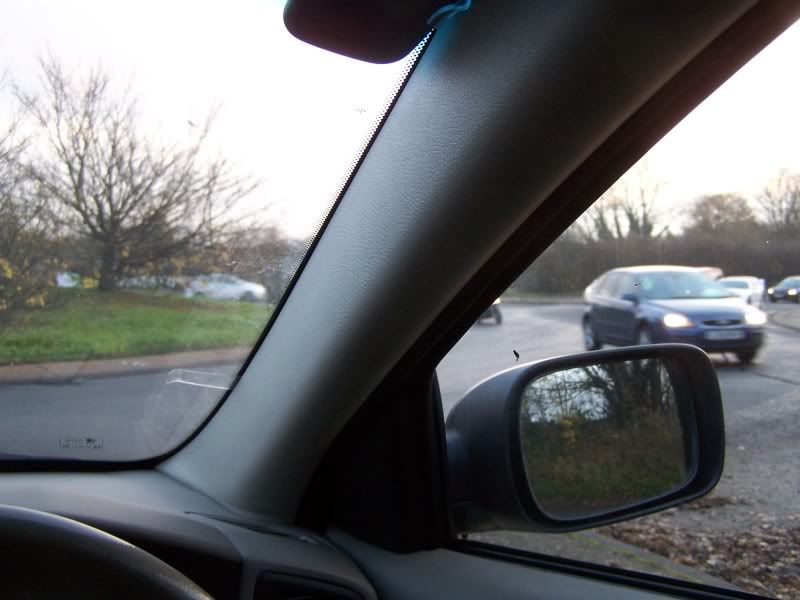
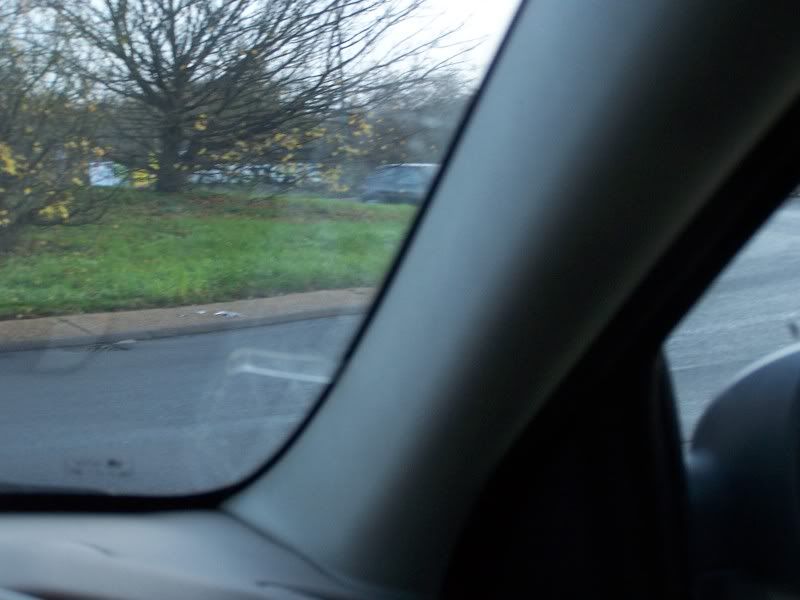
The A post (window pillar) in a car is a pretty crucial part of its structure; its failing in a collision is a major contribution to front seat driver / passenger head injuries. The modern A post has got stronger and stronger as manufacturers have strived to score well in what they call 'secondary safety', (occupant safety) but as a result, 'primary safety' (avoiding the accident in the first place) has suffered. Research has shown that as A posts have got stronger, they've also got bulkier, and as a result there has also been an increase in offside accidents, especially at junctions. Not good news for us bikers.

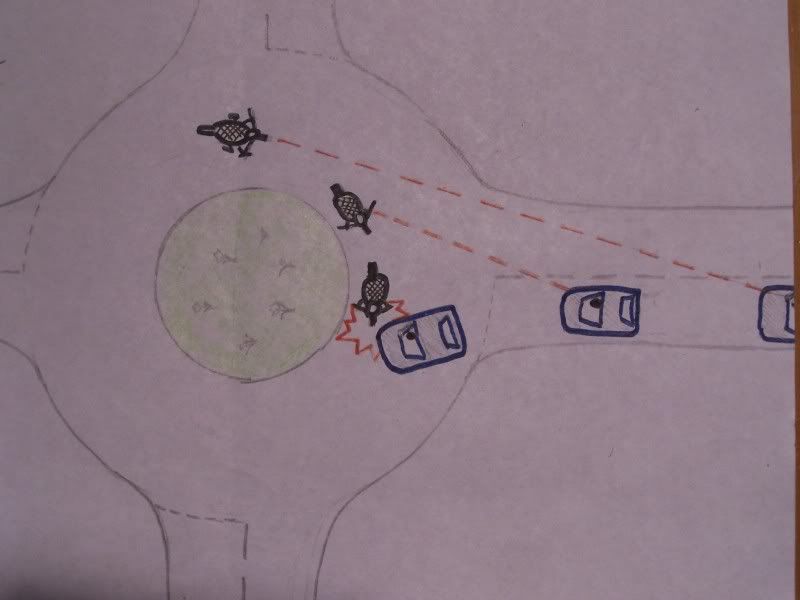
The modern A post can create significant blind spots for drivers.The typical blind spot accident scenario that could involve us, will be our self and another vehicle moving towards each other at the same time, probably approaching a junction, and at that, probably on some sort of a curved path. A roundabout would be an ideal scenario: As the car approaches the roundabout, if the circumstances are right, we the motorcyclist, already on the roundabout, can sit in that A post blind spot which then sort of locks on to us, tracking our movement, and making us completely invisible right up to impact.

015-2.jpg


The sting in the tail is that because we're busy leaning the bike over, our attention is often focused, rightly so, on where we want to go, and it's easy for us to be completely unaware that something is pulling out at the very last second. Both drivers are as blind as each other.

006-2.jpg


010-2.jpg


011-1.jpg

No idea who this is! But thank you very much!


No hard and fast cures to this one. Just try and be aware of cars approaching all your exits. The stationary cars are more likely to have see you. Alarm bells should ring in your head when you spot traffic approaching the roundabout as you are.


Motion camouflage.

A couple of years ago Bike magazine wrote a good article on motion camouflage. So they take the credit! This is the theory..

If you watch a hover fly or a dragon fly, they often move in a mysterious way! They fly perfectly still, hovering, then they abruptly change course a few inches, and hover again. they move in this jerk / still / jerk way. They are hunting, and they're honing in on their prey. As their prey moves, they move, they keep themselves in the same place against they're background, making it hard for the prey to detect its movement. As they do this, they fly towards their prey in a dead straight line. It's not until they're almost on top of their prey, that they 'loom' into view. But by then it's all too late. Munch!!
dscd0483.jpg


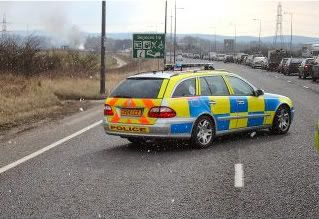
Ever wondered why emergency vehicles 'fend off' at the scene of an accident on a fast moving road? Arguably, the rear emergency lights are most effective square on, so you would think that by parking in a dead straight line, you would see the rear reds / blues more clearly, and that would be safer. Not so! There are a couple of other benefits to fending off, but the biggest benefit, is that by clearly showing the side on profile of the fend off vehicle, drivers approaching at speed, can instantly tell that it's a stationary vehicle, in a live lane.

Its also common knowledge that when we're travelling on a main road, and we spot a car in a side road waiting to pull out, looking at the wheels (rotating or not) will detect movement much more efficiently than looking at the car itself.

So you get the jist of this idea, it's all to do with how we perceive motion, and if we reverse the prey / hunter role-play we can unexpectedly become the hoverfly and move invisibly along our road.

018.jpg


As we ride down a main road, if the circumstances are right like our back drop and the angle of the main road to an approaching side road, we can find our selves riding on a straight line that extends from a fixed point behind us directly into the eye of a waiting driver in a side road ahead. Our bike will appear motionless, and will not appear to increase in size until the very last second. The driver in the side road is searching for movement on the road, objects moving against a background, and when we're on this straight line path, the car driver may quite simply, just not see us.

This accident is particularly relevant in town. Our eyes tune into our environment and start looking for regular themes. A good example is dusk on the motorway. Every car has it's lights on except one. (Always metalic silver!!) We miss that car in the flow of traffic because now our eyes see headlights... head lights.... gap.... headlights....headlights.... So we change lane, move into the gap and hit the invisible car. In busy urban town, drivers, sitting in a side road, tune into movement... movement....movement.... gap..... BANG!!!

Part of the research into this theory delivers yet another sting in the tail; when the dragonfly does eventually 'loom' into view, the prey momentarily freezes - rabbit in the headlights. Likewise, a car that does pull out in front of us, will simply freeze on the spot as we reveal ourselves.

So what can we do about this one? I can't say I weave down the road trying to break up my backdrop when I see a car in a side road, but knowledge is power and it's good to know why I'm sometimes difficult to see. If I spot the nose of a car in a side road, then just once in a while, I might chose to move out, but deliberately delay that movement until I see the driver looking my way.

 
A Posts


The A post (window pillar) in a car is a pretty crucial part of its structure; its failing in a collision is a major contribution to front seat driver / passenger head injuries. The modern A post has got stronger and stronger as manufacturers have strived to score well in what they call 'secondary safety', (occupant safety) but as a result, 'primary safety' (avoiding the accident in the first place) has suffered. Research has shown that as A posts have got stronger, they've also got bulkier, and as a result there has also been an increase in offside accidents, especially at junctions. Not good news for us bikers.

The modern A post can create significant blind spots for drivers.The typical blind spot accident scenario that could involve us, will be our self and another vehicle moving towards each other at the same time, probably approaching a junction, and at that, probably on some sort of a curved path. A roundabout would be an ideal scenario: As the car approaches the roundabout, if the circumstances are right, we the motorcyclist, already on the roundabout, can sit in that A post blind spot which then sort of locks on to us, tracking our movement, and making us completely invisible right up to impact.

015-2.jpg


The sting in the tail is that because we're busy leaning the bike over, our attention is often focused, rightly so, on where we want to go, and it's easy for us to be completely unaware that something is pulling out at the very last second. Both drivers are as blind as each other.

006-2.jpg


010-2.jpg


011-1.jpg

No idea who this is! But thank you very much!


No hard and fast cures to this one. Just try and be aware of cars approaching all your exits. The stationary cars are more likely to have see you. Alarm bells should ring in your head when you spot traffic approaching the roundabout as you are.


Motion camouflage.

A couple of years ago Bike magazine wrote a good article on motion camouflage. So they take the credit! This is the theory..

If you watch a hover fly or a dragon fly, they often move in a mysterious way! They fly perfectly still, hovering, then they abruptly change course a few inches, and hover again. they move in this jerk / still / jerk way. They are hunting, and they're honing in on their prey. As their prey moves, they move, they keep themselves in the same place against they're background, making it hard for the prey to detect its movement. As they do this, they fly towards their prey in a dead straight line. It's not until they're almost on top of their prey, that they 'loom' into view. But by then it's all too late. Munch!!

dscd0483.jpg


Ever wondered why emergency vehicles 'fend off' at the scene of an accident on a fast moving road? Arguably, the rear emergency lights are most effective square on, so you would think that by parking in a dead straight line, you would see the rear reds / blues more clearly, and that would be safer. Not so! There are a couple of other benefits to fending off, but the biggest benefit, is that by clearly showing the side on profile of the fend off vehicle, drivers approaching at speed, can instantly tell that it's a stationary vehicle, in a live lane.

Its also common knowledge that when we're travelling on a main road, and we spot a car in a side road waiting to pull out, looking at the wheels (rotating or not) will detect movement much more efficiently than looking at the car itself.

So you get the jist of this idea, it's all to do with how we perceive motion, and if we reverse the prey / hunter role-play we can unexpectedly become the hoverfly and move invisibly along our road.

018.jpg


As we ride down a main road, if the circumstances are right like our back drop and the angle of the main road to an approaching side road, we can find our selves riding on a straight line that extends from a fixed point behind us directly into the eye of a waiting driver in a side road ahead. Our bike will appear motionless, and will not appear to increase in size until the very last second. The driver in the side road is searching for movement on the road, objects moving against a background, and when we're on this straight line path, the car driver may quite simply, just not see us.

This accident is particularly relevant in town. Our eyes tune into our environment and start looking for regular themes. A good example is dusk on the motorway. Every car has it's lights on except one. (Always metalic silver!!) We miss that car in the flow of traffic because now our eyes see headlights... head lights.... gap.... headlights....headlights.... So we change lane, move into the gap and hit the invisible car. In busy urban town, drivers, sitting in a side road, tune into movement... movement....movement.... gap..... BANG!!!

Part of the research into this theory delivers yet another sting in the tail; when the dragonfly does eventually 'loom' into view, the prey momentarily freezes - rabbit in the headlights. Likewise, a car that does pull out in front of us, will simply freeze on the spot as we reveal ourselves.

So what can we do about this one? I can't say I weave down the road trying to break up my backdrop when I see a car in a side road, but knowledge is power and it's good to know why I'm sometimes difficult to see. If I spot the nose of a car in a side road, then just once in a while, I might chose to move out, but deliberately delay that movement until I see the driver looking my way.

Thanks Gilles saved me the trouble of explaining my post


Back
Top Bottom