Leaking tire question

Micklin

Registered user
Joined
Jun 12, 2013
Messages
16
Reaction score
0
Location
Wiesbaden Germany
I've been riding motos for many many years. I just got a little nail or piece of metal in the rear tire and have a slow leak.
What is the best permanent fix? Dealership? Tire place? Can it be permanently fixed on a bike with all the pressure in tight corners? Oh yeah, Michelin PR4s, one inch off center of the tire to the left.
Any help would be great as this is my first tire issue. (amazingly lucky this is the first in 25 yrs)
 
I don't know what the laws regarding puncture repairs are in Germany are but technically it can be fixed subject to inspection. Jjh
 
Easily repaired by a tyre dealer or DIY with stop n go or the like

Depends on how old the tyre is as to if i would leep riding on it but i had a PR4 puncture after about 300 miles from new, had it repaired and it saw me to the end of its life at about 5000 with no problems
 
Plug and forget about it. If that's allowed in germany..

Here's the easiest, quickest, cleanest and most efficient method, you won't even get your hands dirty. = Stop and Go tyre plugger .
 
I had a problem on my K1200S, tyre went down in 5 seconds (trousers went brown too) ! I plugged it with Genuine Innovations plug and took it to my dealer, they assured me they could patch it properly using a glued patch which they did. Has not given me any problem at all, have ridden it 2,000 miles to the Black Forest and back without so much as a leak. Even the temporary stringy plug thing I used didn't leak, I was impressed with that too !
 
I've been riding motos for many many years. I just got a little nail or piece of metal in the rear tire and have a slow leak.
What is the best permanent fix? Dealership? Tire place? Can it be permanently fixed on a bike with all the pressure in tight corners? Oh yeah, Michelin PR4s, one inch off center of the tire to the left.
Any help would be great as this is my first tire issue. (amazingly lucky this is the first in 25 yrs)

If it was me I would pour into the tyre some punctureseal!

wouldn't use the stuff normally, but if it's a slow puncture I would leave in and add the sealant!
 
One of the participants in my group at the Nürburgring wore out a rear tyre and had it replaced at the track. The next lap we did he picked up a nail getting a puncture in his new tyre.

The tyre company said that they were not allowed to repair it in Germany and he had to buy another tyre. They did agree to ship it back to the UK for him where they knew that he would be able to get it legally repaired.

If it was me I would repair it on the wheel with my Stop & Go puncture repair kit. I believe that it is not allowed to repair Z rated tyres.
 
If it was me I would pour into the tyre some punctureseal!

wouldn't use the stuff normally, but if it's a slow puncture I would leave in and add the sealant!

I don't believe in using this stuff except as a last-ditch desperation measure when nothing else is available. It's too easy to just forget about it and leave it in the tyre.
If you want to patch the tyre permanently, you're also looking at a massive clean-up effort when that tyre comes off the rim.

= dead TPS

not good idea

Entirely possible if the gunk blocks the orifice leading to the pressure-sensing cell. (If you hold a BMW RDC sensor in your hand, you'll see a tiny hole on the 'inside' surface. That's where the sensor takes the air pressure reading).

If it was me I would repair it on the wheel with my Stop & Go puncture repair kit. I believe that it is not allowed to repair Z rated tyres.

It's not really about tyre construction - it's about the speeds that tyre is subjected to on any given bike, by any given owner.
'Z'-rated is a bit of a misnomer when used to refer to tyres, anyway - it's not an actual 'speed' rating, but people are impressed when tyre markings spell out, for example, '190/50 ZR 17'.
Tyre speed ratings are useless if they aren't referred to in context of the tyre's load rating. The manufacturers assume a 'worst case' scenario for every tyre they design, so that speed rating applies at the tyre's rated maximum mass loading.
If you look closely at sidewall markings, they will typically say something like '190/50 ZR 17 78W'. 78 is the load rating, W is the maximum speed that tyre is rated to run at when subjected to the maximum load permitted by that load rating.
I don't remember the values off the top of my head, but Google 'tyre load rating chart'. :)

Actual speed ratings are as follows:
S: safe to 180 Km/h at rated maximum load.
T: safe to 190 Km/h at rated maximum load.
H: safe to 210 Km/h at rated maximum load.
V: safe to 240 Km/h at rated maximum load ('more than' 240 at 'reduced loading' - for actual values, contact the tyre manufacturer).
W: safe to 270 Km/h at rated maximum load ('more than' 270 at 'reduced loading' - for actual values, contact the tyre manufacturer).
 
I don't believe in using this stuff except as a last-ditch desperation measure when nothing else is available. It's too easy to just forget about it and leave it in the tyre.
If you want to patch the tyre permanently, you're also looking at a massive clean-up effort when that tyre comes off the rim.

Your supposed to forget about it and leave it in the tyre, that's what it's for!

what massive clean up, it takes a couple of minutes max, and don't believe that once the sealant is in that the tyre can no longer be repaired!


still I bow down to your greater knowledge and experience, I only change around 15 tyres a week!
 
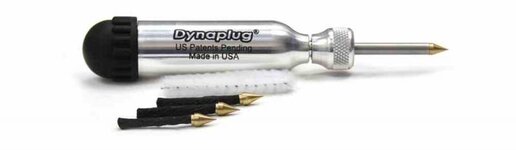
That looks like a really nifty tool, can you get them in the UK or is it a only USA order?
 
Your supposed to forget about it and leave it in the tyre, that's what it's for!

Part of the official product description of Tyre Weld from the manufacturers (Holts).
Note the portions in red:
Be prepared for a puncture at any time by carrying Tyreweld. It is a quick and simple repair in order to get you home, so you're not left stranded at the roadside. No wheel change is necessary, so don't worry if you can't change a tyre yourself. All you have to do for this quick fix, is just connect the canister to the valve on your vehicle tyre and press the button.

'Quick fix'. 'In order to get you home'.
There's a good reason for that. What happens if you pick up a second puncture while this stuff is still in your tyre? You won't know about it, that's what. This stuff is not meant to be a 'magic bullet' that solves all your puncture-related problems.

still I bow down to your greater knowledge and experience, I only change around 15 tyres a week!

I'd say you've had an amazing run of luck - so far.

I wish you even more luck the next time you advise a customer to 'just leave it in the tyre and forget about it'. Let's expand on my example above: say that customer picks up a self-tapping screw that penetrates the steel cord (but they don't know about it because the tyre doesn't lose air) and that screw starts getting forced back and forth by road contact, creating an ever-widening hole through which the air suddenly escapes while the rider's doing 160+ Km/h.
These things happen. I've seen the aftermath of them, and they are not pretty.

Next, let's say the rider survives and is interviewed in his hospital bed by police.
"You experienced a high-speed blowout, Sir. Did anything unusual happen to your tyre recently?"
"Yes, I repaired a puncture with Tyre Weld."
"So, what speed were you doing at the time, Sir?"
"Oh, around 70 mph."
"You do know that tyres repaired using temporary sealants are considered 'For Emergency Use Only', right, Sir?"
"...But the guy who sold it to me told me just leave it in the tyre and forget about it!"
"Hmm. What's this person's name and address, Sir?"
"Ian. From Cumbria."
"Thank you, Sir. We'll be paying Ian a visit."

Having second thoughts yet?
 
I bought one of these
http://www.ebay.co.uk/itm/DYNAPLUG-...rcycles_Parts_Accessories&hash=item5411673b8e

Used it twice now and it works a treat, cheaper to buy from the states, if you buy one get some refills and save some postage.

Wow that's just what I've been looking for!
A much better idea than the gunk.
I used the tire sealent a few weeks ago and it worked for a few days, which was enough time for me to get another set of tires. I replaced them because the rear had two punctures in it, and then garage man said he couldn't guarantee the repair because of the sealent. The tires where almost spent anyway.

But that tool looks just the job and if you go to the manufactures web side you can see the fella repaire a puncture made by an inconceivably large nail :augie
 

Attachments

  • image.jpg
    image.jpg
    14 KB · Views: 186
Part of the official product description of Tyre Weld from the manufacturers (Holts).
Note the portions in red:
Be prepared for a puncture at any time by carrying Tyreweld. It is a quick and simple repair in order to get you home, so you're not left stranded at the roadside. No wheel change is necessary, so don't worry if you can't change a tyre yourself. All you have to do for this quick fix, is just connect the canister to the valve on your vehicle tyre and press the button.

'Quick fix'. 'In order to get you home'.
There's a good reason for that. What happens if you pick up a second puncture while this stuff is still in your tyre? You won't know about it, that's what. This stuff is not meant to be a 'magic bullet' that solves all your puncture-related problems.


I'd say you've had an amazing run of luck - so far.

I wish you even more luck the next time you advise a customer to 'just leave it in the tyre and forget about it'. Let's expand on my example above: say that customer picks up a self-tapping screw that penetrates the steel cord (but they don't know about it because the tyre doesn't lose air) and that screw starts getting forced back and forth by road contact, creating an ever-widening hole through which the air suddenly escapes while the rider's doing 160+ Km/h.
These things happen. I've seen the aftermath of them, and they are not pretty.

Next, let's say the rider survives and is interviewed in his hospital bed by police.
"You experienced a high-speed blowout, Sir. Did anything unusual happen to your tyre recently?"
"Yes, I repaired a puncture with Tyre Weld."
"So, what speed were you doing at the time, Sir?"
"Oh, around 70 mph."
"You do know that tyres repaired using temporary sealants are considered 'For Emergency Use Only', right, Sir?"
"...But the guy who sold it to me told me just leave it in the tyre and forget about it!"
"Hmm. What's this person's name and address, Sir?"
"Ian. From Cumbria."
"Thank you, Sir. We'll be paying Ian a visit."

Having second thoughts yet?


quite possibly lucky, but I posted about punctureseal type products which are different to Holts tyreweld, like this

http://www.punctureseal.com/motorbike.html
which is designed to last the life of the tyre,

Maybe you should edit some of what you have said, because it kind of makes you look stupid :thumb

if you use Holts tyre weld, doing 70MPH is 40MPH faster than the maximum recommended for tyre weld,

I await your next installment, with baited breath!:D
 
That looks like a really nifty tool, can you get them in the UK or is it a only USA order?

Yes you can. But the only sellers I found were dearer. Have a good look round if you find them cheaper put it on here. The guy in the states posts good and quick, great service.
 
Thanks for all ithe info everyone. Think I'm going to plug it for the time being and order a new tire. Thanks again.
 
'Baited' breath? Have you been eating earthworms? :toungincheek

Oh, boy(d)... Where do I begin?
Perhaps I can make a good start by stating that bullsh!t doesn't always baffle brains.

Allow me to present a few quotes from the manufacturer's website:

"Punctureseal cures the porosity inherent in all tyres. In doing this, it reduces tyre temperature so evident when under-inflated tyres are put under stress."

It 'cures the porosity inherent in all tyres'? That's one hell of a claim.
The Millbrook test report presented on the manufacturer's website contradicts this by stating that there was a loss of pressure from one of the two tyres punctured during the test.

'It reduces tyre temperature so evident when under-inflated tyres are put under stress'?
Oh? How does it do that? And by how much?
Does it act as a heat sink? How can it, when it's in a totally enclosed environment?
Or is this a claim that it's some kind of guarantee against a tyre overheating when it's under-inflated?
If you believe that, stick around: I've got a bridge and some snake oil to sell you.

"While Punctureseal can operate at speeds up to 160mph, we do not recommend the product for competition biking."

At least they had the honesty to say this, and it's easy to see why.
If you put any kind of fluid into a rapidly rotating wheel/tyre assembly, the fluid mass will attempt to self-stabilize as it's thrown outward by centrifugal force.
But depending on the fluid's viscosity, it may also 'pool' under gravity. A certain portion of the fluid mass is also going to be forced from side to side in the tyre carcass under aggressive manoeuvering. (And your miracle cure is now doing something even more dangerous than masking punctures - it's making the bike's handling unpredictable.)
And because you've put a dynamically-changing mass into that wheel/tyre assembly, your wheel balancing is now shot. (And because the extra load is dynamic, no matter how many times you try to get the wheel balance right, it will always change.)

But here's the clincher. While the Millbrook test report is an impressive study of before-and-after scenarios when using Punctureseal under laboratory conditions, it makes no attempt to suggest counter-measures for situations which might arise in the real world.
What might happen if a typical customer (having gained a false sense of security from all the impressive claims) neglects to check the full outer surface area of both tyres before every ride?
I said before, in reference to Tyre Weld and similar products, that their self-sealing properties make it difficult or impossible to know that there is now a foreign object lodged in your tyre.
And so, I return to your original statement:
Your supposed to forget about it and leave it in the tyre, that's what it's for!
That's a direct contradiction of the manufacturer's instructions, also found on their website:

"If you find a nail or screw in your tyre, follow this procedure:
1. If the object is in the sidewall, replace the tyre.
2. If the object is in the tread area, unscrew the screw or pull out the nail.
3. Immediately drive 3km / 2 miles.
4. Check you air pressures. You may need to top up 0.5 to 1 PSI."


Punctureseal or not, a big enough screw or piece of sharp metal which enters at the right angle will stay in the tyre tread, working back and forth like a saw. And because most riders won't follow step 4 above as conscientiously as they should, they won't know about that puncture until it catches them by surprise.

The fact is that Punctureseal is a commercial product.
Therefore, the manufacturer has incentive to sell it. And if flaws are found in the product and/or its application, the manufacturer has incentive for spin-doctoring to ensure that those flaws are down-played and that the product continues to sell.

Pro-Punctureseal evangelists like yourself are also the best free advertising there is for a company like this.
So now that the ball is well and truly back in your court, Ian, ask yourself: how many bikers are you willing to endanger in order to put a few extra Guineas in your pocket?

Stupidity is relative - wouldn't you agree? :loopy

In the final analysis, though, I've probably wasted my breath. Those who know the science of how tyres work already know the things I've just said.
The rest will believe what they want to believe, sticking their fingers in their ears and going "...Na nah nah NAH nah!..."



Back
Top Bottom