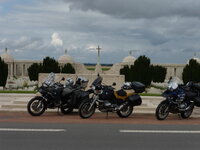
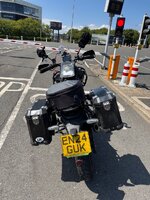
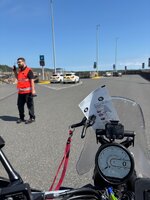
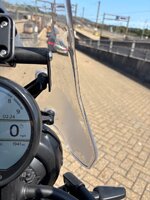
M’off…… Pas de Calais

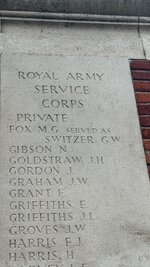
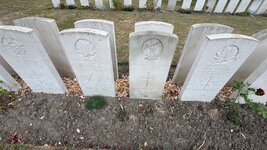
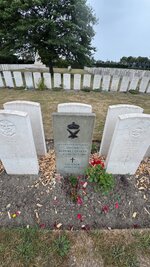
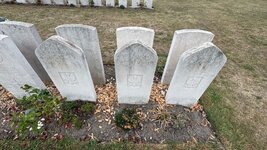
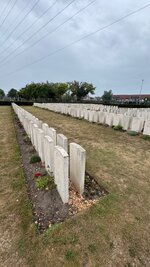
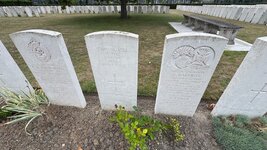
I visited a grave of a soldier killed at the battle of cassell on Tuesday, he is named on my village war memorial, there are 17 names on the war memorial, I am visiting the graves and memorials to 15 of them this week, the last two are in Malta and Greece so a couple more holidays to go yet.
When I was young and not quite single my then girlfriend and I did the same for all the 1st world war names in northern France on the village war memorial, we put this in a power point with a bit of narrative about each person and a photograph of their grave. For many years this was ‘played’ in church on the screen during the two minutes silence…
 
That’s an interesting way to travel about and see things.

In 2018, the Lloyd’s Motor Club did a similar thing, finding the graves (or where there is no known grave, the name on the walls of ‘missing’ soldiers) of all those who worked in Lloyd’s. We found them all and photographed them. Some were buried overseas, including one in Iraq. Via the Lloyd’s agents, it was arranged for the local War Graves people to visit the grave sites and, if possible, photograph them. The gentleman in Iraq, who (through the thick and thin of war and God knows what else) tends the graves there, did exactly what he was asked to do. Lloyd’s Motor Club made a special donation to him.

The photographs and, where possible, a potted history of the person, Lloyd’s Motor Club had published into quite a nice book. Interestingly, Lloyd’s of London was itself very uninterested in the effort made, not least as it was deep into its much more ‘useful’ Diversity and Inclusion project. Make what you will of that. Hey-ho, the modern world!

View attachment 428085

PS If I remember correctly, the person who kicked off the Lloyd’s Motor Club initiative (himself an amateur historian) discovered that:

A. Lloyd’s of London has no archivist. If true, that alone is a crime, given that Lloyd’s has been linked with just about every social, political and economic event, since its first coming into existence.

B. Had all but dumped the book recording the names of the fallen into a dusty locker in the basement. It would have been lost forever. It was found by the amateur historian after a search and then only because a Lloyd’s employee (known as, a ‘waiter’) remembered it. The waiter was about to retire and there are now none as such. Progress? I think not.

We did a similar thing in 2014 - one of my brothers, a teacher in the village school, did a project with the kids to look up the names of local lads who died in WWI on the local cenotaph. We visited their graves over the course of a week.

P1000252.jpeg
 
Straight down the M20, via the A13 and QE2 crossing. Operation Stack is in place but, as there was very little traffic, we sailed along.

I was booked on the 15:24 train but was offered the 14:36 instead, which departed bang on time. Who said that fix price ‘cheap’ tickets are not moveable?

IMG_0235.jpeg

IMG_0236.jpeg

IMG_0237.jpeg

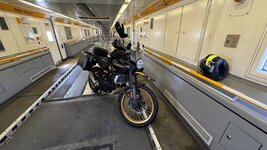
Obligatory picture of motorbike on Chunnel, all alone:

IMG_4615.jpeg

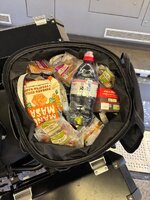
And onboard dining:

IMG_0240.jpeg

Off the train and onto the D roads for an hour to St Omer, where I fuelled up, ready for tomorrow.

Unsurprisingly, it is very humid, so a shower and then a stroll into town to rehydrate in the Queen Victoria pub.
 
Last edited:
Straight down the M20, via the A13 and QE2 crossing. Operation Stack is in place but, as there was very little traffic, we sailed along.

I was booked on the 15:24 train but was offered the 14:36 instead, which departed bang on time. Who said that fix price ‘cheap’ tickets are not moveable?

View attachment 428343

View attachment 428344

View attachment 428345

Obligatory picture of motorbike on Chunnel, all alone:

View attachment 428329

And onboard dining:

View attachment 428346

Off the train and onto the D roads for an hour to St Omer, where I fuelled up, ready for tomorrow.

Unsurprisingly, it is very humid, so a shower and then a stroll into town to rehydrate in the Queen Victoria pub.

Enjoy your shower. Ketchup later
 
It’s very nice on the patio in Folkestone sipping a pre-dinner drink this evening.

I do hope you have your oilies for tomorrow for the forecast is inclement…
 
1752863433518.jpg

Now to find nosebag.

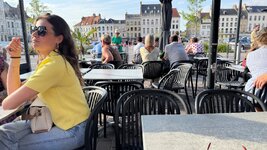
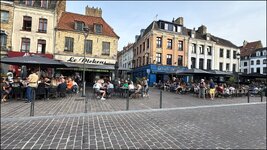
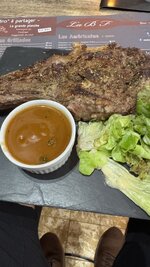
The restaurant I hoped to at least book is full through Friday and the weekend. I’ll wander across the square to a brasserie place that!, in umpteen visits to the town, I’ve never tried. Hey-ho, anything for something new.

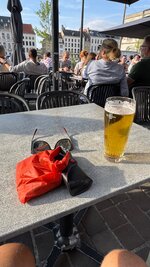
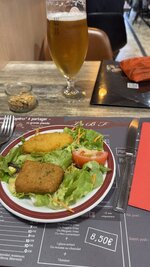
Kicking off with two fried cheeses and (naturally) a beer. Four down, so far….

IMG_4625.jpeg
 
Day two

I plan to be off at around 08:00, for the 200 miles wander around the fields. First stop will be the bakery on the town square and then to find some water.
 
  • Like
Reactions: Doc
Day one

First stop, my local corner shop (Waitrose) to a get a sandwich (also known as ‘scram’) and water for my epic 70 miles to Folkestone. I shall not be taking a flask, nor kettle.

View attachment 428269
Did not know that Waitrose sold Scram, unless you do mean Scran. :D
 
Day two, continued….

After engaging in bikermate banter with ‘northern folk, ay up’ in the hotel car park and then buying lunch in the bakery, it was 08:45 before I got on my way.

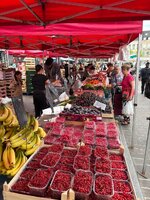
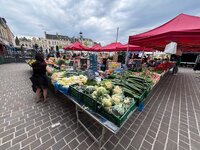
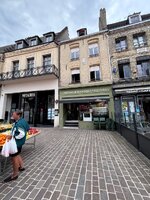
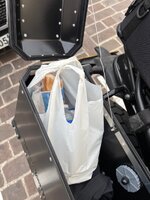
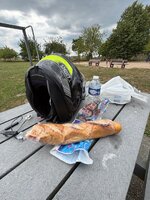
Saturday, as I knew is market day in St Omer, so I had a look around before buying lunch, made to order by the very nice ladies behind the counter:

IMG_0242.jpegIMG_0243.jpegIMG_0244.jpegIMG_0245.jpegIMG_0246.jpegIMG_0247.jpeg

Lunch bought, it was off on an excellent cross country route to Cassel. For anyone who thinks that there are no good roads around north east France, they need to give it a go. No main (N roads) as such, just mile after mile of country D roads, some quite small but all in pretty good condition. It gets quite hilly in parts, through woods and across rolling countryside. The little Himalayan is in its element, but I’d be happy to ride it on my 1600 or a FireBlade, let alone a GS Adventure, with a capital A.
 
Last edited:
Pictures have now been added to post #33

Day two, continued….

I arrived in Cassel for a coffee at around 11:30, about three hours after I left St Omer; I told you it definitely wasn’t direct! The weather has been kind to me, with just a few spots of rain first thing, scarcely enoighh to wet the road. I did though take the precaution of bringing my waterproof over-jacket and trousers, not needed…. so far.

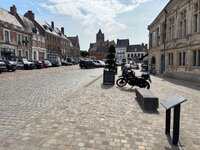
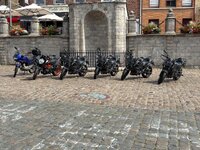
The little car parking area opposite tge cafe’s was full, so I parked a little down the road, opposite where the local motorcycle training school had parked their bikes:

IMG_0250.jpegIMG_0251.jpeg

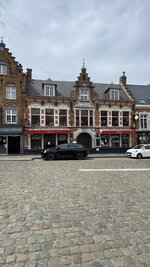
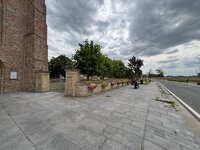
Coffee done, I wandered back to my bike, but paused to take a picture of the former hotel, where General Gort thrashed out the plans for ‘Operation Dynamo’, culminating in the successful rescue of thousands of Allied soldiers from the beach at Dunkirk. Cassel played a vital role in that, holding up the German advance, the town being smashed to oblivion in the process. Yiu can see from the infilled and mismatched buildings, that most of tge town dates from the 50’s, there was nothing left of it.
IMG_4636.jpeg
 
Last edited:
My route then curved away towards Belgium, the land becoming as flat as Lincolnshire, very different to the rolling hills and wooded scenery before Cassel.
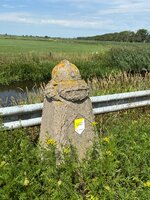
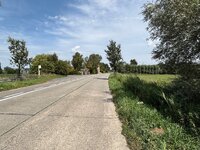
One of the joys of riding along the D roads, all be it flat, is that you can get a chance to spot things. I saw this old stone marker post and recognised it as a point that, in World War One was of some significance, so I stopped:

IMG_0262.jpeg

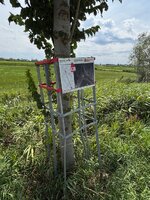
I then noticed that the local ‘remembrance association’ had planted two trees, one either side of tge road, a few yards from the helmet’d stone. I went to look at those, too:

IMG_0268.jpeg
IMG_0266.jpegIMG_0267.jpeg

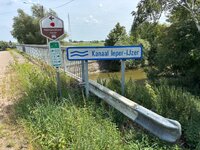
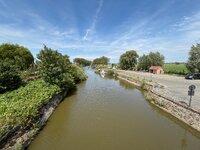
I then vaguely remembered that the canal (just a few yards away) had seen viscous fighting early in the Great War:

IMG_0269.jpegIMG_0270.jpeg

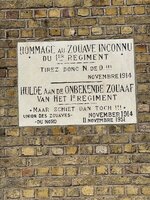
In addition, there was a memorial plaque to the ‘Unknown Zouave soldier’, who woukd have been born and raised in what was then French Africa.

IMG_0261.jpeg

As usual, Google had the story behind the initiative:


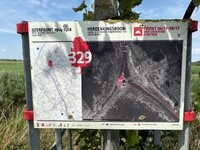
Also on the ‘Niemansland Route’, whose sign I’d also spotted:


I think I’ll ride along it at some point, hopefully.
 
Last edited:
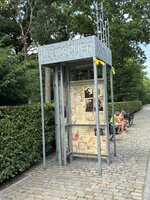
Riding along, I spotted a strange structure, clearly quite modern. I guessed (correctly, for once) that it must relate to the German army in WW1, so I stopped to look:

IMG_0277.jpeg

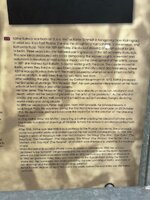
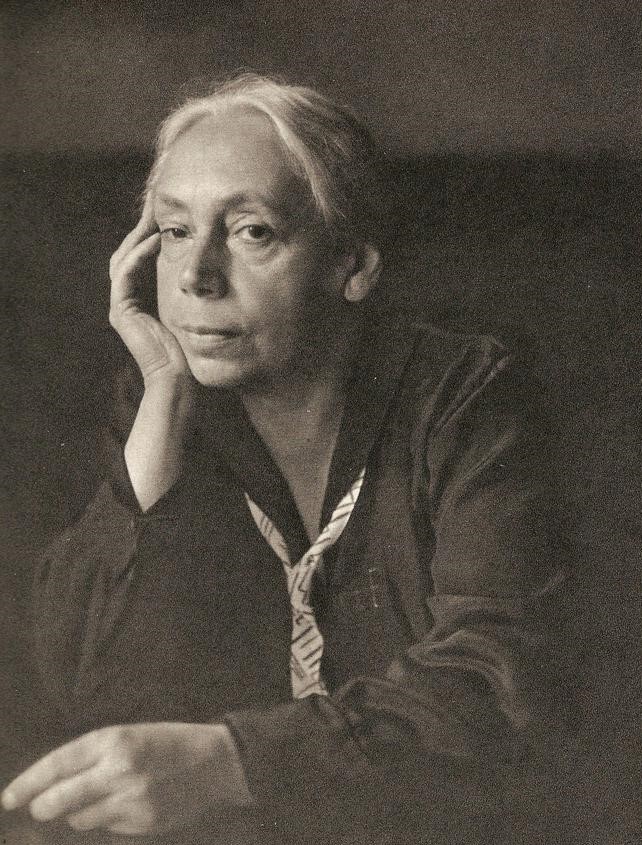
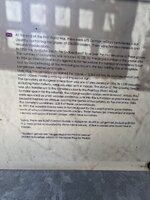
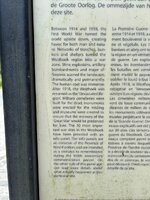
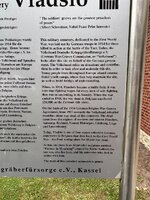
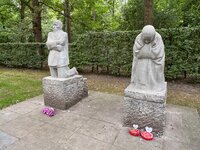
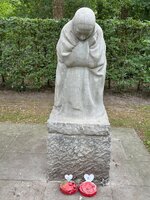
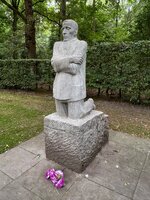
It was indeed a German WW1 cemetery, the structure and the information inside the site giving an interesting history. Not least, the story of the German artist / sculptress Käthe Kollwitz, who I’d never heard of. A sad tale:

IMG_0278.jpeg


IMG_0276.jpegIMG_0274.jpeg

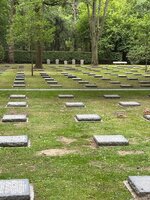
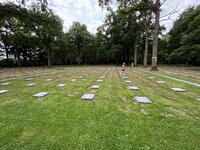
The cemetery itself is also interesting:

IMG_0282.jpeg

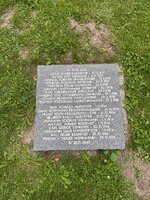
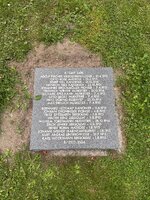
The single grave stones, arranged in the fashion of all German wartime cemeteries, each mark the final resting place of perhaps 10 comrades:

IMG_0291.jpeg
IMG_0285.jpeg

IMG_0283.jpegIMG_0284.jpeg

You can do the maths on how many lie here.

The sculptures, referred to in the picture above are excellent. Clearly Kallwitz had some considerable talent, an outlet no doubt for her misery:

IMG_0288.jpegIMG_0289.jpeg
IMG_0290.jpeg
 
Last edited:
War cemeteries, memorials and grieving mothers behind me, I carried on through the flat lands of Belgium, circling around behind Ypres, to stop for (by now) a late lunch at around 15:00:

IMG_0294.jpegIMG_0295.jpeg

Before completing the figure-of-eight 200 miles back at St Omer.

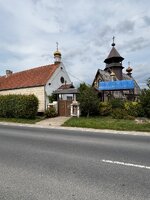
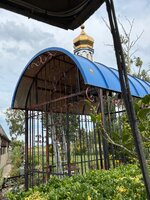
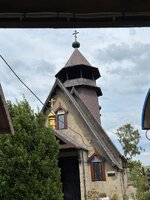
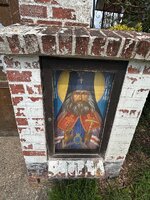
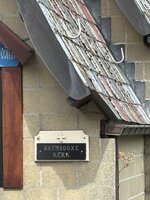
But, one oddity did catch my eye, close the Belgian / French border, which I’d crossed back over without realising. What I saw would not have looked out of place in the sunflower and wheat fields of Ukraine, so I stopped to look:

IMG_0297.jpegIMG_0300.jpegIMG_0299.jpegIMG_0298.jpegIMG_0301.jpegIMG_0302.jpeg

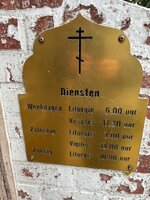
Sadly, the gate was locked or I’d have looked inside to see, I’m sure, all the ‘Smells and bells’ of Orthodoxy.

A good day out!
 
Day three

Up to the coast, or near enough.

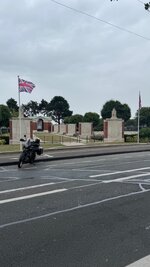
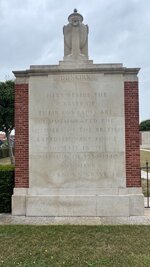
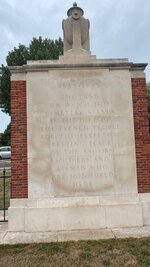
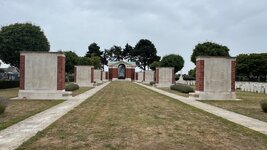
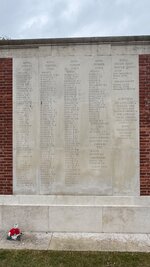
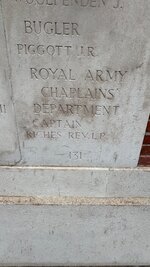
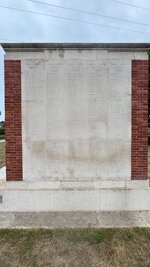
Dunkirk and its cemetery are largely ignored in all the ‘War stuff’, which is rather a pity. A cross-country D roads from St Omer, brought me to it. There are remarkably few grave stones, when compared with some. But, the gravestones only tell of tge resting places of known dead. The memorial tablets, tell a very different tale, as these record the names of the fallen with no known grave. They run into hundreds.

Of course it’s easy to concentrate on the military (fighting) regiments, but the lists of ‘service corps’ troops’ names is sobering. I can only assume that these poor souls died, having been overrun in the Blitzkrieg that engulfed them in 1940:

IMG_4650.jpeg
IMG_4651.jpeg
IMG_4653.jpeg
IMG_4654.jpeg

IMG_4652.jpegIMG_4664.jpegIMG_4665.jpegIMG_4666.jpeg

IMG_4656.jpegIMG_4657.jpegIMG_4658.jpegIMG_4659.jpegIMG_4660.jpeg

The Canadian graves, shown above, are interesting as they come well after the masses from 1940 and the retreat to Dunkirk. These date from August 1942, some two years later. They’ll be from the disastrous Dieppe Raid. I /we will meet the Canadians again, later.
 
Last edited:


Back
Top Bottom