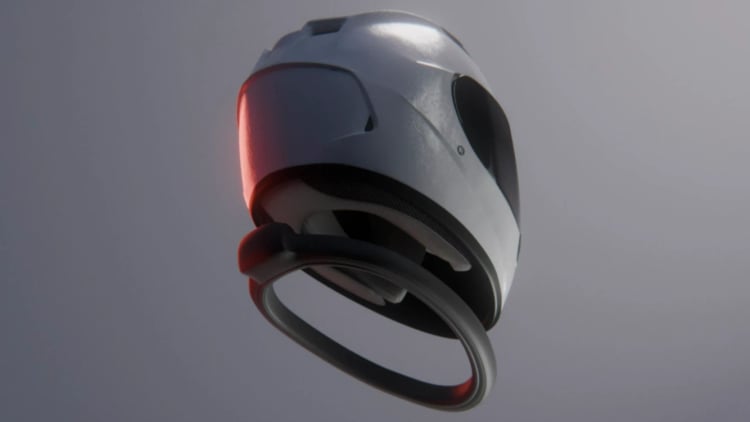
Prototype helmet airbag – looking for rider feedback

Evaldas

Registered user
Joined
Jul 11, 2025
Messages
5
Reaction score
11
Location
Vilnius, Lithuania
Hey everyone,
A small team of us has spent the past year hacking on a helmet-integrated air-inflation liner for neck protection. The aim: fully deploy in < 100 ms when onboard sensors plus ML-based crash patterns scream “unrecoverable.”
Where we’re at
  • Data-collection phase – logging real-world riding hours to prototype the trigger algorithm.
  • Sensor composition & electronics design.
  • Attachment design – working on a universal, flexible mount so the liner fits multiple helmet shells.
What we’d love feedback on
  • Comfort / weight limits you’d realistically tolerate inside a lid.
  • Crash scenarios that defeat current airbag vests (so we can test against them).
  • Test protocols or standards you trust for validating deployment speed & reliability.
Just sanity-checking the concept with real riders. Tear it apart now so we can fix it before tooling.
Thanks for the brain-cycles!
— Evaldas
 
sounds interesting, other than intentionally throwing ourselves off our bikes 🤣 what do you need ?
 
I can see the benefits of having an inflatable liner so that the helmet fits perfectly.
I'd like it if it inflated round the neck to keep wind last out and kept the noise down.
 
I can see the benefits of having an inflatable liner so that the helmet fits perfectly.
I'd like it if it inflated round the neck to keep wind last out and kept the noise down.
There’d be no point having any ventilation in a helmet then?
No ta, I like to have a cooling breeze blowing around my noggin.
 
There’d be no point having any ventilation in a helmet then?
No ta, I like to have a cooling breeze blowing around my noggin.
Of course there would. You'll still have the air vents and can open the visor.
 
Of course there would. You'll still have the air vents and can open the visor.
So how would the air circulate around your head to cool it if you’ve inflated the liner to perfectly fit your head? Or stop the draught coming up past your neck / chins ( as in my case ).
Am I miss-understanding this? Does it only inflate once you’ve crashed?
Either way, I’m out as they say.
 
I presume that you’ve already discounted a collar based airbag? One that you wear with /attached to your jacket?
 
So how would the air circulate around your head to cool it if you’ve inflated the liner to perfectly fit your head? Or stop the draught coming up past your neck / chins ( as in my case ).
Am I miss-understanding this? Does it only inflate once you’ve crashed?
Either way, I’m out as they say.
Hello Udders,

That's right, the airbag would only inflate in case of a crash or fall. We are working on easily attachable rim around the base of full face helmet.

The development of the crash detection would require logging hundreds of hours of riding data. Together with the riding data crash tests are needed to measure the forces a rider would be experiencing in such scenarios.
Currently we are working on the riding data collection together with the rider community.
 
I presume that you’ve already discounted a collar based airbag? One that you wear with /attached to your jacket?
Hey Oldrat,

We aim to make the safety equipment more flexible:
  • If you already own a jacket without neck protection, the neck surrounding airbag would be a relatively small addition.
  • If you were to ride in a non-inflatable jacket, the neck would still be protected.
See concept video for your reference.
 
Hodving (?) tried this for bicycles and I think they recently shut down. However, proof of concept (neck airbag) is there. A friend's brompton dropped into a drain and threw her off: The Hodving worked perfectly. You may want to try contacting them
 
Hodving (?) tried this for bicycles and I think they recently shut down. However, proof of concept (neck airbag) is there. A friend's brompton dropped into a drain and threw her off: The Hodving worked perfectly. You may want to try contacting them
You are right, the technology is there, and I think they were quite reliable. I have heard the community is still active developing the tools to keep the already purchased devices running after the company shut down.
 
Personally, I wouldn't consider one a) because my air vest already inflates to provide a full neck brace in the event of inflation and b) because I wouldn't want any weight added to a helmet. I can though see the merit where someone doesn't want to wear an air vest and hasn't any issues with wearing a heavy lid. If I were in that camp, I think I'd prefer some sort of air collar that provides similar support in the event of inflation leaving the lid to be as light as possible.
 
Personally, I wouldn't consider one a) because my air vest already inflates to provide a full neck brace in the event of inflation and b) because I wouldn't want any weight added to a helmet. I can though see the merit where someone doesn't want to wear an air vest and hasn't any issues with wearing a heavy lid. If I were in that camp, I think I'd prefer some sort of air collar that provides similar support in the event of inflation leaving the lid to be as light as possible.
Thanks for the insights.

I understand the need to keep the load on the neck as low as possible. Could you estimate what would you consider too heavy of an addition to your helmet?

We aim to fit within 150-200 grams. Helmet weight varying from 1200g (2.65 lb) to 1900g (4.19 lb) with the addition would increase by 9.5 - 16%. However, all the additional weight would be positioned at the bottom on the helm slightly lowering the center of mass. See concept image bellow:

image
source: https://itaroblu.com
 
I like this concept, esecially as I often ride in very hot places so an airbag vest/jacket might get in the way of ventilation, plus I have nowhere to store extra cartridges if I set it off. Difficult to know about the extra weight - I wear an Arai, and it's not the lightest lid out there, but I don't really notice that in use. My wife is more concious of helmet weight though.
 
A few ounces is no drama. It's not like we are lugging it about. It's only sitting there.
 
Thanks for the insights.

I understand the need to keep the load on the neck as low as possible. Could you estimate what would you consider too heavy of an addition to your helmet?

We aim to fit within 150-200 grams. Helmet weight varying from 1200g (2.65 lb) to 1900g (4.19 lb) with the addition would increase by 9.5 - 16%. However, all the additional weight would be positioned at the bottom on the helm slightly lowering the center of mass. See concept image bellow:

image
source: https://itaroblu.com
I use a neotech 2 and already consider it too heavy, so wouldn't want any additional mass. My carbon Shark lid is featherweight and I'd happily consider up to 200g so it's very helmet dependant. Added mass adds to rider fatigue over longer trips and may be one of the "human factors" said to affect concentration. It also adds to inertial force on the neck in the event of an accident so again, a light lid could be considered preferable, but it's often a trade off in protection or wind noise, since some weight in heavier lids is down to the better padding and shock absorbing layer. I stick with a neotech only because it's so comfortable and quiet but only if wearing the turtle vest as I have the safeguard of a full neck brace with that. I do like your concept though and it's definitely one to consider if you don't want an air vest. For the growing number of riders adopting air vests or jackets, they'd probably have to be sure that the two systems didn't interact to create additional safety hazards if used together?
 
What are you using as the the inflation system for the bag?, propellant?

How fast does the bag deflate following inflation,
 
I’d consider buying this product.

Safety standards are critical. Would the CE standard for motorcycle airbags be fit for purpose?
 
Thanks for the insights.

I understand the need to keep the load on the neck as low as possible. Could you estimate what would you consider too heavy of an addition to your helmet?

We aim to fit within 150-200 grams. Helmet weight varying from 1200g (2.65 lb) to 1900g (4.19 lb) with the addition would increase by 9.5 - 16%. However, all the additional weight would be positioned at the bottom on the helm slightly lowering the center of mass. See concept image bellow:

image
source: https://itaroblu.com
Please could you send us some more information on this, very interesting concept!


Back
Top Bottom