Small generator

grantmac

Commuting between NL & UK
UKGSer Subscriber
Joined
Feb 7, 2017
Messages
4,114
Reaction score
5,446
Location
The Hague, Holland
Interested in buying a small generator for power in case of short term power outage. Not that’s happens too often but also in case I want something on a camping trip. Nothing really expensive but reasonably compact. Any advice



I used a couple of those previously and they seem to be very good.
I am considering replacing all my solar setup: standalone lipo battery + victron charge controllers, shunt, remote monitor, external inverter, cables, fuses and all that for a medium sized solix, and just hook it up to my existing solar panel.
 
Last edited:
FV3WIIOGU1I4DQL.jpg


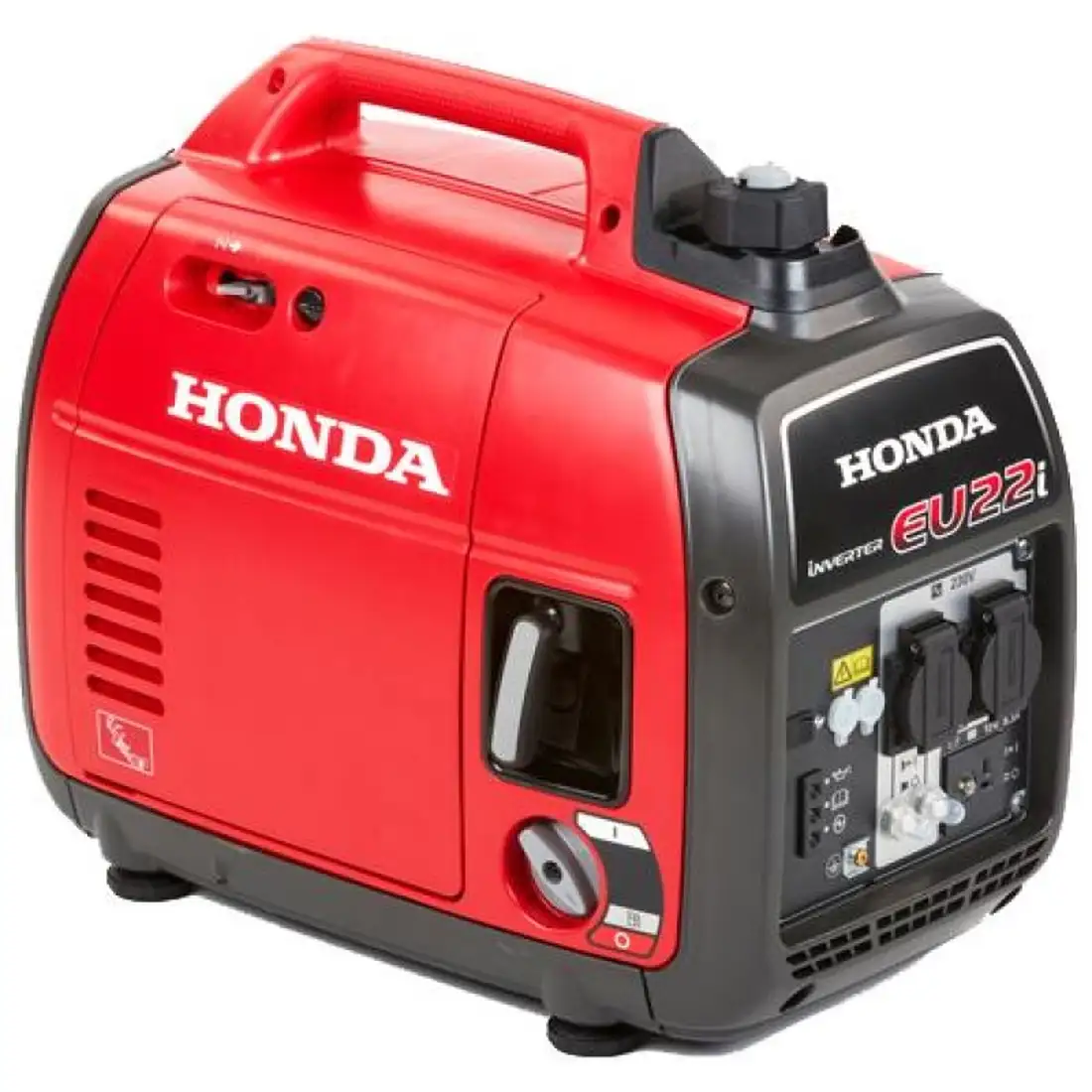
I have a Honda portable generator.

It is fully enclosed, so it runs pretty quiely. Not much larger than a large domestic boxed sewing machine and not a lot heavier. That said, the power (as in domestic mains electricity) really doesn’t go off that often.

You’d arguably do better with a modern ‘super battery’ from day, Anker, as (unlike a noxious generator) you can use it inside. I guess it really does depend on what you want to power and for how long. They are not cheap and they are heavy.
 
Work out exactly what you want it for first. Is it primarily for short term power outage?

If so how are you going to connect it to your domestic mains system and how are you going to connect it up (Quickly) if there is a power outage. Arranging this could cost as much as the generator.

How much power do you need for your house. I have OFCH and no open fires, so for me the Generator has to run the heating Lights , TV, pc/laptop and I can run the electric kettle or the Microwave.....but not at the same time. I can't run my oven. My old generator supplies about 3KVA or about 2.4KW which is adequate for the above. Proper sizing requires adding up the total wattage of all devices you want to run, typically with a 20-30% safety margin.

Also sound level. I have a very old (Sidevalve) Honda G300 powered builders generator that is 30+ years old and makes a hell of a racket 96db LWA at one metre. I had no close neighbours until they built in the field beside me this year........so I may have to review that :D

For something that could be used when camping and serve as a backup generator for a house the minimum you are looking at is probably something like this which can produce 1800w continuously though it weighs 21 kg. But only 67 dB(A) at 7 Meters......so barely audible behind a closed window.


But as a house backup it would be a bit of a pain as it would need replenished with petrol every 4-6 hours.

All that said a backup generator is worth its weight when you need it. This time last year after Storm Eoin my Electricity was off for eight days (my supply is overhead and I'm last on a line) my neighbours tree 200m away came down and took out my supply. I hadn't looked at the old generator for about 15 years and it took me 2.5 days to get it going (its so old it has points ignition) and once I got the flywheel off and cleaned these off it went (after wasting time trying to source another generator which were unobtainable as everyone was in the same boat). So I had it running 5 days until the mains supply was reconnected. Its now sitting in my garage filled with Aspen long life petrol (7.90 a litre) and a message comes up on my phone every month to start it run it for 10mins and check the output from the generator. Lesson learned.

Oh and mine is connected to an 80amp switch on the distribution board and a long fly lead so that I can put it at the Gable of the house where I can't hear it :D
 
I had a macallaster bandq for many years 25+. 2kwh. Did all I needed with the frequent power outages we suffered as new builds quickly overwhelmed the supply to our area. A great €250 investment. It sadly died about 2 years ago. Replacement was a 3kwh draper which does what’s needed when needed. I bought a camping electric kettle which boiles up a pint of water slowly. Also have a 2 burner gas stove. I once had the use of a 7 kWh generator and it makes life much easier as my wife still insists on using the hairdryer. But it would be over kill to have something like that for the very infrequent use it would get. JJH
 
Sorry misunderstood. Generator, not power storage.
But do quick math around how much power you need, as a generator might be an overkill in some cases.
 
Sorry misunderstood. Generator, not power storage.
But do quick math around how much power you need, as a generator might be an overkill in some cases.
I have a VW ID3. Having use of its Battery as a backup would be great. This was a promised development of the model as Vehicle to Home V2H. But when it finally emerged they only supplied hardware to support the 77KWH models not the 58KWH.
 
Just thinking. I know that’s dangerous. It should be possible to create a cheapish backup battery bank using lead acid batteries an ordinary battery charger 12/24 volt and an inverter. Why lead acid? Cheaper. We’re not looking for liteness or power density. This is a static installation. JJH
 
Just thinking. I know that’s dangerous. It should be possible to create a cheapish backup battery bank using lead acid batteries an ordinary battery charger 12/24 volt and an inverter. Why lead acid? Cheaper. We’re not looking for liteness or power density. This is a static installation. JJH
Way back early 1990's I came across a bloke who had installed a Wind Turbine (from the US), before they became a thing and before feed in tariffs. Lithium batteries weren't avaliable either and he had an outbuilding full of old lead acid submarine batteries to store the energy produced. It had to be well ventilated to get rid of the Hydrogen produced during the charging process. I often pass his house on the Craigantlet Hills outside Belfast and his old lattice tower turbine is still in operation. I'm sure he's upgraded from lead acid storage by now.
 
I bought a new Honda EU22i to carry in my motorhome. It’s fantastic. Not the cheapest but well worth it. :thumb2
That's good to know. I'm wondering if needed whether I could get way with the Honda EU22i or have to go for the Honda EU32i which is twice the price. I bought my old G300 engined generator in the late 80's when I was building my house and it can produce 110v (which was handy for things like hired kango hammers) or 240v. I don't need a 110v supply these days. The old generator still works fine and hasn't done a lot of work...........but it is LOUD :D
 
I’ve got a Kipor(Chinese Honda copy) that I used to carry around in my old non solar motorhome, only 1kw but it will run the fridge, microwave and phone/ipad charging, I’ll use my Cadac and refillable lpg bottle from the van for hot water and cooking if needed, can’t recall the last time our power went off.

Al.
 
Way back early 1990's I came across a bloke who had installed a Wind Turbine (from the US), before they became a thing and before feed in tariffs. Lithium batteries weren't avaliable either and he had an outbuilding full of old lead acid submarine batteries to store the energy produced. It had to be well ventilated to get rid of the Hydrogen produced during the charging process. I often pass his house on the Craigantlet Hills outside Belfast and his old lattice tower turbine is still in operation. I'm sure he's upgraded from lead acid storage by now.
But there isn’t any need. Lead acid does a wonderful job and is infinitely recyclable. JJH
 
Marine Batteries are meant to be a really good option... with inverters....

small petrol generates may not have the legs to power lots of stuff... to power a house we've supplied several 5Kva diesel units to the Ukrainian charities...

diesel units have a longer power curve and handle load changes better
 
Way back early 1990's I came across a bloke who had installed a Wind Turbine (from the US), before they became a thing and before feed in tariffs. Lithium batteries weren't avaliable either and he had an outbuilding full of old lead acid submarine batteries to store the energy produced. It had to be well ventilated to get rid of the Hydrogen produced during the charging process. I often pass his house on the Craigantlet Hills outside Belfast and his old lattice tower turbine is still in operation. I'm sure he's upgraded from lead acid storage by now.
I wonder did he have a dc circut? Inverters were much rarer then and I’d imagine a lot more expensive. JJH
 
I wonder did he have a dc circut? Inverters were much rarer then and I’d imagine a lot more expensive. JJH
I’m not sure JJ The outbuilding the batteries were in was about 16ft by 12ft and it was pretty full. He must have had an inverter of some sort as the house was powered by it. He also had a big 1000ltr insulated tank which he used to heat water with excess electricity and it .was used for central heating. The whole system must have cost a bomb. He told me the price of the turbine was £23,000 in about 92/93 and it looks like the ones in the mid west USA with a lattice tower. It was a rare thing at the time.
 
I bought a new Honda EU22i to carry in my motorhome. It’s fantastic. Not the cheapest but well worth it. :thumb2

Mine is the earlier version, but pretty much the same design.

It’s a very good generator for camping and very light household use, not least as its encased design means it runs reasonably quietly. Similarly, it is pretty compact. For example, I use it for running a strip light, power tools and kettle when I’m at my container ‘lock-up’.

We used it at Le Mans for running a strip light, basic (small) fridge, TV and Sky box. I think we ran a small air conditioner unit, off it too. For obvious power output reasons it won’t run an entire house (or indeed the family oven in a kitchen) during a power cut. Not least, you’d probably not want to run it indoors for very long, unless you are very keen on carbon monoxide.

Interested in buying a small generator for power in case of short term power outage. Not that’s happens too often but also in case I want something on a camping trip. Nothing really expensive but reasonably compact. Any advice

Running a generator for a house, is very different to running one on a campsite or for, say. a caravan or modest motorhome. Even a caravan with a microwave, small oven and fridge can be pretty power hungry. That is why so many run their oven, hob and boiler off gas or include a 240 volt / sizeable amperage domestic hook-up. A house is a whole step (or leap) up.

The key question therefore is just how much power do you need for use in a power outage? In short, what do you hope to run, for how long, how do you intend / hope to connect the appliance(s) to the generator and can you run the generator outside?

This very basic guide will give you somewhere to start from:

  • 2,000–3,000 Watts: Suitable for small campervans/trailers for basics (fridge, lights, coffee maker).
  • 4,000 Watts: Sufficient for most medium motorhomes with a single AC unit, microwave, and coffee maker.
  • 5,000–10,000+ Watts: Required for large motorhomes or fifth wheels running multiple ACs and heavy-duty appliances.
  • Inverter Technology: Highly recommended for quieter, fuel-efficient operation that safely powers sensitive electronics.
  • Running vs. Starting Watts: Ensure the generator can handle the higher "starting" surge of appliances like air conditioners
 
Last edited:
We used to use Mase generators on boats. They did some very well made small units which were quiet (acoustically enclosed and well silenced) and portable.
Honda are probably the most widely used though.
 
Thanks all. Not for powering a house but just running a fridge or even small heater. So definately more like a camping version.


Back
Top Bottom