


NLC
Registered user
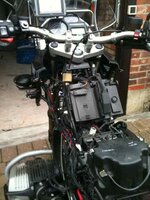
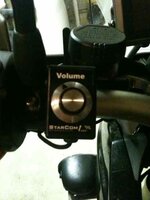
Well had the Starcom system for about 3 months now a quick review for those considering. I ordered the unit with a pro-fit kit as I thought it would be easier and cleaner to have the mounting bracket. It is a cleaner install but what I didn't realize was that there would be a hell of a lot of cable. You can't cut the cable because of the connectors. I initially ran all the excess cable under the body panels but my dealer didn't look too pleased when they have to take the tank off for service and it was very messy. They suggested running it under the tank and I did that today. Added a push to talk button, noise filter and volume control. Having the volume is much easier to turn up and down the volume especially when some Polish bloke is asking for directions in London. I have fitted two of these units now on a GS with a low seat and a high seat. Do your self a favor and check to see if the seat closes as there is more clearance on a low seat than a high seat! I assumed that they would be the same! 
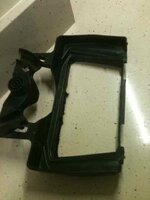
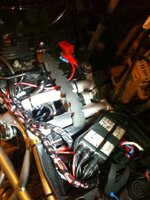
Getting the unit to fit with a Fuzebox and radio in the tool box was a challenge. So here is what I did I took a Dremel and cut out the floor of the tool tray and some of the excess under the rubber seat stopper. I didn't want to put the Starcom on top of the battery because of the risk of water but also the risk of crunching one of the DIN sockets when putting the seat back. I can get a radio, Fuzebox and Starcom all in the tool tray now. I kept the shell of the tool tray as I think you need the support of the rubber stopper to keep the seat from bottoming out.
The only other comm system that I have used was the Scala G4 and that was utter crap.
Starcom Pluses:
- Easy to setup
- Unit is small
Minuses:
- Connectors are very fragile and you have to be ubber careful not to bend the pins which is very easy to do
- When using the push to talk and radio din cords this makes the footprint of the unit much bigger. The rider and pillion cords don't plug directly in the unit and Starcom and they should have used this technique as when the bike vibrates these can come loose. I had to zip tie these into the unit to prevent this from happening.
Getting the unit to fit with a Fuzebox and radio in the tool box was a challenge. So here is what I did I took a Dremel and cut out the floor of the tool tray and some of the excess under the rubber seat stopper. I didn't want to put the Starcom on top of the battery because of the risk of water but also the risk of crunching one of the DIN sockets when putting the seat back. I can get a radio, Fuzebox and Starcom all in the tool tray now. I kept the shell of the tool tray as I think you need the support of the rubber stopper to keep the seat from bottoming out.
The only other comm system that I have used was the Scala G4 and that was utter crap.
Starcom Pluses:
- Easy to setup
- Unit is small
Minuses:
- Connectors are very fragile and you have to be ubber careful not to bend the pins which is very easy to do
- When using the push to talk and radio din cords this makes the footprint of the unit much bigger. The rider and pillion cords don't plug directly in the unit and Starcom and they should have used this technique as when the bike vibrates these can come loose. I had to zip tie these into the unit to prevent this from happening.


 ) No more problems.



