Tyre pressure warning on front wheel

beaver

Well-known member
UKGSer Subscriber
Joined
Oct 8, 2017
Messages
1,841
Reaction score
2
Location
Bradford
So every Friday (i know, its Thursday this week)I use the bike for work as the Mrs takes the car to do the shopping whilst we are in lockdown.
So for the past 4 Fridays, going to work, I don't do over 40mph on the small roads, but the front tyre pressure does not show for the full 15 miles and I end up getting the yellow triangle thing. Back one shows straight away.

When I come home, I can get on the dual carriageway and get up to 70 and it then goes off.
Guess its been getting worst for a period of time.

I'm assuming its a chip in the rim that generates power when moved and its not doing as it should. and I'd also assume the only fix is to get the tyre off and have a new one fitted ? (cast wheels).. the bike is 2017 if that matters.

Or is there something else I can do to fix it.. sure I've seen it commented on before but can't find it using search??..
 
which battery? :rolleyes: if you talking about the device in the rim, I'd of thought they had small coils and generate power when moved? Do they have batteries? :blast
 
Yes, they have batteries.its built into the sensor.Replace and recode.
 
oooh ooooh ooooh I know the answer to this..... It's the battery. Just done it on my bike only a few weeks ago. Changing the battery is easier and far far far cheaper than doing anything else.

Needed are, Soldering iron, stanley knife, correct battery, glue gun. small flat bladed screwdriver. Bob's your uncle.

https://www.ukgser.com/technical/ni...s (All BMW models equipped with RDC) V1.1.pdf

There is a video somewhere, but this is the long winded way of doing a VERY easy job.
 
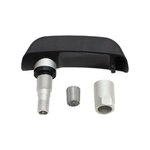
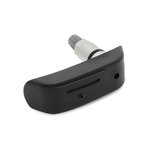
Hi, sorry for hijack... don`t want to open another thread.. My rear sensor is doing the same. Question: will this chinese sensor work?...or i need to buy the genuine ones, what sensors you buy if your sensor go wrong(not battery related). Thanks very much.
 

Attachments

  • s-l1600 (1).jpg
    s-l1600 (1).jpg
    26.3 KB · Views: 622
  • s-l1600.jpg
    s-l1600.jpg
    22.6 KB · Views: 610
Yet another unnecessary gismo. Go back to checking tyre pressures the old fashion way.
Nowadays nobody checks tyre pressures, uses a dipstick for oil, checks bulbs, they all rely on electronics to tell them something is amiss.
How many do the Roadcraft check list before venturing out. Takes all of A couple of minutes.
 
I agree with the above (and thank you all for your reply's)
1/ the bike is in warranty so are they covered?
2/ is there a way to switch them off? I have a GS911 but I've not used it on thid bike yet as I need the square to round cable to connect.

if no and no to the above, I'll be taking the Skudd option and putting a new battery in (unless the China ones do work) :thumb
 
The "knock-off" versions from "offshore" work fine, as do TPMS senders from any year or model of BMW bike that has the same physical configuration as your rims need. That could be the senders with the stem attached for thru the center of the rim in the case of the GS style wire spokes, or the senders that use an aluminum shear bolt and the fill port is built into a spoke.

I've also replaced the coin cell (CR2032 the numbers denote the diameter and thickness in mm) in senders that have either died completely or ones that have started giving dash alerts or fail to check-in for long periods after you first start riding. In my opinion, it's not worth all the DIY work needed to dig out the sealant to access the small battery and deal with making good electrical contact with the new coin cell. A new coin cell is about $4 USD and it takes about 2hrs to do the replacement, and a replacement TPMS sender can be as little as $20 USD. But you do need the GS911 to capture the new ID and then input those numbers in the bike.

Here are some YouTube videos that can help you make a decision on which way you want to do this.

This first one is how to use the GS911 to activate different senders if you are using multiple rims or if you just replace a sender on your current rims.
https://www.youtube.com/watch?v=4HAnT58b2DY

The second video gives options for using various 17in rims on bikes with that size rims. The later part of the video shows the actual mounting of the TPMS sender in a new built up rim and includes lots of models of BMW bikes that use the same sender as are used across the motorcycle lineup.
https://www.youtube.com/watch?v=ZS8eZdVaCGU

This last video shows how to replace the battery in your current TPMS sender.
https://www.youtube.com/watch?v=Mpjz0cDjnK4

Hope this helps if you want to keep your dash mounted safety system working.
 
I agree with the above (and thank you all for your reply's)
1/ the bike is in warranty so are they covered?
2/ is there a way to switch them off? I have a GS911 but I've not used it on thid bike yet as I need the square to round cable to connect.

if no and no to the above, I'll be taking the Skudd option and putting a new battery in (unless the China ones do work) :thumb

I believe someone on here did use the cheap versions in another thread, though some had said they got faulty ones which had to be replaced by the seller so the choice is yours [BMW units run at around £100 a pop]
 
The "knock-off" versions from "offshore" work fine, as do TPMS senders from any year or model of BMW bike that has the same physical configuration as your rims need. That could be the senders with the stem attached for thru the center of the rim in the case of the GS style wire spokes, or the senders that use an aluminum shear bolt and the fill port is built into a spoke.

I've also replaced the coin cell (CR2032 the numbers denote the diameter and thickness in mm) in senders that have either died completely or ones that have started giving dash alerts or fail to check-in for long periods after you first start riding. In my opinion, it's not worth all the DIY work needed to dig out the sealant to access the small battery and deal with making good electrical contact with the new coin cell. A new coin cell is about $4 USD and it takes about 2hrs to do the replacement, and a replacement TPMS sender can be as little as $20 USD. But you do need the GS911 to capture the new ID and then input those numbers in the bike.

Here are some YouTube videos that can help you make a decision on which way you want to do this.

This first one is how to use the GS911 to activate different senders if you are using multiple rims or if you just replace a sender on your current rims.
https://www.youtube.com/watch?v=4HAnT58b2DY

The second video gives options for using various 17in rims on bikes with that size rims. The later part of the video shows the actual mounting of the TPMS sender in a new built up rim and includes lots of models of BMW bikes that use the same sender as are used across the motorcycle lineup.
https://www.youtube.com/watch?v=ZS8eZdVaCGU

This last video shows how to replace the battery in your current TPMS sender.
https://www.youtube.com/watch?v=Mpjz0cDjnK4

Hope this helps if you want to keep your dash mounted safety system working.

Many thanks for your very comprehensive reply... I will have a look and chose which way to go.
I do think fitting batterys here is a poor call, they could use a coil device and maybe a cap to retain the power when stoped as I'm sure the power reqired to dive these things is minimal.
Better get the lead of the GS911 then... :)

I may have a go at doing the battery having watch the vid. I did once manage to repair a Mercruser ECU that was fully potted so this should be easy.. Guess you can also wake up the unit by rotating the wheel if fitting a new unit as I don't have a wake up gizmo (wonder what RPM it needs)... okay, will have a look. :thumb
 
The bike can learn/store only 2 independent TPMS sensors ID's per wheel location.

I reference this only briefly in the video, but better explain that more here.
The OEM sensors occupy 1 position each in the bikes software for the front and rear. If you ever mounted a different set of tires, in either position, the bike has a blank/unused position for an additional TPMS sensor ID.
When/if you were to switch back to the first set of rims, the bike would be able to pick them up as soon as they meet the requirement of something like 300 revolutions when first riding.

If you've used/filled in both lines of sensor ID numbers for either or both rim positions, then you will need to go thru the steps in the video to replace either existing sensor ID with a new ID.
This only becomes an issue if you have replaced a given front or rear sensor that would introduce a third unique sensor ID. That's where using my GS911 comes into play.

I rode about 41k miles last year on my '16RT, and have 4 complete sets of rims/rotors/tires all built up so I can match remaining tread depth with my planned trips. That's the reason I needed to master the TPMS sensor ID issues. I do all my own maintenance and start the riding season with materials and consumables for my entire season.
Call it overkill, call it OCD, but it may all be for naught now that I'm still in a locked down US state and have not turned a wheel on my bike this year...and may not!

Let me know if I can help with anything else thru PM.
 
The bike can learn/store only 2 independent TPMS sensors ID's per wheel location.

I reference this only briefly in the video, but better explain that more here.
The OEM sensors occupy 1 position each in the bikes software for the front and rear. If you ever mounted a different set of tires, in either position, the bike has a blank/unused position for an additional TPMS sensor ID.
When/if you were to switch back to the first set of rims, the bike would be able to pick them up as soon as they meet the requirement of something like 300 revolutions when first riding.

If you've used/filled in both lines of sensor ID numbers for either or both rim positions, then you will need to go thru the steps in the video to replace either existing sensor ID with a new ID.
This only becomes an issue if you have replaced a given front or rear sensor that would introduce a third unique sensor ID. That's where using my GS911 comes into play.

I rode about 41k miles last year on my '16RT, and have 4 complete sets of rims/rotors/tires all built up so I can match remaining tread depth with my planned trips. That's the reason I needed to master the TPMS sensor ID issues. I do all my own maintenance and start the riding season with materials and consumables for my entire season.
Call it overkill, call it OCD, but it may all be for naught now that I'm still in a locked down US state and have not turned a wheel on my bike this year...and may not!

Let me know if I can help with anything else thru PM.

No, Thats great. I fully understand the process now.. many thanks. We too are still in lockdown but I have been using the bike once a week as I'm a key worker (engineering making Flexo machines for DuPont amongst many). We have a site in Trenton NJ and they are working also but on shifts. It does appear okay by them but I know NY has it bad... Just can't wait to get back in the Dales on a Sunday morning!!

When I bought my bike I negotiated 3 years warranty and 2 years service so its a bit like a rest for me right now, but I usualy do all my service work as well, so have watched your vid on making the cam chain tensioner etc, real useful info and has saved me a few $ for sure.

I was going to change my bevel box oil today, but somehow things didn't work out that way?..

Thanks again for the info :thumb:thumb:thumb
 
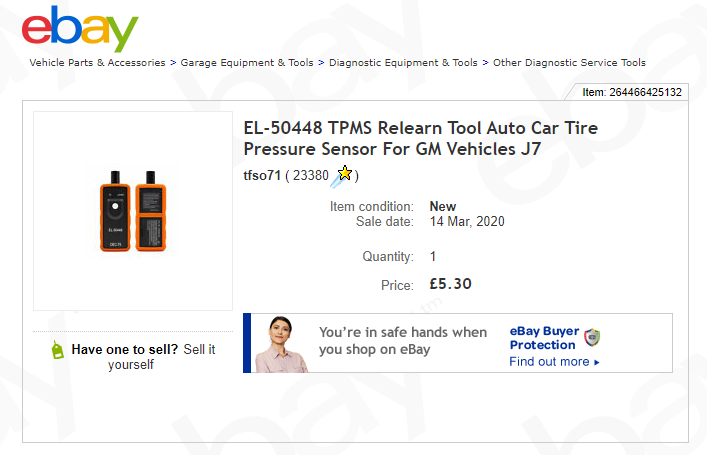
You might want one of these to wake up the sensor if you fit a new one and do the recode yourself

f19232270058906352ffcdf534e26b35.png
 
I agree with the above (and thank you all for your reply's)
1/ the bike is in warranty so are they covered?
2/ is there a way to switch them off? I have a GS911 but I've not used it on thid bike yet as I need the square to round cable to connect.

if no and no to the above, I'll be taking the Skudd option and putting a new battery in (unless the China ones do work) :thumb

You still have to program the Chinese ones in, I got one then used it as spare just in case I cocked up, but it is REALLY easy easy to do.
 
Yet another unnecessary gismo. Go back to checking tyre pressures the old fashion way.
Nowadays nobody checks tyre pressures, uses a dipstick for oil, checks bulbs, they all rely on electronics to tell them something is amiss.
How many do the Roadcraft check list before venturing out. Takes all of A couple of minutes.

A bit difficult to do at 70 plus mph on a motorway! My tyre pressure monitors have alerted me to slow punctures on three occasions over the past few years. I consider them to be an excellent feature to have.
 
You still have to program the Chinese ones in, I got one then used it as spare just in case I cocked up, but it is REALLY easy easy to do.

Thanks Andi will look at them

Mine are cast wheels, but most on e-bay have the valve in.. have you seen ant without.. I do need to spend a bit of time and have a good look TBH...
 
I believe you can by riding the bike to get them activated but that didnt work for me hence the purchase of the unit.
 
Can you do this with the tyre on and wheel in? in as much as mark where the tyre is, let the tyre down and off of the bead one side... then push it over localy to get to the unit.
Replace the unit, make sure the tyre has not moved, re-inflate, should be balanced? I've not got the best kit for taking tyres off so would help if you can....
 
Hi beaver,
If you want to gain access to the TPMS sender while leaving the tire on, it is possible, but almost as much work as just removing the tire completely. Marking the tire/rim location will probably keep your existing balance OK for riding again, but if you only break one side of the bead loose, it won't move while the second bead is set on the rim.

To gain enough tire movement at the TPMS side of the bead, you must break the bead all the way around on whatever side you decide to work from. The extra space for working near the TPMS comes from the bead going into the "drop center" on the opposite side of the rim.

You may need to use "C" type clamps to smash the tire, bead to bead, both on the TPMS side and on the side opposite. If your tires have any steel belts/plies, I'd try not to do this...they are flexible for sure, but putting them in a complete kink could result in an unusual condition when you ride...once again, I'd recommend just taking your tire to someone with the proper equipment/tools to remove the tire. You can then work on the bare rim, and let them remount your tire.


Back
Top Bottom