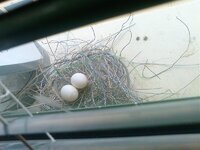
To the gent who said it is a Dove, not a Pigeon, how do you tell one from t'other?
Bin
Hmmm,
This got me thinking, and I've gone to d'internet for an answer....and there's no easy answer, and really no features that can be used to separate them other than those based on their ecology and diet. However, there is no true scientific technical difference between 'pigeons' and 'doves'. Generally, the smaller pigeons often get called 'doves', but this is fairly inconsistent. What we see in towns and squares are called 'pigeons' but are decendents of Rock Dove's........

That said, the smaller longer-tailed species generally have the name "Dove" and plumper, and drabber species, "Pigeon". Like a lot of things, its a case of getting to know the proper name for each one, rather than trying to find a simple 'key' to identifying each one.
There are those pigeons that feed on seeds, and those that feed on fruit. Those species that feed on seeds tend to live in more open, drier country, and these include some of the better known and more commonly seen pigeons. However, tropical rainforest has many of the second type. These fruit eaters tend to that live in these wetter forests, are lesser known, but more diverse. They tend to live high in the canopy, are often colourful, and difficult to spot.
Confused.........................I'm not surprised!