What damping settings do you normally ride in?

Scarfall

Member
UKGSer Subscriber
Joined
Apr 4, 2020
Messages
52
Reaction score
1
Location
London
Hi all,

I have a 2015 R1200GS that I bought when she had 57k miles. I mostly ride on pavement in London, UK, with half of my commute being on highways.

I ride with '1 helmet' preload setting, as I weigh 180lbs, and normally in Road mode.

Any kind of road bump is transmitted through the pegs and handlebars a lot more on this bike than in any other bike I have ever had, even speed camera markings or cat's eyes send vibrations up the bike. My previous bike was a F800GS.

Riding in Soft damping makes it a bit better, but the bike becomes a bit less responsive in turns. The difference in bump absorption between Soft, Normal, and Hard feels minimal, hardly perceptible. On motorways at 70mph, I feel no difference between them.

It seems the bike is over damped, could my shocks be a bit shot?

I ride in the following configurations, this is how it feels most stable to me, but surely 'Normal' should feel better?

Rain mode, Soft.
Road mode, Soft.
Dynamic mode, Normal or Hard if the roads are VERY smooth.

I was wondering what you all have your ESA damping settings on the pavement, around town and on the motorway.

Thanks!
 
Dynamic mode almost all the time. Road setting on main roads and soft around town more often than not.

Yes, I suspect your shocks are shot, particularly at that sort of mileage.
 
Hi all,

I have a 2015 R1200GS that I bought when she had 57k miles. I mostly ride on pavement in London, UK, with half of my commute being on highways.

I ride with '1 helmet' preload setting, as I weigh 180lbs, and normally in Road mode.

Any kind of road bump is transmitted through the pegs and handlebars a lot more on this bike than in any other bike I have ever had, even speed camera markings or cat's eyes send vibrations up the bike. My previous bike was a F800GS.

Riding in Soft damping makes it a bit better, but the bike becomes a bit less responsive in turns. The difference in bump absorption between Soft, Normal, and Hard feels minimal, hardly perceptible. On motorways at 70mph, I feel no difference between them.

It seems the bike is over damped, could my shocks be a bit shot?

I ride in the following configurations, this is how it feels most stable to me, but surely 'Normal' should feel better?

Rain mode, Soft.
Road mode, Soft.
Dynamic mode, Normal or Hard if the roads are VERY smooth.

I was wondering what you all have your ESA damping settings on the pavement, around town and on the motorway.

Thanks!

My 2014 gsa was like that from new and eveb after two replacement front and two replacement rear shocks in 3 years and under 13,000 miles plus many ecu updates.

Only way it ever gave a smooth compliant ride was in enduro mode but it disables cruise control
 
I was wondering what you all have your ESA damping settings on the pavement, around town and on the motorway.

Thanks!

Stay off the pavement, it'll get you in bother.
 
What damping setting do you have when you ride in Dynamic mode?
 
Hi all,

I have a 2015 R1200GS that I bought when she had 57k miles. I mostly ride on pavement in London, UK, with half of my commute being on highways.

I ride with '1 helmet' preload setting, as I weigh 180lbs, and normally in Road mode.

Any kind of road bump is transmitted through the pegs and handlebars a lot more on this bike than in any other bike I have ever had, even speed camera markings or cat's eyes send vibrations up the bike. My previous bike was a F800GS.

Riding in Soft damping makes it a bit better, but the bike becomes a bit less responsive in turns. The difference in bump absorption between Soft, Normal, and Hard feels minimal, hardly perceptible. On motorways at 70mph, I feel no difference between them.

It seems the bike is over damped, could my shocks be a bit shot?

I ride in the following configurations, this is how it feels most stable to me, but surely 'Normal' should feel better?

Rain mode, Soft.
Road mode, Soft.
Dynamic mode, Normal or Hard if the roads are VERY smooth.

I was wondering what you all have your ESA damping settings on the pavement, around town and on the motorway.

Thanks!
From my experience shocks should be serviced at 30 K
After that mileage and time buildup in the oil causes tons of internal friction.
I sometimes struggle to remove the piston from the shock body.
Freshly services shock 35N of seal drag 30\40k mils 120 -150N of seal drag.
So before the shaft starts moving it takes 15KG more fore than it should plus Nitrogen pressure another 25Kg and it starts adding up!

So what was described here could be just internal friction.

Corroded spherical bearings worn out internal parts all create unwanted friction.
Simple maintenance can solve a lot of problems.
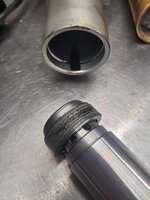
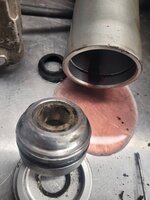
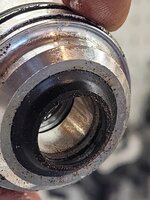
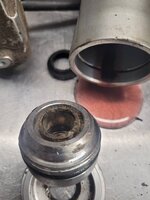
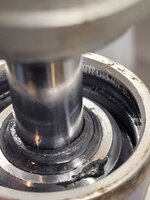
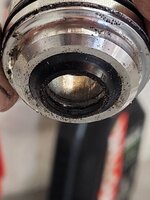
On the pictures below 40K mils GSA shock
Tons of black deposits in oil worn out guide bush (they only last 20K after that is only metal left)20220104_135333.jpg20220104_135743.jpg20211222_113517.jpg20211223_100929.jpg20211222_104214.jpg

Sent from my SM-G780G using Tapatalk
 
Do as I and many others on here have done. Remove your suspension units and send them to the man in post #7.

Al.
 
You don’t fully appreciate how much your suspension has degraded until you get the shocks serviced/repaired and take that first ride:

My bike needed a weeping seal fixing on the rear ESA shock. Doing so then revealed how knackered the front shock also was. Getting both sorted was a revelation.

It’s getting close to shock srvice time again now and although my bike rides nicely, it will be way better once serviced.
 
My 2014 gsa was like that from new and eveb after two replacement front and two replacement rear shocks in 3 years and under 13,000 miles plus many ecu updates.

Only way it ever gave a smooth compliant ride was in enduro mode but it disables cruise control

crikey - be careful telling the truth you'll get branded as subversive, and get snidey remarks from fanboys with no brains
 
From my experience shocks should be serviced at 30 K
After that mileage and time buildup in the oil causes tons of internal friction.
I sometimes struggle to remove the piston from the shock body.
Freshly services shock 35N of seal drag 30\40k mils 120 -150N of seal drag.
So before the shaft starts moving it takes 15KG more fore than it should plus Nitrogen pressure another 25Kg and it starts adding up!

So what was described here could be just internal friction.

Corroded spherical bearings worn out internal parts all create unwanted friction.
Simple maintenance can solve a lot of problems.
On the pictures below 40K mils GSA shock
Tons of black deposits in oil worn out guide bush (they only last 20K after that is only metal left)View attachment 520896View attachment 520897View attachment 520898View attachment 520899View attachment 520902

Sent from my SM-G780G using Tapatalk

Interesting. Is this something my local independent mechanic or BMW dealership can do, or is it done by a suspension specialist? Is it expensive?
 
Interesting. Is this something my local independent mechanic or BMW dealership can do, or is it done by a suspension specialist? Is it expensive?

No
Yes
No
Done by the man who's pictures you are looking at.
 
Hi Scarfall, I have the same year and model bike, and I always ran it in Dynamic with hard setting, but very occasionally in Road with medium setting. I swapped the stock shocks at 20,000 miles for Ohlin shocks, bought from a very nice man on here.

At 57,000 miles your shocks will be way past their best. Denz0 from post #7 is a specialist at refurbishing shocks, I doubt if any independent will have the equipment and know how to fully rebuild your shocks, as good as they may be on the mechanical side of your bike. If it was me I would contact Denz0 and have a chat.
 
Interesting. Is this something my local independent mechanic or BMW dealership can do, or is it done by a suspension specialist? Is it expensive?
Local dealer can only plug the diagnostic computer tell you that everything is okay, looks normal and they don't see any problem.
They will be happy to supply new shocks. Nobody will guarantee if that will solve your problem.
Yes is done by me and cost about 20℅ of what new OEM shocks will cost.
I can answer any of your questions you can PM at any time.

Dyno data from my daily research clearly shows the numbers.
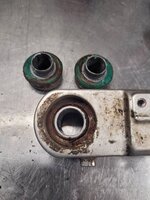
Picture of the OEM sealhead at 40K mils
Scraper stopped performing a long time ago
There is no PTFE coating left on the bush and that creates unwanted friction. 20220104_135736.jpg20211227_105144.jpg20211222_104225.jpg

Sent from my SM-G780G using Tapatalk
 
Scarfall, You would need to become a subscriber on the forum to send and receive private messages. It’s £15 a year and you will have full access to the site. It’s well worth it.
 
In addition to Denzo’s fine and highly recommended work, take a proper look at your bike and make sure everything is correct. 57k is substantial mileage so I would be pleasantly surprised if you only had a pair of worn shocks.

Do any and all normal bike maintenance and checks (even if not in the various BMW maintenance schedules)… inspect and regrease the swingarm bearings, check the front wishbone bearings, check the headset bearings, change the fork oil / bushings / seals… all the usual stuff. Any moving part on any vehicle has a finite working life and should be inspected.

Obviously check the wheel rims are true and properly round, tyres fitted correctly and correctly balanced. You’d be amazed how bad the ride quality can get if a few balance weights have flown off.

Also in my experience rattling or bouncy bits on the chassis confuses the ESA computer and can cause it to overcompensate, giving a really harsh ride. My 2013 bike had weak centre stand springs, so Tieing up and eventually removing the centre stand made a substantial difference to my ride quality. Worn driveshaft U-joints also cause a vibration that upsets the ESA, so remove and inspect the shaft (only a 20 minute job)

Cleaning both esa sensors and experimenting with tyre pressures a few psi lower than 36/42 won’t cause any harm either.

For comparison, at 32k miles my 2013 LC bike got:
- new front wheel bearings
- new drive shaft (notch bearings in the U joint)
- new shaft rubber boot (a small tear in the old one probably caused water to leak in and trash the shaft)
- new fork oil and seals
- new brake disks (all were at the wear limit and the rear disk was slightly warped)
- all open bearings cleaned and regressed, all sealed bearings inspected
- all frame bolts loosened and retorqued to spec (bike had been dropped fully loaded on a recent trip)
It was a far smoother bike after all the above was done, and it only took a couple of unhurried weekend’s the garage to do.


Back
Top Bottom