What kit do I need?

JohnnyBoxer

Well-known member
UKGSer Subscriber
Joined
Jan 3, 2002
Messages
51,451
Reaction score
9,114
Location
North Yorkshire
What’s worth packing in your backpack?
Essentials

=====

I have started you a fresh thread.

Richard
 
Last edited by a moderator:

What’s worth packing in your backpack?
Essentials
Depends on the length of walk really.

Waterproofs, small packed down jacket, food, water, spare socks, small first aid pack including an emergency blanket, powerbank. Hanging round neck would be a compass and map (old style)

I generally pack different depending where I'm going.
 
Last edited by a moderator:
I do a fair bit of walking in the Isle of Skye. These days I have a Garmin 66i GPS and InReach device as there's frequently no mobile coverage. I'll typically have a route set up in the Garmin, and a map & compass for backup, and my phone with OS Maps and WalkHighlands for backup backup. And a small battery charger pack that will charge my phone or the GPS twice.

Even when the weather is good, I'll always have a pair of waterproof overtrousers, an insulated jacket and a waterproof shell in my backpack, along with some tasty ham, cheese and pickle rolls. And a survival bag thing, water (though plenty falls from the sky), and sugary things.
 
I always buy the best kit I can afford, used to do that even when I was young and didn't have a lot of cash, would rather buy decent kit than go out for beers.

Big fan of Paramo waterproofs and of course my Bufflo mountain shirt. Bit of a serial pack buyer, think I have 5 daypacks. Current favourite brand is Osprey.
 
As Casbar says...buy quality (and most stuff will be perfect for lightweight motorbike packing...quick dry, lightweight trousers and shorts, merino t shirt etc )
 
I'd add a waterproof peaked baseball cap (I use a deerhunter one) as when raining it helps keep the hood from coming too low when you sinch it up in rain and when sunny it keeps the sun out of the eyes. If going for a few days or longer hike, a small water purifier filter is a great bit of kit to have. Stop at any stream and top up your water. These days they are light, very effective and pump style ones can be decanted into any empty light plastic container. I bank on at least carrying one litre per 10 miles in milder weather and two litres in warmer weather. Don't under estimate the need to stay properly hydrated...most people simply don't drink enough on long hilly walks. Carry a few puritabs too. If you want a dedicated water carrier, the lightweight aluminium ones can take a bashing.

If camping, any budget (I recommend OEX brand which is Go Outdoors own brand) ultralight jet stove and small gas cannister. They stay lit in a howling gale and can bring water to the boil surprisingly quickly.

For several days on a trail, or even longer periods, it's not worth taking much food if you can plan stops to buy the odd meal or stock up. I'd be carrying a couple of high energy (typically 80 KCal) bagged meals. They're quite good these days, pack up into a small space and avoid the need to carry plates as you just pour in hot water to the mark on the bag, stir and eat out of the bag. That and a few energy bars. First aid: I always carry a compact knee and ankle brace, as I've previously sprained an ankle and done a knee in, and these made the difference between finishing the walk and calling for help. I was able to walk several miles after popping a few pain killers so always take those just in case. A few self adhesive padded would dressings, some antiseptic wipes, some germolene, anti-chaff stick for longer walks (a bit like a compact deodorant stick that really does make any chaffing bearable) a few blister dressings and a few Piriteze tabs an some painkillers. It all packs into a very compact zipped bag. Take a squished up bin bag (small size) to put washing in until you can sort it later.

For camps, I really recommend a decent lightweight sleeping pad.....always get the wider one for comfort. these pack tiny, are ultra light (maybee 500g?) and seem very fragile and thin but they take a lot of stick and are way more comfortable than my old and heavier self inflating mattress. They typically have decent R values too (a measure of thermal efficiency for insulating against cold). I wont wear waterproof hiking trousers. I much prefer lighter polycotton ones why are quick drying or for winter, a heavier pair of Rab ones with elasticine which allows them to be stretchy. Both are DWR treated and will withstand a shower or two. if it chucks it down, I carry a lithweight cheap pair of over trousers.

Nothing worse than wet feet, so I religiously only use light goretex textile boots these days. My old Alterbergs were totally waterproof and I kept them liberally cleaned with Ledergris to maintain them but as I've previously mentioned on other threads, I just find leather boots too warm in summer and too fatiguing on loner hikes.

My only luxury item I guess is a compact high quality pair of Bins. In my case some compact Swaro 8 x 25's which are fantastic. I use those occasionally to spot where the path goes in the distance and for the odd bit of wildlife.

My total pack weight, including carrying a Durston X mid tent, comes in at well under 15Kg, including all this kit and spare clothing.
 
I'd add a waterproof peaked baseball cap (I use a deerhunter one) as when raining it helps keep the hood from coming too low when you sinch it up in rain and when sunny it keeps the sun out of the eyes.
I wear a cowboy hat for similar reasons, the peak stops you getting water on your face or down the back of your neck.
And sun out of eyes the same.
If going for a few days or longer hike, a small water purifier filter is a great bit of kit to have. Stop at any stream and top up your water. These days they are light, very effective
Agreed.
if you use a water bladder in yoru backpack this is great Amazon
For several days on a trail, or even longer periods, it's not worth taking much food if you can plan stops to buy the odd meal or stock up. I'd be carrying a couple of high energy (typically 80 KCal) bagged meals. They're quite good these days, pack up into a small space and avoid the need to carry plates as you just pour in hot water to the mark on the bag, stir and eat out of the bag. That and a few energy bars.
I carry cereal bars very light, tasty and keep you going.
Military food ration packs are good too, but as you say carry them but eat from shops if you can and keep these for stretches of a walk you see nothing.
First aid: I always carry a compact knee and ankle brace, as I've previously sprained an ankle and done a knee in, and these made the difference between finishing the walk and calling for help. I was able to walk several miles after popping a few pain killers so always take those just in case. A few self adhesive padded would dressings, some antiseptic wipes, some germolene, anti-chaff stick for longer walks (a bit like a compact deodorant stick that really does make any chaffing bearable) a few blister dressings and a few Piriteze tabs an some painkillers. It all packs into a very compact zipped bag. Take a squished up bin bag (small size) to put washing in until you can sort it later.
great tip
I wont wear waterproof hiking trousers. I much prefer lighter polycotton ones why are quick drying or for winter, a heavier pair of Rab ones with elasticine which allows them to be stretchy. Both are DWR treated and will withstand a shower or two. if it chucks it down, I carry a lithweight cheap pair of over trousers.
I have Berghaus goretex overcoat and trousers along with a pack away feather down jacket i carry.
I wear baggy shorts and quick drying t-shirt and only wear what i pack if needed.
Nothing worse than wet feet, so I religiously only use light goretex textile boots these days. My old Alterbergs were totally waterproof and I kept them liberally cleaned with Ledergris to maintain them but as I've previously mentioned on other threads, I just find leather boots too warm in summer and too fatiguing on loner hikes.
I wear Sealskinz socks, best thing ive discovered while hiking ever!
Wooly but totally waterproof socks, you can stand in water with just sock on and you stay dry! amazing.
They wick away sweat too so stop blisters.
My only luxury item I guess is a compact high quality pair of Bins. In my case some compact Swaro 8 x 25's which are fantastic. I use those occasionally to spot where the path goes in the distance and for the odd bit of wildlife.
I used to carry a Nikon camera with 2 lenses but soon got sick of the added weight, even though it took great photos.
I just use my phone now but the zoom is crap quality.
compact monoculars are good for viewing.
 
I wear a cowboy hat for similar reasons, the peak stops you getting water on your face or down the back of your neck.
And sun out of eyes the same.
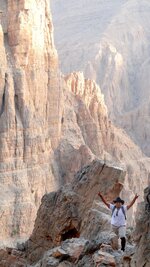
This was you wasn’t it.....?

59B12191-3553-41F2-A588-1C32DB691F1B.jpeg
 
I see so many people get headaches because they’re just not hydrating enough. A little bottle stuffed in their rucksack is a pain to get at and thus many don’t.

Best advice...buy a bladder, for inside your sack, with a drink hose and clip that to your straps. Keep on sipping throughout the day.
 
I see so many people get headaches because they’re just not hydrating enough. A little bottle stuffed in their rucksack is a pain to get at and thus many don’t.

Best advice...buy a bladder, for inside your sack, with a drink hose and clip that to your straps. Keep on sipping throughout the day.
I don't think people realise how good they are until they get one.

I have a Camelbak one for on the bike and a Berghaus backpack and bladder for walks.
Brilliant things, gives you something to suck on while you walk... ooer misses.

The Camelbak one is insulated too, so even in hot weather the water is cold.
 
  • Like
Reactions: G&T
I see so many people get headaches because they’re just not hydrating enough. A little bottle stuffed in their rucksack is a pain to get at and thus many don’t.

Best advice...buy a bladder, for inside your sack, with a drink hose and clip that to your straps. Keep on sipping throughout the day.
Most rucksacks have outside pockets... that's what I use... I usually take 2 or 3 plastic 500ml water bottles filled from home. As you drink them, you can squash them down (saves space and stops them slopping around), then stow the empties inside the bag ready for next time. Super lightweight, super easy and super cheap (free !).

I always worry with a bladder about it leaking... then there's the weight of it all, then there's knowing what's left, then there's cleaning it all out etc. etc.... to much faff for me...

Each to their own and all that...
 
I always worry with a bladder about it leaking... then there's the weight of it all, then there's knowing what's left, then there's cleaning it all out etc. etc.... to much faff for me...

mine holds 3 ltrs, but i never put that much in, 2 at the most.
Weight wise is only the same as carrying a bottle.

Cleaning occasionally with a bit of Milton sterilising fluid, works a treat
 
I dont walk the hills anymore but from my Arctic and mountain warfare days my best advice is everything as light as possible and the minimum needed to survive
 
I dont walk the hills anymore but from my Arctic and mountain warfare days my best advice is everything as light as possible and the minimum needed to survive
Most people do carry to much.

Mate of mine started the Pennine Way and got a couple of days in before giving up.
He had a ridiculous amount of stuff and was struggling to walk.

he had camping gear, cooking gear, changes of clothes, battery chargers and cameras lol

Even more ridiculous was he never walked anywhere and "just fancied" doing the Pennine way for his first distance walk!
I have done the PW a couple of times and carried very little, i told him this before he went.

Strangely enough he's never walked anywhere since as its put him off.
 
Some great points made above. I stopped using camel backs a few years back. Need frequent cleaning and add unwanted weight, even empty. Got tired of tubes twisting and having to unpack everything to get the kinks out and water flowing. Had a few occasions where mine leaked (my own fault, hadn't screwed cap on tight enough) which soaked my kit. As above two or three lightweight squashy plastic bottles. I would never buy any rucksack without at least two bottle carriers. For those who "struggle" to reach them, good practice is to stop a few minutes every 30 minutes, remove the pack and rehydrate. Lightweight water filters are the way to go, you can replenish from streams and clear pools enroute. Keeping weight minimal is critical. Pay the extra for a light tent, preferably a walking pole tent so no additional poles. Durston X Mid is my fave and only weighs 700g packed up. That or don't bother and YHA or B&B en route. If cought out late on hills and weather turns though you'll be glad of a shelter hence I'd carry the tent anyway.
 
Well my free outdoors gear is coming to an end. My son no longer has a clothing sponsor. I haven’t bought any waterproofs for many years but when I need a new jacket it will be me buying it. I’ve been wearing Marmot clothing for a long time. I’m guessing his hardware and footwear sponsorship is ending too. Never mind it’s been great for a long number of years.
Hopefully my current waterproofs and a few other bits will last a while yet. I did have a very good marmot day sac but he wanted that back.
 
Yep, all this discussion about weight. Save your knees. They’ll thank you in later life 👍


Back
Top Bottom
