Wheels

  • Thread starter Thread starter drew
  • Start date Start date

drew

Guest
I've got a R100GS with tatty wheels (spokes and rims). Has anyone got any thoughts about a) the feasibility and b) the advantages/disadvantages of rebuilding these with standard tubed rims?

(I've read all the posts on re-spoking these wheels).

Cheers
 
you may have a problem as the spokes from a tubeless wheel are completely different to those from a tubed so you would have to get spokes specially made to mate youre hubs to standerd rims. thought about it myself, but gave up as no point.
 
Drew,

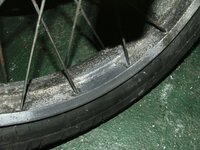
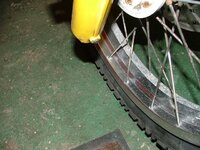
You may be able to save the rims. I've just taken mine from this...
 

Attachments

  • wheel before.jpg
    wheel before.jpg
    77.2 KB · Views: 369
to this by using a strong caustic soda solution, the crap just fell off and I gave it one quick going over with solvol. the picture shows the near side after solvoling and the far side before. There's some scarring on the rim but most of this will come out after a few solvol sessions. Took about 1 hour to do and cost a couple of quid for the caustic.
 

Attachments

  • wheel after.jpg
    wheel after.jpg
    77.6 KB · Views: 359
Rob

Nice effect but risky approach. Caustic rapidly dissolves aluminium - it's ok to clean organic crud off iron parts with it but it will completely dissolve ally parts. Its' the same sort of effect as putting acetone onto polystyrene - try caustic on an old ally saucepan. Slopping caustic onto your rims (critical part of the bike) is dangerous, especially around the spoke holes where the solution could get trapped and start up some interesting 'stress corrosion cracking'.

I suggest you keep a close eye on the spoke holes to see if fine micro-cracks start to appear.

Simon
 
Sorebums
Would you say the same thing applies to aluminium wheel cleaner which presumably has some acidic content?
 
Paul

If you've got an aluminium cleaner that 'says on the tin' that it is ok for ally, and doesn't have any warnings on it, you should be ok. The problem with caustic (especially concentrated) is its reactability with Ally...

Aluminium is a VERY reactive metal (arguably more so than magnesium - Al 3+ versus Mg 2+) and normally it's reactivity is its saviour. Ally instantly forms a thin but strong oxide layer over any raw metal. Anodising is an artifically enhanced version of that layer, with pretty dye-stuffs added sometimes.

Caustic has the ability to dissolve the oxide layer and allow reaction of the metal - fizz!! Most ally cleaners will have mild abrasives to cut through the excess oxide deposits (the white stuff), abd once you're down to the metal, your beneficial thin layer of oxide instantly forms - shiney wheels! Another substance that breaks down the oxide on ally is mercury - hence the reaction that you get when you chew silver foil on your fillings - the pain comes from the electrical chage caused by the reaction - you mouth becomes a battery and one electrode is you tooth!

Was that interesting? I did a degree in metallurgy 20 years ago....

So Paul, back to your presumption about acid content of the cleaner - this is probably wrong - it's probably an abrasive. You can check the cleaner by tasting a little - if it tastes acidic, it probably is, and should be washed off the wheels ASAP after cleaning.

Hope this helps.

Simon
 
Paul

If you've got an aluminium cleaner that 'says on the tin' that it is ok for ally, and doesn't have any warnings on it, you should be ok. The problem with caustic (especially concentrated) is its reactability with Ally...

Aluminium is a VERY reactive metal (arguably more so than magnesium - Al 3+ versus Mg 2+) and normally it's reactivity is its saviour. Ally instantly forms a thin but strong oxide layer over any raw metal. Anodising is an artifically enhanced version of that layer, with pretty dye-stuffs added sometimes.

Caustic has the ability to dissolve the oxide layer and allow reaction of the metal - fizz!! Most ally cleaners will have mild abrasives to cut through the excess oxide deposits (the white stuff), abd once you're down to the metal, your beneficial thin layer of oxide instantly forms - shiney wheels! Another substance that breaks down the oxide on ally is mercury - hence the reaction that you get when you chew ally foil on your fillings - the pain comes from the electrical charge caused by the reaction - you mouth becomes a battery and one electrode is your tooth!

Was that interesting? I did a degree in metallurgy 20 years ago....

So Paul, back to your presumption about acid content of the cleaner - this is probably wrong - it's probably an abrasive. You can check the cleaner by tasting a little - if it tastes acidic, it probably is, and should be washed off the wheels ASAP after cleaning. WHATEVER IS IN IT, IT IS UNLIKELY TO BE AS BAD FOR YOUR WHEELS AS CAUSTIC IS

Hope this helps.

Simon

 
Caustic is indeed an alloy eater. We had a caustic tank leak in work a couple of years ago,and some well meaning dimwit pushed an eight foot by four foot metal bunker under it to catch the leakage.

An ALUMINIUM bunker.

He returned to find four stainless steel castors in a huge foamball

:D :D :D
 
some ally wheel cleaner that i have contains phosphoric acid
the same stuff is in pepsi and coke
no wonder coke cleans jewelry sooooo well:eek:
 
A friend of mine used coke to free up a siezed car engine.

I used to practice white water kayaking at Home pierepoint, if you swallowed the water then a bad stomach was guaranteed, a can of coke after always seemed to prevent any problems. just makes you wonder whats in it.
 
Wonderwheels is safe for your alloy wheels as long as you follow the instructions and clean it off with plenty of water after use. i used it on my GS and on the engine casings come up very well.


Back
Top Bottom