WW2 YOUR DAD/GRANDFATHER

My uncle Stephen (father's brother, now deceased) was in the Royal Navy sometime during the late 1960's - mid 1970's.

My uncle informed me that my grandfather (father's father, now deceased) was a Chief Petty Officer (CPO) in the Royal Navy and was aboard one of the British Warships at the Battle Of The River Plate where Captain Hans Langsdorff scuttled his ship the Admiral Graf Spee.

I am uncertain whether my grandfather was a CPO at the time of the battle and would dearly love to know which warships he served on.
I know the three RN warships at the battle were HMS AJAX, HMS ACHILLIES and HMS EXETER. They were subsequently joined by HMS CUMBERLAND.

Richard.

My old man was present for the scuttling of the Graf Spee. He lived in Argentina during the war, and was doing something for the British Embassy which required him to go to Montevideo, possibly to assist in the pressure being put on the Uruguayan government to intern Graf Spee if it did not leave with 24 hours. Or, as a fluent Spanish speaker, who could pass as a native Argentinian, he might have been spreading rumours about what ships the British had waiting. He never let on exactly what he was doing though, at least not to me, but as he should have been called up in 1942, he must have been doing something fairly useful, as he stayed in Buenos Aires until after the end of the war.
 
I had a Grandfather who unfortunately passed away when I was about 15, he never spoke about the war to me and got cancer at a relatively early age, would love to have spoken to him about the war.

I know he never really spoke about it much to anyone, he went on the rememberance marches and I remember trying to spot him on the telly as a youngster.

All I know is he was at Dunkirk and spent most of the war getting bombed on a daily basis in Gibralter.

Had a great Uncle who was a Japenese POW, no idea how he ended up there, he never spoke a word to anyone, a real shame that so many people took their stories and troubles to the grave with them.

Great thread by the way.
 
Had a great Uncle who was a Japenese POW, no idea how he ended up there, he never spoke a word to anyone, a real shame that so many people took their stories and troubles to the grave with them.

Great thread by the way.

Indeed. My Grandfather returned from the Somme, I have his medals on my wall now, but he never ever spoke of it. As a kid I asked him questions but he just dismissed them.... I learned later that my father had quizzed him too and had got the same response.

Until my grandfather was dying that is, he was in a half coma, my dad nursing him. In his last few hours my grandfather was reliving those terrible days in the trenches ... he was in a water filled bomb crater nursing his pal he had joined with, it was a headless corpse that was in his arms. My father was in tears later when he was telling me. My granddad just rambled and rambled as he relived the torment ....

Respect .....
 
My old man was present for the scuttling of the Graf Spee. He lived in Argentina during the war, and was doing something for the British Embassy which required him to go to Montevideo, possibly to assist in the pressure being put on the Uruguayan government to intern Graf Spee if it did not leave with 24 hours. Or, as a fluent Spanish speaker, who could pass as a native Argentinian, he might have been spreading rumours about what ships the British had waiting. He never let on exactly what he was doing though, at least not to me, but as he should have been called up in 1942, he must have been doing something fairly useful, as he stayed in Buenos Aires until after the end of the war.

Interesting info.

He must of had an important job, perhaps he was S.O.E.
 
My mums dad came over from Italy in 1905. He served during WW1 in the Lancashire Fusiliers. He met his wife (also Italian) when he was guarding German POW's at Wythanshaw General Hospital. As he was never naturalised during WW11 he was an enemy alien. He worked for British Rail at the time and had to give up this job.He was not allowed a radio and had to report to the police once a week.

My dads father was also a Lancashire Fusilier who went missing during the Arakan offensive in 1943. His name is on face 9 of the memorial in Rangoon
 
Great Thread

My Grandfather was an amazing chap, lived with us for the last few years of his life. He was a regular with the Border Regiment and served in India and was sent from there to Gallipoli for the landings, was wounded twice and finally sent back to the UK to recuperate. He was then sent to the Western Front and was awarded the VC at Ypres for taking out a German machine gune nest. He died when he was 74 from a cancer that grew around a bullet that the doctors couldn't remove as it was too close to his spine, he retired from the Army as a Sgt. Major.

My Father was an regular officer with the RAF during WW2, serving in Blenheims, Wellingtons and Lancasters, after two tours in Bomber Command he was posted to Coastal Command and served in Sunderlands. He remained in the RAF after the War and his final posting was Brize Norton.
 
my grandfather was the foreman in a yard that built MTBS (motor torpedo boats)
 
Been trying to find out more on my Grandad, I know he was with the Oxfordshire and Buckinghamshire Regiment and was rescued at Dunkirk, found this on the web:

The British rapidly sent the British Expeditionary Force (BEF) to France in September, which included the 1st Ox & Bucks and the Territorial 1st Buckinghamshire Battalion, later joined by the 4th Ox & Bucks, all of which eventually became part of the 48th (South Midland) Division, with the 1st Ox & Bucks part of the 143rd Brigade and the 4th Ox & Bucks and 1st Buckinghamshires part of the 145th Brigade.

The Germans launched their invasion of the Low Countries on 10 May 1940, shattering a period of the conflict that was known as the Phony War. The German invasion of northern Belgium—where the BEF was located—was a diversion with the main attack being through the poorly-defended Ardennes forest. The BEF withdrew west towards the Dendre river after the Dutch Army had surrendered, and then withdrew further towards the Scheldt river by 19 May. The British force, having given a good account of themselves in the defence of the Scheldt, eventually withdrew into France, moving towards the Dunkirk area where, on 26 May, the evacuation of the British force back to Britain began, known as Operation Dynamo (26 May-3 June). The 1st Ox & Bucks took part in the defence of the Ypres-Commines Canal (26–28 May) and was eventually evacuated, having suffered heavy casualties. The other battalions took part in the defence of Mount Cassel until 29 May where they eventually attempted a breakout though the 4th Battalion was encircled by German forces near Watou and being overwhelmed. The 1st Buckinghamshires, having also suffered heavily, made it to Dunkirk and was evacuated back to Britain. The Dunkirk evacuation was extremely successful, with over 330,000 British and French troops evacuated.

I know after that he spent the rest of the war on Malta, which was bombed heavily, although I cannot find references to his regiment being there, although he may have transfered :nenau

I know he was gone for the rest of the war as my dad was born around the start of the war and did not meet his dad until he returned after the war.

Malta was one of the most intensively bombed areas during the war. The Luftwaffe (German Air Force) and the Italian Regia Aeronautica (Italian Royal Air Force) flew a total of 3,000 bombing raids over a period of two years in an effort to destroy RAF defences and the ports.[10] Success would have made possible a combined German—Italian amphibious landing (Operation Herkules) supported by German airborne forces (Fallschirmjäger). It was never carried out. In the end, Allied convoys were able to supply and reinforce Malta, while the RAF defended its airspace, though at great cost in material and lives.
 
My Grandad was on board the M2 Sub, every one on board was lost, his was one of only 2 bodies recovered as his job was to time the launch of the plane when it surfaced.

"It is believed that the disaster happened because the submarine’s hangar doors were opened before it had properly surfaced. The entire crew perished and with the exception of two, whose bodies were recovered, remain inside the hull"

At least his was a quick death by drowning, the rest all suffocated slowly in the freezing depths.... he was identified by dental records!

In the video at 3m 15 secs in, the woman carrying a child going into church is my Gran carrying my mum!


<object width="480" height="385"><param name="movie" value="http://www.youtube.com/v/-PGXyxZV62M?fs=1&hl=en_US&color1=0x234900&color2=0x4e9e00"></param><param name="allowFullScreen" value="true"></param><param name="allowscriptaccess" value="always"></param><embed src="http://www.youtube.com/v/-PGXyxZV62M?fs=1&hl=en_US&color1=0x234900&color2=0x4e9e00" type="application/x-shockwave-flash" allowscriptaccess="always" allowfullscreen="true" width="480" height="385"></embed></object>
 
Like many on here it would seem, my grandfather turned into a virtual recluse when he came back from the Somme. My mum tells how he never smiled, never laughed and had turned from a normal fun loving bloke into a depressed and angry man.

He had a hand grenade blow up between his legs and was in hospital for two years, Apparently he begged and begged the doctors to amputate his legs because he was in so much pain. I remember him as a grumpy old bent over man who hobbled about.

There was a story that he jumped into a trench and was faced with a German. He shot him dead. It was shoot him or be shot himself. He went through the guys pockets, found his wallet, the photos of his wife and kids and sent them back to his widow explaining all and saying how sorry he was.
 
My Dad was part of the paras involved in the action below, in the pic taken in Athens in Jan 45 after the action (2nd row down 4th in from right) he is still fit and well aged 89 :thumb2
dadupload.jpg


What it doesn't say in the report below is that when dropped by Dakota at Megara, half the troops were drowned when blown out to sea with full kit on, my dad was one of the Lucky ones or I would`nt be here !


Fact File : British Expedition to Greece

September 1944 to January 1945

Theatre: Mediterranean
Location: Greece
Players: Allies: Force 140 under Lieutenant General Ronald Scobie, including 2nd Brigade, Parachute Regiment and 23rd Armoured Brigade (later reinforced by 4th Indian Division and 4th British Division); Force 120 (Royal Navy). Communist EAM/ELAS forces in Athens.
Outcome: Operation Manna was sent to prevent the Communist EAM/ELAS from seizing power in Greece after the German withdrawal.


'Do not hesitate to act as if you were in a conquered city where a local rebellion is in progress.' - Winston Churchill to General
Scobie on the uprising in Athens, December 1944

Local resistance to the German occupation of Greece emerged in the form of the communist EAM/ELAS movement and the royalist EDES party. During the winter of 1943-4, civil war broke out between the two groups and the British became alarmed at the prospect of communist rule in Greece after the war.

Following the German withdrawal from Greece in 1944, Churchill arranged for a small British force to accompany the Greek government back home.

In late September 1944, Scobie's Force 140 began landing on the Peloponnese while the Special Boat Squadron (SBS) captured Araxos airfield. Parachute troops were dropped at Megara on 4 October and entered Athens on 14 October. The rest of Force 140 landed soon afterwards.

The Greek Prime Minister, George Papandreou, arrived in Athens on 18 October. However, confrontation with EAM/ELAS loomed. After 15 communist protesters were shot dead, fighting broke out between ELAS and the British on 3 December. Scobie's troops were outnumbered and clinging onto a small section of the city, but once reinforcements arrived they regained the initiative and suppressed the uprising.

On Christmas Eve, Churchill and his foreign secretary Anthony Eden flew to Athens to resolve the situation. A ceasefire was agreed on 11 January and a political settlement reached in February. It was not to last - Greece fought a bitter civil war from 1946-9.

T

The above was posted a couple of years ago on a similar thread, pleased to say Dads still going strong at age 91 now, :thumb2


.
 
I dont have any photo

My Grandfather was in the Royal Artillery, he died on the 12th of February 1982. He was a lovely bloke, clever sharp and driven. Must have been quiet a nice chap cause some bloke who signs himself Rex wrote to him on a couple of occasions and sent him these lovely coin things with ribbons attached. My uncle has those letters now and they have a map of North Africa and the Med behind them.........

Miss him now and again, especially now when I try to make light of what he did and how much him and so many of his friends gave.

Im a copper now and cant not say what I would do to those who chose to desecrate the cenotaph and other monuments , burning the tree, Jesus, they were supposed to be left wingers, surely that tree symbolizes one of the greatest fight against extremism ever. Still blimming good punch up.

Ooops rant sorry
 
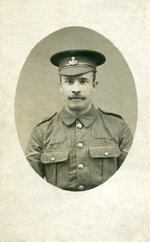
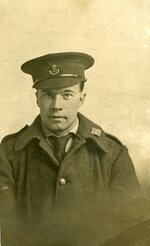
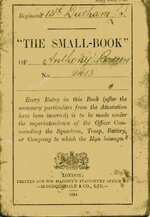
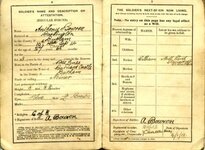
My Grandad was in the DLI (Durham Light Infantry) 1st and 2nd WW. Was injured and i have a copy of the letters sent home to his mum and dad somewhere and a couple of photos of him. I think my uncle did National Service, but i think i am the only one in the family who followed him into the services. Can't confirm this though as i don't do the close family thing after years of arguing!!!!! He survived to tell his tales although i was too young to remember them unfortunately. I would love to have a chat with him now as i'm sure we would have lots to talk about!
 
My Grandad was on board the M2 Sub, every one on board was lost, his was one of only 2 bodies recovered as his job was to time the launch of the plane when it surfaced.

"It is believed that the disaster happened because the submarine’s hangar doors were opened before it had properly surfaced. The entire crew perished and with the exception of two, whose bodies were recovered, remain inside the hull"

At least his was a quick death by drowning, the rest all suffocated slowly in the freezing depths.... he was identified by dental records!

In the video at 3m 15 secs in, the woman carrying a child going into church is my Gran carrying my mum!

Incredible Balders .... incredible!

I'm booked in at Martin Peglar's Orchard Farm for three days 4th 5th and 6th April for a three day visit to the Somme Battlefields with my two sons and a couple of pals. From there we'll go for a razz down to the Schwarzwald for a couple of days, or up towards der Nürburgring, but probably both ;)

Anyone welcome to join us ... open invite :thumb

:beerjug:
 
Drandads Pics

Random Pic's of my Grandad's past
 

Attachments

  • DFC_007.jpg
    DFC_007.jpg
    119.4 KB · Views: 600
  • DFC_008.jpg
    DFC_008.jpg
    113 KB · Views: 615
  • DFC_009.jpg
    DFC_009.jpg
    31.9 KB · Views: 576
  • DFC_010.jpg
    DFC_010.jpg
    39.4 KB · Views: 660
  • DFC_011.jpg
    DFC_011.jpg
    25.7 KB · Views: 572
And more
 

Attachments

  • DFC_012.jpg
    DFC_012.jpg
    117.3 KB · Views: 579
  • DFC_014.jpg
    DFC_014.jpg
    95.8 KB · Views: 582
  • DFC_030.jpg
    DFC_030.jpg
    30.8 KB · Views: 583
  • DFC_031.jpg
    DFC_031.jpg
    26.1 KB · Views: 601
  • DFC_016.jpg
    DFC_016.jpg
    117.2 KB · Views: 571
This ...

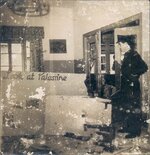
... is one of my Father that was recently scanned and sent to me. Following demob in Naples he was reluctant to return home (women trouble) and so went off to Palestine; this is taken in the foyer of the King David Hotel in Jerusalem the day the Irgun blew it up :augie
 

Attachments

  • Dad-Palestine.jpg
    Dad-Palestine.jpg
    74.5 KB · Views: 577


Back
Top Bottom