Twotter's 2008 Trip to Normandy

Twotter

Registered user
Joined
Mar 25, 2004
Messages
4,212
Reaction score
4
Location
Cambs
It’s taken me rather longer than I expected to write the second part of my trip report from 2008’s visit to the Somme and Normandy.

Right then, where was I?

Oh yes, Steve and I had just finished our visit to the Somme and were now heading towards Normandy. Leaving Wavans CWGC behind us we headed off towards Amiens. Famous for its cathedral, which is a UNESCO World Heritage Site, instead we were going to see Amiens Prison.

Why?

On 18th February 1944 Group Captain Percy Pickard lead 19 Mosquito’s on a low level bombing raid in broad daylight. Codenamed Operation Jericho, the objective of the raid was to breach the prison wall and free French Resistance and political prisoners. Over 700 prisoners were held at Amiens and 120 were due to be executed on 19th February. The raid was a success though it cost the lives of 102 prisoners as well as the raid leader, Group Captain Pickard, and his navigator, Flight Lieutenant Broadley, who were shot down by a German fighter.

Here is a picture taken on the raid.

amiensoperationjericho.jpg


Parked up on the road outside the prison.

254n.jpg


A closer view of the breach.

255j.jpg


Just along the road is St Pierre Cemetery. It’s a quiet wooded place and towards the rear is a CWGC section. Amongst the headstones we found Group Captain Percy Pickard , DSO and two bars, DFC. In the row behind him lies his navigator, Flight Lieutenant ‘Bill’ Broadley, DSO, DFC, DFM.

256o.jpg


257r.jpg


We still had a long way to go so after a brief GPS glitch we set off for Normandy. Sticking to the motorways makes for a quicker journey but that’s all, so apart from the odd stop for coffee and petrol it was heads down and go for it. The Pont du Normandie was fun to ride over in a strong cross wind but if you like your bridges (and let’s face it who doesn’t?) it’s worth a detour. Even better that there is a little bike lane that misses out the toll booths! Once over the River Seine the weather turned against us and we rode on in torrential rain. We were very glad to finally arrive at our destination, a rural farmhouse owned by Mrs Twotter’s former boss and her Triumph Tiger riding husband. It’s a big place and ideal for large groups though a bit too big for just Steve and I!

261o.jpg
 
The following morning the weather had improved but the quiet location hadn’t agreed with Steve. He’s more comfortable in a town location so after a few phone calls we agreed to relocate up to Bayeux once we had finished for the day.

Anyway with lots to see we headed off to visit some of the sites of the largest amphibious invasion ever seen. Operation Overlord was the allied invasion of Nazi occupied Europe. On 6th June 1944 a combined operation saw paratroopers dropped ahead of ground troops who landed on five beaches. The names are famous now – Gold, Juno, Sword, Utah and Omaha.

Today we were going to visit the American sites.

First stop was St Mere Eglise.

262i.jpg


Famous from the film ‘The Longest Day’ when American paratroops landed in the town and one was caught up on the Church steeple. Red Buttons played the character in the film but in real life the unfortunate paratrooper was Private John M. Steele of 505th Parachute Infantry Regiment, US 82nd Airborne Division.

264h.jpg


With more than a few ‘tat shops’ around the square selling cheap souvenirs I was keen to move on to the excellent museum nearby. The buildings are meant to look like parachute canopies and contained some excellent exhibits including a Douglas C-47 and a Waco glider that you walk through – well worth a visit if you can.

268j.jpg


The paratroops of the US 82nd and 101st Airborne Divisions were dropped ahead of the beach landings to capture causeways across land that the Germans had purposely flooded. Without the causeways the ground forces would be unable to move inland to expand the initial beachhead and continue the invasion. We rode along some twisty back roads until we came to Utah Beach.

275c.jpg


It’s peaceful now with just a few people walking but on 6th June 1944 this was the beach assaulted by the US 4th Infantry Division in the lead and the US 90th Division. There is a museum, which is well worth the entry fee, and nearby are a number of memorials to the various units involved.

283e.jpg


277q.jpg


279v.jpg


280pqp.jpg


After lunch at a nearby crepe/baguette stand we headed back inland and made our way along the coast. Our next stop was Pointe du Hoc. This was the site of a battery of six 155mm guns housed in huge concrete casemates. Although heavily bombed prior to the invasion the task of capturing the battery was given to the US 2nd Ranger Battalion who had to scale the cliffs under fire. They discovered the casemates were empty and the guns were gone. A patrol later found the guns sited further inland and successfully destroyed them.

With a memorial and a visitor centre the site is covered in craters and concrete.

286nfs.jpg


296z.jpg


Towards the crumbling cliffs is the Ranger Memorial. Unfortunately it’s considered too dangerous to approach now so is fenced off.

292s.jpg


Next stop was Omaha Beach. The western half of the beach was assaulted by the untested 29th Infantry Division (nicknamed the ‘blue and the gray’ as it was composed of units from opposite sides in the US Civil War) together with elements of the US Army Rangers who were unable to land at Pointe du Hoc. The eastern half of the beach was assaulted by the veteran 1st Infantry Division (the ‘Big Red One’ who had seen action in North Africa and Sicily). Opposing them was the 352nd Infantry Division of the Wehrmacht who fought from prepared positions overlooking the wide open beach. The fighting was very heavy with the Americans losing some 2400 men, since earning the nickname ‘Bloody Omaha’. The opening scenes of the film ‘Saving Private Ryan’ graphically represent the fighting at Omaha.

301.jpg


302.jpg


We found two memorials. Just off the beach is this imposing stone structure.

304g.jpg


Close up.

305p.jpg


Side view.

303yar.jpg


Another, more modern, memorial stands in the sea itself. This is ‘Les Braves’ by Anilore Banon. It consists of three elements; the wings of hope, the rise of freedom and the wings of fraternity.

306x.jpg


Just up the road from the beach is another excellent museum. On a hot day the cool inside was very welcome as well as being very interesting. Leaving the museum we headed up to visit the American Cemetery overlooking Omaha Beach.

This aerial view is taken from the American Battle Monuments Commission website.

uscemetery.jpg


There are 9387 graves with a further 1557 names recorded on the Walls of the Missing. It’s quite stunning to look along the rows of white crosses.

314k.jpg


We walked along the path overlooking the sea to the furthest corner where we placed a poppy cross upon the grave of ‘a comrade in arms, known unto God’.

312j.jpg


313e.jpg


Walking back through the cemetery we noticed that some of the headstones had sand pressed into the carved letters. Perhaps done by visiting relatives?

315f.jpg


Finally, a view of the pool of peace reflecting a bronze statue called ‘Spirit of American Youth’.

320f.jpg


Leaving the beaches we headed back inland to the German Cemetery at La Cambe. There are 21222 German soldiers commemorated here.

323ssz.jpg


Under the central mound is a mass grave, or kamaradengraben, for 207 unknown and 89 identified soldiers.

324d.jpg


328igr.jpg


The famous tank ace, SS-Haupsturmfuhrer Michael Wittman and his crew are buried here. Wittman was one of the top scoring panzer aces of WW2 credited with 138 confirmed tank kills. In the Normandy campaign he is probably best known for his ambush of the 4th County of London Yeomanry during the Battle of Villers-Bocage.

326f.jpg


327hsf.jpg


That was it for today but remember Steve wasn’t comfortable in the country? We found a room in the Campanile at Bayeux so it was a case of heading back to the Farmhouse, collecting our kit and heading to the bright lights.
 
Today the plan was to visit the British and Canadian sites. We wouldn’t be able to visit every site we might like to but we were going to give it a good go!

Heading off through Bayeux we quickly managed to lose each other but made our way separately to the first stop of the day.

The Longues Battery was part of the Atlantic Wall defences. It was subjected to allied bombing prior to D-Day and came under naval bombardment during the invasion itself. It was captured on 7th June by 2nd Battalion, The Devonshire Regiment who came ashore on Gold Beach. Concrete casemates still house the 152mm cannon.

Parked up side by side at the Longues Battery.

329exo.jpg


It still looks like it means business!

338s.jpg


This is the bunker from where they directed the gunfire. It was used in the opening scenes of the film ‘The Longest Day’.

344hgk.jpg


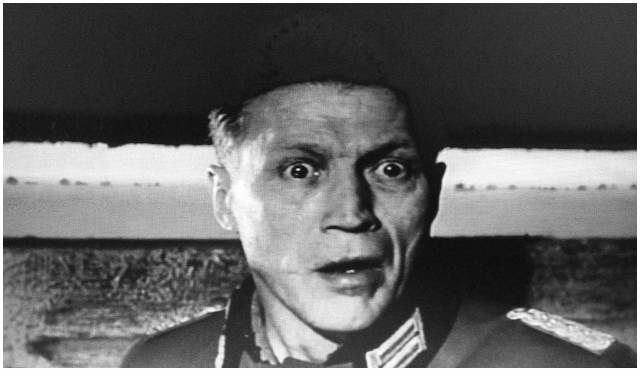
The view from the top ‘deck’ and the view of Major Werner Pluskat, played by Hans-Christian Blech in the film ‘The Longest Day’.

347u.jpg


l3.jpg


Leaving the bunker and looking to the east you can see the remains of the Mulberry Harbour caissons at Arromanche, our next stop.

345o.jpg


Arromanche was not one of the invasion beaches on D-Day as the allies wanted to minimise damage to the beach and town. They had other plans for Arromanche as the site of one of the prefabricated Mulberry Harbours, later known as Port Winston. Some of the caissons still remain though the nearby museum shows what it looked like in its heyday.

349j.jpg


350b.jpg


For such a major military operation I’ve always found it surprising that there was only one Victoria Cross won on D-Day. It was won by Company Sergeant Major Stanley Hollis, 6th Battalion, Green Howards. From the historylearningsite;

“The landings at Gold Beach had been relatively easy in terms of casualties lost. However, the Germans did have defensive positions on the beach and behind it and these posed a potential problem for the advancing British troops ordered to take the beach.

When Hollis and his men landed, they sprinted to the top of the beach where they were pinned down by machine gun fire. Hollis saw the pill box from which the machine gun fire came. He rushed the position and threw a grenade into the pill box killing the two Germans operating the machine gun. He also captured between 18 to 20 German soldiers who were around the position of the machine gun post.

Later on the same day at Crepon, despite being wounded in the face, Hollis and some other men attacked a German field gun that was holding up their advance. The field gun destroyed the building being used by Hollis as shelter. He withdrew from the position but two of the men who had been with him were trapped there. Hollis returned to the destroyed house and guided the two men out. Prior to his rescue mission, Hollis had told his company commander: ‘I took them in. I will try to get them out.’ For the bravery that he displayed that day, Hollis was awarded the Victoria Cross.

Stanley Hollis died in 1972 aged 59.”

At Crepon we visited the Green Howards Memorial.

360s.jpg


Closer view.

[IMG http://img6.imageshack.us/img6/2201/361m.jpg[/IMG]

Following the coast road we passed what we thought was Gold Beach (must have missed the signs) and came across this memorial to the Royal Artillery Regiments who fought with 50th Northumbrian Division.

364p.jpg


Across the road was this Sexton Self Propelled Gun of the 86th (Hertfordshire Yeomanry) Field Regiment, Royal Artillery. The Sexton mounts the famous 25 pounder gun.

367a.jpg


Following the road we made our way to Juno Beach and the Canadian Museum at Courselles. I had planned this stop as I wanted to learn more about the Canadian contribution to D-Day. This museum was very interesting but looked at the whole war instead of just focussing on 6th June. I left feeling a bit confused to be honest.

368f.jpg


Outside is this statue. It looks like soldiers coming out of the sea...

371d.jpg


Views of Juno Beach.

372m.jpg


373v.jpg


A concrete bunker overlooks the beach and was obviously the scene of heavy fighting. This is Cosy’s Bunker, named after Lieutenant W.F. (Cosy) Aitken and 10 Platoon of ‘B’ Company, Royal Winnipeg Rifles.

374f.jpg


376v.jpg


Guarding the entrance to the site is this magnificent Churchill tank. The keen tank spotter will notice this is an ‘AVRE’ version or ‘Armoured Vehicle Royal Engineers’. The main gun is a 290mm Spigot Mortar and was particularly effective when used against concrete pillboxes and other similar structures.

377gnu.jpg


Staying with the Canadians we headed for the Canadian War Cemetery at Beny-Sur-Mer. Another beautifully kept CWGC cemetery it has 2030 burials, of which 19 are unknown.

382p.jpg


387r.jpg


Three of the graves are for the Westlake brothers.

George served with the North Nova Scotia Highlanders and was killed on 7th June. He rests a little way from his brothers in VIII.F.12.

384k.jpg


Four days later his brothers Albert and Thomas, both serving with the Queen’s Own Rifles of Canada, were also killed. They rest next to each other in III.D.8 and III.D.7.

386l.jpg


385n.jpg


Now here is someone we’ll all recognise...

390p.jpg


391ccz.jpg


Montgomery was already famous for defeating Rommel in North Africa. Returning to England he adapted and expanded on the initial plans for Operation Overlord and took over command of 21t Army Group. This made him the Ground Forces Commander for all allied ground units until, with American units beginning to outnumber the British, Eisenhower took over this responsibility at the end of the Battle of Normandy.

Back on the road we found our way along one-way streets in Ouistreham until we found the Museum of the Atlantic Wall. This is situated in a former fire control bunker overlooking Sword Beach. It held out until 9th June when Lieutenant Bob Orrel of 91st Field Company, Royal Engineers, won the Military Cross by blowing up the entrance forcing the garrison inside to surrender. It’s an imposing sight and definitely worth a visit.

393q.jpg


Once again the one-way system proved our undoing as I could not find the Sword Beach Memorial despite riding round in circles. Pulling over I did manage to take this photo along the beach.

395n.jpg


Heading inland from Ouistreham we made our way to another bunker system, called Hillman Strongpoint. This was heavily defended by 150 men from the 736th Regiment. Two assaults were required by 1st Battalion, Suffolk Regiment, who lost 7 killed and 24 wounded. Private J.Hunter won the Distinguished Conduct Medal in the fighting.

397c.jpg


399s.jpg


400dbw.jpg


We left and headed back to Bayeux for our last stop of the day at the Museum of the Battle of Normandy. Outside are some of the larger exhibits!

An M4 Sherman tank.

401q.jpg


An M10 Wolverine tank destroyer.

402z.jpg


At first glance what looks to be a Churchill tank.

403v.jpg


But it turns out to be a Crocodile, the ‘machine gun’ in the lower hull is a flame thrower.

405j.jpg


The Crocodile towed a trailer containing fuel for the flame thrower. This is the connection link.

406j.jpg


Behind the Crocodile are three British Memorials.

The Corps of Royal Military Police.

408w.jpg


Nottinghamshire (Sherwood Rangers) Yeomanry.

409u.jpg


2nd Battalion, The Essex Regiment – ‘The Pompadours’.

410m.jpg


Around the corner is a German Jagdpanzer 38(t) Hetzer.

411s.jpg


A little more modern, this Renault is a colourful advert for the Museum.

412r.jpg


The Museum is excellent and you should definitely give yourself a few hours to do it justice. As we left the heavens opened and we were lucky that our hotel was only just down the road.
 
The rain had stopped during the night leaving us good weather for the last day of our trip. Leaving the Campanile we headed back up the road to the Bayeux War Cemetery which contains 4265 graves. Of these 338 are unknown and there are over 500 war graves of other nationalities, the majority of whom are German. This is the largest CWGC Cemetery of WW2 in France.

414a.jpg


417u.jpg


Amongst the headstones we found these two fitted closely together. A search of the CWGC website shows that Flight Lieutenant Ronald Desham and Flying Officer Henry Ellis DFM served with 29 Squadron. In 1944 the squadron were flying DeHavilland Mosquito night fighters so I assume they were a crew who were killed and buried in a joint grave.

422.jpg


Amongst the other headstones we found some of those other nationalities...

Czech.

423t.jpg


Italian.

424v.jpg


Polish.

426d.jpg


French Colonial.

427w.jpg


German.

418j.jpg


Across the road is the Bayeux Memorial to the Missing. It records the names of 1808 men with no known grave. Along the top is an inscription that reads:

NOS A GULIELMO VICTI VICTORIS PATRIAM LIBERAVIMUS

“We, once conquered by William, have now set free the Conqueror’s native land”

413j.jpg


430d.jpg


433q.jpg


Leaving Bayeux we joined the motorway and headed towards Caen. Traffic slowed us down until we filtered past an accident that seemed to have drawn every member of the local emergency services. Waved past by a policeman we headed on towards the Orne.

My favourite bit of ‘The Longest Day’ is the glider landings against what became known as Pegasus Bridge. Major John Howard and elements of 2nd Battalion, Oxfordshire and Buckinghamshire Light Infantry with Royal Engineers and Glider Pilot Regiment support carried out a ‘coup de main’ assault which seized the bridge. With a war cry of ‘up the Ox and Bucks’ they seized the bridge before sending the code words ‘ham and jam’ to signal their success. They were later relieved by men of 7th Battalion, Parachute Regiment and then Lord Lovat’s Commandos. In the film ‘The Longest Day’ Major Howard was played by Richard Todd who was actually there as he served with 7 PARA on D-Day.

With typically bad timing we arrived as the Help 4 Heroes cycle ride was just getting ready to head through from the Airborne Museum car park. The present day bridge is a replacement for the original which is now sited in the nearby Airborne Museum. We only had a few minutes to get across the bridge before it was closed to traffic so didn’t have time to visit the Cafe or the glider landing sites.

Not a bad picture of the tank...

436jba.jpg


...but the picture of the cafe is rubbish! A good reason to go back again one day!

435g.jpg


Parking up on the other side of the bridge we visited the superb Airborne Museum. I have to say that out of all of the museums and visitor centres we visited on this trip that this one was the best.

In the grounds of the museum is a replica Horsa glider.

441z.jpg


The actual bridge that was attacked by Major Howard and his men.

438h.jpg


Not far away is the CWGC cemetery at Ranville.

445c.jpg


447d.jpg


450fsh.jpg


Not long ago I read an excellent book called ‘The Day the Devils Dropped In’ about the 9th Battalion, Parachute Regiment in Normandy from D-Day to D+6. One of the stories in there was of Private Emil Corteil and his para dog Glen. They were killed together and were later buried together.

448z.jpg


449b.jpg


9 PARA had a number of targets on the morning of 6th June but chief among them was to assault the Merville Battery. This was thought to contain four heavy guns which threatened the Sword Beach landings. The drop was scattered over a wide area so the Commanding Officer, Lt/Col Otway, had to carry out an improvised attack with 150 men rather than the 650 men the initial plan required. Fighting their way through a minefield, past machine gun nests and finally into the casemates themselves, 9PARA took their objective. Of the 150 attackers, 65 had been killed or wounded. Today the Merville Battery is preserved as a museum.

Lt/Col Otway DSO

456c.jpg


The museum is in one of the former casemates.

464s.jpg


It’s small and watch out for the sound show when the lights go out!

One of the other casemates and an open gun platform.

461q.jpg


462j.jpg


With time pressing it was time to leave Normandy and head for home. No need to show you pictures of French motorways heading to Calais but here’s a shot of Steve at a service station preparing to brave the rain again!

466.jpg


Now I look back on the trip I think I would like to go back again one day to visit some sites and museums that we missed. I’d like to spend more time on Omaha, Gold and Sword beaches for a start and there is also the Underwater Wrecks Museum that I would like to see as well.

Thanks for reading.
 
What an interesting read. I enjoyed that. I am planning to visit shortly after the GSA is delivered this month. Think I will now plan in a few extra days. Fascinating stuff. It always been one of those”yeah would love to do it when I get the time” Now I will make time. Thanks for posting that. I am really looking forward to my trip now. Gary
 
What an interesting read. I enjoyed that. I am planning to visit shortly after the GSA is delivered this month. Think I will now plan in a few extra days. Fascinating stuff. It always been one of those”yeah would love to do it when I get the time” Now I will make time. Thanks for posting that. I am really looking forward to my trip now. Gary

Cheers - enjoy your GSA and your trip :thumb2
 
Cheers - with my memory posting a trip report is the best way of remembering what I got up to last year :D

Steve and I are off to Germany next month. The plan is to visit Sennelager, where we used to live as kids, and have a look at the Dambuster dams, Wewelsberg Castle, Colditz (maybe) and Remagen along the way. Might even try to get a cheeky lap of the Nurburgring too :augie
 
Well worth the wait. :clap

A very good read.
 
did you have a route saved by any chance? you might share with me?:thumb:thumb
 
did you have a route saved by any chance? you might share with me?:thumb:thumb

Sorry :( I would if I could but it was saved on my old computer which suffered a melt down and lost everything!

To be honest all of my routes come from a combination of the GPS POI sticky that Whatton started and Major & Mrs Holt's guidebooks.
 
I really enjoyed that, good narrative and great photo's. I have recently become the proud owner of a GSA and I MUST do this trip.


Back
Top Bottom