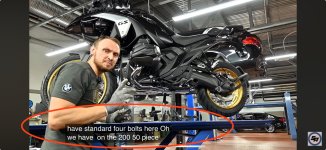
1300 Oil Change

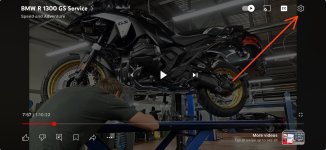
This guy does good videos, oil filter starts around 12’, I think he gives the torque setting at 12’49”

it’s in polish I think, maybe @EVskij can understand what he says as he speaks Russian which has similarities?

At 12 minutes 45 seconds he mentions 10Nm for the three oil filter cap screws.

12Nm for the spark plugs later on in the video.
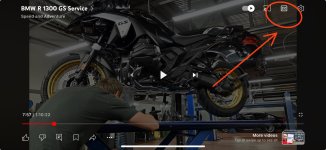
 
This guy does good videos, oil filter starts around 12’, I think he gives the torque setting at 12’49”

it’s in polish I think, maybe @EVskij can understand what he says as he speaks Russian which has similarities?

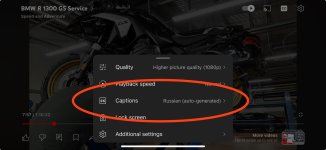
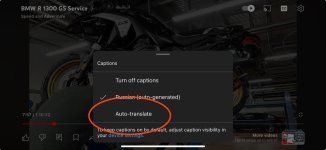
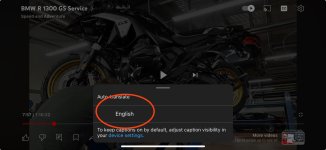
for anybody who watching this video, turn on captions.


IMG_4207.jpeg

IMG_4208.jpeg

IMG_4209.jpeg

IMG_4210.jpeg

IMG_4211.jpeg

IMG_4212.jpeg
 
Wondering if 3500 miles is when the first oil change should be done from new (seems a lot of miles) and if not, why is there swarf(!) in the oil? Do these engines take 5 litres? Seems like a lot for a bike.
I thought the running-in service was usually around 600 miles on most motorcycles?

Its probably a combination of tiny machining swarf from oilways etc and running-in debris from components wearing together like gear teeth etc. The darkening of the oil is probably from assembly grease, clutch wear, camchain guide wear and by-products of combustion deposits.

If its like the 1250, then this water-cooled bikes oil system will also lubricate the gearbox, so no surprise its 5 litres (compared to 4 on a Hexhead engine plus a litre of gear in oil the separate gearbox).
 
As a suggestion, if you're not sure how much oil you'll need why not simply measure how much drains out of it, then as a starter put the same amount back in?
Might have had the wrong amount in before :-) .
Think it's a semi dry sump so the sight glass isn't just measuring what is in the sump like previous versions. Think manual say to run engine until warm and then wait a while and tilt bike upright and look at the sight glass.

Think the manual suggests only doing it off the side stand and tilting bike upright but I presume that may be because the centre stand isn't a standard item on all 1300's ??. I've done it on centre stand and it's the same as tilting it off the side stand.
 
Last edited:
Wondering if 3500 miles is when the first oil change should be done from new (seems a lot of miles) and if not, why is there swarf(!) in the oil? Do these engines take 5 litres? Seems like a lot for a bike.

Maybe it’s got a quickshifter banging the cogs together. I’ve only ever seen swarf on bikes with a quick shifter.
 
I get that

Those are very low settings from Yamaha . I know Honda, Suzuki and Kawasaki all quote 9nm for an M6.

Not worth losing sleep over though I agree 👍

Don’t BMW have a habit of quoting torque values based on dry bolts? 10nm on a dry bolt probably same as 6nm on an oily one.

Almost impossible to achieve the dry status on drain plugs and those filter housing bolts but I seem to remember that’s what they specify.
 
Don’t BMW have a habit of quoting torque values based on dry bolts? 10nm on a dry bolt probably same as 6nm on an oily one.

Almost impossible to achieve the dry status on drain plugs and those filter housing bolts but I seem to remember that’s what they specify.
That is a safe assumption to make.
 
Thanks guys, all very helpful.
The filter cover is now tightened to 10Nm, or “just nipped up” as was the backup plan.
The bike had a 600 mile service then was thrashed around France and Spain and has done a bit of commuting to the airport since (until a stone went through a rad - another story - BM’s own rad protectors now fitted!). The oil looked a nasty colour in the sight glass, and did look a bit of a state when drained, so glad I did the job. Hasn’t stopped all the 1300 engine rattles, though! Hopefully someone will come up with a decent noisy collector soon, to cover the clatter…
After warming the engine properly, the oil level got above the min mark but was still short of halfway, even with a full 5 litres onboard. Out of interest, the level was the same whether on the mainstand or both wheels.
 
Might have had the wrong amount in before :) .
Think it's a semi dry sump so the sight glass isn't just measuring what is in the sump like previous versions. Think manual say to run engine until warm and then wait a while and tilt bike upright and look at the sight glass.

Think the manual suggests only doing it off the side stand and tilting bike upright but I presume that may be because the centre stand isn't a standard item on all 1300's ??. I've done it on centre stand and it's the same as tilting it off the side stand.
Wouldn't you check the oil level in line with the owner's manual beforehand to see if it had the correct amount in it? That way providing it hadn't been overfilled you'd have a baseline to start at and could put the same amount in as came out and go from there if it then needed topping up.
 
Ive just done my 600 mile service and the measured amount that drained out from factory fill was 5.4 litres.
I refilled with 5.4 litres and its at max level when checked .
 
Wouldn't you check the oil level in line with the owner's manual beforehand to see if it had the correct amount in it? That way providing it hadn't been overfilled you'd have a baseline to start at and could put the same amount in as came out and go from there if it then needed topping up.
Best not to refer to the user manual - it says oil capacity is 4 litres
 
Im an vat registered diagnostic specialist. Never had a problem getting waranty .
It's only some third party warranty providers who require VAT registration.

For a BMW manufacturers or AUB used bike warranty, the warranty is honoured by BMW as long as you use genuine parts and fluids, follow their schedule and keep receipts.

You also have to be a qualified mechanic.

But this is all at the discretion of the agent you use for your warranty. Most are reasonable if they know it's been done properly.
 
very good point on smear my dogs, destroy my box, with the quick shift garbage discoloring the oil

its the main reason they fit it - wear them out, sell more bikes

all of which make me wonder quite how much more damage ASA will do to people's bikes

the idea of longer service intervals is just marketing yet another way to wear out your bike - so long as it scrapes by the warranty (which is shorter than you get on a Ducati !!!) its not they don't care if you destroy the engine and gearbox, they want you to destroy the engine and gearbox - so you or the next guy can buy another bike...

if it looks dirty change it - and don't forget integral gearboxes need jaso MA2 bike spec oil - as bike gearboxes destroy std car oils
 
very good point on smear my dogs, destroy my box, with the quick shift garbage discoloring the oil

its the main reason they fit it - wear them out, sell more bikes

all of which make me wonder quite how much more damage ASA will do to people's bikes

the idea of longer service intervals is just marketing yet another way to wear out your bike - so long as it scrapes by the warranty (which is shorter than you get on a Ducati !!!) its not they don't care if you destroy the engine and gearbox, they want you to destroy the engine and gearbox - so you or the next guy can buy another bike...

if it looks dirty change it - and don't forget integral gearboxes need jaso MA2 bike spec oil - as bike gearboxes destroy std car oils
I thought the JASO spec oils was all about no friction modifiers to cause wet clutch slip. The original Mini's gearbox ran in the engine oil. :D
 
that's only one part of why we use bike oils - the box create huge shear forces that tears car oils to bits - who cares about a mini - a vile joke of noise and wear

googles AI managed to do a good job - that's scary

Motorcycle gearboxes require specialized oils due to the high shear forces and different lubrication needs compared to engine oil. Engine oil, while designed for high-temperature and high-RPM environments, often lacks the specific additives needed for the complex interactions of gears and clutches in a gearbox. Therefore, motorcycle gearboxes typically use a separate, thicker oil designed to withstand the shearing forces generated by gear meshing and shifting

Exceptional anti-wear properties protect engine and gear components
Excellent shear stability maintains proper viscosity to provide needed lubrication

Its thermo-oxidative stability reduces high temperature deposits formations
Superior detergency and dispersancy keep engine clean
Eliminate wet clutch slippage
Improves fuel economy
 
Last edited:


Back
Top Bottom