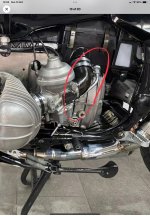
Any ideas what this pipe is for?

It’s part of a ‘cleaner emissions device’. Later bikes and some other markets had them. I’m sure someone will be more specific with their answer.
 
It’s an air recirculation pipe to help clean up emmisions . All later twins had them,
 
Do they do any good, or harm?
Ie, if they are fitted, is it worthwhile removing them, or just leave as is?

I’m sure the experts will be able to assist with this…..
 
Do they do any good, or harm?
Ie, if they are fitted, is it worthwhile removing them, or just leave as is?

I’m sure the experts will be able to assist with this…..
If it's part of the design (it is) it is likely to improve the environmental impact of emissions.
 
It’s a system that allows air into the exhaust port just after the valve and provides extra air to complete the combustion of any unburnt fuel headed out of the motor to give a cleaner emission. Inside the air box there are a couple of large valves that form part of the system too. It’s easy to remove, you just strip out all of the gubbins, blank off the holes in the air box or fit an earlier air box without the holes, and finally blank off the holes in the head with a blanking plug. There are no electronics involved, it’s all mechanical. Advantages are less to go wrong, less weight, more airbox volume. Disadvantages are marginally worse emissions and loss of originality. It took mine off 😜
 
It’s a system that allows air into the exhaust port just after the valve and provides extra air to complete the combustion of any unburnt fuel headed out of the motor to give a cleaner emission. Inside the air box there are a couple of large valves that form part of the system too. It’s easy to remove, you just strip out all of the gubbins, blank off the holes in the air box or fit an earlier air box without the holes, and finally blank off the holes in the head with a blanking plug. There are no electronics involved, it’s all mechanical. Advantages are less to go wrong, less weight, more airbox volume. Disadvantages are marginally worse emissions and loss of originality. It took mine off 😜
Triumph Bonnevilles post 2001 had a similar system. Dealers would remove the gubbins at first service et voila the popping on de acceleration would go away.
 
If it's part of the design (it is) it is likely to improve the environmental impact of emissions.

These engines were designed in the 1930’s and it wasn’t part of the design then… it was a desperate attempt (and failed) to pass the ever tightening emmissions tests in the last two years of this engines life.
 
Pipe envy.
New listing on TT and other sites allowing you to burden down your classic with extra shite and fittings that do nothing, but allow you to keep up with the others..
 
Pipe envy.
New listing on TT and other sites allowing you to burden down your classic with extra shite and fittings that do nothing, but allow you to keep up with the others..

I’m sure if you chromed the pipes and added a couple of led light fittings you’d sell shed loads to those who love adding unnecessary shite to their awesome steeds.
 
Seem to remember reading somewhere that the system MAY shorten the life of the exhaust valves. I took mine off. As others have said, a sump plug fits the drilling in the head. At the other end, a couple of the rubber crankcase bungs will fill the holes left in the airbox a bit more neatly than duct tape...
 
Just returned to an Airhead R65 and enjoying it.
In the early 80s BMW had serious problems with valves and seats, poor material choice etc. Some suffered with high valve seat wear and others with damaged exhaust valves. The emissions air injection system took a lot of the blame. Thing was these were the days when people rode 1000s of miles a year, with todays usage it’s hardly likely to cause a problem if it’s running well. Taking it off and blanking the ports will have no effect on running and if it’s like when removed on my Bonneville it stopped some popping on the overrun.


Back
Top Bottom