

You are using an out of date browser. It may not display this or other websites correctly.
You should upgrade or use an alternative browser.
You should upgrade or use an alternative browser.
Bloody Ell! Would you ??
- Thread starter DrFarkoff
- Start date

I've looked at it again and again and I do like it and there is plenty of "depth" of metal plus all the edges of the holes seem to be radiused and lets face it Jim Cray has been doing these a long long time!
Here's a Pic Dean lear sent me of his San Hose lightened clutch Middle Pic left of centre

Ole Deano Don;t mess around None either
#

Here's a Pic Dean lear sent me of his San Hose lightened clutch Middle Pic left of centre
Ole Deano Don;t mess around None either
#
And Here's a question I knew it was Jim Crays design and I've heard of his work
But Who saw it, before they knew Jim Cray, had carried out the work and Went OMG??
Come on Hands up!
But Who saw it, before they knew Jim Cray, had carried out the work and Went OMG??
Come on Hands up!
Does not look to have enough area left for the clutch driven plate to drive on, recon we may have slippage
agreed...must be down by 50% or more

I dont think it looks brilliantly done either...then gaps between the big holes on the clutch drive are not equal... i bet its out of balance..
if the object was to make a super light flywheel for a racer...fail...unless it has a lot less power than a stocker!

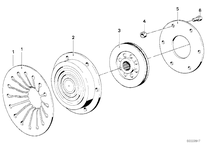
Re Clutch area it's not a conventional car unit Guys
the Diapraghm sits in there Part1
Parts 2 and 5 are the pressure plate area
and Part 3 is the driven plate connected to the gearbox
oops....now it makes sense

Shep
Shep of the Dessert
And Here's a question I knew it was Jim Crays design and I've heard of his work
But Who saw it, before they knew Jim Cray, had carried out the work and Went OMG??
Come on Hands up!
You're right! I was horrified.......
That first B could have been an 8, shocking!

Paul Rochdale
Registered user
Jim Cray can do no wrong in my eyes. Eighteen years ago he rebuilt my R100/7 motor and he's just about to start on my R100GS-PD engine too.
Yep it was never meant to "Dis" Jim Cray
You don;t get to his age working on things without gaining some knowledge
I once saw the aftermath of a Lightened Mini Flywheel that broke up and chewed its way through the gearbox casing and up through the bulkhead
You don;t get to his age working on things without gaining some knowledge
I once saw the aftermath of a Lightened Mini Flywheel that broke up and chewed its way through the gearbox casing and up through the bulkhead
Jim Cray can do no wrong in my eyes. Eighteen years ago he rebuilt my R100/7 motor and he's just about to start on my R100GS-PD engine too.
simoto
Registered user
Very nice. It's going to rattle like a bastard at tickover and have bugger all torque. Why would you want to do it?
This modification will have zero effect on the torque figure.
Torque is a measure of engine efficiency, the turning force generated by the engine.
You would do it to increase the rate at which the engine is able to accelerate and to reduce engine braking, which would suit some riders/circumstances
It should spin up PDQ , but as said, bugger all torque and no engine braking. He should've bought an RD.
Engine braking will be much increased due to less inertia.

Engine braking will be much increased due to less inertia.
You might want to think about that some more...

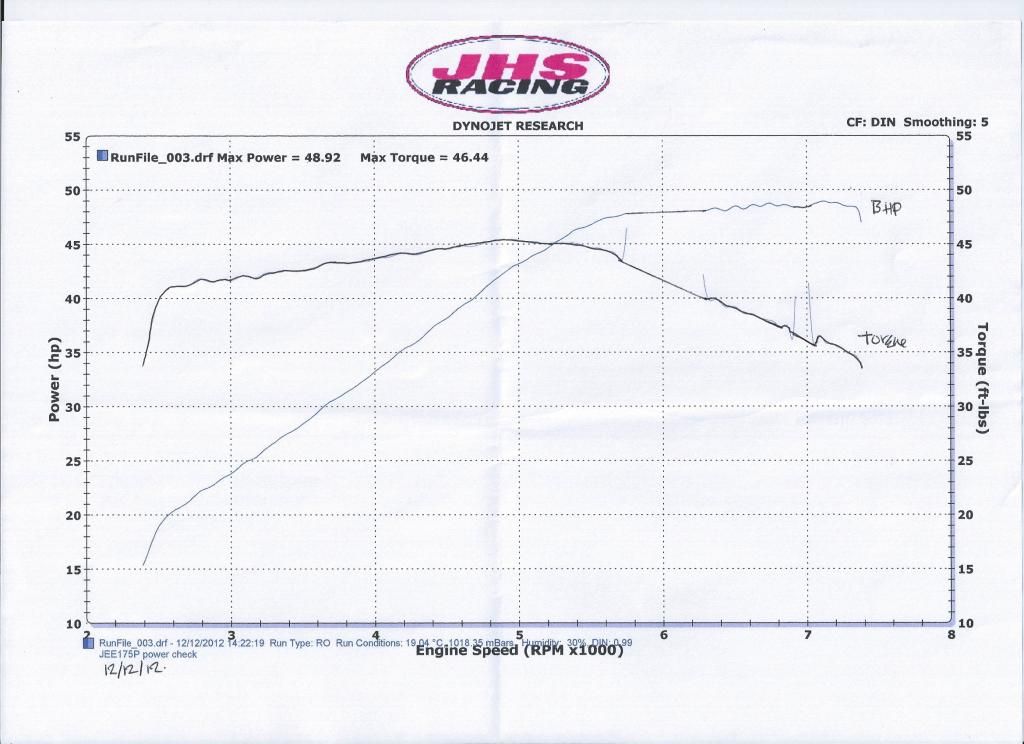
that's my flywheel, done as part of a full refurb of my 90/6 engine, including twin plugging, lightweight pistons and a fully balanced engine. It's very smooth and pulls from no revs, with a very flat torque curve.
I managed to roughen up the ring gear after the starter stuck and by using a 9 tooth starter motor, so removed the flywheel to clean it up.
It still picks up revs slower than my 82, but that has a 1070 kit fitted!
I'm also fitting a Motoren Israel 320 degree cam and it will be interesting to see what difference that makes
Charles
I managed to roughen up the ring gear after the starter stuck and by using a 9 tooth starter motor, so removed the flywheel to clean it up.
It still picks up revs slower than my 82, but that has a 1070 kit fitted!
I'm also fitting a Motoren Israel 320 degree cam and it will be interesting to see what difference that makes
Charles

lots of internet experts need to read some more...
http://www.uucmotorwerks.com/flywheel/there_is_no_torque_loss.htm
http://www.uucmotorwerks.com/flywheel/how_a_lightweight_flywheel_works.htm
http://www.uucmotorwerks.com/flywheel/there_is_no_torque_loss.htm
http://www.uucmotorwerks.com/flywheel/how_a_lightweight_flywheel_works.htm

You might want to think about that some more...
Well I thought about it and I reckon that he's right - a lighter flywheel has less inertia and therefore has less effect on speed change(rotational) - the clue is in the name - engine braking. Any rotating mass will fight the decelerating engine, the greater the mass, the greater the inertia hence the greater the resistance to change.
Take it to the extreme, an engine driving a massive flywheel will take an age to slow down if you kill the ignition/stop the petrol. An engine driving no flywheel will come to a halt very quickly.
of course this is just my simple understanding - yours may differ


patzx12
Registered user
Does this mean you can carry more luggage \ duty free?


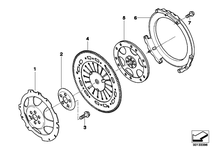

Never mind that, the K-Series 'Bricks' and the V12 BMW built specifically for the McLaren F1 have no flywheel.
wot about the 12 GS clutch then, it weighs feck all ?

The main difference between the heavy and the light flywheel bikes is that with the light flywheel the engines picks up and loses revs more quickly and this really improves the gearchange.
Mind you the my light flywheel bike is still better at this than the one with the lightened flywheel, both are happy at low revs with a careful hand.
Mind you the my light flywheel bike is still better at this than the one with the lightened flywheel, both are happy at low revs with a careful hand.

Similar threads
- Replies
- 41
- Views
- 2,334

- Replies
- 5
- Views
- 672


- Replies
- 9
- Views
- 960

