endplay in rear wheel bearings?

Magwa

Well-known member
UKGSer Subscriber
Joined
Dec 12, 2006
Messages
1,658
Reaction score
412
Location
Llanbrynmair
Well just a quickie

I took my 1150GSA with 22,500miles on the clock (52 plate single spark model/ No ABS) for MOT and for the first time EVER had an advisory:blast

MOT tester pointed out there was ' dectectable' end play/ float in the rear wheel.
I checked myself with him and he's right.:blast

Just dectectable BUT it feels more like endfloat than bearing play?
If this is rear wheel bearings how/ easy/ difficult:augie
Can i do it in situ ?:augie
well I've got till next MOT to sort it:thumb

I did a check ( with the owners permission) on the 1200GS in for the next MOT for comparsion and there was NO endplay/ float

Cheers all

Magwa:thumb

should I be reading THIS:-
http://www.ukgser.com/forums/showthread.php?t=159180&page=2
 
Almost certainly the paralever bearings.

Apply the rear brake and test again, if it disappears then it is the wheel bearing, if not paralever's, which you can adjust but my experience is that once there's play there they're on their way out.

On Steptoe's advise I'm now going to regularly (once a year) re grease them....when I get around to it:augie
 
Yep, got to do my paralever bearings this weekend. AGAIN! Only did them 6 months/6,000 miles ago.

My GS seems to eat them.

Didn't have a spare hand/foot handy to press the rear brake so I'm only 99% sure it's not the wheel bearing.

Either way, I have a spare set of both sitting on a shelf in the garage. Could be a fun weekend :D

Regards

Rob C
 
Didn't have a spare hand/foot handy to press the rear brake so I'm only 99% sure it's not the wheel bearing.

Use a block of wood, hammer handle...anything wedging the brake pedal, same for undo/torqueing wheel bolts:thumb

If they've gone again after such a short time check the pinions for wear too.
 
Almost certainly the paralever bearings.

Apply the rear brake and test again, if it disappears then it is the wheel bearing, if not paralever's, which you can adjust but my experience is that once there's play there they're on their way out.

On Steptoe's advise I'm now going to regularly (once a year) re grease them....when I get around to it:augie

Cheers
I'll try adjust first but get new bearings on order by the sound of it :thumb
 
Use a block of wood, hammer handle...anything wedging the brake pedal, same for undo/torqueing wheel bolts:thumb

Heh, I was stopped in Clacket Lane services at the time. Bike had felt funny when hooning around the roundabout just before I joined the M25.

What pinions should I be checking? I was going to remove the bearings from both sides in their entirety so see what condition they're in. Last time, they were completely mangled. Buggered if I know why.

Regards

Rob C
 
What pinions should I be checking? I was going to remove the bearings from both sides in their entirety so see what condition they're in. Last time, they were completely mangled. Buggered if I know why.

The pinions which fit into the bearings, rh side fixed, lh side adjustable with locknut :confused:

When the bearings are knackered it wears this pinion on one or both sides.

Mangled? Either wrongly adjusted. Fitted to worn pinions which makes accurate torque adjustment impossible. No grease:thumb
 
The pinions which fit into the bearings, rh side fixed, lh side adjustable with locknut :confused:

When the bearings are knackered it wears this pinion on one or both sides.

Mangled? Either wrongly adjusted. Fitted to worn pinions which makes accurate torque adjustment impossible. No grease:thumb

I think you meant trunnions instead of pinions. :)
 
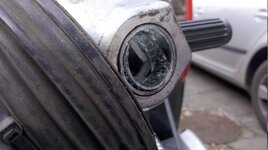
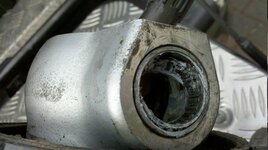
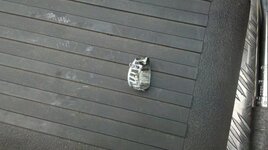
Change the pivot bearings at the weekend again. As expected the cage for the right hand bearing was mangled. Photo's attached. This is the second time in 6 months/6,000 miles this has happened.
All other parts of the bearing and bolts appear to be good nick.

Both times I've followed Steptoe's guide on replacing them. It's not hard so I can't have got it wrong.

Tightening procedure I use:

Torque left bolt to 9nm.
Back it off and retorque to 7nm.
Mark bolt with a marker pen.
Torque lock nut to 160nm.
Check bolt has not moved. It hasn't
Torque right bolt to 160nm.
Check final drive has smooth up/down movement. It has.

Same process as the time before too. I'll just have to wait and see how long this bearing lasts.

Regards

Rob C
 

Attachments

  • pivot_cage_small.jpg
    pivot_cage_small.jpg
    66 KB · Views: 254
  • pivot_cage_small2.jpg
    pivot_cage_small2.jpg
    72.9 KB · Views: 249
  • pivot_cage_small3.jpg
    pivot_cage_small3.jpg
    71.1 KB · Views: 255
This is the second time in 6 months/6,000 miles this has happened.
All other parts of the bearing and bolts appear to be good nick.

Are you 100% sure you've fitted the tapered outer part of the bearing the right way round?
 
I would say that's misalignment damage

I always undo the bottom tie bar and wiggle the FD up and down to check for tightness or graunchiness whilst assembling and recheck after torquing the pivot pins

are the inner bearings a "snug" fit on your pins?
 
Tightening procedure I use:

Torque left bolt to 9nm.
Back it off and retorque to 7nm.
Mark bolt with a marker pen.
Torque lock nut to 160nm.
Check bolt has not moved. It hasn't
Torque right bolt to 160nm.
Check final drive has smooth up/down movement. It has.

Something doesn't sound right there... you should be tightening the right hand (outer) first and then the left 9/7nm followed by the locknut.... there's no point setting a 7nm preload and then banging a 160nm 'load' in from the other side :blast :thumb
 
Ok, I'm willing to accept I torqued everything up in the wrong order. What is the correct order? I'd like something definitive. I don't immediately believe everything I read on the internet you know :D

Since following the Steptoe guide first time I've done it from memory since. I'll check that to see if there was a tightening order.

Regards

Rob C
 
I did exactly what Paul FG said, which I believe is correct. No problems so far...........

Likewise - fixed pinion first.

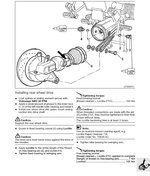
Page from factory manual below:
 

Attachments

  • paralever.jpg
    paralever.jpg
    96.4 KB · Views: 247
I can loosen them all this weekend but what difference does it really make? It's the right hand bearing that is always ruined. How does tightening that one first prevent that? It's completely separate from the left hand bearing.

I'd like to understand why it would make a difference.

Regards

Rob C
 
I can loosen them all this weekend but what difference does it really make?....

A lot apparently :D

both bearings are tapered with the taper sloping away from the inside face.

so they need to act together to work correctly as when you set up the pivot points they push against each other so the bevel box can swing through it's arc freely an smoothly

so if you fit both pivot points hand tight then tighten up the adjustable LHS then the RHS you'll be surprised by how much the RHS moves when torqued upto 160nm so your crushing the bearings together past there desgn limit so you'll get premature failure,

if on the other hand you do the RHS which is fixed then the adjustable LHS you can correctly set the initial torque at 7nm then do the locknut to 160nm

as an analogy imagine two lines 100mm apart but the slightest pressure will push the two lines together and they need to stay 100mm apart, if you do the LHS first then the RHS you crush the lines together to 95mm since you've got to heave on the RHS to torque to 160nm, if you do it the other way round you can set the adjustable side so it's just touching the line and then torque up the locknut with out moving the pivot point so the lines stay 100mm apart

HTH
 
Swivel pins

That picture looks like over tightening.


Back
Top Bottom