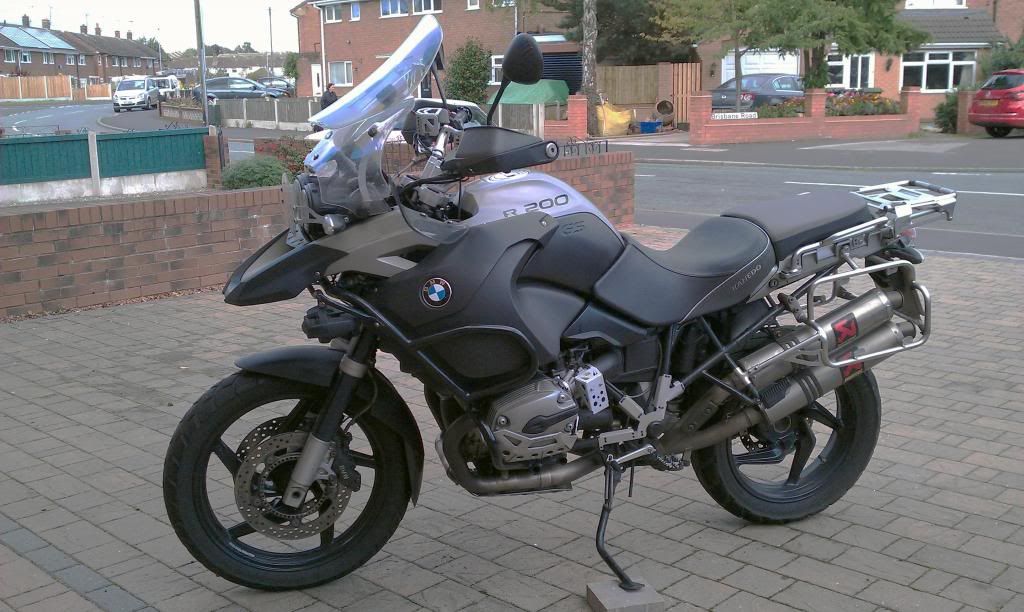
exhaust flapper

These give a higher tone when wound up and really make it rip. I have a 30mm baffle on spacers in each outlet. A little flapper in each outlet with no baffles would be nice to calm it down in polite company but I'm a responsible rider. ;)

 
hi everyone ,what do you do with the two cables that go to the valve control
 
Unplug the motor and remove the whole thing complete with cables.
 
I have one spare piece if anyone wants it. 63mm diameter with a 2mm wall thickness cut to length but it will be a tight fit (which is good) and need dressing with emery cloth.
 
hi everyone ,what do you do with the two cables that go to the valve control

I took the cover off the actuator and removed the cables. I found two old expanding rubber screen bolts and put them in the holes, sealing them nicely. Put the cover on, and Bob's yer perverted family member of choice!

The actuator stays in place so the bikes brain should never throw up any error/ faults. As someone else said, the removed bits are in an oily bag on a shelf to be refitted if needed.
 
Just remove the whole thing. Only one error code is generated and it is never displayed at the instruments.
Also some guys were saying their bike cuts out or stalls if they we blipping the throttle at the lights. Perhaps the flappy valve couldn't keep up?
 
The closed valve will restrict gas flow but should make no difference to the engine's needs at town speeds.
 
I just removed the exhaust and flapper valve, along with the control unit. Removed the cables from the control unit and covered the holes where the cables were with pvc tape. Replaced the unit and plugged it in again so no fault codes show up.

No faults will show on the dash display (nor will said display show any faults if you simply remove/unplug the control unit entirely), but if you plug in a GS-911 or similar you will see that it does indeed show a fault. The exact fault shown will vary depending on whether you have removed/disconnected just the valve or the servo box as well. I think the only way to ensure *no* faults shown would be to take the valve out of the exhaust system but leave it (and the control box) physically connected to one another and wired up to the bike.
 
I took the cover off the actuator and removed the cables. I found two old expanding rubber screen bolts and put them in the holes, sealing them nicely. Put the cover on, and Bob's yer perverted family member of choice!

The actuator stays in place so the bikes brain should never throw up any error/ faults. As someone else said, the removed bits are in an oily bag on a shelf to be refitted if needed.

Even with the actuator/control box still in place, if you remove the cables it will still throw up an error. Nothing will display on the dash, but the error code is still readable via a GS-911.
 
Suppose the main benefit is prevention rather than cure.
I believe its a question of when, rather than if, the flapper seizes up and can restrict the exhaust all of the time without the owner being aware.

If/when it does seize, it will generally fail in the fully-open position (the valve is spring loaded and "rests" in the open state).
 
I'll second that.
I removed the flapper and cables but left the control box in place. While getting it serviced, he was able to tell me that it was showing up an error code on the GS-911.
 
Funnily enough I was just looking at it yesterday and thinking the same thing. Just need to seal up the plug and stash it away somewhere.
You mentioned earlier about stalls and hesitancy when blipping the throttle. Think that might be down to weak fuelling.
Look up booster plugs, re maps and Power Commanders sometime you have a month to spare. :blagblah
 
So why leave the control box there??? I just gotta know.

Indeed.

Take off the whole assembly (valve, cables, motor) and unplug from the wiring loom. The GS-911 will show there is a fault on the servo motor but you know 100% why that is so nothing to worry about.

Oil the valve spindle and bag it all up in plastic with some silica gel to refit when you sell the bike.


Back
Top Bottom