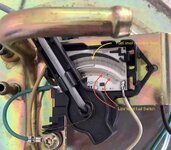
I'm hoping for some hive mind technical input from anyone familiar with the R1150GS Adventure fuel sender and warning light system. The bike is a 2002 R1150GSA with approximately 250,000–260,000 miles on the clock and after a run went to start today and ... bingo...
The original fuel sender / pump plate assembly failed in around 2012 after approximately 110,000 miles and was replaced with a genuine BMW pump plate and sender assembly. The current assembly is therefore around 14 years old and has covered approximately 140,000–150,000 miles.
Symptoms
The following resistance readings were taken on the 'tank side' of the four-pin connector with the ignition switched off. Tank Side Resistance Measurements
| Pins | Resistance
| Pin 1 to Pin 2 | 0.6 Ω
| Pin 1 to Pin 3 | 6.56 Ω
| Pin 1 to Pin 4 | 0.50 Ω
| Pin 2 to Pin 3 | 5.52 Ω, slowly falling
| Pin 2 to Pin 4 | 1.0 Ω
| Pin 3 to Pin 4 | 4.2 Ω
Bike Side Resistance to Ground
| Pin | Resistance
| Pin 1 to Ground | 1.0 Ω
| Pin 2 to Ground | 1.1 Ω
| Pin 3 to Ground | 6.88 Ω
| Pin 4 to Ground | 1.1 Ω
Bike Side Voltage to Ground (Ignition On)
| Pin | Voltage |
| Pin 1 to Ground | 0 V
| Pin 2 to Ground | 0.9 V
| Pin 3 to Ground | 7.9 V
| Pin 4 to Ground | 12.2 V
Additional Information
One of the pump plate retaining bolts is already loose, which makes me reluctant to disturb the assembly unnecessarily. She is not leaking and i don't want her to start...
At present she runs perfectly, the fuel pump is operating normally and there are no fuel leaks. Given the age of the pump plate assembly and the condition of the retaining hardware, I do not want to risk damaging the seal or creating a fuel leak where none currently exists - the plate repair and bolt replacement can wait until its snowing and cold up here...
I can quite happily live without the fuel gauge and simply use the trip meter, so I am not looking for a reason to dismantle the tank. Rather, I am looking for any advice from those familiar with the R1150GS Adventure fuel sender system to ensure that I have not overlooked something obvious in the electrical testing.
So... my question is
Based on the resistance and voltage readings above, does anything stand out as a known fault pattern on the R1150GS Adventure?
In particular, do the readings suggest:
A failed fuel level sender?
A failed low-fuel warning circuit?
An internal pump plate wiring fault?
An earth/ground fault?
Something else entirely?
Any technical interpretation of the readings would be greatly appreciated before I consider disturbing the pump plate assembly.
Ta
The original fuel sender / pump plate assembly failed in around 2012 after approximately 110,000 miles and was replaced with a genuine BMW pump plate and sender assembly. The current assembly is therefore around 14 years old and has covered approximately 140,000–150,000 miles.
Symptoms
- Fuel gauge displays no bars from the moment the ignition is switched on.
- Amber low-fuel warning light is permanently illuminated.
- Tank currently contains approximately 20 litres of fuel.
- Bike starts, runs and rides perfectly.
- Fuel pump primes and operates normally.
- No fuel leaks.
- Rocking the bike makes no difference to the gauge reading.
- When the bike is rocked, movement can be heard from within the tank, suggesting the float mechanism is not completely seized.
- Original RID is still fitted.
- The RID appears to be functioning because the temperature gauge works normally and the low-fuel lamp is being driven.
The following resistance readings were taken on the 'tank side' of the four-pin connector with the ignition switched off. Tank Side Resistance Measurements
| Pins | Resistance
| Pin 1 to Pin 2 | 0.6 Ω
| Pin 1 to Pin 3 | 6.56 Ω
| Pin 1 to Pin 4 | 0.50 Ω
| Pin 2 to Pin 3 | 5.52 Ω, slowly falling
| Pin 2 to Pin 4 | 1.0 Ω
| Pin 3 to Pin 4 | 4.2 Ω
Bike Side Resistance to Ground
| Pin | Resistance
| Pin 1 to Ground | 1.0 Ω
| Pin 2 to Ground | 1.1 Ω
| Pin 3 to Ground | 6.88 Ω
| Pin 4 to Ground | 1.1 Ω
Bike Side Voltage to Ground (Ignition On)
| Pin | Voltage |
| Pin 1 to Ground | 0 V
| Pin 2 to Ground | 0.9 V
| Pin 3 to Ground | 7.9 V
| Pin 4 to Ground | 12.2 V
Additional Information
One of the pump plate retaining bolts is already loose, which makes me reluctant to disturb the assembly unnecessarily. She is not leaking and i don't want her to start...
At present she runs perfectly, the fuel pump is operating normally and there are no fuel leaks. Given the age of the pump plate assembly and the condition of the retaining hardware, I do not want to risk damaging the seal or creating a fuel leak where none currently exists - the plate repair and bolt replacement can wait until its snowing and cold up here...
I can quite happily live without the fuel gauge and simply use the trip meter, so I am not looking for a reason to dismantle the tank. Rather, I am looking for any advice from those familiar with the R1150GS Adventure fuel sender system to ensure that I have not overlooked something obvious in the electrical testing.
So... my question is
Based on the resistance and voltage readings above, does anything stand out as a known fault pattern on the R1150GS Adventure?
In particular, do the readings suggest:
A failed fuel level sender?
A failed low-fuel warning circuit?
An internal pump plate wiring fault?
An earth/ground fault?
Something else entirely?
Any technical interpretation of the readings would be greatly appreciated before I consider disturbing the pump plate assembly.
Ta