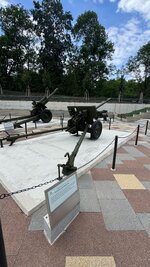
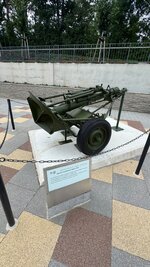
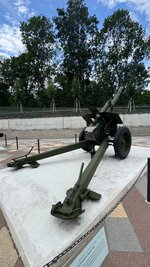
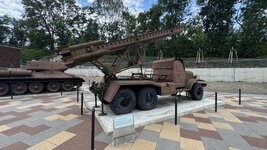
Thursday, continued…..
Following my change of plan to do everything on my bicycle, I started my ‘holiday on the Oder’ by going to Seelow, the town that gives its name to the ridge of the Seelow Heights and was the very centre of the Russian’s strategic plan for the battle. Zukhov, the overall commanding Russian general, was under immense pressure to take Berlin and had promised Stalin that the heights and town of Seelow would fall on day one. That plan and promise failed, it finally took three days of intense bombardments and continuously hard fighting for the Russians to advance the 20 km (12 miles) from their bridgeheads on the river Oder to the town of Seelow.
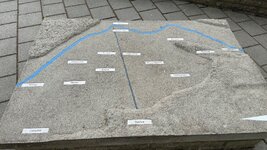
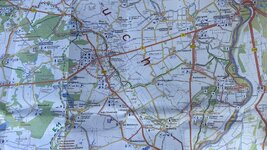
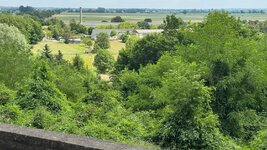
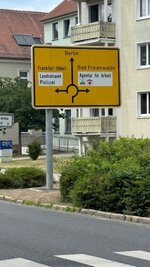
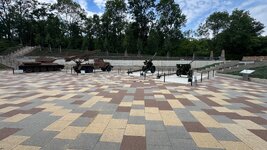
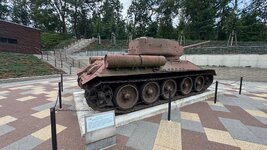
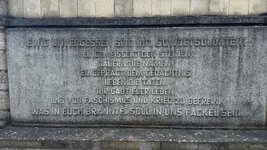
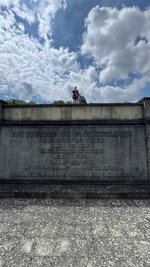
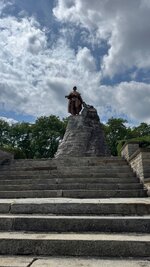
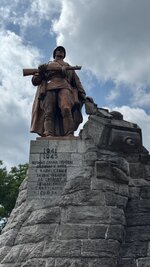
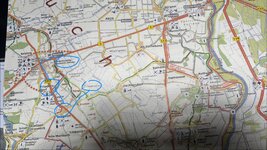
The tiny hamlet where I’m staying is right in the centre of the Russian central advance. Though not mentioned specifically in the books I’ve read, it must have featured in the battle, alongside the villages that are mentioned. The map I was loaned is helpful. We start in Friedenstahl, taking the small country road, crossing the single track railway line running north to south (this railway formed a part of the battle) before turning right at Dolgelin, to pass through Frieddersdorf to Seelow itself to end at the Russian memorial on the edge of the Seelow Heights, looking back towards Kustrin:
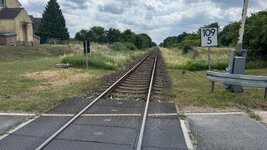
 The little single track railway line, running north south and was a target for the Russians to cut is still there:
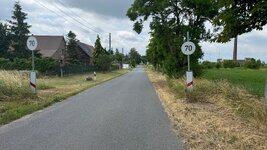
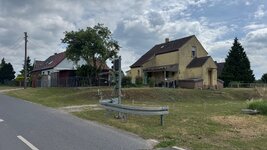
Dolgelin is a simple crossroads hamlet of a few houses. However, crossroads (like Bastogne, miles away in Belgium) are strategically important to defender and attacker alike. It featured heavily in the battle of day one and beyond,, as these snippets record:



We’ll turn right at Dolgelin and follow the road north through Friedresdorf to Seelow, but here’s an extract from the book describing the Russian bombardment onto Dolgelin and its surroundings, all around where we are standing now:
Gnr Hans Hansen with the 3rd Battery, Ist Battalion, 26th Flak Regiment, 23rd Flak Divi-sion, which was deployed in a field west of the Sachsendorf-Dolgelin road, described his experience of the opening barrage and went on to write:
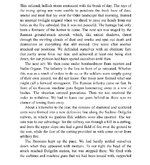
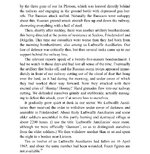
The account was given by an Luftwaffe Auxiliary soldier, probably not much more than a boy. It confirms not just the intense fighting but also that by now the Germans (scraping the very bottom of the barrel for troops and weaponry) had pressed troops that were untrained in ground fighting into desperate action in an attempt to stop the Russians.
While most traces of the war (bar the trenches that can still be found in some of the fields and woods) are now gone, the starkest reminder lies in fact that there are no old houses at all anywhere. Everything was destroyed and then each hamlet rebuilt in I guess the 1950’s.
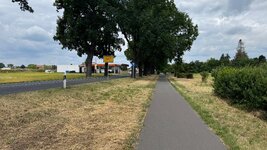
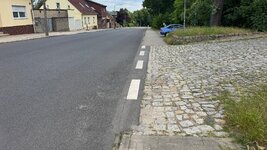
On the road / cycle path (which is excellent) you pass over one of the many drainage dykes that litter the floodplain:
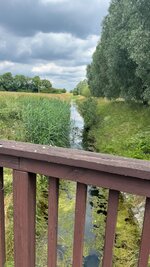
The number of ditches and small canals, combined with the waterlogged ground following the April thaw from winter, all impeded the Russian advance.
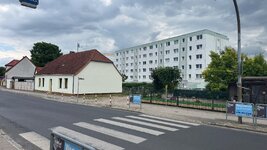
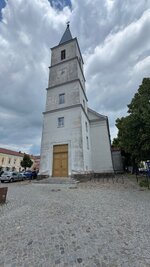
We are now coming into Seelow, a journey by bicycle which took me maybe 15 minutes, but which took the Russians about three days: