Le Mans to Berlin and a bit beyond

oooooh nazi stuff, Icecream... and machine guns..... volkssturm gewehr VG-2 "people's assault rifle mk2" (well there's models 1-5) the later veriants looked even shitter)

 
Friday.

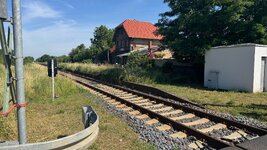
Leaving my camping place, I passed by Dolgelin’s former railway station, which is now a private house. This saw lots of fighting during the battle, as of course did Dolgelin itself:

IMG_9420.jpeg

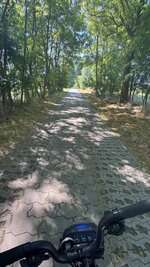
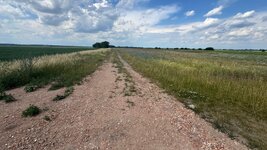
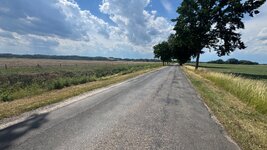
From there I followed the cycle paths across the flat flood plain:

IMG_9422.jpeg

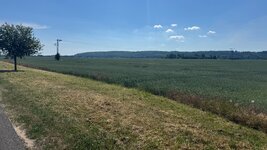
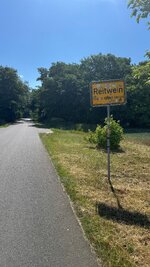
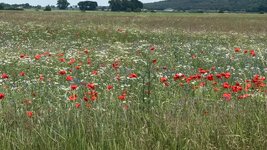
Looking away to my right I could see the end finger of the Reitwein Spur, coming into view. The hamlet of Reitwein is right at the end of the finger, on the plain itself. This picture probably shows how steep the whole Seelow Heights ridge is:

IMG_9423.jpeg

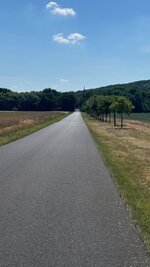
Eventually the spire of the destroyed church at Reitwein came into view. You can see it silhouetted against the skyline and again, the steepness of the ridge:

IMG_9424.jpeg

IMG_9425.jpeg

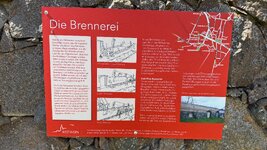
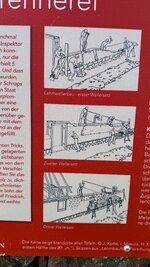
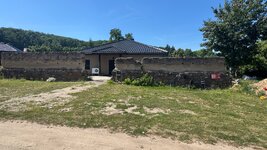
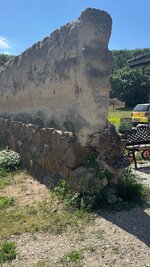
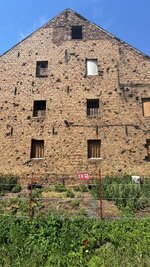
One good thing about the slower pace of a bicycle, is that you often spot things you’d miss in a car or on a motorcycle. This is one such example. It’s an explanation of how traditional walls for buildings were made. Given that Reitwein (it is just a handful of houses) was flattened in the battle, it’s surprising that anything remains. It’s nice that someone has preserved the ancient wall and gone to the trouble of telling how it was made. Google tells me that the building was originally a distillery:

IMG_9426.jpegIMG_9427.jpegIMG_9428.jpegIMG_9429.jpeg

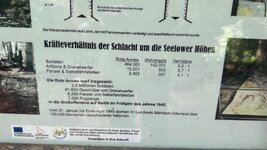
In the picture, you can see the sandy soil which forms the flood plain. This is often quite deep in places, which stops the small wheel of the Brompton bicycle in its tracks. In the battle it formed a thick gluey paste in the thaw of April, slowing the men’s advance to a crawl and bogging down tanks.
 
Last edited:
I need to catch up on this thread Wapping...from the start, but looks like you are enjoying yourself 👍
 
…. but looks like you are enjoying yourself
Indeed I am.

Whilst Le Mans was a tried and tested affair (though returning to camping at Arnage Corner again after about 15 or 20 years was ‘new’) the rest has been very much DIY, based on nothing more than reading a few books, the powers of Google and a bit of imagination.

:beerjug:
 
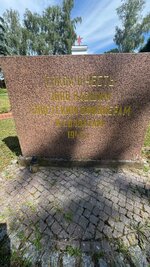
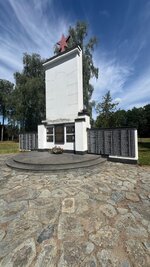
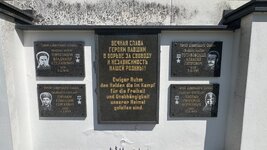
My first stop in Reitwein was to visit the Russian military cemetery. As with all war grave sites, it is kept neat and tidy. I assume the grass cutting and general maintenance is done by a local company or the council?

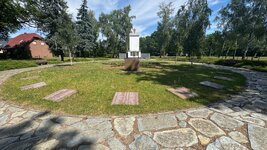
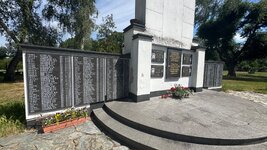
The site is a decent size, with the obligatory ‘Red star’ in place on top of the memorial and laid out in a raised bed of sorts.

I am not sure why some of the Russian graves are in black marble and some separate. My guess is that these souls were transferred from another site, perhaps?

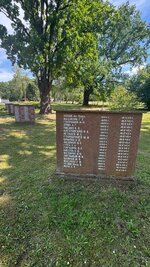
Similarly, I am not sure why some (indeed, many) record no year of birth. My guess here is that the bulk of the Red Army was made up of peasants, at best semiliterate or quite possibly, illiterate. It is quite possible that they did not know their date of birth and the Red Army did not care.

Unsurprisingly, there are 100’s of names recorded, their dates of death most often mirroring the fighting in the area:

IMG_9436.jpegIMG_9434.jpegIMG_9435.jpegIMG_9437.jpegIMG_9438.jpegIMG_9439.jpegIMG_9440.jpegIMG_9441.jpegIMG_9443.jpegIMG_9444.jpegIMG_9445.jpegIMG_9446.jpeg
 
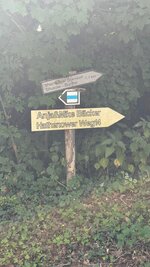
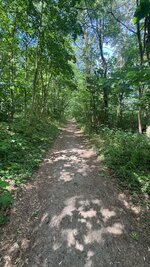
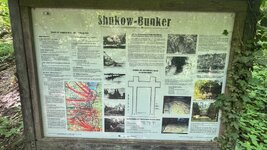
The hamlet of Reiwein lies at the foot of the Retwein Spur, so to visit Zhukov’s Bunker, you have to follow a foot path up the slope:

IMG_9430.jpeg

IMG_9449.jpeg

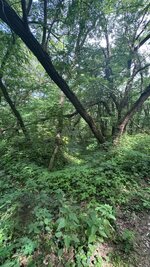
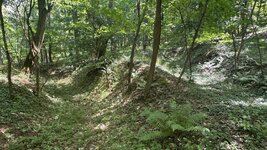
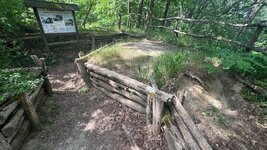
By this stage of the war the slope was denuded of trees and would have resembled a moonscape, covered with trenches, dugout sites, artillery and mortar positions. Nature has claimed the site back again, but now and again you can see places that ‘Don’t look right’ which must have been man-made emplacements 80 years ago:

IMG_9450.jpegIMG_9466.jpeg

The bunker was tunnelled through the rise, with just the forward observation platform exposed:

IMG_9453.jpegIMG_9454.jpeg

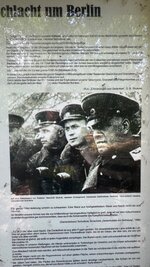
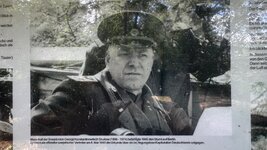
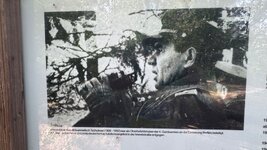
In fact, the bunker was built for another general, whose task it had been to organise the local attack towards Seelow. If I recall correctly, Zhukov (the senior Russian Field Marshal) pulled rank and arrived unannounced to watch the battle unfold, much to the local generals’ annoyance and frustration.

IMG_9460.jpegIMG_9461.jpegIMG_9462.jpeg

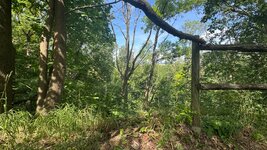
The view across the flood plain is oblique from the spur’s tip and, today is obscured by trees:

IMG_9455.jpeg

IMG_9458.jpeg

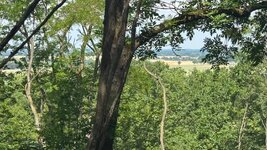
But by zooming in the phone camera, you can see what Zuhkov and the other generals would have seen through their binoculars, looking across the huge battlefield to Seelow:

IMG_9459.jpeg

I’ll find the description of the opening barrage that Zhukov witnessed and the troops experience of it.
 
Last edited:
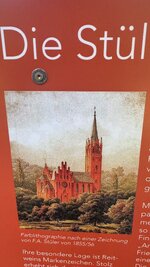
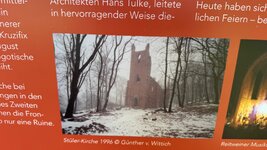
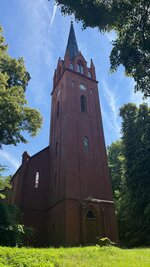
The last place to visit in Reitwein is the ruined church, only the steeple of which has been rebuilt;

IMG_9468.jpegIMG_9469.jpegIMG_9467.jpeg

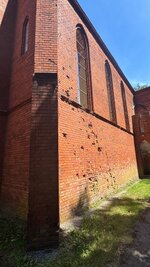
The outside walls still bear testament to the shelling:

IMG_9470.jpeg

IMG_9471.jpegIMG_9472.jpeg

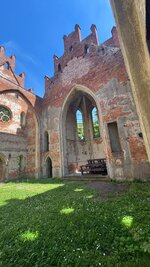
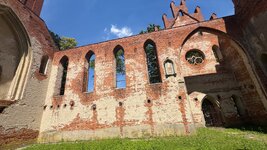
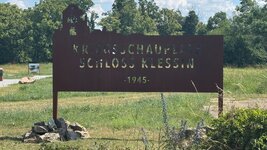
Next to pedal to closer to the Oder river, to the vanished manor house at Kessin, the scene of intense fighting as the Russians struggled to enlarge a bridgehead in preparation to take the Reitwein village and its eponymous spur.
 
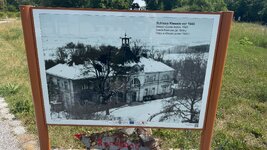
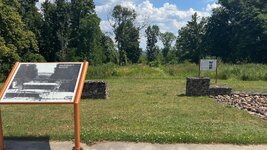
Klessin is another tiny hamlet, which was dominated by a manor house, whose misfortune it was to face exactly onto the Russian bridgehead and their route to Reitwein.

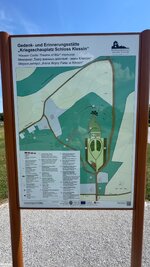
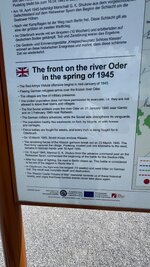
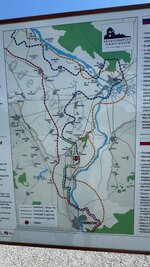
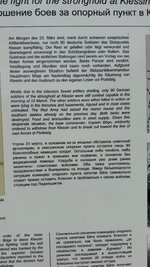
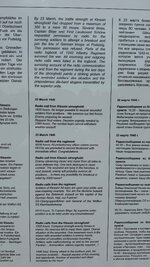
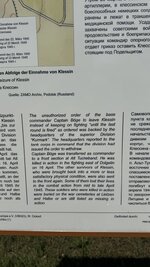
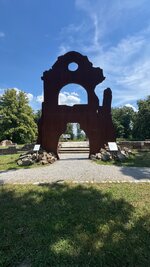
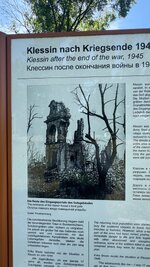
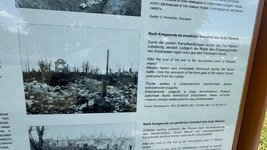
The local council has created a really very good open area, giving a full of description terrible events that unfolded here, in a matter of maybe 100 square metres. The battle to take the manor house was to last several days, the German holding force having been ordered to fight to the last man, cut off and facing a huge Russian force. It was both heroic and futile.

IMG_9477.jpegIMG_9478.jpegIMG_9479.jpegIMG_9480.jpegIMG_9481.jpeg
 
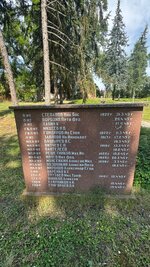
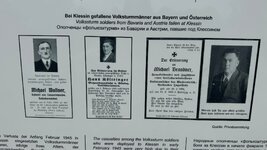
Some of the defending force was drawn from the newly raised ‘Home Guard’ units, some of whom were from miles away in Bavaria. You can see how old these ‘soldiers’ were from their obituary notices:


IMG_9482.jpeg

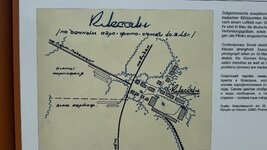
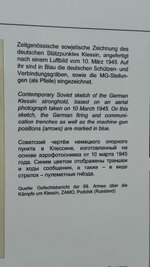
A contemporary Russian field sketch of the manor house and its defences:

IMG_9484.jpegIMG_9485.jpeg

A description of the doomed defenders’ last hours:

IMG_9487.jpeg

And the surviving radio transcripts:

IMG_9486.jpeg

And the final but inevitable breakout by the last remaining troops:

IMG_9488.jpeg

The last paragraph of the picture above is interesting (to me at least) as it mentions some of the survivors buried in Halbe. I plan on visiting the site of the appalling ‘Halbe Pocket’ on my return run to the UK. I guess that these soldiers died in the ‘Pocket’, miles away to the south of Berlin, in their attempt to retreat to the Elbe to surrender to the Americans.

IMG_9491.jpeg

The view from the front of what was the house towards the Oder. The Germans at one point moved a Hertzer tank destroyer into the house, using it to shell the Russian pontoon bridges on the river. It’s mission failed.

IMG_9492.jpeg


The remains of the house after the battle had passed over:

IMG_9494.jpeg

IMG_9495.jpeg

All in all, a place worth visiting.
 
Last edited:
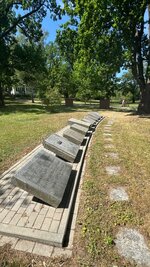
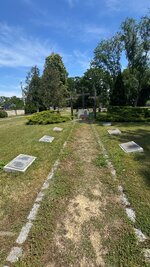
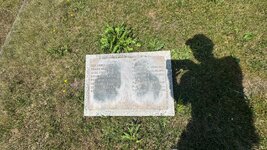
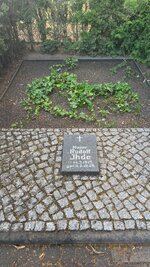
Before leaving Klessin, I visited the village’s little German war graves plot, part of the general cemetery:

IMG_9475.jpeg

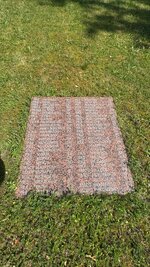
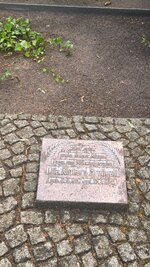
As is common, the little ground plaques record multiple names:

IMG_9476.jpeg

With it now towards 14:30 and the temperate in the mid-30’s, it was time to pedal back to where I started from. This involved cycling along some field paths, totally unsuitable for a Brompton. This was one of the better ones;

FullSizeRender.jpeg

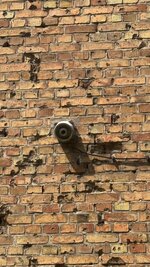
It did though mean I was probably following the same crude paths, raised a few inches above the flood plain, that the Russians would have taken towards Seelow, the ridge of which I could see. By luck, I chanced upon one of the very few remaining buildings from the time, the evidence of battle clearly still visible:

IMG_9496.jpegIMG_9497.jpeg

The plain is now very much more peaceful, with the Heights up ahead:

IMG_9500.jpeg

Finally, out onto a proper road, to home:

IMG_9501.jpeg

A return trip, all by bicycle of about 32 km or 20 miles all in.
 
Saturday, has been breakfast, followed by a few chores and doing a little clothes washing from the last few days. I will though pedal up to Seelow to visit the German cemetery in the town, my visit to which was delayed by the ‘Let me return this jar of mouldy cherry jam, please” police.

IMG_9503.jpeg
IMG_2093.jpeg
 
Last edited:
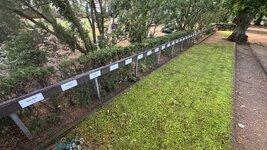
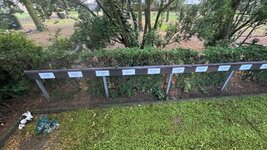
German war cemeteries’ graves are usually marked by somber granite crosses or plaques laid into the ground.

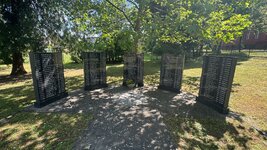
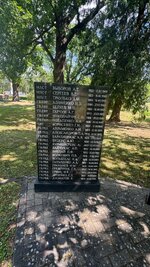
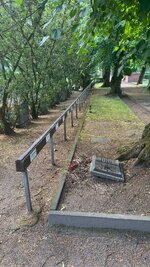
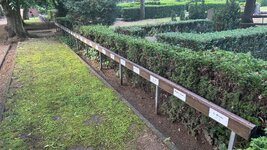
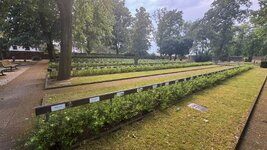
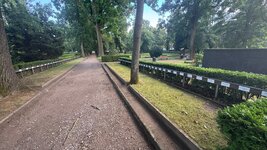
The cemetery at Seelow is different to any I have seen before, in that the graves are in lines (nothing different about that) but each is marked by an enamel plaque bearing the deceased’s name, dates of birth and death. The cemetery area is much bigger than I first thought. The revenue leading in has graves both sides, say 150 metres in length. The open field portion is full of rows, too. I suddenly realised that these rows are double sided. Near enough each death is from the period January 1945 through April 1945, in other words the period of the Russian offensive on the Oder.

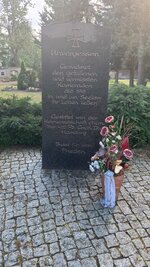
This is the memorial to the Panzergrenadier-Division "Hamburg", which fought and fell at Seelow:

IMG_9506.jpegIMG_9507.jpegIMG_9508.jpegIMG_9509.jpegIMG_9510.jpegIMG_9512.jpegIMG_9513.jpeg

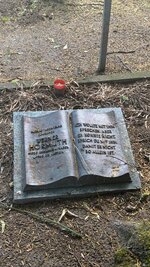
There is also a small number of personal ‘military’ graves:

IMG_9511.jpegIMG_9518.jpegIMG_9519.jpeg
 
Last edited:
One thing I like to do is to walk around graveyards and look at some of the dates of births and deaths.

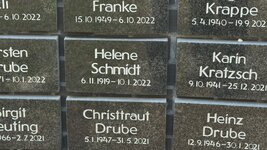
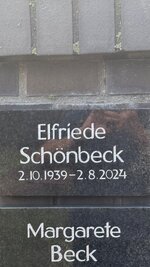
These two struck me:

IMG_9514.jpegIMG_9515.jpeg

Helene Schmidt was born in November 1919, one year after the Great War finished. She would have been 20 when the Second World War commenced. That means she must have spent her formative teenage years being schooled under the Nazi regime. What kind of girl was she? A Nazi ‘maiden’ all ‘Strength through joy’ perhaps? What became of her and her family through the war and after?

Elfriede Schõnbeck’s mother gave birth to her one month after the war started. She would have been six as the war ended. What destroyed world did she grow up in?

It’s personal histories like these that interest me, as much as anything else.
 
Brilliant and entertaining report Wapping. Finally got caught up this evening. Helene Schmidt's 102 years must have been interesting. Germany trying to rebuild after WW1 hyper-inflation the rise of the Nazi's. Lord knows what she went through as a 26 year old when the Russians prevailed. Living in East Germany when the Stasi had "Files" on nearly half of the population. Then the fall of the Wall and reunification. She lived through turbulent times!!
 
Thank you.

I have found that the German central government has a kind of ‘War Graves Commission’ operating under law, whose duty it is to maintain war graves.

Their website has some brief details of the Seelow cemetery:

The municipal cemetery is the resting place of 649 German soldiers, most of whom died between January and April 1945 in the battles for the Seelow Heights. The site, which was hardly known to the public before reunification, was renovated by the town in 1990.
Come the end of the war (and maybe not surprisingly) the Russians cared little for German war dead, millions of whom lay in Russia, Belarus and Ukraine, let alone the dead within Germany itself. Their only effort was to order the local German population to scour the surroundings to find bodies, not through any moral duty but rather because they feared disease. What the locals then did by way of burying or disposing the corpses was up to them. From the German side, the locals were struggling anyway, surviving or not in a totally shattered world.

There’s an interesting story about the ‘clean up’ in relation to the Halbe Pocket cemetery, the largest cemetery on German soil, which I’ve read about. I hope to see Halbe and the cemetery on my return journey.
 
Last edited:


Back
Top Bottom