Le Mans to Berlin and a bit beyond

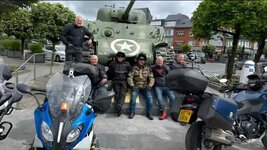
Interesting insight thanks Wapping. A few days ago I stumbled into Bastogne, greeted by a WW2 American tank with a shell hole up its rear. I had no idea. Embarrassingly! The Bulge, 101st airborne, the Screaming Eagles surrounded by German troops. Then, you’re in....the stories, history, human endurance as you are discovering. It’s unbelievable!

Oh yes, best cappuccino I’ve had in my life there too.
66E0427E-468F-4B05-B8F2-E9A5F86081C0.jpeg
 
Thank you.

I have found that the German central government has a kind of ‘War Graves Commission’ operating under law, whose duty it is to maintain war graves.

Their website has some brief details of the Seelow cemetery:


Come the end of the war (and maybe not surprisingly) the Russians cared little for German war dead, millions of whom lay in Russia, Belarus and Ukraine, let alone the dead within Germany itself. Their only effort was to order the local German population to scour the surroundings to find bodies, not through any moral duty but rather because they feared disease. What the locals then did by way of burying or disposing the corpses was up to them. From the German side, the locals were struggling anyway, surviving or not in a totally shattered world.

There’s an interesting story about the ‘clean up’ in relation to the Halbe Pocket cemetery, the largest cemetery on German soil, which I’ve read about. I hope to see Halbe and the cemetery on my return journey.
It's a very different cemetry to the one on the futa pass; it was 4 to a plot on one headstone; but like you say it's what you imagine on a personal level that makes the impact; horror and peace in harmony. Great write up wapping; (y)
 
everytime I get near Berlin, Greifwald or Usedom, I just get the urge to rush into Poland and shout "come on then...!" no idea why that is....
 
Interesting stuff, thank you.
Nice to see the Russian Cemetery and their war dead being remembered.
Some people/politicians are very quick to forget the crucial role and huge sacrifices the Russian people made during WW2.
 
Sunday.

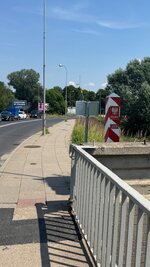
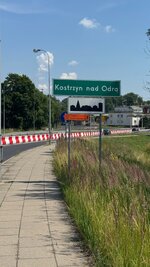
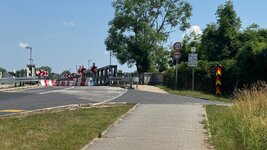
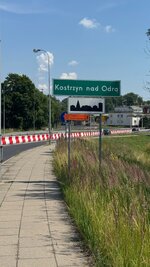
I was keen to visit the German town of Kūstrin or, more precisely, the town of Kostryn nad Odra, as the territory east of the river Oder (formerly part of Prussia) was ceded to Poland at the end of the war.

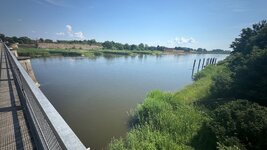
Kostryn had long been a fortified town in the traditional sense, its strategic position on the confluence of the Warta and Oder rivers, coupled with to it being at the head of a very long straight road (now known as Highway 1) across the flat Oder river flood plain to Seelow and then Berlin.

The Germans knew that they had to hold the town and the Russians that they had to take it, not least as it stuck out eastwards from the Oder, creating a salient into the Russian front line. There then followed a very violent siege that lasted about 60 days from the end of 1944 through to early 1945. The town was 95% destroyed, never to be rebuilt. This gives its familiar name of ‘Pompeii on the Oder’.

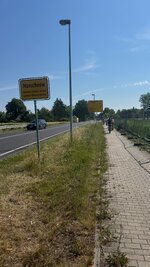
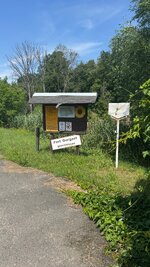
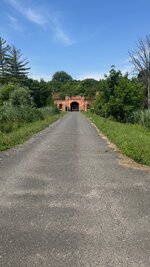
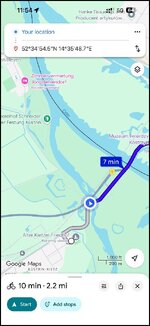
My cycle ride took me cross country at first, through hamlet villages that all featured in the battle for the Seelow Heights, before turning right onto Highway 1. From here it was my plan to stop off on the way to visit the best preserved of the outlying forts that formed a part of the chain of forts around Küstrin, Fort Gorgast.


Google told me that the fort was visitable (EUR 3 entry) on Sunday. Google lied, so I had to be satisfied by looking at the entrance through an iron gate:

A pause whilst the pictures I took synchronise…..
 
One observation whilst I wait for the pictures. It is pretty clear that, like the Baltic coast of Germany, they don’t get too many visitors from the UK to this part of the country, whilst the Rhine / Mosel and of course Bavaria remain very popular. Those locals that I have spoken to seem all but amazed (and pleased) that I have come.

If you want a holiday ‘Away from it all’ and just to maybe cruise about ‘In the nature’ (as they put it) then I can recommend it.
 
Back to Sunday….

The dead straight A1:

IMG_9528.jpeg

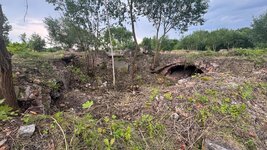
The fort at Gorgast:

IMG_9529.jpegIMG_9533.jpegIMG_9534.jpeg

I guess it is or was home to someone:

IMG_9530.jpegIMG_9531.jpegIMG_9532.jpeg

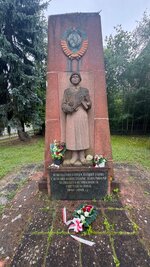
A little Russian memorial at Kustrin-Keitz:

IMG_9598.jpeg
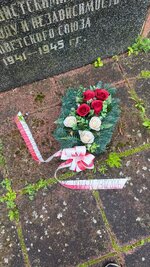
IMG_9599.jpeg

I noticed that the Polish flagged wreath (we are still just in Germany) was laid on 23 February, which I assume ties up with the date of the small town’s liberation:

IMG_9600.jpeg
 
The good thing about the slower speed of a bicycle is that you sometimes notice things that you’d otherwise miss and / or it’s more often easier to stop.

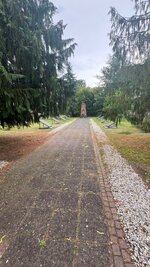
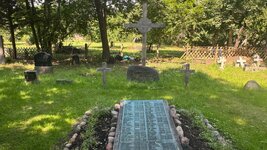
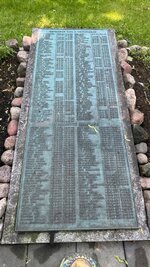
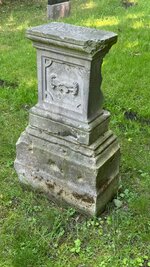
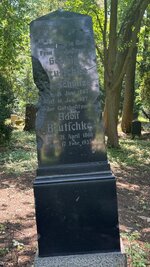
As I cycled out of Kustrin-Keith, I happened to spot the generic German sign for a military graveyard, so I detoured a little. It was hidden away. It holds very few military graves in the form of of headstones but does record the fallen:

IMG_9543.jpeg

The upper section records deaths in the two world wars. The lower section records ‘Unknown grave location’. I am wondering if the upper list shows that the plot is some sort of mass burial site?

IMG_9544.jpeg

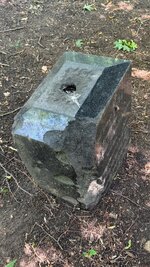
What was interesting is that the graveyard shows clear evidence of the fighting in and around the whole area:

IMG_9545.jpegIMG_9546.jpegIMG_9547.jpeg
 
Last edited:
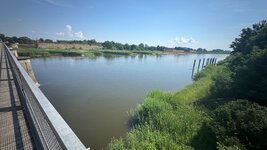
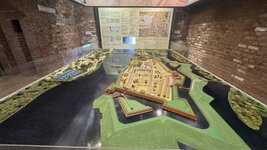
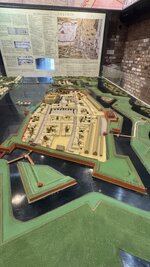
The ‘Old Town’ of Kustrin, with it walled fortifications, sits on an island in the Oder.

This model from the museum shows it quite well:

IMG_9563.jpeg

IMG_9564.jpeg

It was, until 1945, a bustling place, complete with shops, houses, a tram system and more besides. The first warning that the citizens received that something was going badly wrong (the Nazi party suppressed all ‘defeatist’ news) was when a trickle and then a flood of refugees appeared, all fleeing westwards.

This stream then suddenly stopped! This could only mean one thing that the Russians had overtaken the refugee columns and were now very close.

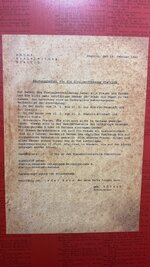
The Russians then paused, not least as their troops were exhausted but also because they were outrunning their extended supply lines, stretching back 100’s of miles. Zuhkov, then ordered that Kustrin be bypassed but besieged, whilst his front armies concentrated on establishing bridgeheads on the west bank of the Oder. So began the siege that would see the town utterly destroyed, the German troops ordered to hold it all cost, their only access to other German troops being via a narrow gap over the river. Only late in the day was permission granted for the civilians to be evacuated by night. There’s a copy of the order (in German and Polish) in the museum:

IMG_9567.jpeg

Google translates the text as:

Eviction order for the civilian population of Küstrin.

By order of the fortress commander, all women and children and the men of the city who are no longer able to fight have to leave the city. The marching path will be announced at the meeting point.

Order of repatriation:

1. On the night of 19. 2. Until 20. 2. only Küstrin-Neustadt and Alt-Drewitz.

2. On the night of 20. 2. to 21. 2. Küstrin-Altstadt and Küstrin-Kietz.

3. Pregnant women who have not yet reported to the town hall must register at the office of the local group Neustadt,

Vineyard Road

8 or have it registered in the town hall.

For this group of people and also for women with very small children (up to 3 years), vehicles are provided within the scope of the possible vehicles up to the intended train station. All other women, children and old men must travel this path on foot.

Baggage limit 30 pounds, preferably in bundles that can be carried on the back.

Meeting place: 5 - 8 pm at the Knabenmittelschule Oderbrücke

Provide information:

Küstrin-Neustadt-Local Group Weinbergstraße 8, Küstrin-Altstadt-Town Centre

Walking catering is to be taken with you

Capable of Defence is everyone who can carry a gun.
Children four and over would have to walk. The last line is particularly telling. No civilian who was even remotely capable of carrying a weapon was to leave. The dreadful truth is that you’d be hung as a traitor, should you even try. The bottom of the barrel, physically and morally had been reached and breached. Eventually, the encirclement was complete and the town, along with its remaining forces reduced to all but zero.
 
Last edited:
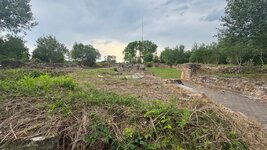
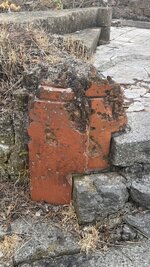
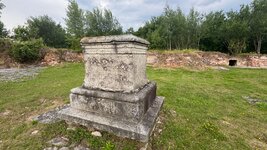
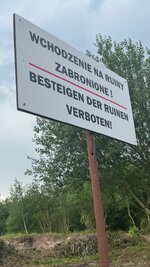
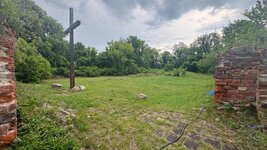
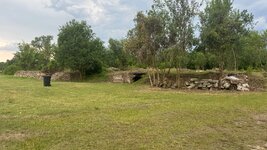
Post war, the ‘Old Town’ on the island was never rebuilt, hence its ‘Pompeii’ name:

IMG_9583.jpegIMG_9585.jpegIMG_9586.jpegIMG_9588.jpegIMG_9589.jpegIMG_9587.jpegIMG_9591.jpeg
 
‘Pompeii’ done, it was time for me to cycle back the 14 or so miles to ‘home’, just missing the thunderstorm that broke behind me as I left.

That said, I had one more visit that I wanted to make, back at Seelow. As Highway 1 goes to Seelow, I added a couple of miles on….

More to follow.


Back
Top Bottom