


You are using an out of date browser. It may not display this or other websites correctly.
You should upgrade or use an alternative browser.
You should upgrade or use an alternative browser.
M’off…… Pas de Calais
- Thread starter Wapping
- Start date
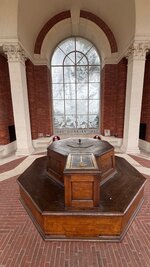
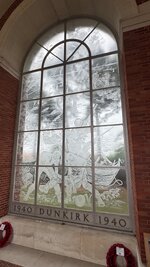
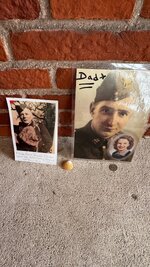

My kind of trip. Have fun 
Next it was a hop on the motorway from Dunkirk to Calais, not least as the coast road is not too remarkable.
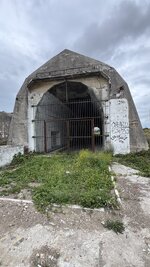
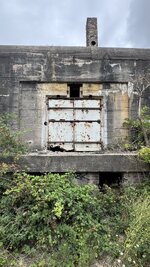
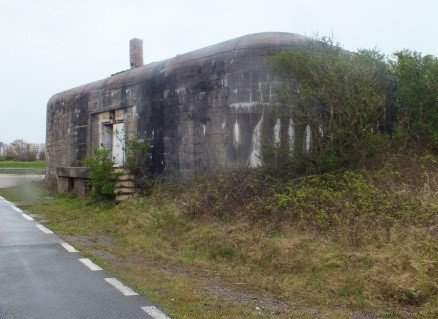
In Calais, I went to see the massive concrete structure that housed a German railway gun, used to shell shipping in the Channel. The area is somewhat derelict and fenced off, but the fence (like the concrete itself) is rotting, allowing access. So in I went:
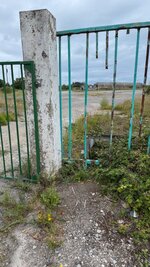
To be continued, when more of the pictures transfer across from my phone.
In Calais, I went to see the massive concrete structure that housed a German railway gun, used to shell shipping in the Channel. The area is somewhat derelict and fenced off, but the fence (like the concrete itself) is rotting, allowing access. So in I went:
To be continued, when more of the pictures transfer across from my phone.
Last edited:
My kind of trip. Have fun
Thank you.
There’s lots to see and do, just a short way from Calais. Some of it is old to me, but some new. I like to ride along and think, “That looks vaguely interesting” and stop. Obviously, you can’t stop everywhere and take a picture or you’d never get on. But that doesn’t matter too much.

I would wager Posh Pete could explain what the Ukrainian looking monument is all about....War cemeteries, memorials and grieving mothers behind me, I carried on through the flat lands of Belgium, circling around behind Ypres, to stop for (by now) a late lunch at around 15:00:
View attachment 428931View attachment 428932
Before completing the figure-of-eight 200 miles back at St Omer.
But, one oddity did catch my eye, close the Belgian / French border, which I’d crossed back over without realising. What I saw would not have looked out of place in the sunflower and wheat fields of Ukraine, so I stopped to look:
View attachment 428935View attachment 428936View attachment 428937View attachment 428938View attachment 428939View attachment 428940
Sadly, the gate was locked or I’d have looked inside to see, I’m sure, all the ‘Smells and bells’ of Orthodoxy.
A good day out!
I would wager Posh Pete could explain what the Ukrainian looking monument is all about....
Greek Orthodox (or similar) I’d guess. What it’s doing in Flanders, I have no idea…. But Google has the answer.
Umpteen Greeks emigrated to the Low Countries, as workers. Today’s movements are nothing new, it seems.

Following the Orthodox theme; when next you wander have a look at the Georgian Orthodox Cathedral in Rookwood Road, N16. Very few crosses but some startling imagery in stone 
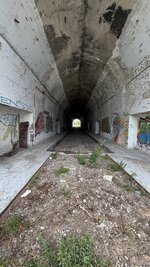
Through the fence and into the wasteland:
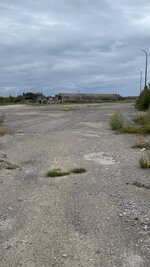
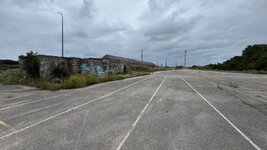
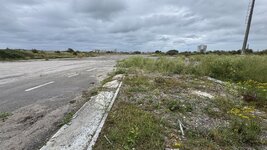
The huge area has, at some point, been laid with tarmac and marked out with lines. It looks like it was some sort of lorry park:
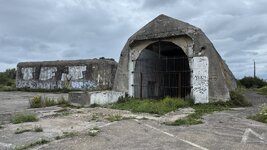
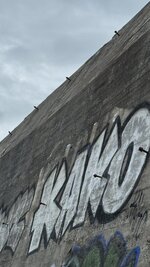
I take it that the regularly spaced bolts on the outside of the huge structure once held camouflage nettting:
 www.liberationroute.com
The huge area has, at some point, been laid with tarmac and marked out with lines. It looks like it was some sort of lorry park:
I take it that the regularly spaced bolts on the outside of the huge structure once held camouflage nettting:
Dombunker
Built in July 1940, the Dombunker in Calais protected German railway artillery with its massive vaulted structure. It formed part of the Stp 89 Fulda position, which included heavy artillery and defence installations along the Channel coast. Located near the route de Verdun and the cemetery...
www.liberationroute.com
The railway gun shed done, I rode along the coast from Dover to Calais, to have lunch in Cap Gris Nez. Clearly my picture was taken by Giles:
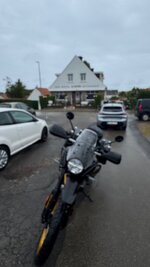
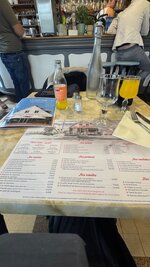
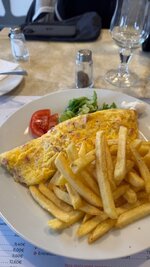
Lunch done, it was off along the D roads to see the former V3 supper cannon site.
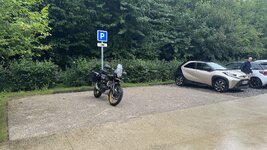
The parking area for cars (on large gravel) is well set out, including a solid area (no gravel) dedicated to motorbikes:
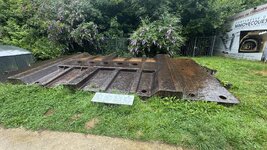
Of all the huge V-weapon sites, this is arguably the maddest. Having built a smaller test site in Germany, the Germans knew that the cannon would not work, but they went ahead and tried to build it anyway. The project was massive, all be it having to be scaled down from the original outlandish plans. What was left was a huge angled shaft, 130 metres long, hacked and tunnelled into the chalk, to house a planned five tubes or gun barrels. The huge steel plate which was to cover the five, closely spaced barrels, lies at the entrance. You can see the five holes where the barrels exited:
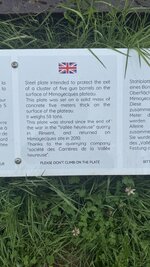
The tunnels (you pay a modest fee to enter) are about 30 metres down from what would have been the exit of the five barrels. Beneath you, is 100 metres of the angled shaft. There are good boards to read explaining the utter madness of what went on, not least that this was but one of tge gun sites that the Germans planned on constructing, even though they knew it wouldn’t work. Even if it had worked, the quantity of munitions it would deliver, would have been paltry compared with the massive bomber fleets available to the Allies.
The gun was never finished. Several attempts were made to bomb the site which, despite doing considerable damage at the surface, did little or nothing to destroy the 130 metres of shaft. This was eventually hit by Tall Boy bombs and put out of action completely, but not before the Americans had twice tried to use guided bombs to hit it. This latter plan (equally mad) involved filling aging and battled damaged Flying Fortress bombers with high explosives, have them piloted by two pilots to take off only. Once airborne, the pilots would parachute out, the aircraft being flown by remote control to their target. It was a complete failure!
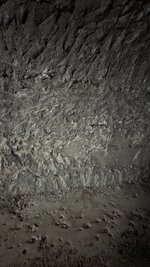
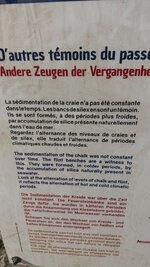
The site is definitely worth visiting and takes about an hour, if you read the well displayed information boards. The boards, whilst giving the site’s purpose and construction, also tell the visitor about the bats which overwinter in the tunnels (the site closes over tge period, to leave the bats in peace) and the geology of tge chalk into which the tunnels and shafts are carved. Interesting, to me at least, is they they can tell the multiple thousands of years over which the billions of tiny creatures lived (their shells form the metres thick chalk, the same as White Cliffs at Dover) and the global temperatures at the time. In essence ,the world and its seas were warm when the tiny creatures died and sank to firm the chalk. It then got cooler and a layer of what became flint covered them. It then warmed and the chalk restarts, then cools, the flint layer reappearing. You can see tge layers in the tunnels:
The galleries end with a small exhibition, telling the story of the Canadian army, which landed on D-Day and fought along the coast, all the way to Holland, to liberate the Channel ports. Their struggles are generally overlooked. I plan on visiting their cemetery (I have been past it lots of times, but never stopped) and have a read of the two volume history of their endeavours.
From the V3 site, it was D roads back to St Omer.
A simple but good day out.
Lunch done, it was off along the D roads to see the former V3 supper cannon site.
The parking area for cars (on large gravel) is well set out, including a solid area (no gravel) dedicated to motorbikes:
Of all the huge V-weapon sites, this is arguably the maddest. Having built a smaller test site in Germany, the Germans knew that the cannon would not work, but they went ahead and tried to build it anyway. The project was massive, all be it having to be scaled down from the original outlandish plans. What was left was a huge angled shaft, 130 metres long, hacked and tunnelled into the chalk, to house a planned five tubes or gun barrels. The huge steel plate which was to cover the five, closely spaced barrels, lies at the entrance. You can see the five holes where the barrels exited:
The tunnels (you pay a modest fee to enter) are about 30 metres down from what would have been the exit of the five barrels. Beneath you, is 100 metres of the angled shaft. There are good boards to read explaining the utter madness of what went on, not least that this was but one of tge gun sites that the Germans planned on constructing, even though they knew it wouldn’t work. Even if it had worked, the quantity of munitions it would deliver, would have been paltry compared with the massive bomber fleets available to the Allies.
The gun was never finished. Several attempts were made to bomb the site which, despite doing considerable damage at the surface, did little or nothing to destroy the 130 metres of shaft. This was eventually hit by Tall Boy bombs and put out of action completely, but not before the Americans had twice tried to use guided bombs to hit it. This latter plan (equally mad) involved filling aging and battled damaged Flying Fortress bombers with high explosives, have them piloted by two pilots to take off only. Once airborne, the pilots would parachute out, the aircraft being flown by remote control to their target. It was a complete failure!
The site is definitely worth visiting and takes about an hour, if you read the well displayed information boards. The boards, whilst giving the site’s purpose and construction, also tell the visitor about the bats which overwinter in the tunnels (the site closes over tge period, to leave the bats in peace) and the geology of tge chalk into which the tunnels and shafts are carved. Interesting, to me at least, is they they can tell the multiple thousands of years over which the billions of tiny creatures lived (their shells form the metres thick chalk, the same as White Cliffs at Dover) and the global temperatures at the time. In essence ,the world and its seas were warm when the tiny creatures died and sank to firm the chalk. It then got cooler and a layer of what became flint covered them. It then warmed and the chalk restarts, then cools, the flint layer reappearing. You can see tge layers in the tunnels:
The galleries end with a small exhibition, telling the story of the Canadian army, which landed on D-Day and fought along the coast, all the way to Holland, to liberate the Channel ports. Their struggles are generally overlooked. I plan on visiting their cemetery (I have been past it lots of times, but never stopped) and have a read of the two volume history of their endeavours.
From the V3 site, it was D roads back to St Omer.
A simple but good day out.
Last edited:
Day four
07:00 and it is hammering down outside. Hey-ho, the weather over the past three days has been OK, so can’t complain.
I am booked on a train a bit after 10:00 but will see if I can arrive a bit early and hop onto an earlier departure
07:00 and it is hammering down outside. Hey-ho, the weather over the past three days has been OK, so can’t complain.
I am booked on a train a bit after 10:00 but will see if I can arrive a bit early and hop onto an earlier departure

Can't beat a bit of geology before brek!
Thanks.
Thanks.
Now the sun is shining. I’m truly blessed!
Can't beat a bit of geology before brek!
Thanks.
Welcome. I also learned that bats migrate out of the tunnels to feed in the spring and summer, only returning to the tunnels to hibernate. Strange creatures but quite wonderful.
Very enjoyable read

Safe trip home. An interesting trip, especially the railway gun which I have built a model of in the past. On Dorking high street there is a very good model shop, in their window they have a 4ft long model of the Schwerer Gustav, railway gun. The largest artillery piece ever made, the gun itself weighed 1100 tonnes and fired an 800mm shell that weighed 7 tonnes to a maximum range of 40km. It is an impressive model. I would love to know if the actual railway carriage is still in existence. The Imperial War Museum has a shell from the Gustav.

Very interesting and informative. Thank you Richard.
It’s a bit soggy in Folkestone, you’ll want your wets for the epic journey back to the smoke!Now the sun is shining. I’m truly blessed!
Great thread. Cheers
Booked on the 10:24 but put onto the 09:34 which, despite the best efforts of British immigration, I just about caught.
If the quality of our nation’s border fortress lies in the hands of the woman that was working the tea hut, God help us all.
The guard on our train has just announced that his name is Kevin. We are definitely going home to England.
If the quality of our nation’s border fortress lies in the hands of the woman that was working the tea hut, God help us all.
The guard on our train has just announced that his name is Kevin. We are definitely going home to England.
Safe trip home. An interesting trip, especially the railway gun which I have built a model of in the past. On Dorking high street there is a very good model shop, in their window they have a 4ft long model of the Schwerer Gustav, railway gun. The largest artillery piece ever made, the gun itself weighed 1100 tonnes and fired an 800mm shell that weighed 7 tonnes to a maximum range of 40km. It is an impressive model. I would love to know if the actual railway carriage is still in existence. The Imperial War Museum has a shell from the Gustav.
There is a railway gun at the large Todt bunker near Cap Gris Nez.
It is apparently one gun made out of two, salvaged from the south of France.
Thank you all for the kind comments, appreciated.
I have some odds ‘n ends pictures to include, which I’ll add as soon as they transfer.
I have some odds ‘n ends pictures to include, which I’ll add as soon as they transfer.

Similar threads


- Replies
- 5
- Views
- 1,085
- Replies
- 29
- Views
- 2,134


- Replies
- 23
- Views
- 7,027
