Rab or Alpkit Sleeping bag

Santa-2512

Omnipotent one
UKGSer Subscriber
Joined
Aug 3, 2016
Messages
14,475
Reaction score
3,959
Location
North Pole
Thinking of replacing my G4 challange sleeping bag

its got a stupidly high cold rating - 24c if i recall

so looking for similar

Alpkit & Rab both do bags that meet that spec

Question is which ?

Ive not used either brands , so open to experiances of others
 
Do you actually need the minus 24 rting or would a minus 10 or suchlike be OK ?
I'd happily have either. I have a few Alpkit things and they are very well made. I've also got a RAB bag and down jacket, again, bery well made and do the job.
RAB factory shop may well be worth a visit.
 
If you're heading up near Derby, pop into the Rab outlet store (Mountain Outfitters) and see if there's a a good deal on one in there.
 
If you are feeling flush ..

PHD make super sleeping bags


And when they say minus whatever they mean it

They have some good doss bags in the sale
 
If you are feeling flush ..

PHD make super sleeping bags


And when they say minus whatever they mean it

They have some good doss bags in the sale
PHD, wowsa

some serious stuff there !
 
I found the Rab a bit narrow so bought the Alpkit down 600 which was more comfortable. However i also bought a Deuter Astro 800 which was s game changer. Compression is good and comfortable plus warm. If I had one the Deuter wins.
Quite expensive I think but look around and you can find good deals. If I recall Black's had s sale and it was half price
 
I have 2 top end Alpkit sleeping bags and they are excellent. Highly recommended.
 
I'm in exactly the same boat as Santa.
the reason for a -24 bag is because usually the rating is bullshit.

I bought a -6 comfort rated bag a few years ago and went to the Dragon Rally, it was 0 degrees and i got zero sleep and the start of hypothermia!
I hate being cold, a minus 24 rated bag is over kill yes but guarantees a good nights sleep 👍

Been looking at the Alpkit Pipedream 600 which is rated to -12 paired with the Alpkit Radiant sleeping mat which is R7.2
 
I have an Thermarest sleeping bag

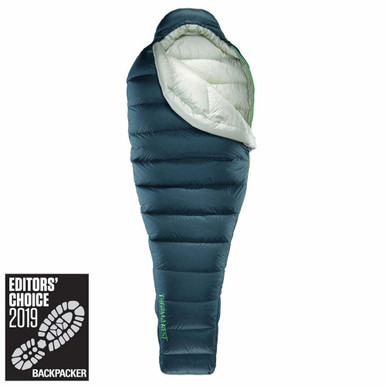
thermarest Hyperion bought as the lightest warmth to pack size i could find at the time it is very warm despite its rating of -6 and does pack down to next to nowt


And yet if i were to be in the market for a new one i would still spend the cash on a PHD as a lifetime purchase
 
Last edited:
Thinking of replacing my G4 challange sleeping bag

its got a stupidly high cold rating - 24c if i recall

so looking for similar

Alpkit & Rab both do bags that meet that spec

Question is which ?

Ive not used either brands , so open to experiances of others

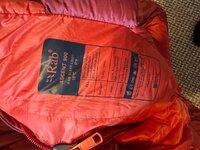
I’ve got no experience of Alpkit, but I use a Rab Ascent 900 rated down to -18c (I had to get it out to check). I tend to use a silk liner with it and although it’s never been used in anger at that temp, I’ve used it at -7c and would describe it as comfortable. I don’t like sleeping with clothes on, so wearing thermals overnight would get it down to lower temperatures.

I have used it a few times just above zero and had to have the zip open 😅

IMG_4667.jpeg
 
I’ve got no experience of Alpkit, but I use a Rab Ascent 900 rated down to -18c (I had to get it out to check). I tend to use a silk liner with it and although it’s never been used in anger at that temp, I’ve used it at -7c and would describe it as comfortable. I don’t like sleeping with clothes on, so wearing thermals overnight would get it down to lower temperatures.

I have used it a few times just above zero and had to have the zip open 😅

View attachment 551222
Having to have a zip open cos your too warm is better than being all zipped up and still freezing.

You can always cool down, you can never warm up.
 
whichever bag you get, make sure the temp rating is checked against the standard ISO 23537;

The current standard and its drawbacks- ISO 23537

ISO 23537, and its predecessor EN 13537, uses a heated manikin with multiple temperature sensors inside a climate-controlled room on a standardized mat. The manikin, wearing standard pyjamas and a cold weather mask, measures the power needed to maintain warmth in a cold room, determining the sleeping bag's thermal resistance. Before testing, sleeping bags are kept at a constant temperature and humidity and allowed to loft fully. The test runs until equilibrium is reached. The thermal resistance is converted into temperature ratings based on historical data. This standard produces three temperature ratings.

  • Comfort temperature: This is where a "standard woman" with relaxed posture is just not feeling cold.
  • Limit temperature: This is where a "standard man" with curled up posture is just not feeling cold. This is the number most retailers and brands refer to.
  • Extreme temperature: This is where risk of health damage to a ‘standard woman’ by hypothermia occurs.
The standard has reduced discrepancies between manufacturers and is repeatable within a few degrees. Using a consistent heat source from the manikin, it avoids variables like diet or mindset that affect real people and measures the whole sleeping bag, unlike some lab tests. However, the standard isn't perfect. The manikin does not represent individual sleep patterns or real sleeping environments.


There are a few drawbacks of the ISO 23537 test, and three of them are explained below:

  • Manikin shape: The manikin used in the test varies slightly by lab, affecting how tight spots on the sleeping bag compress insulation and make the bag seem colder. Since the test may not represent your size, it's important to try a sleeping bag for fit, like a jacket or climbing shoes. This is why there are various fit options, lengths, and women's versions in many models.
  • Winter sleeping bags: The test excludes "extreme climate zone expedition" sleeping bags, officially for bags with a limit temperature colder than -24°C, though its accuracy diminishes below -15°C. For very cold conditions, it's better to rely on experienced friends, shop staff, trusted brands, and common sense: a bag with 1200g of down will likely be warmer than one with 800g, unless construction or quality differs significantly.
  • The effect of face fabrics: In huts or sheltered tents, the face fabric of a sleeping bag doesn't impact warmth much due to minimal airflow. However, outdoors without shelter, airflow becomes crucial. The ISO 23537 test simulates a 1 kmph airflow which can negatively affect results for very air permeable fabrics, which might perform poorly despite their real-life advantages. These fabrics are breathable, comfortable, fast-drying and lightweight, making them ideal for multi-day trips. Many professionals prefer these fabrics despite poor test ratings because they excel in practical use.
ISO 23537 is the best rating system for sleeping bags despite some shortcomings. It helps identify bags that deviate significantly from their advertised ratings but doesn't precisely differentiate bags within a few degrees of each other.


Having a really good quality air bed can make a massive difference to keeping warm.

And a silk sleeping bag liner. They pack really small too.
 
i have an Alpkit 600 ; I have used it with the temp "dropping to frosty" overnight -- not warm enough for that imho; conversely I have used it at 6/,8 deg overnight and it was OK but not warm.
 
Having a really good quality air bed can make a massive difference to keeping warm.

And a silk sleeping bag liner. They pack really small too.
The mat makes all the difference. Laying on the down of a sleeping bag just compresses it and it loses the vast majoirty of its warmth...add that to a little or zero insulated mat and you have a very cold nights sleep.


Back
Top Bottom