Is this old?
In large parts of "our" world, a petrol station on Route 66 that closed in 1976 is considered old and worth a visit. If it was closed in 1937 it is a National Monument.

Context
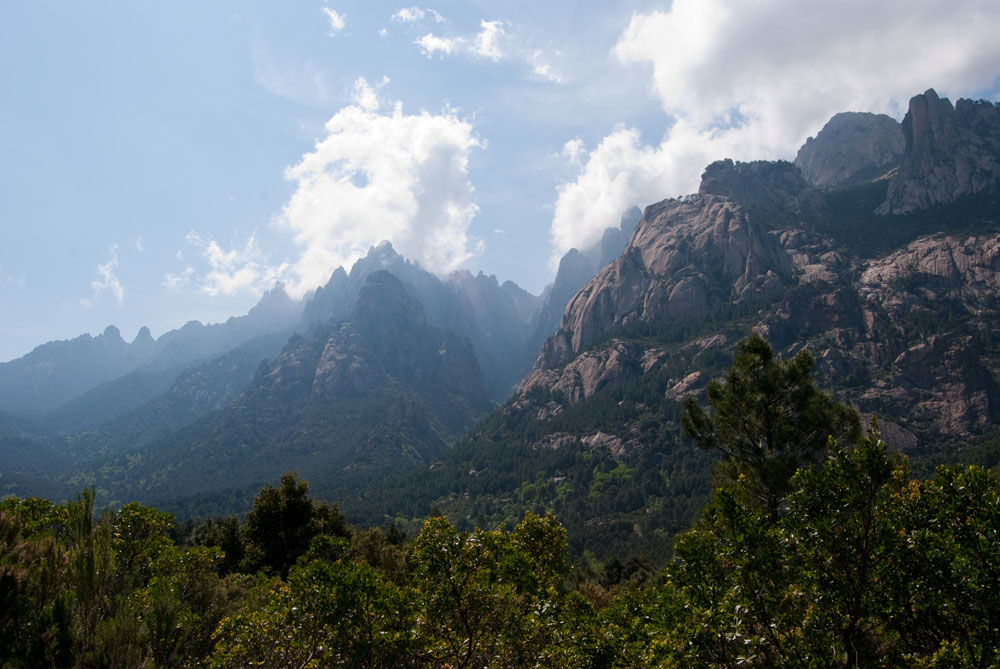
is everything, and we shouldn't make fun of them for having one different from ours. After all, they can pull out stunning pictures of hundreds of kilometers of unspoiled nature. And mountain ridges making the Alps look like hills.
This afternoon I went to a few places less that 20 km from my home. The idea was to look up some old structures in the vicinity.
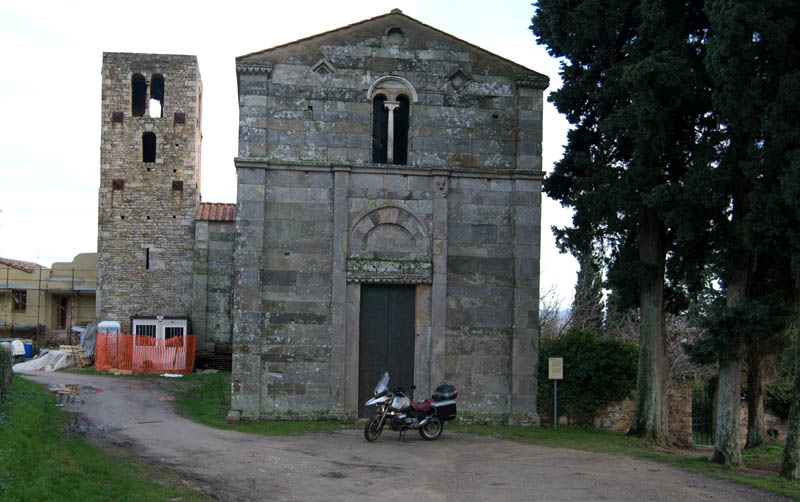
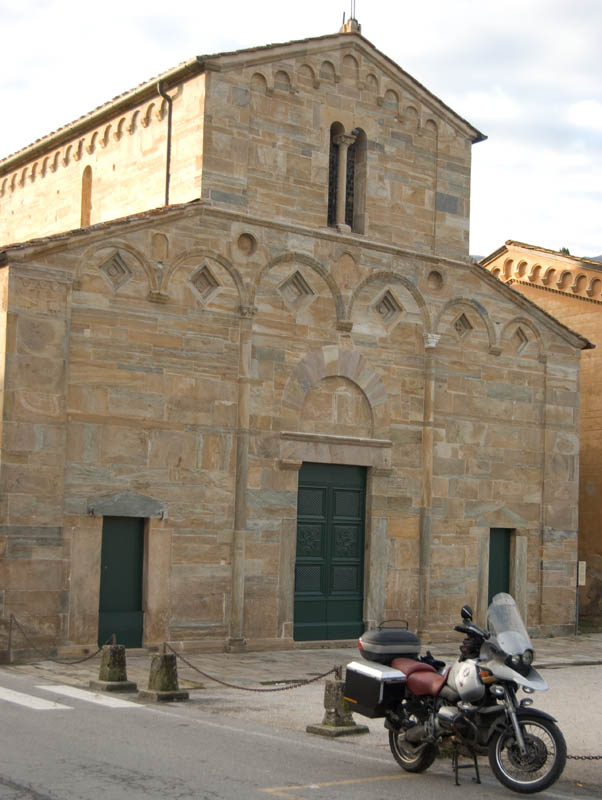
The first stop is Chiesa e convento di San'tIacopo in Lupeta. This monastery and church was mentioned in a document as early as 757.
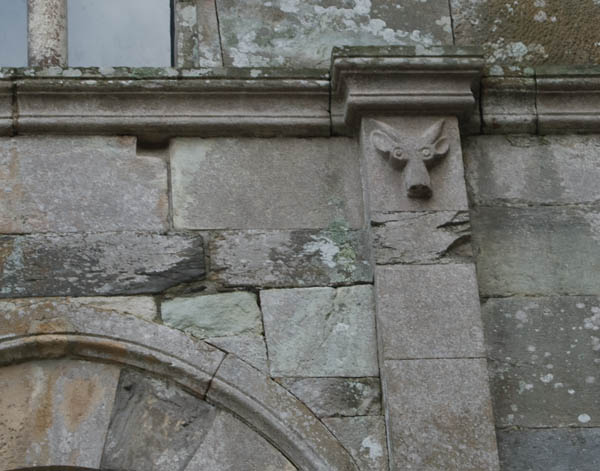
On the facade, just above the door, there is this very cool head of an animal in relieff. The meaning is not known. Doesn't look very Christian, and might have been taken from a temple of some other religion at the time.
The bell tower (which you can see
here) is still tall, but was significantly shortened by the retreating Germans in 1944.
I turn around, and head for Pisa. On my way I stop in Vicopisano. Pieve di Santa Maria e di San Giovanni Battista as we see it today dates from the 12th centery. It was built on the fundation of a much older church, which was mentioned in a document in 934, but from the text we understand the church has been there for a long time already.
I ride into Pisa. As I am removing my helmet this pretty girl walkes up to me:
-
Sir, may I ask you something?
-
Indeed. It will be a pleasure talking to you. Actually, I didn't say that, I probably only said Yes. But you get the idea.
-
Can you tell me where I can find the famous Leaning Tower of Pisa?
-
Eh....yes I can. But before I explain where it is, may I take your photo?
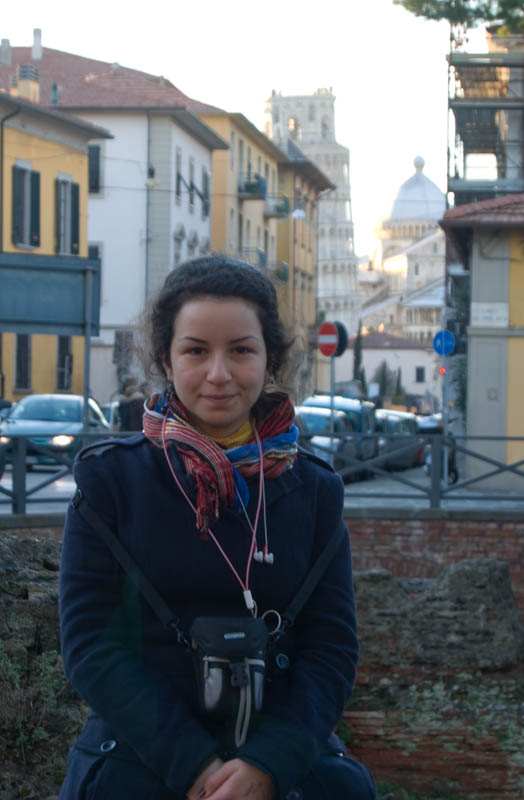
So instead of the bike I offer you this girl in front of the 55 meter (183 feet) tall, 850 years old Leaning Tower of Pisa. She was on a one-week vacation in Italy, and this was her last evening before returning to Turkey. I think she would look pretty also with spectacles.

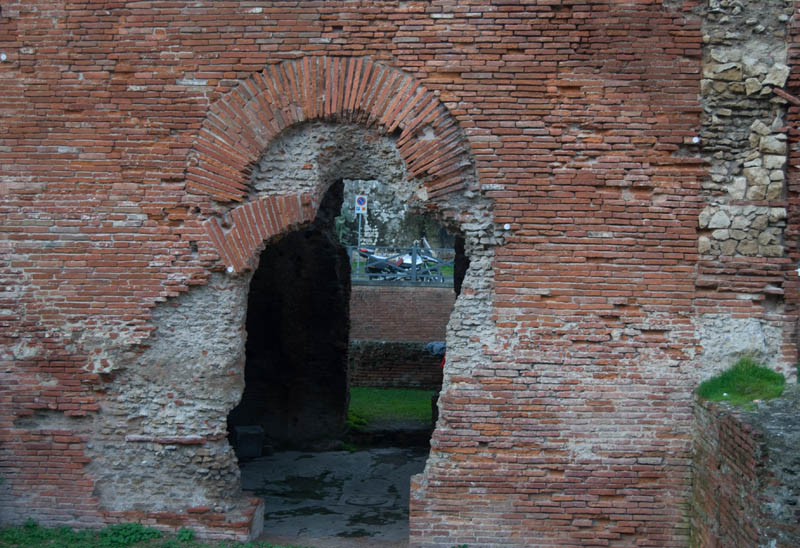
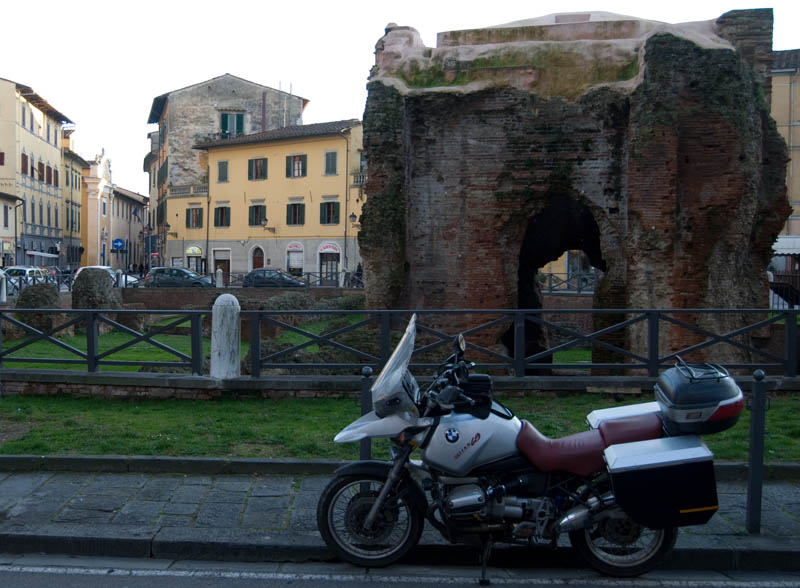
As I didn't need to pose in front of the Leaning Tower, I instead took two pictures of Bamsefar behind and in front of Hadrian's Bath in Pisa (called Bagni di Nerone). It was built by one Lucio Venuleio Aproniano Ottavio in the first century (AD) and restored sometime in the second. It is the only significant Roman ruin in Pisa.
The gate in the Pisa city walls that was called Porta Monetaria (the Mint Gate, mint as in "makes coins") was closed in the 13th centry. A new gate, called Porta San Zeno was opened here to as late as 1937. The old gate can clearly be seen a little to the south of Porta San Zeno.
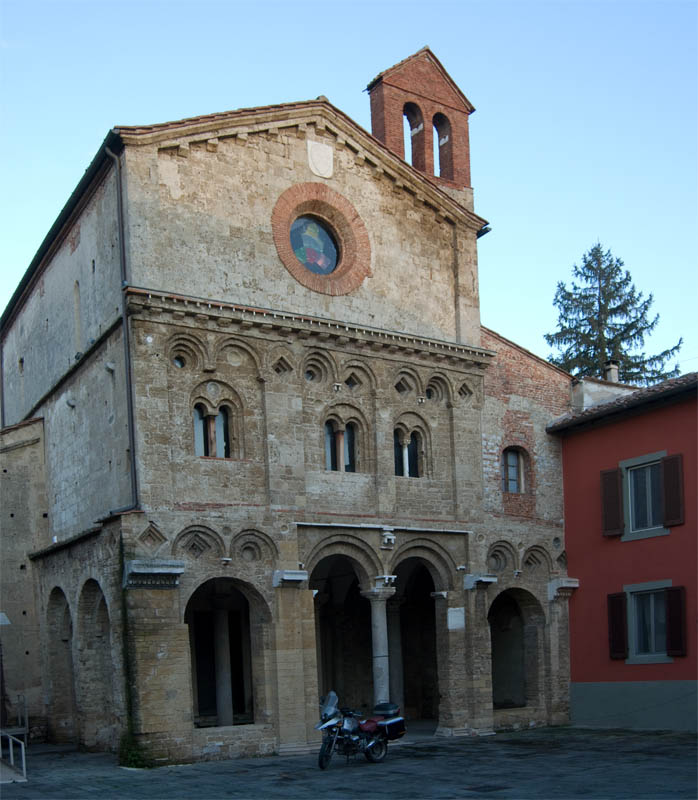
Porta San Zeno derives it's name from the church San Zeno which lies just inside. The church was first mentioned in a document from 1021. The columns you see are Roman, as are those inside.
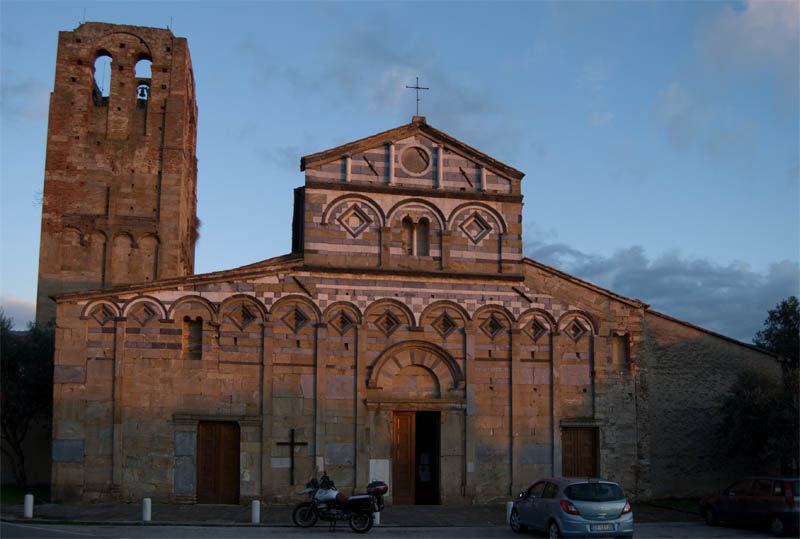
I return home, and as the sun is setting I stop in Calci. The church Pieve dei Santi Giovanni ed Ermolao was mentioned in a document the first time in 1116. Two rows of Roman columns inside.
It was built to replace a much older church that stood on the same fundations. That old church was probably from the 7th century.
The belltower is unfinished. From the fundations one can see it was not built together with the church, and was probably already there when the (present) church was build.
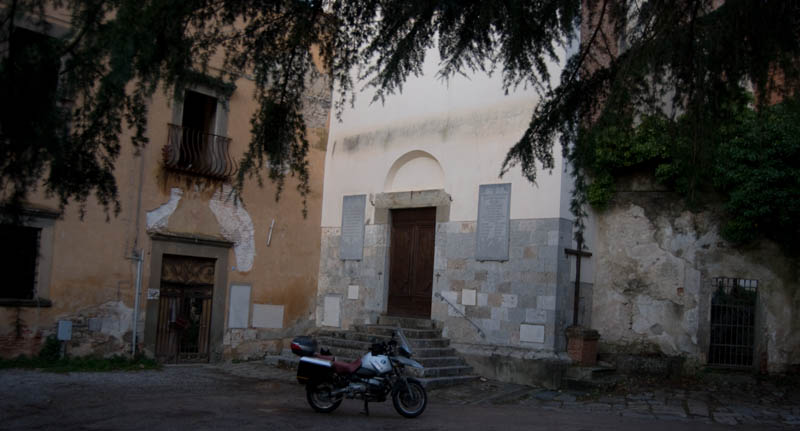
On my way from Calci up to my village, I stop outside (or actually inside) Chiesa e convento Sant'Agostino. For some unknown reason, the bishop Ugo in Nicosia, on Cyprus, funded the construction in 1258 of a church and a monastry here in Calci, Tuscany. The picture was taken in the court yard. The church is just behind the bike while the monastry is to the left on the picture.
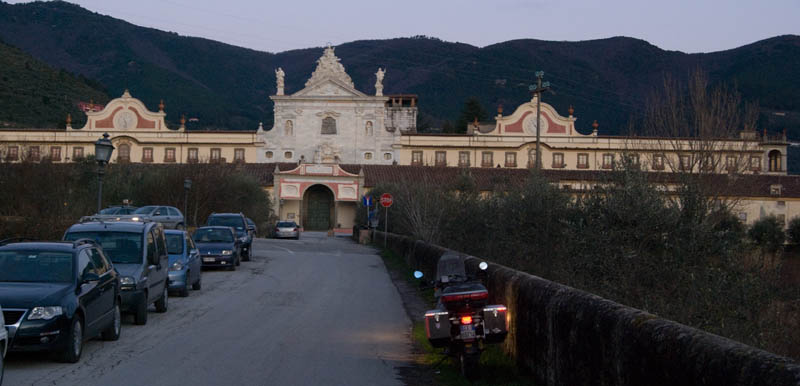
But there are not only one monastry around here. The la Certosa di Calci was founded in 1366. Very, very large.
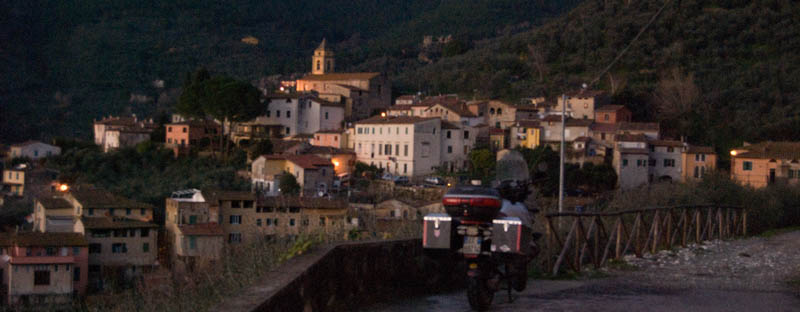
Finally, the splendid village of Montemagno. The village was already here in April 780 when it was mentioned in a document.
And that was it. A mere 48 km. But if you appreciate old structures, I hope you liked these.
If you were looking for food, I promise to get back to you.
[TaSK]





 ).
).