Rusty nuts!

welder8uk

Active member
UKGSer Subscriber
Joined
Nov 21, 2004
Messages
178
Reaction score
0
Location
Cumbria, England
I wonder if anyone can help. Currently undergoing a major service (I'm off this week). So I am sorting out all the little problems I am aware off.

- electrical starter problem, occasionally when I press the starter all I get is the sound of the solenoid pulling in. The engine trys to turn over, but doesnt move. Sometimes I can press the starter 3-4 times before it turns over properly. I dont think it is a battery fault (12.8v with the ngine off, and the ABS resets ok). I am pretty sure it is a bad connector/joint/earth connection ect/ or even the solenoid contacter itself.

Any one any idea what connection may be the suspect one (Ihave cleaned up the starter terminals and the battery terminals, just wondered if there was another common connector issue/ earth connection issue)?

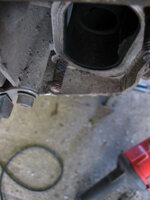
- took the front pipes off, and the exhaust studs on front of the cylinder really should be changed, see picture (this is the worst). They are ok at the moment but will really should be changing in the next couple of years. I tried to remove them using 2 nuts and couldnt get them to budge. I have'nt tried heat yet, not sure the damage it may cause.

Anyone know of a good way of removing the studs before they start to give problems and snap?


Thanks

Steve
 

Attachments

  • img_0368.jpg
    img_0368.jpg
    37.7 KB · Views: 387
Personally, if you have a trip planned this week end I wouldn't risk breaking them and defer until you have the time to sort out should the worst happen.

Other than that, do soak it in Plus Gas or something similar. If in doubt I try and give something like that several days spaying oil on 3 times a day.
 
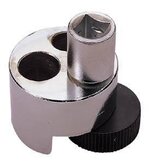
I've use a stud extractor like this with good effect, but its kill or sure, once you start, the threads will be destroyed and you have to finish the job somehow
 

Attachments

  • extractor.jpg
    extractor.jpg
    9.3 KB · Views: 366
Heat, lots of it!

I can't see that heating up the cylinder head could cause problems, after all it gets pretty hot during use. But obviously make sure no cables etc are nearby if you're using direct heat (eg a blowtorch, oxy-acetylene etc).

My first though would be to put two nuts onto the stud, lock them together, and then try and wiggle it free - using plenty of penetrating oil and heat applied to the cylinder head.

When you replace the studs and nuts, use brass nuts, they won't corrode to the studs like steel will.
 
Try running an 8mm Die down the studs to clean up the threads as a temporary measure.
 
Theyre niot liekly to cause me any problems this time, but the will nedd chaning in the next couple of years or so.

I thought while I had them off I would try and change them.

Havent sooakes them yet, think I will soak them a few times as suggested, and try the paint stipper heat gun before I put any searious heat.

I dont think the stud extrator wouldnt get a good grip on the stud (they dont protrude very far beyound the cooling fin).

I am also tempted to leave them for the time being until I HAVE to change them (nothing to lose then).

Any one any suggestions on the electrical fault?

Steve
 
welder8uk said:
Any one any suggestions on the electrical fault?


Shagged bushes (not brushes) in the starter motor? Auto-elec mate of mine reckons this is quite common, and is a cheap repair if needed.
 
Heat on the studs. ... Actuall you want thestuds cold and teh surounds hot.

I think the best way to try this is after your have been on a run - engine hot. Take off the exhaust - use leather gloves!

Then put yer two nuts followed by an ice cube no the stud ... try taking it off now.
 
Ive convinced myself that these need changing, some I m off out to soak them in WD40 while I set up the valves and check the endfloat (not in that order).

Then the studs are getting the heat gun, not sure about putting the burner on it...........but I might (allumunium/ alloy is a very good heat conducter).

Never thought about the brushes in the starter, i was wondering if it was the contacts in the solenoid starting to go. I still havent ruled the battery out, I just dont think it is.

Steve
 
To get those studs out you will need to get them red hot, literally, with an oxy-acetylene torch or similar (heat the stud directly, NOT the alloy) then carefully use a stud extractor as shown above. If you try to get them out without that sort of heat you will probably shear them and then you're looking at a very expensive repair.
 
Number 6 said:
To get those studs out you will need to get them red hot, literally, with an oxy-acetylene torch or similar (heat the stud directly, NOT the alloy) then carefully use a stud extractor as shown above. If you try to get them out without that sort of heat you will probably shear them and then you're looking at a very expensive repair.

Surely he'd be better off gently heating the head with a heat gun or similar so that the aluminium expands, freeing it's grip on the stud? The ally will expand at a faster rate than the stud.
 
Steve Pickford said:
Surely he'd be better off gently heating the head with a heat gun or similar so that the aluminium expands, freeing it's grip on the stud? The ally will expand at a faster rate than the stud.
No, the steel stud will be 'welded' to the alloy by electrolytic action, this bond needs to be broken by severe heat, expanding the alloy will not release it.
 
Number 6 said:
No, the steel stud will be 'welded' to the alloy by electrolytic action, this bond needs to be broken by severe heat, expanding the alloy will not release it.

I thought this only happened with stainless in to aluminium when the stainless fastener was not lubed with copperslip or similar?

I've never had a problem with regular steel studs or fasteners suffering from this problem?
 
Steve Pickford said:
I thought this only happened with stainless in to aluminium when the stainless fastener was not lubed with copperslip or similar?


you've never owned an early Range Rover then .


:D :D :eek:
 
any 2 dissimilar metals - not protected by a corrosion resistant film - will set up an electrolytic action - ie a potential difference, or voltage - of minute proportions between themselves - and thus causing metal surface transfer and oxidisation - ie rusting and bonding.

different metals and combinations of metals are worse than others.

Always lube a bolt shank and -

always degrease and apply loctite to threads - loctite acts as a lube and surface corrosion protector as well as a locking agent.
 
Been soaking the studs for the last 2 days, tried again today to move them using 2 nuts, but they wouldnt shift - gave up.

I would probably cause more damage and the bike would be off the road until it was fixed.


They are all right for the time being, but I know they will cause me heartache in the future. I will wait until they snap or I have to take the cylinders off for something.

Steve


Ps: cleaned up all the contacts on the starter (they were a bit corroded, but not over the top) and the bike behaved itself all today, when I would have expected to have the problem at least 2-3 times). Fingers crossed.....


Back
Top Bottom