Something for 2026 perhaps - Seelow Heights and Battle of Halbe

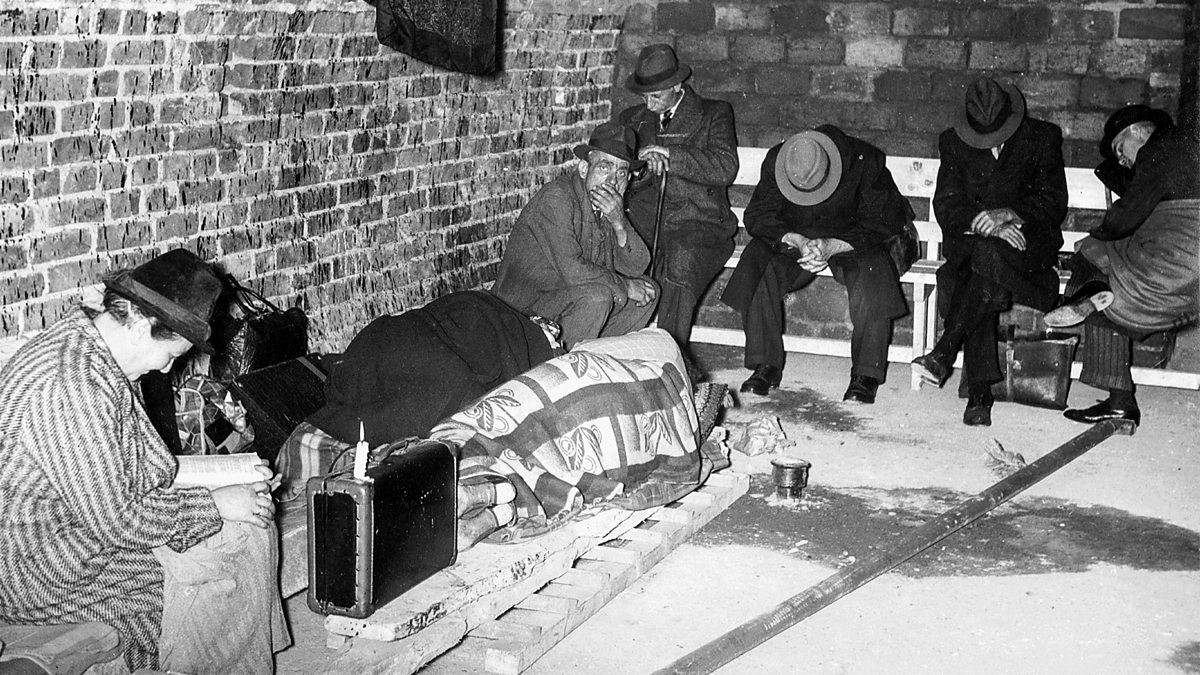
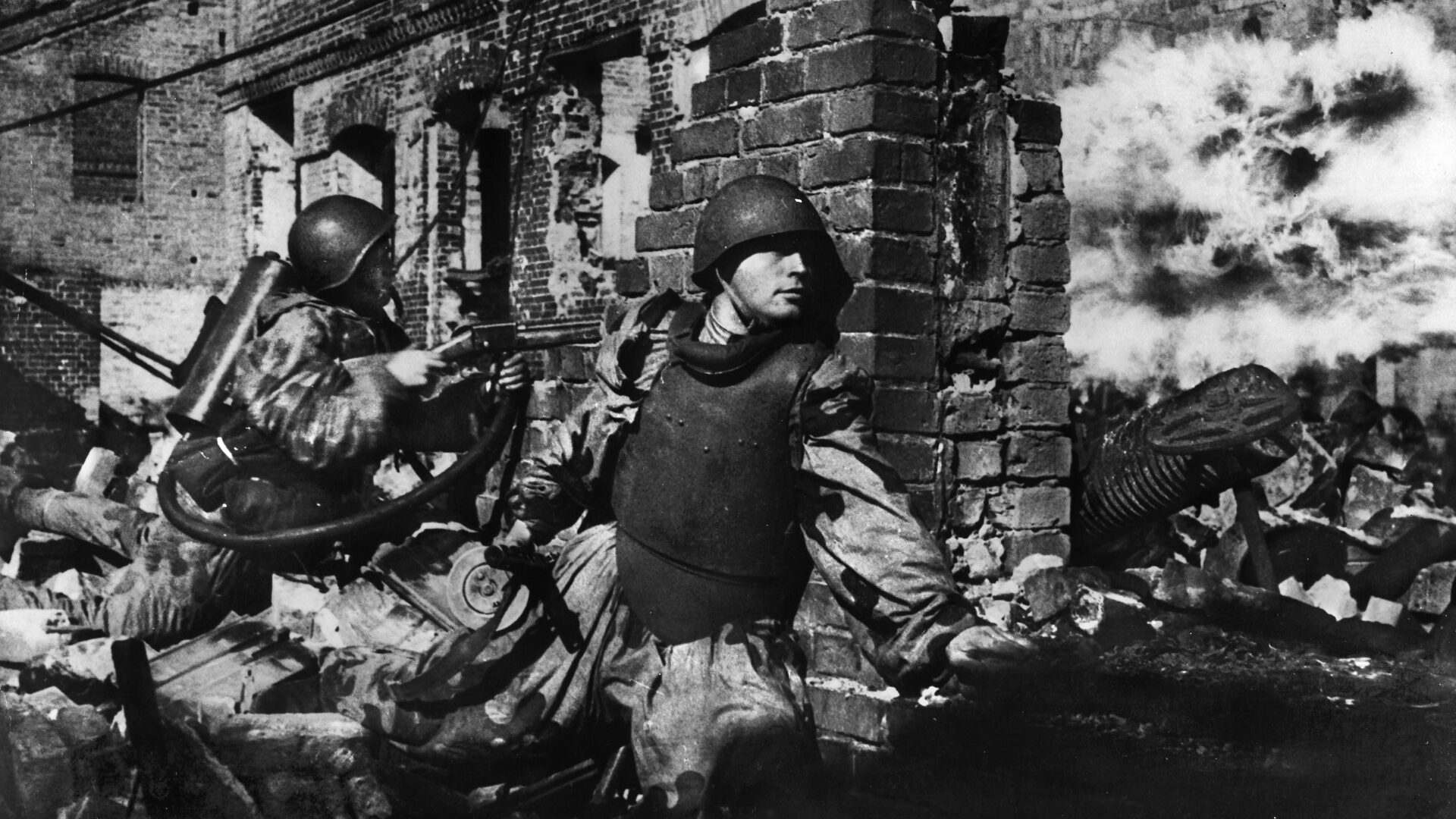
All wars are horrendous, but the narrow small town of Halbe (just about the only place where a breakout might from the encirclement might be possible *) was off the scale, in a war where horrors had unfolded daily. The accounts from civilians, trapped in the town and pocket are dreadful and maybe give an inkling of what must be happening in Gaza today.
IMG_1181.jpeg
IMG_1182.jpeg
* The Russian’s own situation maps, showed them the strategic value of Halbe as the only possible point of escape for the remnants of the German 9th army and the thousands of civilians trapped in the pocket. Inevitably, the Russians fought to hold the town and targeted it remorselessly.

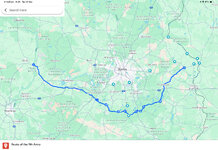
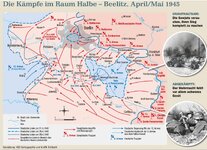
This map sums up the encirclement of the 9th Army pretty well, showing how the Halbe pocket (in blue in the centre, south of Berlin) was steadily reduced, squeezing everything into and through the town of Halbe:
IMG_1175.jpeg

It also shows the eventual dotted lines of the breakout heading west towards the Elbe river and possible sanctuary with the Americans, camped on the western bank. It also shows the complete encirclement of Berlin itself and the separated German 12th Army to the west.

I’ll try to follow the lines, east to west, starting on the river Oder at Frankfurt (Oder) / Seelow Heights, then through Halbe, to finish on the Elbe.
 
Last edited:
You can see working “baggers” in your jaunt this year to the N Eiffel. There are a number of opencast lignite mines just north of Düren (to the north of the A4 autobahn. These holes (mines) are typically 300m deep and the baggers are literally used to move/create hills in the landscape.

 
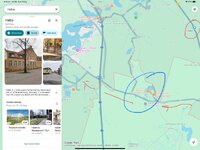
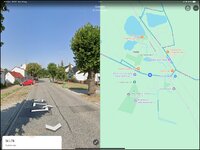
Fortunately, the Germans have all but lifted their ban on Google street view. On it you can see that Halbe (circled in blue) though rebuilt, is probably little changed since 1945 and the battle.

The railway station, the Y-junction, the narrow road through the town, what was probably a forest type road back to the village of Buchhloz and the road branching off to Teupitz are all still there. Similarly, it’s easy to see where the HQ for the 9th Army moved to, circled in red.

You can see the autobahn to the west of Halbe. This was already there in 1945 and was the first reference point that the retreating troops and civilians made for having scraped out of Halbe. They then had to cross it, under heavy and continuous attack, the Russians being able to spot them and having already pre-registered the road on their maps.


IMG_1187.jpeg

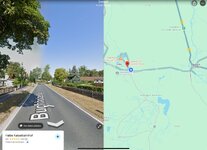
The road into Halbe, westwards from Buchholz. You can just see the Y-junction up ahead.

IMG_1183.jpeg

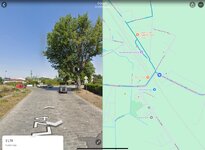
The Y-junction, mentioned in so many of the verbal accounts of the battle:

IMG_1184.jpeg

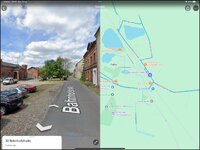
The small town’s railway station, again the centre of very heavy fighting:

IMG_1185.jpg

The road out to Teupitz, across the autobahn, along which so many tried to flee, harried all the way until destroyed:

IMG_1186.jpg

Not forgetting of course, that Halbe and Berlin itself, were (up until reunification) deep inside East Germany.
 
Last edited:
I’ll possibly / probably combine this jaunt into my idea to ride the German Motorcycle Route. Killing two birds with one stone.
 
I have found this somewhat overly breathless account of the breakout of the Halbe Pocket.

I had already identified some of the locations, which the video seems to confirm.

 
Last edited:
This might at least be listenable:


It’s the first of no less than 15 podcasts on the little known Halbe Pocket breakout.

The map the fellow has shared, near enough matches the route I’d created for myself in MyRoute from reading about the battle. It seems I got one thing near enough correct.

IMG_1568.jpeg
 
Last edited:
Just finished reading Col. Hans von Luck - Panzer Commander. Chap joined up in 1929, took part in all the the theaters of war in Europe and Africa. Ultimately spent 5 years in a POW camp in Russia. Describes vividly the last battle with the Russians on the Southern flank.
 
I am now looking to see if, with my new uber camper van, I can make this into a much longer trip:

Home
May: WEC 6-hours Spa
Berlin / Seelow / Halbe Pocket etc
June: (Maybe Doc’s Cochem thing)
Le Mans 24-hour race
Spa 24-hour race
Home

In essence, two months.

To kick it off, I have bought a reasonably flexible Chunnel return crossing, to embrace the duration.
 
As the battle of the Seelow Heights was a major precursor to the invasion of Berlin itself, it’s worthwhile watching some of the many documentaries about the city and its fall.

This is quite a good one from the BBC:

 
Last edited:
I am now looking to see if, with my new uber camper van, I can make this into a much longer trip:

Home
May: WEC 6-hours Spa
Berlin / Seelow / Halbe Pocket etc
June: (Maybe Doc’s Cochem thing)
Le Mans 24-hour race
Spa 24-hour race
Home

In essence, two months.

To kick it off, I have bought a reasonably flexible Chunnel return crossing, to embrace the duration.
Be good to see you if you could make it.
 
I'll see if i can find it again, there was a set of video interviews from different folks involved in and around that area. One such talk was by a dutch bloke who was in the SS had fought with the germans in russia etc. and then had what was left of these units redistributed into other battle groups. He ended up in and around Berlin stuck and encircled they fought their way out and later ended up surrendering to the yanks.

the constant battle stuff wasn't that remarkable the story took a real turn once he'd been processed out and returned to Holland, he was very quickly identified as a person of interest. The dutch rounded up all these folks who clearly fought in the german army. the treatment was something else, no reluxed news footage, being reused over and over of stuff blowing up.... just this old boy talking in great detail and fully aware of his position.

the bit that absolutely made me think, jesus christ... he should have just volunteered for the french legion, his now dutch captors where moving him and his fellow prisoners which takes some logictical thinking.

they had been underway for a couple of days without food, herded into a camp and given a strange soup.... which was made using the menstrual blood and feaces of women that had returned from concentration camps....

The whole 2nd world war is an emotive topic, it still throws up the odd moment of well I would never have thought of that....!
 
I'll see if i can find it again, there was a set of video interviews from different folks involved in and around that area. One such talk was by a dutch bloke who was in the SS had fought with the germans in russia etc. and then had what was left of these units redistributed into other battle groups. He ended up in and around Berlin stuck and encircled they fought their way out and later ended up surrendering to the yanks.

the constant battle stuff wasn't that remarkable the story took a real turn once he'd been processed out and returned to Holland, he was very quickly identified as a person of interest. The dutch rounded up all these folks who clearly fought in the german army. the treatment was something else, no reluxed news footage, being reused over and over of stuff blowing up.... just this old boy talking in great detail and fully aware of his position.

the bit that absolutely made me think, jesus christ... he should have just volunteered for the french legion, his now dutch captors where moving him and his fellow prisoners which takes some logictical thinking.

they had been underway for a couple of days without food, herded into a camp and given a strange soup.... which was made using the menstrual blood and feaces of women that had returned from concentration camps....

The whole 2nd world war is an emotive topic, it still throws up the odd moment of well I would never have thought of that....!
The Dutch were ruthless to any German collaborators after the war. Especially if you had been a part of their version of the SS called the ´´Landstorm Nederland´´
Right after liberation they were rounded up an all summarily executed by the Dutch Resistance. A very good friend of mine who had strong connections to the Dutch Royal family, his father was a high ranking Resistance fighter and apparently oversaw a lot of the ´´dispatching´´. These people were no longer thought of as Dutch although they obviously were.
The women were also treated terribly. Any women who befriended German soldiers were stripped and heads shaved in public in front of crowds of angry locals. Some escaped with their lives but were shunned for years. I had a guy working for me who´s grandmother had become pregnant by a German soldier. She was shunned and homeless begging on the streets for years after the war with her child who was his mother. He still gets emotional but also advises kids in schools about his families predicament. He came from the east of the country, the city dwellers fared much worse.
Interesting that a lot of resistance fighters are still honoured to this day but the collaborators story has basically been wiped from history....

This place is an interesting visit if your on a war tour of Holland. 5 mins walk from my place and is now a lot more notorious for being the place where the ICC holds its prisoners. Latest arrival a few months ago Mr Duterte of the Philippines.....

 
Last edited:
that side of the story is really something that seems glossed over... or sanitised for their domestic audiences

some old dutch bloke being asked "what did you do during the war?" and coughing up he was busy pitchforking babies into a burning building is white russia does paint a very different picture to... I was a sabateur derailing supply trains.... to kill those really annoying germans.... who just wanted a a little piece


SS Nordland, Dutch later on turned in Panzer Grenadier mostly fought on the russian front, deffo involved in mass murder
SS Wikinger (Viking) Danish and Norwegians volunteers
SS Ost baltic states

the french divided into Vichy and free french under deGaul

the slaves, bubbles, italiens and turks also got involved... seems very much to be glossed over
 
The whole lot was, at best, ‘complicated’.

At the fall of Berlin, the SS battalions (even if not at full strength) were often ‘foreign’ volunteers or conscripts, mixed in with the remnants of smashed army groups and pitiful ‘Home Guard’ or ‘Youth’ elements, all fighting or - more accurately - dying in a hell hole of destruction. One assumes the ‘Foreign Legions’ had burned their bridges, going down literally, in flames. From the first massive salvoes on the Oder to the fall of the capital city took ‘just’ 15 days. By comparison, the fall of Budapest took two months and more.

The Dutch had a ‘complicated’ relationship with their German occupiers. Papers show that the government and the police services actively cooperated with their Nazi overlords, whilst the small and flat nature of the county did not easly lend itself to a French or Norwegian style of resistance. That though is not to suggest that Holland did not suffer grossly throughout and particularly at the end. We lived in Holland in the late 50’s, me as a small boy. My mother (only herself in her 20’s) was scolded by our neighbour, for talking to a girl (of the same age) as “Her mother was friendly with Germans. Do NOT speak to her!”.

The Danes were different again, as were tranches of France and Belgium.

There are several good books on the aftermath of the war and the immense challenges of bringing peace to a smashed Europe.
 
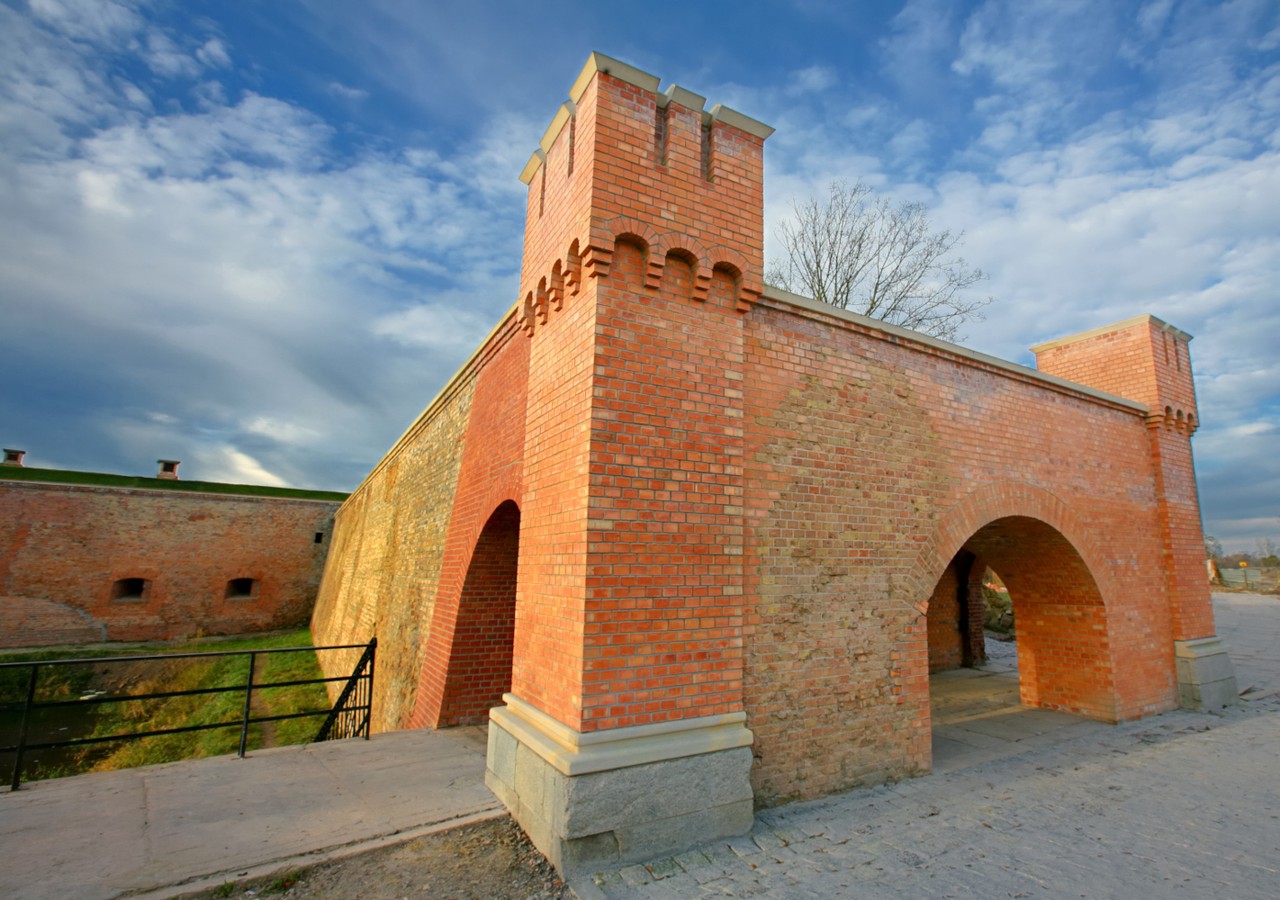
I have amended my itinerary a little bit, to properly take in the former German town of Küstrin, now known as Kostryn nad Odra in Polish. Sitting just over the river Oder from Germany, it was viewed as the ‘gateway to the Seelow Heights’, so strategically important to both sides.

I have been to see several of the ‘dead villages’ in France and Belgium, obliterated in World War 1. The old town of Kürstrin was obliterated, too.


Last edited:
As with many things, this planned trip has evolved, not least as I have now read several books on the fall of Berlin, the retreat westwards and the American army on the Elbe river.

Not least, I have bought and now mapped out several DIY guides to the battlefields themselves. These suit me as I can now stand at (or very close to) places where documented events (small and large) actually happened. Of course 80-odd years of time have changed some locations. For example, the hill that Zhukov and his generals placed their command bunkers, overlooking the sodden flood plain before the Seelow Heights is still there (as is the entrance to the bunker) but the trees have grown up, so you don’t quite get the view they had. That aside, you can ‘follow’ the battle’s places along pretty well still.

I am now mapping out the routes and finding a good location to park my campervan. I think I have found one on a farm near Seelow itself. This is maybe apt, as farms and small hamlets played a part in the battles at the time. I’ll share them here when they are finished.


Back
Top Bottom