

You are using an out of date browser. It may not display this or other websites correctly.
You should upgrade or use an alternative browser.
You should upgrade or use an alternative browser.
Triumph TR6C 1967 and 1968
- Thread starter Number 6
- Start date


I'm fairly confident it was the rotor and stator making contact that caused the problem, I initially assumed it was the belt that was at fault.Is it the rotor rubbing causing the heat, or is it debris from the belt getting in the air gap.

New belt and stator fitted, I've gone for a Continental Synchroflex belt at nearly twice the price of the Megapower that was fitted before. I've done 10 miles on it so far and all appears good, I want to do lot more before I refit the primary cover to be sure all is well.
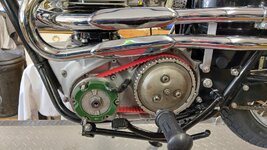
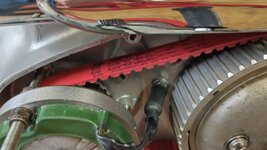
Probably poor manufacturing tolerances, there are several threads on the classic bike forums regarding alternator rotor/stator issues. The new stator was making contact with the rotor in exactly the same place, I shimmed it up to get the required 0.008" clearance. A short video of it running today, just waiting on the weather now for a proper rest run.What was the cause of the rubbing?
Sounds good, looks great….hope no further problems
 Only minor ones.
The weather held up today and I did 45 miles and the new belt is fine, I'm confident that problem is now sorted. The only other thing is a very minor oil leak from the bottom of the inlet pushrod tube. To fix it means taking off the tank, air filter, both exhausts, rocker boxes and cylinder head.  Rather than do all that I'm going to modify the engine breather system to the 1970 onwards configuration and see if that cures the leak. I was in two minds whether to do the mod when I built the engine but I wanted to keep it as standard as possible. I've done two other Bonnevilles previously, it's an easy job and it's a much better system. Well bollocks to originality, it's my bike and I want it to be usable as I like to ride them 'sportingly'. I've ordered the only part needed but seeing as it's Easter I probably won't have it until the middle of next week, when it comes I'll document the process.
Rather than do all that I'm going to modify the engine breather system to the 1970 onwards configuration and see if that cures the leak. I was in two minds whether to do the mod when I built the engine but I wanted to keep it as standard as possible. I've done two other Bonnevilles previously, it's an easy job and it's a much better system. Well bollocks to originality, it's my bike and I want it to be usable as I like to ride them 'sportingly'. I've ordered the only part needed but seeing as it's Easter I probably won't have it until the middle of next week, when it comes I'll document the process. 
Those are not problems…. They are either “glitches”, or “teething troubles”…..
Why do old Triumphs leak oil?
I was going to post this in the T120C rebuild thread but never got around to it so here it is. Some may find it interesting, some won't.
A bit of History. All the Meriden twins and triples are based on the 500cc Speed Twin which went on sale in 1937 so was probably designed around 1935. The basic engine design barely changed from then until the last ones were built in 1988 by Les Harris, so that's pre-war design and technology at a time when oil leaks and frequent maintenance were an accepted part of motorcycling.
The 1937 Speed Twin.
![triumph-speed-twin5t-1937[1].jpg](https://www.ukgser.com/community/data/attachments/491/491419-7aa12c7621a91dec43b50f24ad68bdfe.jpg?hash=YxAOI01Nvq "triumph-speed-twin5t-1937[1].jpg")
1988 Harris Bonneville
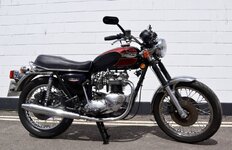
This was my 1968 BSA A65 Spitfire, so the same year as the TR6C. The top end of the engine has three gaskets :- cylinder base, cylinder head, and rocker cover as arrowed.
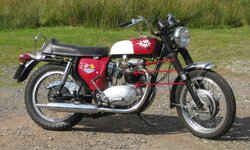
The top end of the TR6C has :-
Cylinder base gasket
Cylinder head gasket
2x rocker box gaskets
4x rocker box inspection cap seals
2x rocker spindle O rings at the drive side
4x rocker spindle copper washers at the timing side
2x inlet pushrod tube seals
2x exhaust pushrod tube seals
So thats 18 various gaskets, O rings and sealing washers where the BSA has just three.
Next up the engine breather system.
I was going to post this in the T120C rebuild thread but never got around to it so here it is. Some may find it interesting, some won't.
A bit of History. All the Meriden twins and triples are based on the 500cc Speed Twin which went on sale in 1937 so was probably designed around 1935. The basic engine design barely changed from then until the last ones were built in 1988 by Les Harris, so that's pre-war design and technology at a time when oil leaks and frequent maintenance were an accepted part of motorcycling.
The 1937 Speed Twin.
1988 Harris Bonneville
This was my 1968 BSA A65 Spitfire, so the same year as the TR6C. The top end of the engine has three gaskets :- cylinder base, cylinder head, and rocker cover as arrowed.
The top end of the TR6C has :-
Cylinder base gasket
Cylinder head gasket
2x rocker box gaskets
4x rocker box inspection cap seals
2x rocker spindle O rings at the drive side
4x rocker spindle copper washers at the timing side
2x inlet pushrod tube seals
2x exhaust pushrod tube seals
So thats 18 various gaskets, O rings and sealing washers where the BSA has just three.
Next up the engine breather system.
They don’t leak, they just mark where they have been so you can find your way back to collect the parts that have vibrated off!

I do agree that the bsa design was far better, but the triumphs (at least until 1971) looked better. ( mind you, I do like that BSA you posted)
The leaks are not helped by tooling that was so far past its sell by date they measured gaps in feet rather than thousands of an inch
Lack of investment by management who didn’t think they had any competition, so didn’t plough any money back into the industry……then came the rise of Japanese bikes, and the rest is history.
I do agree that the bsa design was far better, but the triumphs (at least until 1971) looked better. ( mind you, I do like that BSA you posted)
The leaks are not helped by tooling that was so far past its sell by date they measured gaps in feet rather than thousands of an inch
Lack of investment by management who didn’t think they had any competition, so didn’t plough any money back into the industry……then came the rise of Japanese bikes, and the rest is history.
Yeah but it's a triumph, which is better than a BSA any dayWhy do old Triumphs leak oil?
I was going to post this in the T120C rebuild thread but never got around to it so here it is. Some may find it interesting, some won't.
A bit of History. All the Meriden twins and triples are based on the 500cc Speed Twin which went on sale in 1937 so was probably designed around 1935. The basic engine design barely changed from then until the last ones were built in 1988 by Les Harris, so that's pre-war design and technology at a time when oil leaks and frequent maintenance were an accepted part of motorcycling.
The 1937 Speed Twin.
View attachment 491483
1988 Harris Bonneville
View attachment 491486
This was my 1968 BSA A65 Spitfire, so the same year as the TR6C. The top end of the engine has three gaskets :- cylinder base, cylinder head, and rocker cover as arrowed.
View attachment 491479
The top end of the TR6C has :-
Cylinder base gasket
Cylinder head gasket
2x rocker box gaskets
4x rocker box inspection cap seals
2x rocker spindle O rings at the drive side
4x rocker spindle copper washers at the timing side
2x inlet pushrod tube seals
2x exhaust pushrod tube seals
So thats 18 various gaskets, O rings and sealing washers where the BSA has just three.
Next up the engine breather system.
 I'll get me coat now
The oil breather.
Triumph twins, along with BSA and Norton, are 360 degree parallel twins, ie the pistons rise and fall together. This means that on a 650cc engine such as this, every time the pistons fall they compress 650cc of air inside the engine (which is not a very big space) and so considerable pressure builds up. When the engine is running there is also some blow-by of combustion gas past the piston rings which increases the internal pressure. On a multi cylinder engine the pistons rise and fall separately, as one piston falls another one rises and so they cancel each other out as regards to the pumping effect into the crankcase. The same goes for Honda parallel twins which are 180 degrees apart and so they don't suffer the same internal pressure as British twins.
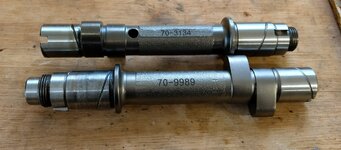
This internal pressue has to go somewhere and so there has to be a breather system to release it. Up until 1970 Triumph used a rather convoluted timed-breather device whereby the engine breathed through the inlet camshaft, which is hollow.
These are the cams, 70-3134 is the intake and the hole is where the air goes when compressed by the falling pistons.
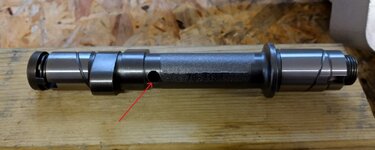
The air then travels along the inside of the camshaft to the drive side of the engine where there is a spring-loaded disc which is pegged to the cam. This disc along with another, fixed, disc inside the camshaft bushing comprise the timing components.
The spring-loaded disc.
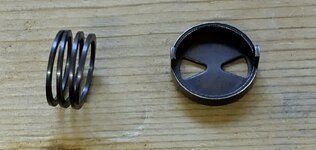
and installed on the end of the camshaft, the arrows show where the air enters and exits the cam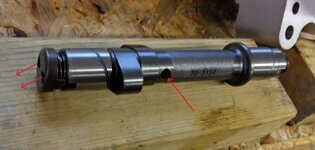
the corresponding disc inside the cam bushing.
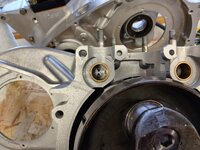
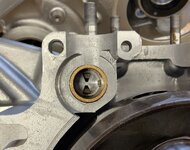
So as the camshaft rotates the two pairs of triangular holes line up once every engine revolution and this is where all the compressed air and combustion blow-by gases have to pass through. It's the VERY small areas circled by the red dots and remember that the camshaft is spinning at up to 3000 rpm.
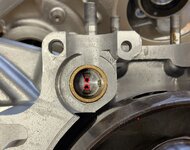
The gases then travel through a steel tube to which a rubber hose is attached and they then vent to the open air at the rear of the bike.
Triumph twins, along with BSA and Norton, are 360 degree parallel twins, ie the pistons rise and fall together. This means that on a 650cc engine such as this, every time the pistons fall they compress 650cc of air inside the engine (which is not a very big space) and so considerable pressure builds up. When the engine is running there is also some blow-by of combustion gas past the piston rings which increases the internal pressure. On a multi cylinder engine the pistons rise and fall separately, as one piston falls another one rises and so they cancel each other out as regards to the pumping effect into the crankcase. The same goes for Honda parallel twins which are 180 degrees apart and so they don't suffer the same internal pressure as British twins.
This internal pressue has to go somewhere and so there has to be a breather system to release it. Up until 1970 Triumph used a rather convoluted timed-breather device whereby the engine breathed through the inlet camshaft, which is hollow.
These are the cams, 70-3134 is the intake and the hole is where the air goes when compressed by the falling pistons.
The air then travels along the inside of the camshaft to the drive side of the engine where there is a spring-loaded disc which is pegged to the cam. This disc along with another, fixed, disc inside the camshaft bushing comprise the timing components.
The spring-loaded disc.
and installed on the end of the camshaft, the arrows show where the air enters and exits the cam
the corresponding disc inside the cam bushing.
So as the camshaft rotates the two pairs of triangular holes line up once every engine revolution and this is where all the compressed air and combustion blow-by gases have to pass through. It's the VERY small areas circled by the red dots and remember that the camshaft is spinning at up to 3000 rpm.
The gases then travel through a steel tube to which a rubber hose is attached and they then vent to the open air at the rear of the bike.
This was not a very good breather system and in 1970 Triumph changed the design and deleted the timed engine-breather, it only took them 33 years. 
Up until 1970 the primary drive chain and clutch lubrication was separated from the crankcase by an oil seal on the drive-side end of the crankshaft. From 1970 onwards the oil seal was deleted and so the crankcase and primary chaincase were connected atmospherically through the drive-side main bearing and the internal volume of the entire engine was greatly increased. A large-diameter breather hose was connected to the rear of the primary chaincase and so the engine could breathe freely which also reduced oil leaks due to the lower internal pressure.
I've converted three 650 twins to the later system and it's relatively easy to do, especially if you also use a belt-drive primary.
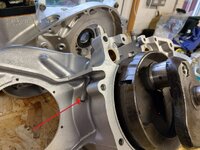
The first thing is to remove the oil seal from behind the engine sprocket or pulley, this comes out really easily once the alternator rotor and sprocket/pulley are removed.
Oil seal arrowed.
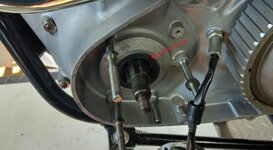
I then removed the primary chain tensioner blade pivot as it's not required with the belt drive.
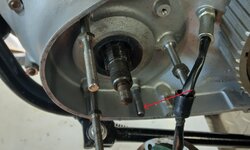
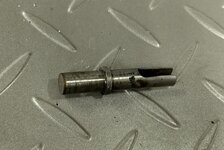
Removing the pivot has two advantages, it allows air to transfer from the crankcase and it allows any oil blow-by to drain back into the crankcase. (I run the belt drives dry.)
The hole were the pivot was located.
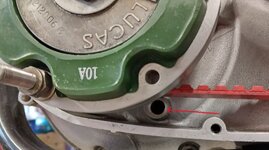
I use the standard 1970 onwards breather elbow on the rear of the primary drive case, fastened on with two M5 stainless screws and nylock nuts and drill a hole to correspond with the elbow orifice.
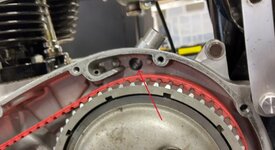
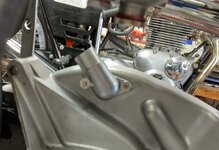
I use 1/2" bore breather tube so I make a reducer out of aluminium which is then stuck in with retaining compound.
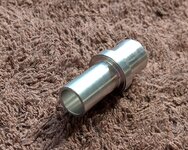
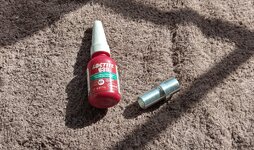
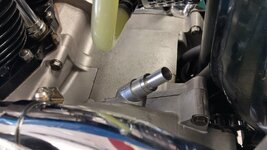
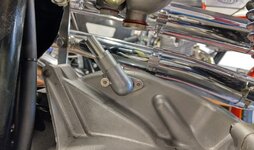
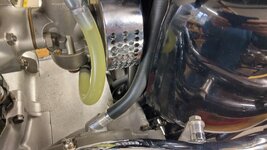
The 1/2" hose is a nice snug fit and doesn't need a clip. Routed to the back of the bike and job done, a better breathing engine and less chance of oil leaks.
Up until 1970 the primary drive chain and clutch lubrication was separated from the crankcase by an oil seal on the drive-side end of the crankshaft. From 1970 onwards the oil seal was deleted and so the crankcase and primary chaincase were connected atmospherically through the drive-side main bearing and the internal volume of the entire engine was greatly increased. A large-diameter breather hose was connected to the rear of the primary chaincase and so the engine could breathe freely which also reduced oil leaks due to the lower internal pressure.
I've converted three 650 twins to the later system and it's relatively easy to do, especially if you also use a belt-drive primary.
The first thing is to remove the oil seal from behind the engine sprocket or pulley, this comes out really easily once the alternator rotor and sprocket/pulley are removed.
Oil seal arrowed.
I then removed the primary chain tensioner blade pivot as it's not required with the belt drive.
Removing the pivot has two advantages, it allows air to transfer from the crankcase and it allows any oil blow-by to drain back into the crankcase. (I run the belt drives dry.)
The hole were the pivot was located.
I use the standard 1970 onwards breather elbow on the rear of the primary drive case, fastened on with two M5 stainless screws and nylock nuts and drill a hole to correspond with the elbow orifice.
I use 1/2" bore breather tube so I make a reducer out of aluminium which is then stuck in with retaining compound.
The 1/2" hose is a nice snug fit and doesn't need a clip. Routed to the back of the bike and job done, a better breathing engine and less chance of oil leaks.

That's clever stuff,good on ya 
Doesn’t the belt suffer with oil mist etc with it breathing through the primary?
No, the belt can run wet or dry.Doesn’t the belt suffer with oil mist etc with it breathing through the primary?
Some pictures from today, out together in the sunshine.
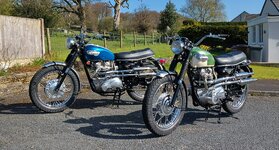
Then I took the '68 out for a 75 mile run up to Ribblehead. Thanks for watching.
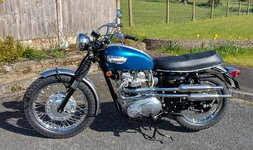
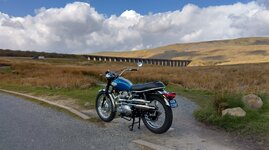
Then I took the '68 out for a 75 mile run up to Ribblehead. Thanks for watching.

Stunning bikes and a real credit to you Andy 

Back in the day ....
Bought a brand new 1966 BSA A65 Lightning that never leaked oil at all .... but was totally unreliable
Back to BSA twice, including the factory, then let it go for what I owed on it

Bought a brand new 1966 BSA A65 Lightning that never leaked oil at all .... but was totally unreliable
Back to BSA twice, including the factory, then let it go for what I owed on it

Similar threads

- Replies
- 0
- Views
- 315

- Replies
- 1
- Views
- 534