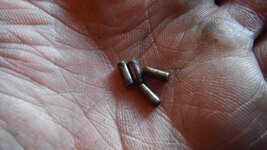
just checked behind seal between final drive and paralever and found some small rollers which i am guessing are from pivot .any idea if they are from there and what are my options for repair cheers (looks like my xmas hols are now a bit busier )


You are using an out of date browser. It may not display this or other websites correctly.
You should upgrade or use an alternative browser.
You should upgrade or use an alternative browser.
1150 gsa paralever
- Thread starter mick oliver
- Start date
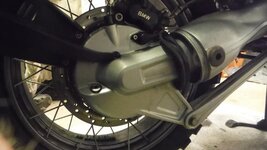
Have you play on the rear wheel? Grab it between 3 o'clock and 9 o'clock and try to rock.
They look small enough for the pivot bearings - easy enough job but use plenty of heat (hot air gun) on pivots as they are loctited in by BMW.
I'm sure there's a how too on here if you search.
Tom
They look small enough for the pivot bearings - easy enough job but use plenty of heat (hot air gun) on pivots as they are loctited in by BMW.
I'm sure there's a how too on here if you search.
Tom
Have you play on the rear wheel? Grab it between 3 o'clock and 9 o'clock and try to rock.
They look small enough for the pivot bearings - easy enough job but use plenty of heat (hot air gun) on pivots as they are loctited in by BMW.
I'm sure there's a how too on here if you search.
Tom
doesnt seem to be any play anywhere .i will google it cheers
Do you know if they've been done before - could be the removed bearings broke up on removal.
Tom
Tom
Karlread
Registered user
That could well be the case topcat. I purchased an R1100RS in February, removed the gaiter to find what looked like part of the final drive housing. Took the final drive apart to find all intact, went through the wad of servicing docs to find a receipt for 5 months earlier a new final drive bearing.......
I hope this is the case for the OP.
I hope this is the case for the OP.
Do you know if they've been done before - could be the removed bearings broke up on removal.
Tom
dont think its been apart white paint spot on pivot bolt looks untouched .nothing to say its been done in paperwork when i bought 5 months ago
I had the final drive rebuilt on my 1200GSA by BMW - they put white spots on it when they had finished - none on before.
If you've got no receipts - I guess it could be worth a call to the previous owner or the servicing garage to check, but if I were you I'd be stripping it apart to have a look.
Its not a big job - should have it apart and back together in a morning.
Tom
If you've got no receipts - I guess it could be worth a call to the previous owner or the servicing garage to check, but if I were you I'd be stripping it apart to have a look.
Its not a big job - should have it apart and back together in a morning.
Tom
last owner didnt do it and didnt know what had been done apart from regular servicing on service book .the zip ties had been replaced from the original ones so somebody has had a look behind seal at some time. i am thinking might as well do the final drive bearing as i plan to keep it for a long time and do a bit off roading with it . the rollers are not that rusty so i am thinking they might of not been there long as i have used it on some rough trails recently and maybe swinging arm has been pivoting more than its been used to on the road

The design of the bearing prevents any of the rollers from falling out unless either the bearing has suffered a catastrophic failure, or the plastic roller cage holding the rollers in the race has so worn, that when the pivot pins were removed, the bearing separated and some of the rollers dropped out. But the pivot pins would have to be removed for that to happen, and that points to a bearing replacement.
Now if your bearings have rollers missing or failed, then you would certainly know about it. It would be as notchy as hell, and impossible to tighten enough to remove the play. The torque load on the bearings is 9 to 11Nm depending on which technical source you use
You never stated the mileage of your bike. Mine were replaced on a service interval at 30k miles. So they are checked and either adjusted or replaced at service. The key to long life of these bearings, is regular maintenance. I do mine every year regardless of mileage. Lubricate and retorque is all that is needed. I don't bother with any of the lock tight. I just mark the position of the pivot pins to the casing with an indelible marker pen. They don't come undone.
Still it doesn't matter. You need piece of mind. The only way you will get that is to remove the bearings and inspect. It is a good training exercise for you, and will help you understand how easy the job can be.
Ian
Now if your bearings have rollers missing or failed, then you would certainly know about it. It would be as notchy as hell, and impossible to tighten enough to remove the play. The torque load on the bearings is 9 to 11Nm depending on which technical source you use
You never stated the mileage of your bike. Mine were replaced on a service interval at 30k miles. So they are checked and either adjusted or replaced at service. The key to long life of these bearings, is regular maintenance. I do mine every year regardless of mileage. Lubricate and retorque is all that is needed. I don't bother with any of the lock tight. I just mark the position of the pivot pins to the casing with an indelible marker pen. They don't come undone.
Still it doesn't matter. You need piece of mind. The only way you will get that is to remove the bearings and inspect. It is a good training exercise for you, and will help you understand how easy the job can be.
Ian
The design of the bearing prevents any of the rollers from falling out unless either the bearing has suffered a catastrophic failure, or the plastic roller cage holding the rollers in the race has so worn, that when the pivot pins were removed, the bearing separated and some of the rollers dropped out. But the pivot pins would have to be removed for that to happen, and that points to a bearing replacement.
Now if your bearings have rollers missing or failed, then you would certainly know about it. It would be as notchy as hell, and impossible to tighten enough to remove the play. The torque load on the bearings is 9 to 11Nm depending on which technical source you use
You never stated the mileage of your bike. Mine were replaced on a service interval at 30k miles. So they are checked and either adjusted or replaced at service. The key to long life of these bearings, is regular maintenance. I do mine every year regardless of mileage. Lubricate and retorque is all that is needed. I don't bother with any of the lock tight. I just mark the position of the pivot pins to the casing with an indelible marker pen. They don't come undone.
Still it doesn't matter. You need piece of mind. The only way you will get that is to remove the bearings and inspect. It is a good training exercise for you, and will help you understand how easy the job can be.
Ian
hi everybody and happy xmas ,bike has 48000 miles it had all its services to 18000 by bmw garage then its next 3 by a non bmw garage and its last at 43000 by bmw .there is no play holding wheel at 3 and 9 or 12 and 6 with back brake on or off .can i remove pivot bolt and check that all the rollers are in place while leaving the final drive in place.if its ok and i reassemble how do i torque up the inner nut without a cut down socket with allen key inside (watched chris harris on you tube) or do you just torque it up and hope inner doesnt move by putting a mark on it thanks mick
You can easily remove the pivot pins, but do them one at a time. When the pin comes out, the inner portion of the bearing should drop out, though on new bearings they clip together, the plastic cage holding the two two parts together.
If they have had loctite on them you wil need to heat the pins up to loosen the loctite to get the pins out. Make sure you remove all, repeat all of the loctite otherwise you will not get a true torque setting on reassembly.
I torque the bearing to 11nm and Mark it's position. I then tighten up the lock nut with spanner until tight. I then final torque the lock nut. The inner portion (pivot pin) doesn't move, so I manage without the special cut down socket. From observations the inner pin does not move when the lock nut is torqued up, otherwise my bearings would be toast by now, and I've used this method at least 6 times now.
But I guess it's all in the technique and how confident you feel about the end results.
If they have had loctite on them you wil need to heat the pins up to loosen the loctite to get the pins out. Make sure you remove all, repeat all of the loctite otherwise you will not get a true torque setting on reassembly.
I torque the bearing to 11nm and Mark it's position. I then tighten up the lock nut with spanner until tight. I then final torque the lock nut. The inner portion (pivot pin) doesn't move, so I manage without the special cut down socket. From observations the inner pin does not move when the lock nut is torqued up, otherwise my bearings would be toast by now, and I've used this method at least 6 times now.
But I guess it's all in the technique and how confident you feel about the end results.
You can easily remove the pivot pins, but do them one at a time. When the pin comes out, the inner portion of the bearing should drop out, though on new bearings they clip together, the plastic cage holding the two two parts together.
If they have had loctite on them you wil need to heat the pins up to loosen the loctite to get the pins out. Make sure you remove all, repeat all of the loctite otherwise you will not get a true torque setting on reassembly.
I torque the bearing to 11nm and Mark it's position. I then tighten up the lock nut with spanner until tight. I then final torque the lock nut. The inner portion (pivot pin) doesn't move, so I manage without the special cut down socket. From observations the inner pin does not move when the lock nut is torqued up, otherwise my bearings would be toast by now, and I've used this method at least 6 times now.
But I guess it's all in the technique and how confident you feel about the end results.
sounds ok to do i will give it a go over the holidays cheers mick
west coast traveller
Registered user
I torque the bearing to 11nm and Mark it's position. I then tighten up the lock nut with spanner until tight. I then final torque the lock nut. The inner portion (pivot pin) doesn't move, so I manage without the special cut down socket. From observations the inner pin does not move when the lock nut is torqued up, otherwise my bearings would be toast by now, and I've used this method at least 6 times now.
Same here. Never had a problem, just mark the pivot pin at 12 o'clock before torqueing up to check it doesn't move........it never has.

Before you dive in there, check some of the tools you'll need. Depending on your tool kit, unlikely you'll have the right ones... 12mm allen key plus a 32mm (it might be 30mm? Check it out) ring spanner but ideally a modified deep socket...without them torquing those pounds will just be guess work (I'm assuming you have torque wrenchsounds ok to do i will give it a go over the holidays cheers mick
 ). I bought a ring spanner for the job, just to undo the nut but I also modified a deep socket...
Alert from this it's relatively straight forward. Do some searching on here. Lots about doing and some priceless info to help you avoid some cock ups
 . As Ian mentioned, you'll need some heat on the pins. They're only aluminum alloy, so take care.
 Sent from my SM-N910F using Tapatalk
found this so will give it a go
http://www.ebay.co.uk/itm/Laser-Too...856005?hash=item2ca622bf05:g:6vkAAOSwZ1lWenUa
http://www.ebay.co.uk/itm/Laser-Too...856005?hash=item2ca622bf05:g:6vkAAOSwZ1lWenUa
That tool will do the job for you, if you don't have any of the right tools. 30mm hex and 12mm Allen key. You can fit a 10mm spanner on the reduced portion of the 12mm Allen key stub. Personally I'm not a great fan of those star sockets when using high torques like 100 plus Nm as they can slip off or round the nut if your not too careful. I use a hex socket to get a good tight fit on the locking nut. But that's just personal preference from experience.
Ian
Jiffy176
Registered user
I did mine a couple of years back, you would know if there was an issue.
I've got the lazer tool linked above, it is worth getting as my bearing shifted when I tried to tighten the large nut, whilst doing the job I also needed to replace the large nut.
The main thing I would stress is get the nut really really hot to loosen the thread lock otherwise the inevitable occurs.
My swinging arm was not marked up at all, the fact yours is suggests the job may have been done and what you have is witness marks.
I've got the lazer tool linked above, it is worth getting as my bearing shifted when I tried to tighten the large nut, whilst doing the job I also needed to replace the large nut.
The main thing I would stress is get the nut really really hot to loosen the thread lock otherwise the inevitable occurs.
My swinging arm was not marked up at all, the fact yours is suggests the job may have been done and what you have is witness marks.
Massive Lee
Registered user
If you have to replace the bearings (very expensive and proprietary to BMW), I suggest you look for Nylotron bushings made a guy on advrider. I now have 45,000km on them and they are still like new. They cost a fraction of what BMW bearings will want from you. And a much better option than the old brass bushing.
The whole thread is here. From finding a bearing replacement to producing Nylotron bushings. A very long read, but well worth it. I assure you.
http://advrider.com/index.php?threads/rear-pivot-bearing-details.977621/
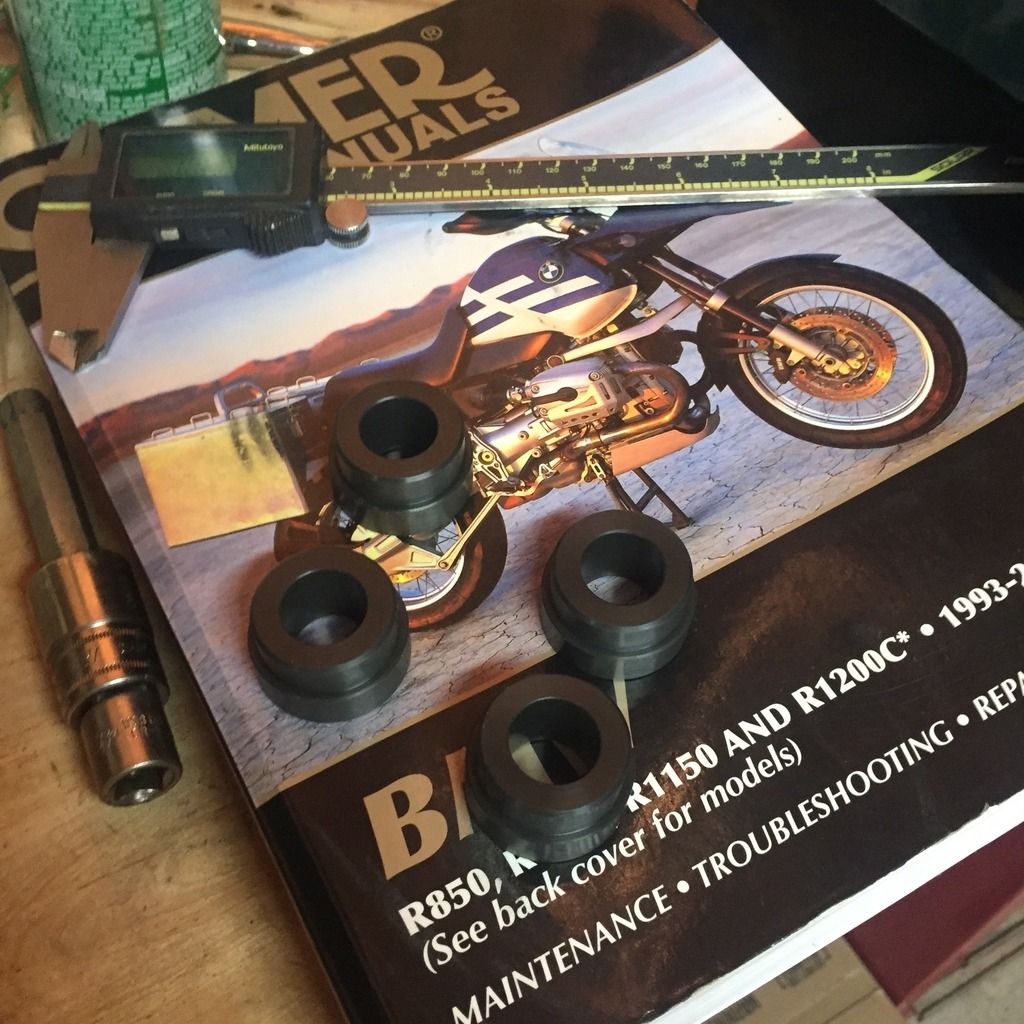
The whole thread is here. From finding a bearing replacement to producing Nylotron bushings. A very long read, but well worth it. I assure you.
http://advrider.com/index.php?threads/rear-pivot-bearing-details.977621/
Thirsty 1
Registered user
I also have these in my bike. That's my picture above. My bike was ran over and they were for the most part ok. My install starts on page 49 in the link above. Put them in and forget about them.
Motorworks also offer a bush version, but the bushes are steel. Very nicely made and they allow for the addition of grease via grease nipples. I fitted a set about 4-5k miles ago, so too soon to give a long term account of them, but so far so good. As above, a big saving on the oem parts.
Sent from my SM-N910F using Tapatalk
Sent from my SM-N910F using Tapatalk

Similar threads


- Replies
- 8
- Views
- 783

- Replies
- 6
- Views
- 1,327
