DOT4 Brake Fluid

Dot4 is same for cars and bikes. Different brands have differing boil points and can keep working where the cheep stuff could have boiled, I think you'd have to be into racing to test the theory though.

bollocks!!!!!!


dot 3
dot 4
dot 5.1

the number indicates the boiling point of the fluid not who makes it, all makers of a particular DOT should produce exactly the same thats what the DOT standard is for. The higher the number the higher the boiling point (close enough for govenment work). All are completely interchangeable, and you can mix them, me personally I would stick with 4 or 5.1 because by adding 3 you will drop the overall temperature ability of the fluid.

Stay CLEAR of dot 5 - is silicone based and not compatible with the others.
 
bollocks!!!!!!


dot 3
dot 4
dot 5.1

the number indicates the boiling point of the fluid not who makes it, all makers of a particular DOT should produce exactly the same thats what the DOT standard is for. The higher the number the higher the boiling point (close enough for govenment work). All are completely interchangeable, and you can mix them, me personally I would stick with 4 or 5.1 because by adding 3 you will drop the overall temperature ability of the fluid.

Stay CLEAR of dot 5 - is silicone based and not compatible with the others.

The numbering is mental. Just doesn't make sense does it.
 
DOT 5? ONLY Acceptable IF you have a Harley? or other system designed to use it as base fluid!

BMW Systems are designed around Ethylene Glycol based brake fluid and on two that I know of the hoses and seals swelled after about 3 months requiring a total rebuild of braking systems
personally I only use DOT 5 but that's another story!

The DOT number System is in reference to the Boiling point of the liquid

Another thing worth remembering is that the base of DOT 3, 4 and 5.1 is ethylene glycol

Does that name seem familiar? It should its the common base for Anti Freeze and if you think about it for a moment it is why water is absorbed into it! It is totally miscible ***


DOT5 If I remember was required to be coloured "Purple" to prevent it being in the same system as the Ethlene Glycol base fluids as they cannot mix

Very Importantly with the silicone base, it is totally immiscible with water so that drop of water that has got into the system (condensation on cap lid etc it is possible) will go where ???

It can't mix so where does it go? Well that's easy too, water is heavier so heads to the lowest point i.e. the calliper and once the fluid temperature passes 100 degrees ( I know it will be higher under pressure "but") Poof it becomes a big steam bubble in your previously totally fluid hydraulic system


*** to finish off this is why we change the brake and clutch fluid every two years (One year on wheel circuits on Servo brakes)

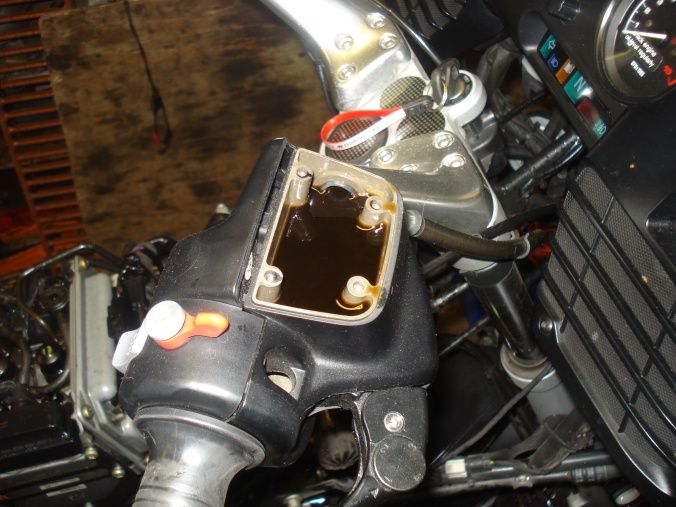
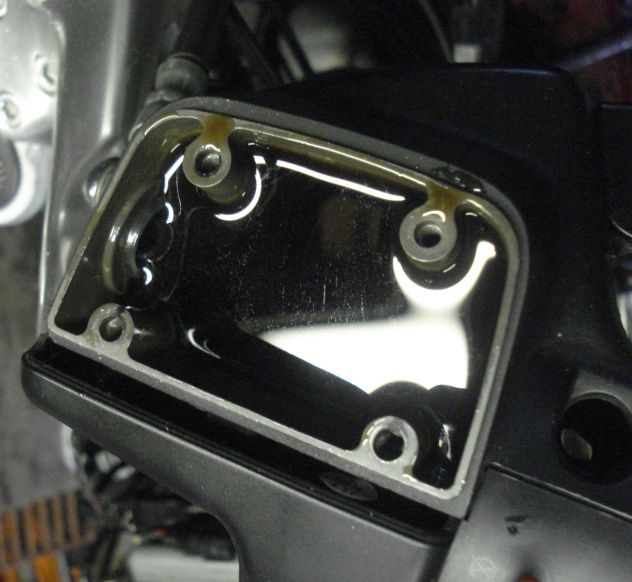
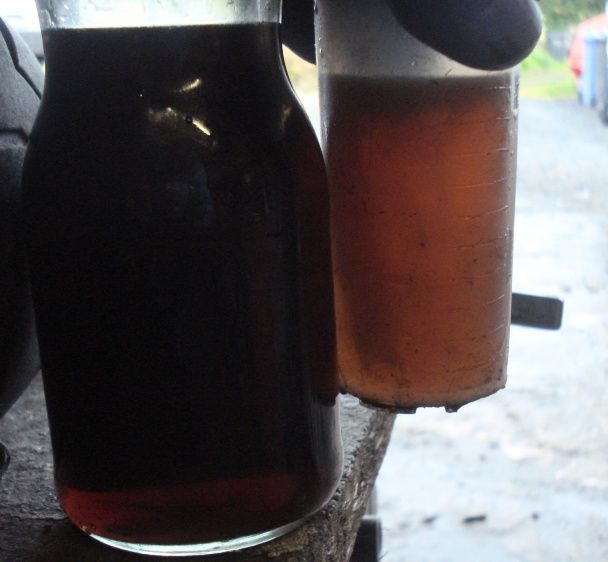
water absorption into the ethylene glycol effectively lowers the boiling point of the brake fluid AND also changes the PH slightly hence why very old brake fluid is often dark brown from eating pipe liners and seals!

R1150RT with Servo Brakes 65,000 miles 8 years old No record of Brake fluid changes
DSC05061.jpg


DSC05060.jpg


DSC05062.jpg


What I am saying is

Don't Piss about with your Brakes! Its a fiver for a bottle of fluid Change it (and Clutch fluid) bi-annually! Annually for wheel circuits on Servo ABS bikes (If there are any left with Servos??)

Oh and Don't use DOT 5 in Non Silicone base systems! It WILL fuck it up later on

 
Yes once you know yourself the histroy of the container. JJH

Depends on how long and how much fluid is in the bottle, or more correctly how much air is in there. The problem is absorption of moisture from the air. Your partially used bottle does not have a vacuum above the fluid it has air. Therefore it will absorb moisture from that air. Better to decant the fluid into a smaller container if you want to keep it. Better still to buy brake fluid in small quantities

John
 
Filtered of course and just a thought. But why not if it extracts moisture from the bottle?

Why not?
Well lets see....will Silica gel dissolve in brake fluid?
If it will, what strange effects will this have ?
What compounds could be created when you heat this new mixture?
Silica gel absorbs water. But so does Glycol. Which has the greatest affinity to water?


If you're really set on recycling brake fluid which may have absorbed some water - just heat it.
However, if you have brake fluid which you suspect may be water contaminated, I'd be tempted to bin it and buy some new.

You ask some disturbing questions, Bendy.
 
I mostly work with industrial and marine cooling so have access to plenty of white spot nitrogen. A quick shot of pure nitrogen into the bottle to displace any air before sealing the lid with some aluminium lagging tape and putting the plastic cap on keeps it 100% free of moisture until the next time a bike or car needs a fluid flush. Never had brake fade even on alpine roads and track days.


Back
Top Bottom