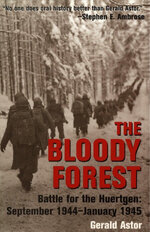
The book confirms that the battle was indeed on a First War scale of attrition.
What is interesting is the depleted state of the American army, raped of men and material in Normandy, the breakout and the dash to and through Belgium. Many of the divisions were at best 50% of their book strength, many were worse and desperately short of experienced junior officers and senior NCO’s.
There is a tale of a hard pressed mortar crew, who (having expended their stockpile fighting off a German counter attack) summoned up re-supply. This arrived, driven in a truck that had to come from Paris, 200 miles away. In the early days of the battle, the senior general, Hodges, had to summon up a minimum 3.000 tons of munitions. That figure would grow exponentially.
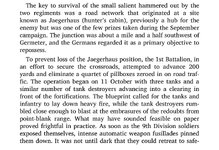
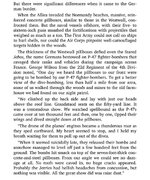
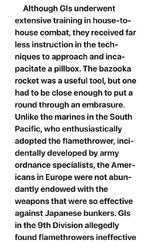
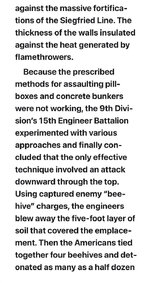
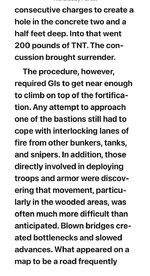
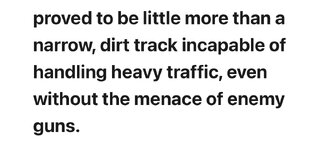
A key problem, besides any other, was how to destroy huge concrete bunkers, hidden deep in a forest. On D-day, they used shellfire from huge battleships, unavailable inland obviously. The air forces couldn’t see let alone hit them, the trees were simply too thick. They had to be subdued by combat engineers. It was almost Medieval, akin to soldiers undermining a castle; only the explosive power differed….
What is interesting is the depleted state of the American army, raped of men and material in Normandy, the breakout and the dash to and through Belgium. Many of the divisions were at best 50% of their book strength, many were worse and desperately short of experienced junior officers and senior NCO’s.
There is a tale of a hard pressed mortar crew, who (having expended their stockpile fighting off a German counter attack) summoned up re-supply. This arrived, driven in a truck that had to come from Paris, 200 miles away. In the early days of the battle, the senior general, Hodges, had to summon up a minimum 3.000 tons of munitions. That figure would grow exponentially.
A key problem, besides any other, was how to destroy huge concrete bunkers, hidden deep in a forest. On D-day, they used shellfire from huge battleships, unavailable inland obviously. The air forces couldn’t see let alone hit them, the trees were simply too thick. They had to be subdued by combat engineers. It was almost Medieval, akin to soldiers undermining a castle; only the explosive power differed….
Last edited: