
Rapidly falling out of love with my R1250GS

I think it was a rare instance or was deemed to be possible when the carb icing would cause a stall condition like running out of petrol and if the road conditions had poor grip then the back wheel could skid.

I would have got the info from MCN at the time, it was considered a safety issue and prompted complete replacement of all four carbs across the range of Kawasaki bikes.

IIIRC the Kawasaki bikes needed modified carbs that had float bowls heated by the bikes cooling system via water pipework.

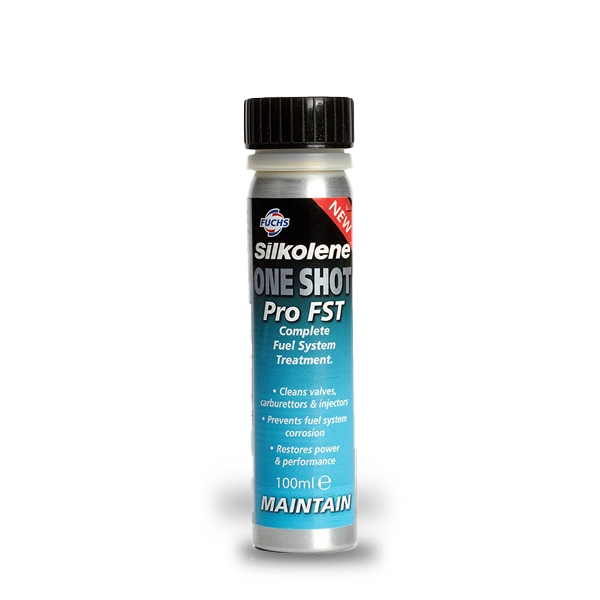
I ran a Silkolene fuel additive in my Yamaha designed in conjunction with Kawasaki to reduce carb icing effects called ProFST. It helped stop ice crystals forming in the carbs during cold damp weather, it was available in one-shot and litre bottles. Wynns dryfuel is another alternative to help with water in fuel and carb icing.
 
I think it was a rare instance or was deemed to be possible when the carb icing would cause a stall condition like running out of petrol and if the road conditions had poor grip then the back wheel could skid.

I would have got the info from MCN at the time, it was considered a safety issue and prompted complete replacement of all four carbs across the range of Kawasaki bikes.
I remember something about a major recall program. Still surprised that carb icing could cause a lock up though. Had it once donkeys years back in an XR2i Fiesta, the works hack. It didn’t stall, but just wouldn’t accelerate at all. It was a great fun car otherwise.
 
IIIRC the Kawasaki bikes needed modified carbs that had float bowls heated by the bikes cooling system via water pipework.

I ran a Silkolene fuel additive in my Yamaha designed in conjunction with Kawasaki to reduce carb icing effects called ProFST. It helped stop ice crystals forming in the carbs during cold damp weather, it was available in one-shot and litre bottles. Wynns dryfuel is another alternative to help with water in fuel and carb icing.

It’s not the water in the fuel that freezes, it’s the water in the air, coating the carbs where it goes through the Venturi.
 
It’s not the water in the fuel that freezes, it’s the water in the air, coating the carbs where it goes through the Venturi.
I'm aware of that being a refrigeration engineer and familiar with the bernoulli principle(if it wasn't the case my bike would have had carb icing all year round).
 
I'm aware of that being a refrigeration engineer and familiar with the bernoulli principle(if it wasn't the case my bike would have had carb icing all year round).
yeah, I recall what you did/do, so figured that, so what's the point of the fuel additive? How can it affect the bits of the carb that it will never get near?
 
so what's the point of the fuel additive? How can it affect the bits of the carb that it will never get near?

I'm no chemist but I believe ProFST acts as a fuel soluble de-icer which reduces the freezing of airborne moisture in the throat of the carburettor as the fuel atomises into the air stream.

Dryfuel is ideally designed for use before laying up a bike in storage. Its purpose is to hold tiny amounts of water found in the fuel tank (such as condensation) in suspension with the fuel rather than it separating out and falling to the bottom of the tank.

It can then be burnt off when the engine runs and prevent an accumulation of water in the fuel tank. Used regularly it keeps your fuel dry, hence the name. When it gets to winter, having no moisture in the fuel (thanks to using the additive) helps prevent carb icing as that water could otherwise freeze as it gets sucked up from the float bowl through the emulsion tubes to cause blockage .
 
ISTR that Pro FST is an octane booster and its main ingredient is Isopropyl alcohol.

I used it every winter during the 80s to prevent carb icing on a CBX750.
 
I'm no chemist but I believe ProFST acts as a fuel soluble de-icer which reduces the freezing of airborne moisture in the throat of the carburettor as the fuel atomises into the air stream.

Dryfuel is ideally designed for use before laying up a bike in storage. Its purpose is to hold tiny amounts of water found in the fuel tank (such as condensation) in suspension with the fuel rather than it separating out and falling to the bottom of the tank.

It can then be burnt off when the engine runs and prevent an accumulation of water in the fuel tank. Used regularly it keeps your fuel dry, hence the name. When it gets to winter, having no moisture in the fuel (thanks to using the additive) helps prevent carb icing as that water could otherwise freeze as it gets sucked up from the float bowl through the emulsion tubes to cause blockage .

Mmm, I’m a cynical old git but I’m thinking “snake oil”. :nenau
 
yeah, I recall what you did/do, so figured that, so what's the point of the fuel additive? How can it affect the bits of the carb that it will never get near?
On the CR, the whole exterior of the carb would be covered in 'frost' after extended running in freezing conditions with the throttle wide open. I would suggest that the jets and emulsion tubes could became blocked with said frost, (the slide would also stick at times too). So it's a combination of factors but an effective antifreeze solution in the fuel may have stopped the jets becoming blocked and kept the bike running. The main issue with my CR was being a single, it had a big keihin flatslide carb so when running flat out was pulling a lot of air though a single venturi so was very much pre disposed to carb icing hence my warm air ducting mod. I'm not sure a fuel additive alone would have been enough to to prevent the carb icing in my particular case.
 
The romantic heroics of yester year are strong in this one! :D
 
2022 R1250GS Triple Black with 12k km on it. I've owned it since the end of October and thought that this would be my ideal bike. Ho ho ho. Last November it spent a few weeks at the dealer with an ignition fault (coil pack, dealer was useless in diagnosing).

Today, it nearly killed me. I was bimbling along at 80kph when the back wheel suddenly locked, only my years of riding experience saved me. I pulled the clutch on but it made no difference. Scanned it with MotoScan and got "rear wheel speed sensor 480913" and "undertension 480860" fault codes. The TFT also said "ABS system fault". I opened the bleed ripple on the caliper to get rid of any pressure and gingerly made my way home. I am deeply disappointed. My last bike was a Harley (I know) but it never let me down. I'm pondering whether to stick the the GS or get shut, I really don't need the hassle.
This is not an issue I've ever seen or heard of. Have you checked the fluid levels are correct and the calipers are moving freely?

A speed sensor fault would disable the ABS. Not apply the brakes.
 
The ProFST helped quite a bit with my carb icing, it made the bike rideable in autumn/winter instead of downright dangerous.
Yeah, I don’t know about the ProFST, but I’m really not a fan of “downright dangerous”.
 
This is not an issue I've ever seen or heard of. Have you checked the fluid levels are correct and the calipers are moving freely?

A speed sensor fault would disable the ABS. Not apply the brakes.
This is a genuine question as I don't know the answer and don;t have a bike with TC. So how does the BM traction control system deal with a slide/wheelspin from a logic perspective?
I know with 4 wheel systems they will apply a brake(s) to match wheel speeds in order to regain traction. How do bikes do it? I would have thought simply cutting throttle response is a bit crude on the latest systems????
 
This is a genuine question as I don't know the answer and don;t have a bike with TC. So how does the BM traction control system deal with a slide/wheelspin from a logic perspective?
I know with 4 wheel systems they will apply a brake(s) to match wheel speeds in order to regain traction. How do bikes do it? I would have thought simply cutting throttle response is a bit crude on the latest systems????
2008 1200 GS did that, when they introduced it
It was crude and horrible
 
This is a genuine question as I don't know the answer and don;t have a bike with TC. So how does the BM traction control system deal with a slide/wheelspin from a logic perspective?
I know with 4 wheel systems they will apply a brake(s) to match wheel speeds in order to regain traction. How do bikes do it? I would have thought simply cutting throttle response is a bit crude on the latest systems????

I didn't design the electronics so I can't give a scientific answer. But when all this stuff came out I was in the dealer network and I don't recall from any of the training or documentation that the brakes would ever be applied. It seems too dangerous on two wheels. They can do that on cars as it's kind of working like a Limited slip differential would. With the obvious advance of having four wheels. But I'm not a car guy... I don't really know.

It was and still is my understanding that traction control (DTC) works my "managing" your throttle and power. "Cutting the throttle" is too harsh terminology.

It uses the two speed sensors to see what your wheels are doing (Like ABS would). It knows your speed, gear and throttle position and does a a million calculations a second to take over your engine management system and it it notices your real wheel is slipping. It's incredibly clever and has probably saved just as many lives as ABS.

The more advanced version also using lean angle too.

If your DTC cuts in, you'll likely see it flashing up on screen too.
 
Just please excuse the terrible grammar in my reply. Auto correct with oily rubber gloves makes me sound retarded when I type :ROFLMAO:


Back
Top Bottom
