The Rivet-Free Revolution

ROA

Registered user
Joined
Feb 16, 2026
Messages
44
Reaction score
30
Location
Baia Mare
Hi everyone,
I’ve been a long-time lurker here, and as a fabricator, I’ve always been obsessed with one thing: why is the industry standard for ADV luggage still 'rivets and glue'?
We’ve all seen it – a minor spill on a green lane, a bit of vibration over a few thousand miles, and those rivets start to weep or pop. Once the hole is stretched, the box is no longer structural, and it's certainly not waterproof.
I decided to take a different path with ROA. We call it Full Sudat.
Coming from a 4x4 custom fabrication background, I don't trust anything that isn't TIG welded.
Our philosophy is simple:
No rivets: Every seam is fused aluminum.
No plastic corners: Just 2mm of high-grade alloy.
Custom over Standard: If someone needs a 54L box for their dog or a specific offset for a custom rack, we just weld it.
I’m curious to hear from the high-mileage guys here: Have you ever had a riveted box fail on you, or do you think the weight-to-strength trade-off of a fully welded box is the way forward?
I’ll be hanging around to chat tech and welds!
Cheers,
Vlad ROA
 
Hi everyone,
I’ve been a long-time lurker here, and as a fabricator, I’ve always been obsessed with one thing: why is the industry standard for ADV luggage still 'rivets and glue'?
We’ve all seen it – a minor spill on a green lane, a bit of vibration over a few thousand miles, and those rivets start to weep or pop. Once the hole is stretched, the box is no longer structural, and it's certainly not waterproof.
I decided to take a different path with ROA. We call it Full Sudat.
Coming from a 4x4 custom fabrication background, I don't trust anything that isn't TIG welded.
Our philosophy is simple:
No rivets: Every seam is fused aluminum.
No plastic corners: Just 2mm of high-grade alloy.
Custom over Standard: If someone needs a 54L box for their dog or a specific offset for a custom rack, we just weld it.
I’m curious to hear from the high-mileage guys here: Have you ever had a riveted box fail on you, or do you think the weight-to-strength trade-off of a fully welded box is the way forward?
I’ll be hanging around to chat tech and welds!
Cheers,
Vlad ROA
Cost

if you had to hand tig 20,000 pannier sets, so 60,000 boxes a year, could you guarantee the quality / durability of each

and what would the cost be for a tigged set vs Glue and rivets

Id hazard a guess, that the cost of glue and rivets, let alone the labour would be significantly lower

And everything is built to a price
 
Cost

if you had to hand tig 20,000 pannier sets, so 60,000 boxes a year, could you guarantee the quality / durability of each

and what would the cost be for a tigged set vs Glue and rivets

Id hazard a guess, that the cost of glue and rivets, let alone the labour would be significantly lower

And everything is built to a price
You’re absolutely right—everything is built to a price, and that’s exactly my point.
When you’re making 60,000 boxes a year, you have to use glue and rivets because it’s the only way to keep the assembly line moving fast and the costs low. It’s a compromise made for mass production.
But at ROA, we aren’t trying to be a factory. We are a workshop.
I don’t want to make 60,000 sets; I want to make the best set for the guy who plans to drop his bike in the middle of nowhere and needs to know his gear will stay in one piece.
To answer your questions:
Quality: Yes, because a master welder inspects every single inch of that seam. You can’t 'fake' a TIG weld like you can hide a bad rivet with some sealant.
Cost: Of course, TIG welding is more expensive. It requires more skill, more time, and more expensive equipment.
But here’s the thing: people on this forum don’t buy a GS because it was the 'cheapest' bike on the market. They buy it for the engineering. We apply that same logic to our boxes. We aren't building to a price; we are building to a standard.
 
But here’s the thing: people on this forum don’t buy a GS because it was the 'cheapest' bike on the market. They buy it for the engineering

Some here will ‘buy’ the expensive bike on PCP and then scour China for every cheap and copy item they can find, delivered to their door within days.

They’ll also moan that anything else is a rip-off.
 
Some here will ‘buy’ the expensive bike on PCP and then scour China for every cheap and copy item they can find, delivered to their door within days.

They’ll also moan that anything else is a rip-off.
Spot on. It's a strange paradox: spending £20k on a bike and then trusting its safety to the cheapest copy found online. We aren't competing with mass-produced cheap kits. We’re here for the riders who appreciate that a hand-welded seam in Europe has more value (and soul) than a container-load of rivets and glue.
 
I had Tesch Travel Taschen when I had ali panniers.
After a crash on the KKH, they were still good, with a bit of persuasion.
Bloody good boxes.

I don't know if they are made anymore as he died last September.
Tesch
 
I had Tesch Travel Taschen when I had ali panniers.
After a crash on the KKH, they were still good, with a bit of persuasion.
Bloody good boxes.

I don't know if they are made anymore as he died last September.
Tesch
Respect to Bernd Tesch. He was the gold standard for 'indestructible' gear. His passing is a huge loss for the overland community.

My goal with ROA is to carry that same 'overbuilt' philosophy into the modern era. While Tesch used steel, I’ve moved to 2mm high-grade aluminum, but the core principle remains: TIG-welded seams that don't quit.

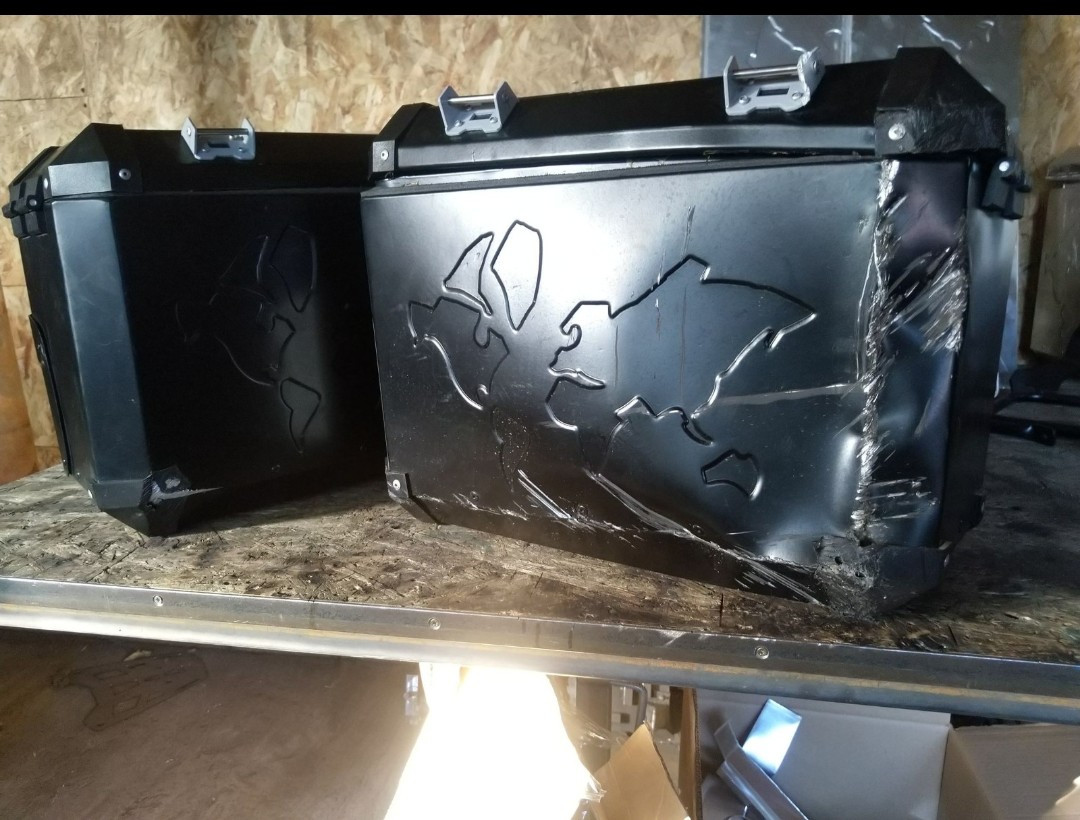
As you said, a good box should handle a crash and keep going with just a 'bit of persuasion'. Here is one of ours that took a hard slide .

Scratched? Yes. But the structure is 100% and it’s still watertight. No rivets to pop, no seams to split. That’s the Tesch spirit in a 21st-century package.
 
but what about crack formation and changes to material properties in the heat affected zone? There is a reason why aluminium alloy aircraft are not welded….
 
but what about crack formation and changes to material properties in the heat affected zone? There is a reason why aluminium alloy aircraft are not welded….
That’s a fair technical point, but there’s a massive difference between an aircraft fuselage and ADV luggage.
Aircraft use specific 2000 or 7000 series alloys (like Duralumin) which are high-strength but notoriously difficult to weld without losing their heat-treat properties—that’s why they are riveted.
For panniers, we use 5000 or 6000 series marine-grade aluminum. These alloys are designed specifically to be TIG welded. In fact, high-speed ferries and offshore boats are entirely TIG welded using these materials because they need to handle constant vibration and impact without cracking.
As for the Heat Affected Zone (HAZ), that’s where the skill of the welder comes in. Proper heat management and the right filler rod ensure the seam is as strong as the parent metal. A well-executed TIG weld doesn't 'crack'—it fuses.
I’d rather trust a continuous, fused seam than 50 holes drilled into the metal for rivets, which are essentially 50 potential starting points for stress cracks. 🛠️
 
Respect to Bernd Tesch. He was the gold standard for 'indestructible' gear. His passing is a huge loss for the overland community.

My goal with ROA is to carry that same 'overbuilt' philosophy into the modern era. While Tesch used steel, I’ve moved to 2mm high-grade aluminum, but the core principle remains: TIG-welded seams that don't quit.
Mine were 2mm alloy. Only the rack was steel. Square of course as round sucks :D
 
Mine were 2mm alloy. Only the rack was steel. Square of course as round sucks :D
Haha, I couldn't agree more about the 'square vs round' debate! Square boxes are easier to pack, easier to mount gear on, and much more honest.
And you’re spot on with the 2mm alloy—it’s the 'sweet spot' for strength-to-weight. Anything thinner feels like a soda can, and anything thicker is just overkill for a bike.
It’s good to see someone who appreciates the classic, rugged setup. That’s the DNA we’re trying to keep alive at ROA. If it was good enough to cross continents 20 years ago, it’s even better now with modern TIG precision!
 
Haha, I couldn't agree more about the 'square vs round' debate! Square boxes are easier to pack, easier to mount gear on, and much more honest.
And you’re spot on with the 2mm alloy—it’s the 'sweet spot' for strength-to-weight. Anything thinner feels like a soda can, and anything thicker is just overkill for a bike.
It’s good to see someone who appreciates the classic, rugged setup. That’s the DNA we’re trying to keep alive at ROA. If it was good enough to cross continents 20 years ago, it’s even better now with modern TIG precision!
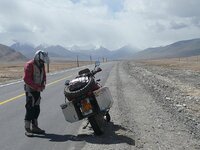
It was 20 years ago, nearly... China.
chinakkh.jpg
 
It was 20 years ago, nearly... China.
View attachment 486589
That photo is incredible. There’s no better testing ground than the KKH and the backroads of China. It’s exactly that kind of 'old school' adventure—where gear failure isn't just an inconvenience, but a real problem—that drives me to build these the way I do.
Bernd Tesch’s boxes were legendary because they were simple, overbuilt, and reliable. Seeing your setup from 20 years ago reminds me why we shouldn't overcomplicate things with plastic and rivets.
If you’re ever planning another trip like that, I’d love to get a set of ROA boxes on your bike. I think you'd find that the 2mm TIG-welded aluminum would feel right at home on those horizons.
Safe travels, wherever you are today!
 
That photo is incredible. There’s no better testing ground than the KKH and the backroads of China. It’s exactly that kind of 'old school' adventure—where gear failure isn't just an inconvenience, but a real problem—that drives me to build these the way I do.
Bernd Tesch’s boxes were legendary because they were simple, overbuilt, and reliable. Seeing your setup from 20 years ago reminds me why we shouldn't overcomplicate things with plastic and rivets.
If you’re ever planning another trip like that, I’d love to get a set of ROA boxes on your bike. I think you'd find that the 2mm TIG-welded aluminum would feel right at home on those horizons.
Safe travels, wherever you are today!
That was the good bit. It soon went to rats over the border.
To old for it now :D

near_gilgit.jpg
 
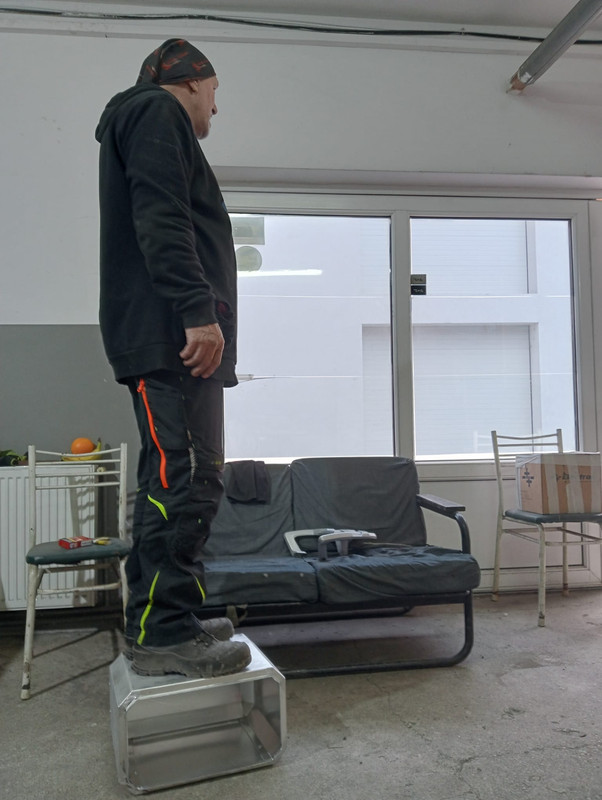
There’s always a lot of talk here about pannier thickness and weight vs. strength. To see exactly what our 2mm handmade cases can handle, we did a little experiment: we had a 100kg (220lbs) guy stand right on the side walls of the pannier with the lid completely off.
As you can see, there’s no bending or structural failure at all. We believe this extra rigidity is vital when the bike takes a tumble on a trail, but I’d love to hear from the experienced riders here:
Does this kind of 'over-engineering' matter to you when choosing luggage, or do you think 1.5mm is 'good enough' for most RTW (Round The World) trips?
Looking forward to your thoughts and any technical feedback you might have!
 
That's bloody impressive!
Thanks! We wanted to show that 2mm aluminum isn't just a number on a spec sheet—it’s about real-world rigidity. When you're out in the wild, you need to know your luggage can take a hit and stay square.
 
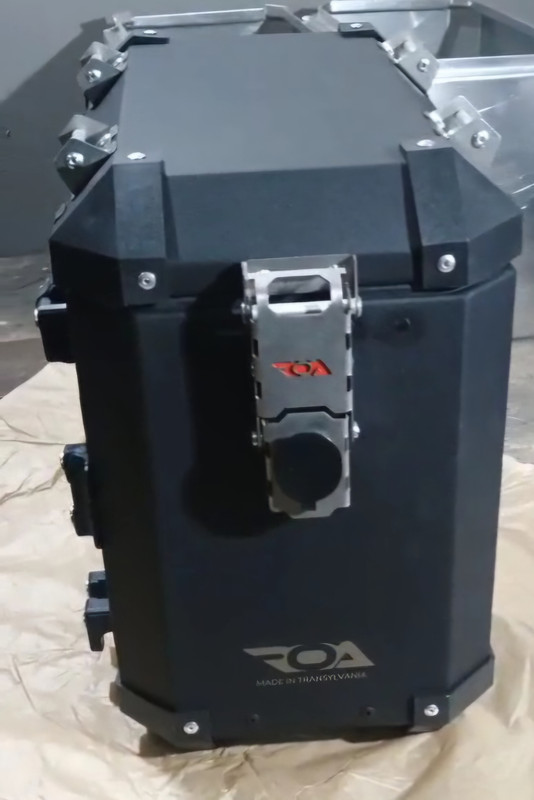
A closer look at the finish. 🛡️

We take pride in the 'Made in Transylvania' mark. It’s not just a location, it’s a commitment to building gear that survives the harshest Carpathian trails. 🇷🇴

Every rivet is placed by hand, every seal is double-checked. No mass production, just one rider building for another.

Have a great weekend on the trails, everyone! 🏍️💨


Back
Top Bottom