1965 Triumph Bonneville TT

Great write up.

About 30 years ago I rebuilt a 1963 T90, 350cc.

I stilll have my old notebooks from the time and a copy of a tuning booklet by Stan Shenton. (Tuning based on 500cc Daytona, but I applied the principles to the 350).

Another, Wish I had never sold it.
This one Doc?

1000019462.jpg

A cracking little book. Still have mine.👍
 
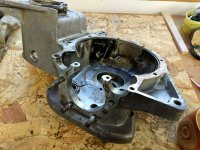
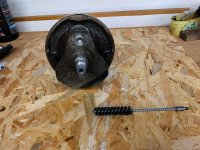
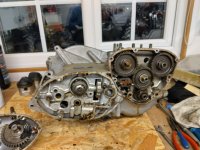
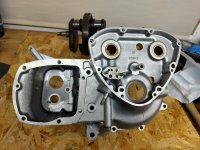
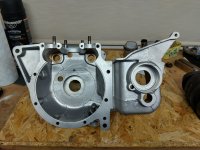
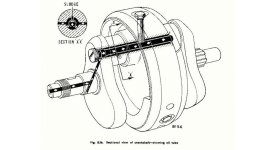
The last few days have been spent cleaning out the sludge trap and the crankcases which have now gone for vapour blasting. The sludge trap in particular is a filthy job but it has to be done meticulously, any crap left in there goes immediately to the big-end bearings as soon as the engine is started. I use an 18mm steel bottle brush, a long screwdriver and a 2.5mm drill to poke through the big-end journals. And 5 litres of petrol which I find is the best solvent for 60 year old sludge.

65.jpg

66.jpg

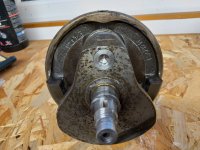
All cleaned out with new sludge trap and plug fitted with high-strength Loctite. The cranks always have some rust spots, the shaft is a steel forging and the flywheel is cast iron, any condensate from combustion quickly stains them.

67.jpg
 
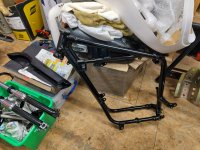
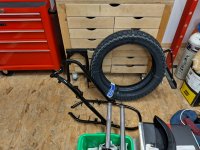
I've also got the bits back from the powder-coaters (Triple S) They do a great job, this is the 8th bike they've done for me over the last 10 years or so. Not too thick a coating so the frame number is still clearly visible. Some firms mainly do industrial components and the results are horrible.

69.jpg

70.jpg

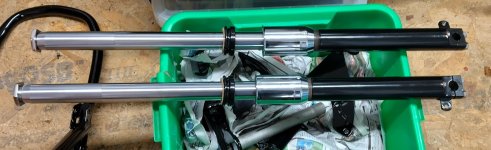
I've also put the fork legs together but I'm waiting for some O rings before finally fitting the chrome oil seal holders.

New stanchions, seals and holders, top and bottom bronze bushes, springs and gaiters etc.

68.jpg
 
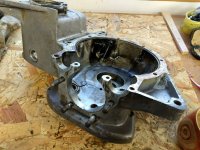
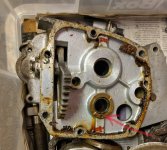
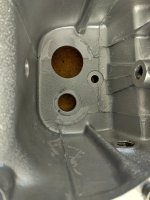
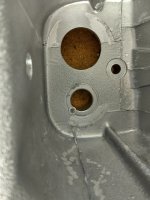
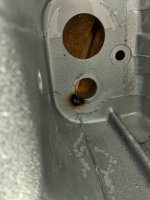
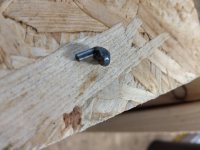
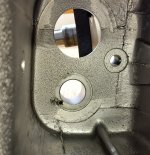
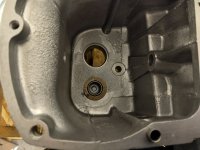
Then I spotted something which I'd missed earlier. The locating dowel for the bronze thrust bearing on the layshaft was broken off. I've seen this a couple of times before, usually caused by the thrust washer not being seated properly before the gearbox cases are bolted up. Strangely there was no damage to the thrust washer or the area around the dowel, it was just flush with the casing, it should be about 2mm proud. There is also one at the opposite end of the layshaft, they should look like this :-

77a.jpg

Not like this :-

71.jpg

The dowel sits in a blind hole and they are 1/8" (3mm) diameter, too small to drill out even if you could get a drill in there. What I've done in the past is weld a washer to the dowel, build up the weld and then pull it out with pliers. I tried four times yesterday without success so gave up. Today it came out first go.

72.jpg

73.jpg

Got the little bastard...

74.jpg

Very minimal marking to the casing, all ready for the new dowel to go in.

75.jpg
 
I then spent an hour or so cleaning out every hole on both casings. Even though I'd taped up the oil ways they were still full of blast media, tiny glass beads. Hot soapy water, a small nylon bottle brush and then blown through with the airline does the job.

The casings are all ready for the bearings to go in now but I want to fit the new dowel first as the casings need heating up and the dowel is right next to the layshaft bearing. I've ordered a new dowel today, should be here early next week.
 
Last edited:
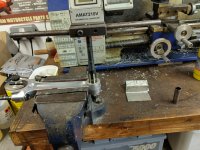
Closer inspection of the conrods revealed some play in the little-end bush. After warming the rods I pressed the old ones out using two sockets in the bench vice and then pressed the new bushes in. They were then reamed to size with an adjustable reamer so I could get them to the optimum fit to suit the gudgeon pins.

81.jpg

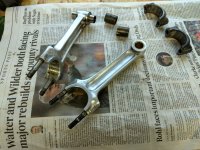
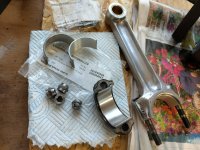
The rods were then polished to remove any scratches and new big-end shells and locknuts were fitted. (old bushes at the top of the picture)

82.jpg

83.jpg

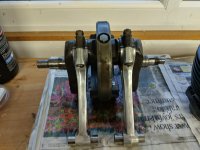
Rods installed on the crankshaft

88.jpg
 
Closer inspection of the conrods revealed some play in the little-end bush. After warming the rods I pressed the old ones out using two sockets in the bench vice and then pressed the new bushes in. They were then reamed to size with an adjustable reamer so I could get them to the optimum fit to suit the gudgeon pins.

View attachment 370491

The rods were then polished to remove any scratches and new big-end shells and locknuts were fitted. (old bushes at the top of the picture)

View attachment 370492

View attachment 370493

Rods installed on the crankshaft

View attachment 370494
👏
 
Next job was to fit new tappet guide blocks to the barrels. This being a 1965 bike there is no direct oil feed to the tappets/cam followers, they are merely lubricated by oil that drains down the pushrod tubes from the rocker boxes. This engine design dates from around 1935 when the Speed Twin was being developed, they are very basic engines. From 1966 onwards the exhaust tappets were pressure lubricated via a bleed off gallery from the crankshaft supply.

This diagram shows the only pressurised part of the lubrication system prior to 1966, the only bits that got oil directly were the two big-end bearings, everything else was drip fed or splash fed.

90.jpg

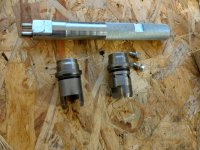
New tappet blocks and tool for insering them. (big hammer not shown!)

85.jpg
 
New layshaft thrust washer dowel now fitted along with the layshaft Torrington needle roller bearing, these are made of very thin sheet metal and are easily damaged when fitting. There is a special tool available, I made my own on the lathe, it contacts the back face and the front edge of the bearing at the same time and so spreads the load. Even after heating the gearbox casing they still need quite a bit of force to drift them in.

93.jpg

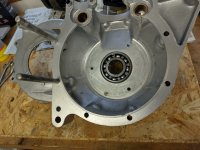
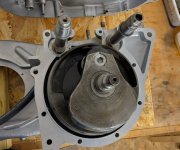
Then new mainshaft bearing, retaining circlip and oil seal, followed by crankshaft main bearings. Heating the crankcases with a Mapp gas torch allows them to just drop in without having to knock them in. Within seconds they expand and are held firmly once the cases cool down.

92.jpg

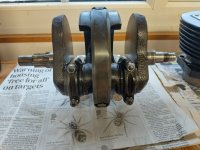
Crankshaft with new big-end nuts fitted and torqued down ready to install. This is the lightweight crank as fitted to the TTs and some other Bonnevilles in 1965 and 1966, it has a smaller flywheel so spins up quicker. I also have one in my 1967 T120R.

91.jpg

I thought I'd taken pictures of fitting the camshafts and crankshaft to the cases but I can't find them. :confused: I'm building a 1967 TR6C engine next week which is identical, I'll take pictures of that and add them to this thread to fill in the pictorial gaps.

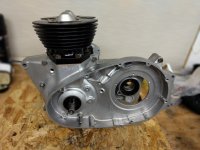
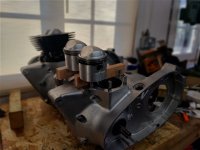
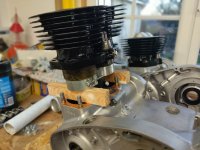
Crankcase halves joined together, pistons and barrels in place. As I've used the 11:1 compression pistons, I've put an 0.080" copper gasket under the cylinder base, this adds about 6cc to the combustion chamber volume and so reduces the CR to about 9.5:1. This will make kick-starting easier and it should run OK on 99 Octane E5.

99.jpg

Nice new shiny parts. :)

95.jpg

That's it for now engine wise, it's easier to build the rest once it's back in the frame and it's also much easier to lift it in without any extra weight.
 
Last edited:
New layshaft thrust washer dowel now fitted along with the layshaft Torrington needle roller bearing, these are made of very thin sheet metal and are easily damaged when fitting. There is a special tool available, I made my own on the lathe, it contacts the back face and the front edge of the bearing at the same time and so spreads the load. Even after heating the gearbox casing they still need quite a bit of force to drift them in.

View attachment 370909

Then new mainshaft bearing, retaining circlip and oil seal, followed by crankshaft main bearings. Heating the crankcases with a Mapp gas torch allows them to just drop in without having to knock them in. Within seconds they expand and are held firmly once the cases cool down.

View attachment 370911

Crankshaft with new big-end nuts fitted and torqued down ready to install. This is the lightweight crank as fitted to the TTs and some other Bonnevilles in 1965 and 1966, it has a smaller flywheel so spins up quicker. I also have one in my 1967 T120R.

View attachment 370930

I thought I'd taken pictures of fitting the camshafts and crankshaft to the cases but I can't find them. :confused: I'm building a 1967 TR6C engine next week which is identical, I'll take pictures of that and add them to this thread to fill in the pictorial gaps.

Crankcase halves joined together, pistons and barrels in place. As I've used the 11:1 compression pistons, I've put an 0.080" copper gasket under the cylinder base, this adds about 6cc to the combustion chamber volume and so reduces the CR to about 9.5:1. This will make kick-starting easier and it should run OK on 99 Octane E5.

View attachment 370913

Nice new shiny parts. :)

View attachment 370914

That's it for now engine wise, it's easier to build the rest once it's back in the frame and it's also much easier to lift it in without any extra weight.

Thanks again. I'm enjoying this . 👏
 
Superb, many thanks for taking the time to take all the photos, compile them into a semblence of order and writing the whole thing up!
 
I remember the Torrington needle roller bearing mod, as mentioned in the Shenton book, but I cant remember how they were fitted into the casing half.

Another mod was to fit 2 sets of points so each cylinder could be individually timed. Machined some timing marks onto the face of the alternator core.
 
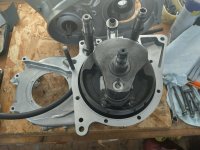
OK, some of the missing photos, this is a 1967 TR6C but the bottom end of the engine is the same as the T120C.

Cams in place.

107.jpg

Crankshaft and conrods installed.

109.jpg

Pistons and rings in place.

112.jpg

Piston ring compressors on.

116.jpg

Barrels bolted down.

117.jpg

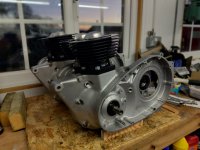
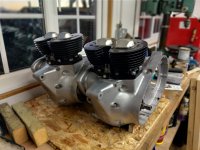
A matching pair of bottom ends. :)

118.jpg


Now I need to make a start on the wheels and frame.
 
Really enjoying this thread, I like old school hands on engineering.
There seems to be quite a bit of interest in the smaller details, work-arounds and fixes. I've skipped some of these as I thought they might have been a bit boring. :(

I started my working life as an apprentice Turner/Fitter and now having my own small lathe I can make some parts without having to wait for them being delivered, especially at this time of year. It's also much cheaper. Imperial sized threaded parts are ridiculously expensive, I just paid £4.80 for two 1/4" x 3/4" BSF bolts! I'll post some pictures of the parts I've made, I like seeing other peoples work so this could be of interest to some on here. (y)


Back
Top Bottom