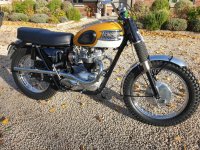
1965 Triumph Bonneville TT

First job is to get the frame ready for painting/powder coating. As it's an old competition bike there are a few areas that need attention. The steering lock-stops were bent but when I tried to remove them I found they had been welded into the frame headstock. I'm not sure if this was factory done or whether someone had done it to stop them coming loose but they're not shown as separate items in the parts book so who knows. Later models were just threaded in using UNF threads, when I got mine out they were threaded BSC / CEI cycle thread as was the rest of the frame and cycle parts. New ones aren't available so I'll make some out of stainless steel.

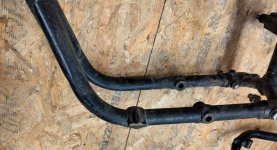
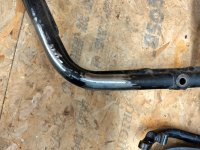
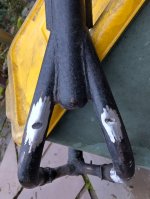
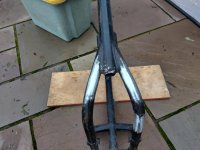
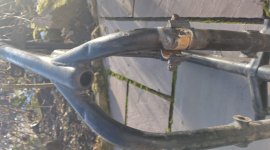
There were two dents in the lower front frame rails at the point were the sump guard bolts on, I took the paint off, filled them with weld and dressed them back. Good as new now.
10.jpg

13.jpg
 
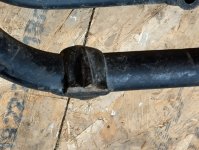
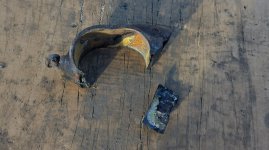
Next was the sidestand mounting lug. These fail regularly mainly due to people sitting on the bike whilst it's on the sidestand. This is the fourth one I've repaired. The ones fitted to early bikes were castings and not very strong, they were tack-welded to the frame rail and then brazed along with the rest of the frame joints. Mine had broken through the cast section.
5.jpg


5b.jpg

I removed the tack welds and cut two slits in the lug with the angle grinder and then used an oxy-propane torch to melt the braze and knock it off with a hammer and chisel.

7.jpg

Broken lug removed.

9.jpg

All traces of braze must be removed from the frame rail otherwise it causes terrible spatter when welding the new lug on.

18.jpg
 
Last edited:
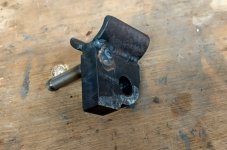
The new lug repair part is like the ones fitted to 1968-70 bikes, made from steel and much stronger. The early cast lugs are available from the USA but they're $260 plus any import costs. No thanks.

New part :-

17.jpg

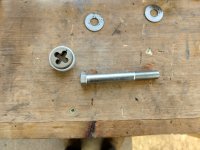
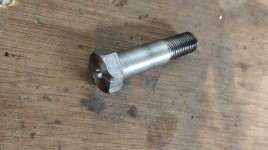
I also needed a new pivot bolt for the sidestand. Rather than buy one and have to wait for it coming, I made one from a stainless 7/16 UNF bolt. I cut it to length then turned down a 3/8" shoulder and cut the BSC/CEI 26 tpi thread with a die, starting it off in the lathe to keep it true.

14.jpg

11.jpg

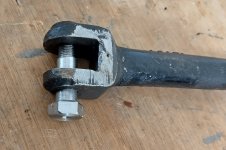
The sidestand had been butchered at some point in it's past life, so I welded up the damage and filed it back to shape.

12.jpg
 
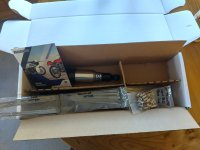
Meanwhile a box of bits arrived from Hagon. New shocks and front and rear spoke sets. Hopefully I'll get the frame finished tomorrow then I can start building the wheels, I've already had the original Dunlop rims re-chromed so we're good to go. :)

6.jpg
 
I have this one tucked away in the garage, this is the 1965 TR6SC; special competition. Absolutely gorgeous bike. Sourcing the parts was difficult and time consuming. I recall that finding the folding footrests was a challenge. Good luck with your build. I will be following closely.
 

Attachments

  • 20201101_125845_Original.jpeg
    20201101_125845_Original.jpeg
    889.1 KB · Views: 67
I have this one tucked away in the garage, this is the 1965 TR6SC; special competition. Absolutely gorgeous bike. Sourcing the parts was difficult and time consuming. I recall that finding the folding footrests was a challenge. Good luck with your build. I will be following closely.
Beautiful. :thumb

I also have a 1967 and a 1968 TR6C both awaiting restoration, like you say getting the correct parts takes time but is very satisfying when you finally find them. I needed three sets of folding footrests! All part of the fun, I have just about everything I need now for all three bikes, just need to crack on and get them built.
 
Makes we shiver thinking how many balls must have been whacked on the tank rack. I remember seeing quite a few modern bikes with a massive vee in the tank post collision, and those injuries were bad enough.
When I crashed my Commando , which had a small Roadster tank (2.5 gal), it had large dents in both sides and also the top, and capacity was then probably about one gallon! My limp post accident was not entirely down to the broken toe. Dread to think what would have been the outcome if it had a triumph style tank rack.
 
Frame repairs completed and today I dropped off all the black parts at Triple S in Bingley for powder coating, they do a great job and specialise in bike restorations. :thumb2

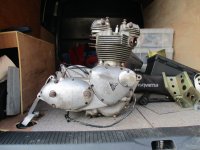
I was intending to build the wheels and forks whilst waiting for the frame parts to be painted but after second thoughts I decided to make a start on the engine. Two reasons, firstly Christmas and New Year are fast approaching and if the crankshaft needs regrinding or the cylinders need reboring I'd like to get them done ASAP before my local engineering shop shuts for the duration. Secondly, curiosity is getting the better of me and I really want to know just what condition the engine is in. It's nearing 60 years old and has obviously not run for years so there could be untold horrors awaiting inside.

Starting at the top I removed the rocker boxes which came off easily with no damaged fasteners or any sign of butchery by previous tear-downs.

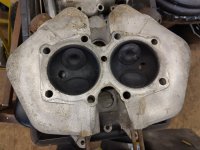
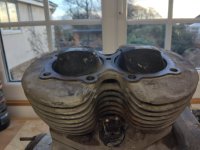
Next was the cylinder head, I knew when I bought the bike that the head was incorrect, it's a single-carb head from a TR6 rather that the twin-carb T120 Bonneville head but I have a correct 1965 dated T120 head so no problem there. The head came off very easily, always a good sign and again all the bolts and fasteners were original with no signs of abuse. It's dated 1966 and is in very good condition, it's obviously done very few miles since being installed. All looking good so far. :thumb2

21.jpg

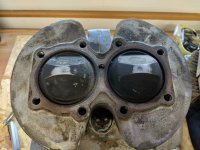
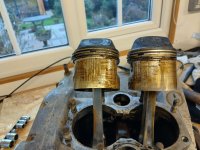
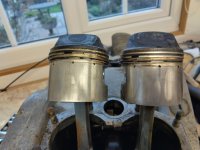
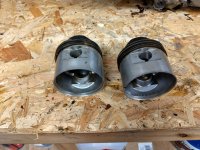
With the head off I could check the pistons and cylinder bores, I was pleased to see high-domed, high compression pistons which also looked to have had very little use. Scraping the carbon off showed them to be +.030" oversize but there was no Triumph part number on the crown?

20.jpg

19.jpg

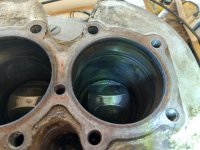
Next the cylinder bores, these looked really good with no wear whatsoever just some very faint witness marks from the piston rings due to them being sat in the same position for many years, a light honing will remove them no problem. This engine has obviously had a rebuild but has had very little use since then, hopefully the crankshaft will be good too.

23.jpg
 
Last edited:
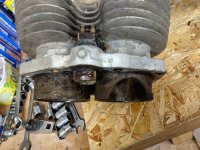
The barrels came off really easily, another good sign, and the piston skirts were still coated with oil. The smell of the inside of this engine is just incredible, if you've ever smelt a Spitfire or an old tank in a museum you'll understand. It's the smell of History. 🙂

24.jpg

A quick wipe of the pistons showed very minimal marking and the conrods looked excellent too, this was turning out to be far better than I was expecting.

25.jpg
 
I thought that you would be here before long :D

I'm looking forward to that video already...:thumb
Number 6 and I have history - if you look at this video and see a very beautiful Rob North shattering the Shropshire peace you will see us both in action

(for anyone who looks at this please look at the bikes and dont comment on the rights or wrongs of trying to help the Ukrainian refugees this was done for the right reasons, the level of abuse I got from over the pond almost made me give up doing the videos)

 
Number 6 and I have history - if you look at this video and see a very beautiful Rob North shattering the Shropshire peace you will see us both in action

(for anyone who looks at this please look at the bikes and dont comment on the rights or wrongs of trying to help the Ukrainian refugees this was done for the right reasons, the level of abuse I got from over the pond almost made me give up doing the videos)

There's no better sounding motor than a T150 on full chat :clap
 
Now for some bad news, the timing side (right hand) cylinder liner has a big chunk missing which is usually caused by a snapped conrod. Bugger. :(

It's still serviceable as the piston rings don't come anywhere near the missing section but Im not sure whether to use it or not which is a shame because the bores and pistons are perfectly good.

33.jpg
 
This explains why the pistons don't have any Triumph part numbers, they're Robbins, made in California. Triumph/Hepolite pistons only come in +10, +20 and +40 thou oversizes, these are +0.030" so maybe someone decided to extend the life of the barrels by using an intermediate rebore size? Either way they appear to be very well made items, I would have been more than happy to re-use them however research shows them to be 12:1 compression ratio which is probably too high for road use and 99 octane E5 pump fuel.

35.jpg
 
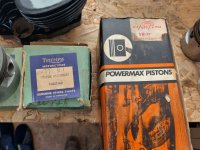
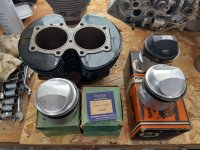
I knew I had some New Old Stock 11:1 high compression pistons in various sizes so I dug them out. One pair of Triumph at +0.040" and one pair of AE Hepolite Powemax at +0.020" I also knew that I had a spare set of used barrels but what I'd forgotten was that I'd already had them rebored to +0.020" and powder coated 2 years ago. Win win. :)

37.jpg

36.jpg
 
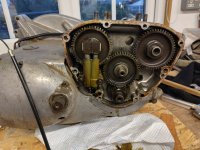
I was now really wanting to get into the bottom end to see just what was lying in wait. The good news was that all the external fasteners were original, the bolt heads and nuts were not rounded off and the timing chest and gearbox covers still had the original Pozidrive screws in place, not an Allen screw to be seen. This looked promising.

34.JPG

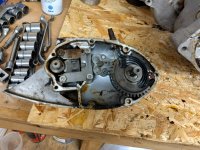
Inside the timing cover was very clean, these are usually filthy with old black oil.

28.jpg

Likewise underneath the outer gearbox cover looked good and clean.

30.jpg

31.jpg
 
Back to the drive side to remove the ET ignition stator and rotor followed by the engine sprocket, primary chain and clutch hub which all have to come off in unison. The stator was a pig to get off as they quite often are but the rest was quite straightforward.

39.jpg

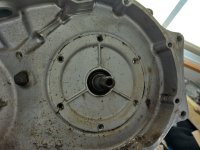
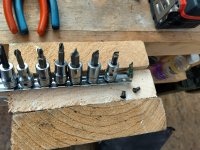
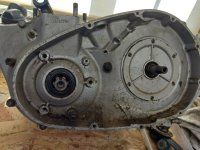
I then turned my attention to the gearbox sprocket cover plate, these slot head screws are quite often buggered by previous owners with either stripped threads, broken off heads or just too chewed up to get any purchase on. These looked good but they were bloody tight, I broke two impact bits including a heavy duty Snap On one. I ended up using a lot of heat to break then free, they were possibly Loctited in.

41.jpg

26.jpg


With the cover removed I could get to the gearbox sprocket. I wasnt looking forward to this as they can be very tight and be really difficult to remove when the engine is out of the bike. As it happens it came off relatively easily, surprisingly there was no lock washer fitted.
 
Back to the timing side......

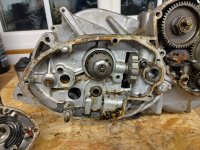
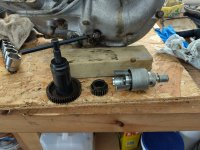
The oil pump, camshaft pinions, idler pinion and crankshaft pinion all came off no problem, it does help having the correct tools though. Most problems on old British bikes are caused by people using brute force, hammers, chisels and pry bars.

43.jpg


Back
Top Bottom