


You are using an out of date browser. It may not display this or other websites correctly.
You should upgrade or use an alternative browser.
You should upgrade or use an alternative browser.
Best Airbag of 2024
- Thread starter Arsey
- Start date

Interesting in depth review thanks
Happy with my Hitair on top of the usual passive “body armour” in bike gear
Ease of use important and not too bulky
Designed for horse riders of course but pretty effective non the less

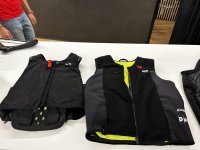
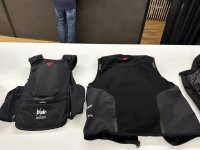
I see that my Dainese came up very well in the test. I use it under the jacket and I also have a D30 back protector.
I had a look at the latest version vest. Looks smaller and a bit lighter, thinner. But has the same volume. I recon it will be cooler to use in hot weather. All the bags fail in this test. The new only last 16 hours. Mine last 36. I don’t think is a deal breaker.
Interesting he didn’t mention that the Dainese is the only air bag that has a deployment in rear collision.
And the patented microfilament tech.
Anyway mine is up for sell. Only 8 months old. Going for the latest one.
I had a look at the latest version vest. Looks smaller and a bit lighter, thinner. But has the same volume. I recon it will be cooler to use in hot weather. All the bags fail in this test. The new only last 16 hours. Mine last 36. I don’t think is a deal breaker.
Interesting he didn’t mention that the Dainese is the only air bag that has a deployment in rear collision.
And the patented microfilament tech.
Anyway mine is up for sell. Only 8 months old. Going for the latest one.
Attachments

Boris Johnson? 
It would be a major step forward if the Government decreed that Amazon is a retailer and it’s therefore wholly responsible to ensure that what it sells is fully compliant with the laws of the country in which the sale is made. They hide behind the “we’re just a portal” and people are injured and die because some of what they sell is cheap shit.
Might have been easier if we were still in the EU, but we could just do it anyway.
Might have been easier if we were still in the EU, but we could just do it anyway.
Eh ? What’s this got to do with airbag vests ?It would be a major step forward if the Government decreed that Amazon is a retailer and it’s therefore wholly responsible to ensure that what it sells is fully compliant with the laws of the country in which the sale is made. They hide behind the “we’re just a portal” and people are injured and die because some of what they sell is cheap shit.
Might have been easier if we were still in the EU, but we could just do it anyway.
There is an article near the end of the one you posted. Read on…Eh ? What’s this got to do with airbag vests ?
- DO NOT be tempted by cheap airbags sold on the likes of Amazon, eBay, AliExpress, Temu and Facebook marketplace. These are often rebranded cheap flotation devices that do not inflate quickly enough to offer protection. Read our report of dangerous and illegally-sold airbags on Amazon here.
Sorry for the rant. Pet hate of mine.
Lies, lies, lies....loads of people buy on Alibaba, same quality, parallel assembly lines blah, blah, blah. Helping CCP etc.There is an article near the end of the one you posted. Read on…
- DO NOT be tempted by cheap airbags sold on the likes of Amazon, eBay, AliExpress, Temu and Facebook marketplace. These are often rebranded cheap flotation devices that do not inflate quickly enough to offer protection. Read our report of dangerous and illegally-sold airbags on Amazon here.
Sorry for the rant. Pet hate of mine.
Anyway, them who buy's them need their fucking head checked.
Including the k_unts who fuck around with the bags and trigger mechanism. There is a thread on advdrive about it.
I have what ever you smoke...Boris Johnson?

Very good review, but I do think a lot of it was trying to make sense of apples vs pears, different standards and interviews with different bods and their opinions. It is a bit of a minefield as a lot depends on the actual accident you have.
But think the take away is, airbags are a worthwhile safety option, but there really needs to be a universal testing standard. But there isn't a lot of difference with the standards for clothing, it is almost as if the standards are there so manufacturers can sell their kit. Manufacturers like BKS (Made to measure) and Hide out go above and beyond in their standards, but cost £££££
But think the take away is, airbags are a worthwhile safety option, but there really needs to be a universal testing standard. But there isn't a lot of difference with the standards for clothing, it is almost as if the standards are there so manufacturers can sell their kit. Manufacturers like BKS (Made to measure) and Hide out go above and beyond in their standards, but cost £££££
Dainese and Alpinestars have the experience and the data from thousands of hours of real life riding and racing for the past 24 years.It is a bit of a minefield as a lot depends on the actual accident you have.
Some data from 5 years ago
Good read, looks like you are ok if you fall off and don't hit anythingDainese and Alpinestars have the experience and the data from thousands of hours of real life riding and racing for the past 24 years.
Some data from 5 years ago
 But in a collision all bets are off!
Helite (the one I have) don’t score too highly 
me too, but I liked the line about the "best airbag is the one you're actually wearing". I tell myself that when I'm tempted to not bother.Helite (the one I have) don’t score too highly
Me toome too, but I liked the line about the "best airbag is the one you're actually wearing". I tell myself that when I'm tempted to not bother.
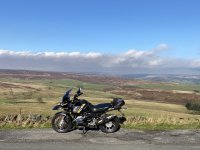
Got it on today for a spin of the Yorkshire Dales
Glorious autumnal day for a ride

A few years back a good mate was T-boned by a U-turning car whilst filtering towards a junction, wrote off his Triumph Sprint and broke a few ribs/bruised lung etc.
Doctors said without his airbag vest he would have had some very serious injuries rather than (painful) minor ones.
Doctors said without his airbag vest he would have had some very serious injuries rather than (painful) minor ones.
It's the sudden stop that causes the damage, deceleration trauma. My friend came off at 160km, didn't hit any street furniture, just rolled about 25m. Only collarbone/ribs damage. Dr. gave him an explanation why he was still alive. Had HG leathers which stood up well and the Arai helmet saved his face.Good read, looks like you are ok if you fall off and don't hit anything
I recon any bag from a reputable manufacture is a good addition to protection.
I have a Helite Turtle 2 as well, but if you read the review of the vest and the interview with the owner of the company, he makes some valid points and disagrees with the EN certification testing and that is why they went CERT. But not sure I would change on the back of the Bennetts review, although the Motoairbag looks good, not sure about the rear connection to the tether though, can see that being a pain.Helite (the one I have) don’t score too highly

I picked the Helite Turtle 2 on the basis that it offered excellent spinal and neck protection, one of the few that effectively immobilises the head in the event of a sudden acceleration or deacceleration, once deployed. This mode of injury seems to be amongst the most common for neck and head injuries, so there are some valid points made by Helite in why they use the protection standard they do in place of EN 1621-4, a point further noted by Dan Read of the Air Ambulance in his response:
"I spoke to Dan Read, an Air Ambulance Advanced Paramedic with MAGPAS who told me that one of the greatest risks to spinal injury is hyperextension of the neck (backwards movement of the head), and the Helite gives very good support in this area, also limiting movement of the helmet to the sides and back."
That and the fact it uses a very substantial passive back protector too, and has some decent coverage of the front, albeit not certified to the same level as EN1621-4.
I'm in the camp that it's better to have one than to ride without one as the chances of it saving you from serious injury are good. I deliberately chose not to buy one with any form of electronic trigger as I simply don't trust them. Mechanically tethered is fine with me. The greatest risk seems to be in a rear shunt thought where a mechanical one won't deploy unless you are thrown from the bike, by which time the sudden acceleration acting on the neck may well have done serious damage. I'm especially cautious of rear shunts in traffic though and try to use frequent all round observation to manage the risk where possible.
"I spoke to Dan Read, an Air Ambulance Advanced Paramedic with MAGPAS who told me that one of the greatest risks to spinal injury is hyperextension of the neck (backwards movement of the head), and the Helite gives very good support in this area, also limiting movement of the helmet to the sides and back."
That and the fact it uses a very substantial passive back protector too, and has some decent coverage of the front, albeit not certified to the same level as EN1621-4.
I'm in the camp that it's better to have one than to ride without one as the chances of it saving you from serious injury are good. I deliberately chose not to buy one with any form of electronic trigger as I simply don't trust them. Mechanically tethered is fine with me. The greatest risk seems to be in a rear shunt thought where a mechanical one won't deploy unless you are thrown from the bike, by which time the sudden acceleration acting on the neck may well have done serious damage. I'm especially cautious of rear shunts in traffic though and try to use frequent all round observation to manage the risk where possible.

Jeez, when I fell off at75 (130kph ?) I slid 185 metres up the road without hitting anything (I did measure this)It's the sudden stop that causes the damage, deceleration trauma. My friend came off at 160km, didn't hit any street furniture, just rolled about 25m. Only collarbone/ribs damage. Dr. gave him an explanation why he was still alive. Had HG leathers which stood up well and the Arai helmet saved his face.
I recon any bag from a reputable manufacture is a good addition to protection.
I willl be looking at an airbag for next year, and the Dainese doe look good..

Similar threads

- Replies
- 3
- Views
- 359

- Replies
- 72
- Views
- 5,744


- Locked
- Replies
- 5
- Views
- 610
- Replies
- 22
- Views
- 1,667


- Replies
- 5
- Views
- 610