City gates…. A Wander

Leaving Postman's Park to the west side, brings us onto King Edward Street. There are no ‘roads’ in the City of London, only streets, avenues, passages, courts and the like.

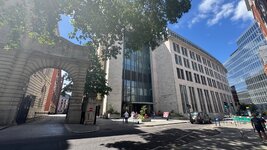
We are now opposite St Bartholomew’s Hospital, known locally as ‘Barts’. The hospital has been in existence since the early 12th century and is the oldest hospital in the country, still operating from the same site. It is not an A&E hospital (for that you’d need to go to the Royal London in east London) but is a world leading ‘teaching hospital’ for cardiac and cancer care:
IMG_0491.jpeg


One thing I do want to go to see, is Barts’ painted ceilings, newly restored and open to the public for near enough the first time in 300 years:

https://www.bbc.co.uk/news/articles/c701y97xj70o

More to follow,,,,
 
Last edited:
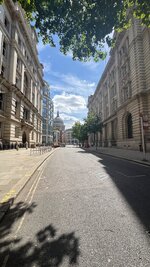
Wandering on, we get our first view of Wren’s masterpiece of St Paul’s:

IMG_0492.jpeg

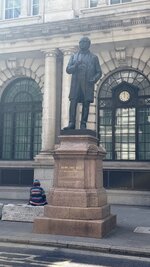
We wander past the statue of Sir Rowland Hill, the man who revolutionised post by proposing a single modest charge to post a letter. This in turn brought about the ‘Penny Black’ stamp. His simple idea was copied around the world, leading to mass communication. He stands, appropriately enough, outside a grand building, which used to be the headquarters of the nation’s post:

IMG_0496.jpeg

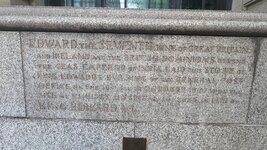
There’s an equally grand plaque on the building:

IMG_0499.jpeg

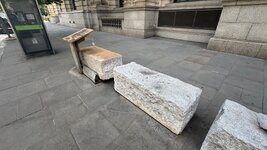
Nearby, there are some stone blocks:

IMG_0498.jpeg


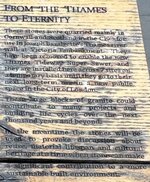
The notice board explains that the stones are a part of the ‘Thames to Eternity’ project:

IMG_2136.jpeg

I hope that they gather all the stones up and turn them into seats. Yes, a bit hard and maybe a little rough at first, but with time and use they will smooth out.

If, for the next 1,000 years, only 10 people a day sit on just one of the stone seats, that is 3,650,000 people as a minimum. Given that the stone has already been used in a huge 19th century project and is itself already I guess maybe millions of years old, it does match in with the reuse and sustainability ethics of the commendable project.

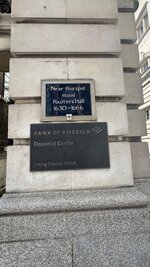
Wander just a few yards further and there’s a reminder that the Great Fire of London, swept westwards from its source in Pudding Lane, maybe a quarter of a mile east of where we stand now, taking the original St Paul’s church (it was huge and dominated the London’s skyline at the time) with it in the conflagration:

IMG_0500.jpeg

Poulters were and still are, a livery company:


The original St Paul’s:

 
Last edited:
We wander past the statue of Sir Rowland Hill, the man who revolutionised post by proposing a single modest charge to post a letter. This in turn brought about the ‘Penny Black’ stamp. His simple idea was copied around the world, leading to mass communication. He stands, appropriately enough, outside a grand building, which used to be the headquarters of the nation’s post:

View attachment 522976
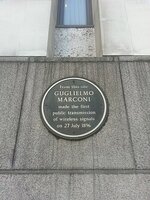
From the roof of this building, if I am not mistaken, Marconi first demonstrated radio in 1895.
 
From the roof of this building, if I am not mistaken, Marconi first demonstrated radio in 1895.

:beerjug:


Not far away, apparently. Toynbee Hall, which is in East London, not far from the eastern edge of the City. It’s still there and has an interesting history of its own:


I walk past the place several times a month, but had no idea of its links with Marconi.
 
Last edited:
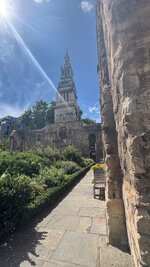
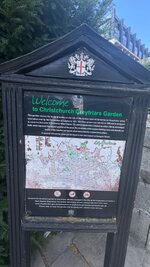
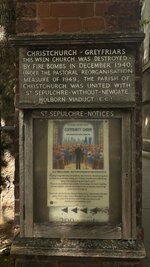
Wandering on, past the remains of Christchurch Greyfriars and its gardens, laid out to recreate the church’s original outline:

IMG_0501.jpegIMG_0505.jpeg


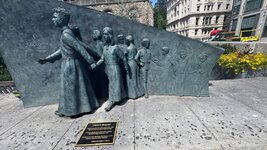
And the home of the original Christ’s Hospital School:

IMG_0504.jpeg


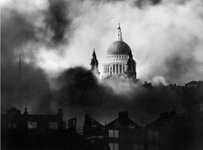
Along with a reminder of the huge fire from the Blitz, that ravaged the area around St Paul’s, with one of the most iconic pictures from the war:

IMG_2137.jpeg

The board also refers to a church being outside of the City’s wall, ‘St Sepulchre without Newgate’:

IMG_0507.jpeg

It’s Newgate, where we are headed next.
 
Last edited:
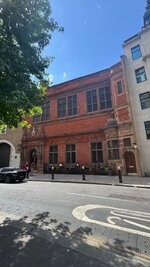
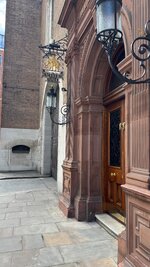
Wandering past the Cutlers’ livery hall:

IMG_0508.jpegIMG_0514.jpeg


We can detour into the oddity of Amen Corner. We shouldn’t really go through the gate, as it’s private. But, temptation proves too great:

IMG_0516.jpegIMG_0517.jpegIMG_0518.jpeg

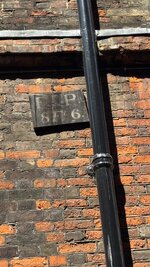
One of the houses, has an old fire hydrant marker, showing that the hydrant is within eight foot, six inches; which indeed it was:

IMG_0519.jpeg

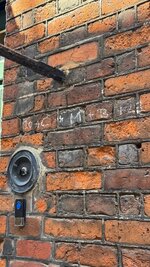
Another of the houses carries some chalk markings, which I hadn’t seen outside of Germany:

IMG_0520.jpeg


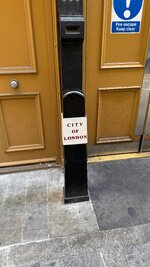
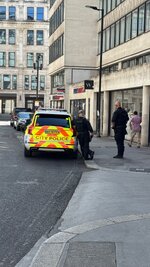
Out we come, thankfully not arrested for trespassing. It’s a reminder that the City of London has its own police force, separate to that of the Metropolitan Police:

IMG_0521.jpeg
 
Last edited:
We are close, but we are not at Newgate yet. We are off on a small detour first….

To be continued…..
 
:beerjug:


Not far away, apparently. Toynbee Hall, which is in East London, not far from the eastern edge of the City. It’s still there and has an interesting history of its own:


I walk past the place several times a month, but had no idea of its links with Marconi.
Marconi_in_London.jpg

It seems that more than one place claims the Marconi honour.

This is 81 Newgate Street.
 
It’s a good job Mr Marconi knew where he’d set up his kit, or it’d never have happened.

:beerjug:

I think I might have worked it out. The Newgate Street transmission was maybe the home of the first public display of his wonders. I guess earlier transmissions were ‘private’?

Anyway, the great Italian was out and about in the EC and E postcodes, for sure.
 
Last edited:
Fabulous write up as usual Richard. Memories come flowing back of my time working for ITT Creed in the “City” and surrounding areas as a field engineer repairing TELEX machines. As a single man in my mid twenties the city’s banks were awash with opportunities to socialise with the fairer sex.
I also recall, as you mentioned the Nat West Tower going up and it was the first time I had seen foundations of such depth, it was officially named as Tower 42 and was completed in 1980 I believe. Prior to this the BT Tower was the tallest.
Thanks for reviving some great memories.
 
Thank you.

I remember the construction crane on top of the Nat West Tower. A rumour was started that they didn’t know how to take it down. The contractors played along and put a suggestion box on the site’s hoarding.

Then, one Monday, there it was…. Gone.

Happy days.
 
We are going to go a little off piste, here.

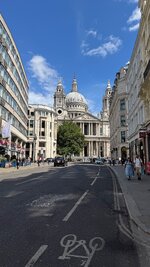
Those that have kept up so far, will know that we are doing the gates, anticlockwise around the wall, finishing with Newgate and finally Ludgate. I did though deviate as I am out on Ludgate Hill. It has one of the best spots to take a picture of St Paul’s from, though it does mean standing in the the road:
IMG_0524.jpeg

It did mean that I could literally then turn around to my right and take a snap of the site of Ludgate gate. But, that would then miss out Newgate.

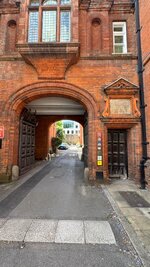
Instead, let’s not take the snap of Ludgate, but instead take a wander through the arch, named ‘Ludgate Square’:
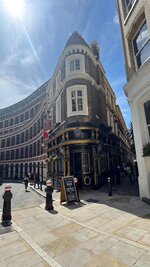
IMG_0522.jpeg
 
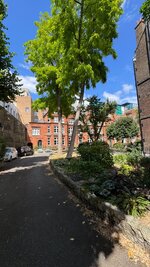
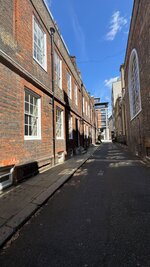
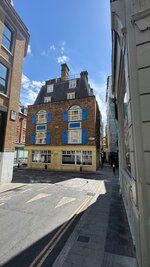
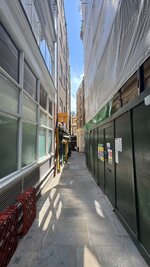
Through the arch, you come across a world of very small streets, lanes, yards and alleys, probably unchanged in layout since Lord knows when:

IMG_0525.jpeg

IMG_0526.jpegIMG_0528.jpegIMG_0529.jpeg

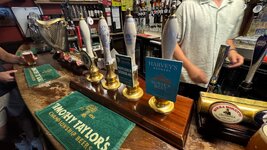
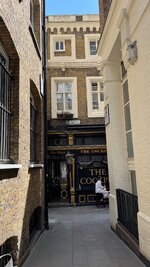
This brings us to the Cockpit pub, which (in truth) I didn’t even know was there:

IMG_0532.jpeg
IMG_0531.jpeg

It is excellent.

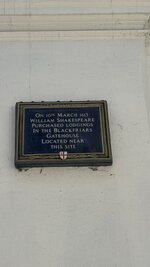
Just outside, there is a reminder that Shakespeare would have known these same streets, too:

IMG_0533.jpeg
 
These walks and wanders should be published for the benefit of tourists wanting to do other than the main "sights" at walking pace. "London Quirks, Curios and Hidden Gems" perhaps? :D
 
It’s a good job Mr Marconi knew where he’d set up his kit, or it’d never have happened.

:beerjug:

I think I might have worked it out. The Newgate Street transmission was maybe the home of the first public display of his wonders. I guess earlier transmissions were ‘private’?

Anyway, the great Italian was out and about in the EC and E postcodes, for sure.
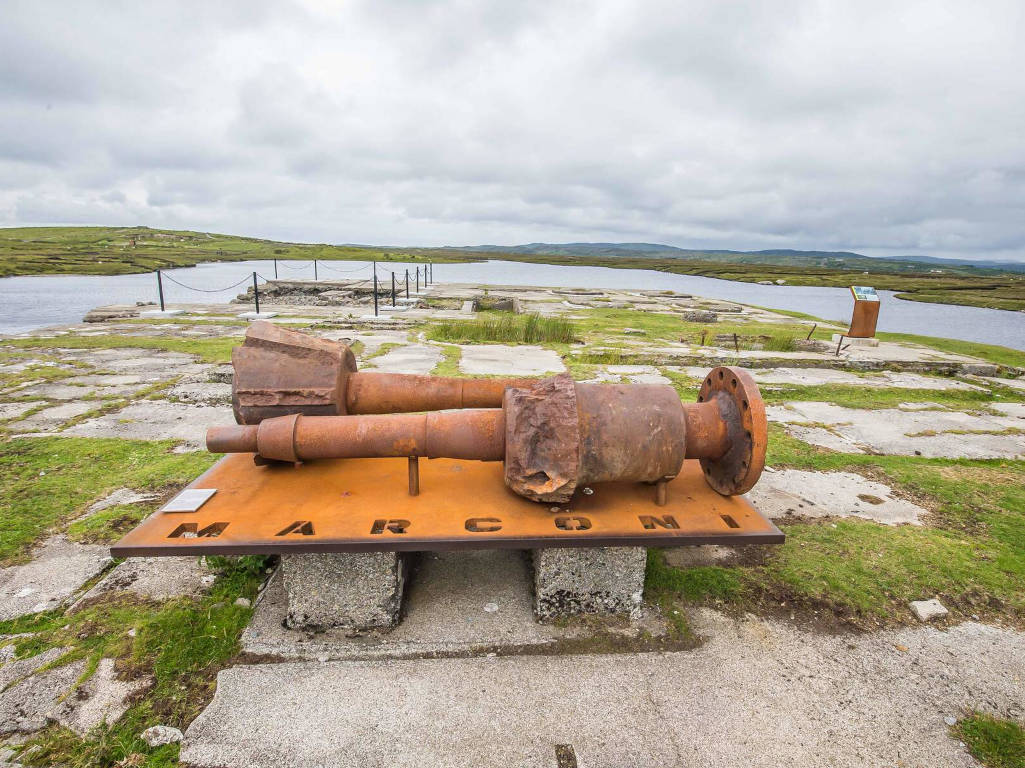
He (Marconi) is also closely connected with Valentia Island off our south west coast from where the first transatlantic cable was laid to Newfoundland and was successfully used for the first time in 1866. An interesting diversion if you had time before or after Leenaun.
 
Also with this place. A short ride (22-23miles) from Leenaun to Clifden and the site of Alcock and Brown's landing. I say landing, they walked away from the remains of the crashed plane!

 
Gate 6 - Newgate
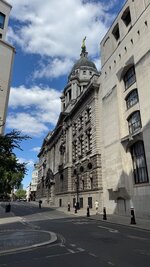
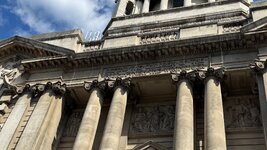
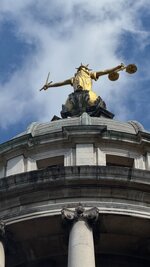
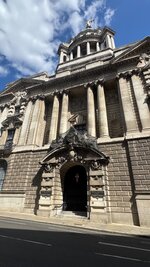
Newgate sat, near enough under what is now the country’s most senior criminal court, The Old Bailey. It was of course the site for the infamous, Newgate prison.

IMG_0536.jpeg

IMG_0538.jpegIMG_0539.jpeg

The statues (I guess that’s the word) have taken on a somewhat Halloween look, covered in black netting, presumably to protect them from further environmental damage and, not least, pidgeon muck:

IMG_0537.jpeg


Back
Top Bottom