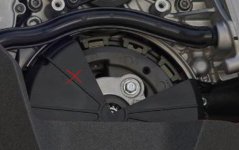
is there oil directly behind the front engine cover ?

DR268

Active member
UKGSer Subscriber
Joined
Dec 24, 2017
Messages
222
Reaction score
4
Location
Saintfield Co Down, Northern Ireland
We have had a slight mishap with one of the front engine lower bolts and before we dig in or not, we need a bit of clarity. (do we need to drain oil, get a new gasket etc etc)

Is there engine oil directly behind this cover as per the 1250 or is it a dry area now ?

in the cut out picture below it shows the clutch with another cover so I assume it seals the oil in the engine.

My thinking is that it is dry and that the cover is mostly cosmetic to cover engine castings, water pipes etc plus deaden sound etc

Has anyone been in there yet ?
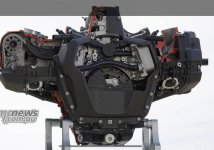
bmw r1300gs engine .jpg
 
Bloody he'll what have you been doing ?
 
Er that's a 1300 engine not a 1250

Sent from my SM-A226B using Tapatalk
 
Ah yes sorry saw the reference to the 1250!

Sent from my SM-A226B using Tapatalk
 
Yup pretty sure there is oil behind the cover :)

The big circular bit you see in the middle is the clutch basket - its a wet clutch so lives in a bath of oil
 
Torque wrench🥴
I would agree with a torque wrench too

I didnt personally take the bolt head off

but I am assured it was only lightly nipped up as would be normal with an m6 in a casing

the head nipped off very very easily

it would usually take a large force to take the head off an m6 bolt, stripping the threads would usually be first

if its dry in there we will leave it as is and get it sorted at a service and ride ride on for now
 
Yup pretty sure there is oil behind the cover :)

The big circular bit you see in the middle is the clutch basket - its a wet clutch so lives in a bath of oil
this is where the confusion is

there is a second inner casing in there as per the zoomed in pic covering the clutch

I doubt there is anything outside the clutch casing that needs lubricated

thanks

r1300 clutch casing.JPG
 
A cam chain perhaps ?
Best thing - run the bike up and see if you get a weep

100% going to know either way

I can see where your comming from,

The large block on the upper right of the cutaway is the oil cooler - which is watercooled which is not unusual

Looking at the clutch cover, there does not appear to be an o ring / groove in the surface -

if there is / was an o ring, then i'd guess over time there would be the potential for age related degridation , and potentailly a leak ?
 
Last edited:
I would hazard a guess that the area behind the cover does contain oil.
The right hand side camchain `tunnel` and the area around and to the front of the starter motor reduction gears looks common to the front cover so although there may be not anything there that requires a direct feed off the oil supply circuit everything inside the front cover may be subject to an oil mist/drizzle which would then collect at the bottom of the engine.
That plastic cover over the clutch may be there to avoid undesirable clutch plate saturation/drag/oil throwout/oil foaming through excessive amounts of oil if it were sat in an oil bath.
There`s only one way to find out.....
 
Judging by the number of screws holding the cover on I'd bet on there being oil in there.

A cosmetic dust cover only needs 4 or 6 screws. See old bikes.

Buy a can of oil, get a catch tray and pull the cover off. That'll answer the question.
 
Best thing - run the bike up and see if you get a weep

100% going to know either way

I can see where your comming from,

The large block on the upper right of the cutaway is the oil cooler - which is watercooled which is not unusual

Looking at the clutch cover, there does not appear to be an o ring / groove in the surface -

if there is / was an o ring, then i'd guess over time there would be the potential for age related degridation , and potentailly a leak ?
The 1250 doesn’t have an o-ring.
Just a liquid gasket applied in the factory.
 
If the bolt is in the middle of a straight run of bolts, I'd be tempted to take a paper impression of the bolt heads then make a drilling jig from scrap to pick up the centre of the snapped bolt, then fit the jig to the cover using the existing bolts and drill the bugger in situ with a depth-set left hand drill bit before attempting an eezi-out or similar.


I wouldn't just go hitting it by hand with a battery drill/centre punch in the hope of getting lucky. If it wanders off line or doesn't drill squarely/too deep you are in a world of pain.


Back
Top Bottom