A spring will only be progressive if some of the coils become coil bound, and change the effective length of the spring.
And it seems that when you compress a spring all the gaps close by the same percentage, and very little of the spring becomes coilbound, 1/2 a coil or around 3% on the Konis on my /7 as an example.
According to Ohlins " The technology does not currently exist to make a spring which is progressive to any meaningful degree." and that is why they fit straight wound springs to everything the make.
Doesnt seem to stop them selling progressive wound springs for aftermarket use though!
This is confirmed by a graph which someone posted here a few months back, when compressing a so called progressive spring - the line was dead straight, no progression whatsoever, and even an experiment with two spring of different rates gave no progression, there was one straight rate until the softer was coil bound , then an abrupt change to a different rate there after.
Air is progressive, which is why the Ohlins Moto GP forks have a separate air reservoir behind the main stanchion.
Fork oil has improved in the last 20 years too, and it is likely that the new oil will be a different level from the old stuff, reducing the air gap which will give a more progressive action, and the improved formulation giving less stiction and providing more consistent damping in both directions.
Which is probably why Wilbers and others supply the good oil with the springs
So I dont doubt that your front end feels much better now, but the progressive wound Wilbers springs I fitted to my F650 GS were no improvement whatsoever.
The important setting is balance front to rear, and the GS had a remote preload adjuster for the rear shock which could be adjusted on the move.
And when you get it just right both ends come good at the same time.
And if you get it just right you will notice the deterioration in the action as the damping oil thins out - you will want to change it a bit more often in the future!


 to say the least


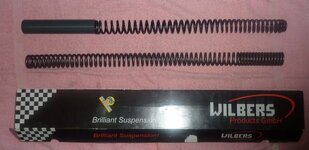
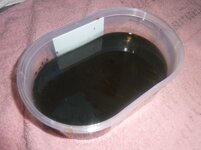
 later this week




