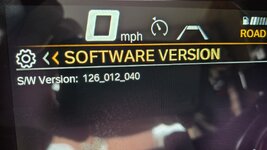
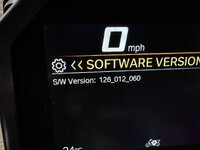
Dealer fix it info - from a USA site - I suspect 0M32 is the US equiv of 0M21 for Europe ???
SIB 46 02 24
SERVICE SOLUTION: R 1300 GS RIDE HEIGHT SENSOR/S CALIBRATION FAILS 2024-03-28
Model Code / Model Description KA1 R 1300 GS 0M23
SITUATION
Calibration of one or both ride height sensors fails as the ride height sensor/s are not positioned correctly.
PROCEDURE
The ride height sensor holders must be inspected for defects and or deformations and replaced as necessary.
If the ride height sensor holders are free from deformations and defects, follow instructions below.
Front ride height sensor:
Loosen the fasteners of the holders on the frame. Then turn the holder counterclockwise (upwards) within the hole clearance and tighten the fasteners to the required torque.
Rear ride height sensor:
Loosen the fasteners of the holders on the frame. Then turn the holder clockwise to the existing torsional stop and tighten the fasteners to the required torque.
NOTE: Be careful not to damage or deform the sensor holders
SIB 33 01 24
SERVICE SOLUTION: R1300 GS CHASSIS CALIBRATION FAILURE 2024-07-11
This Service Information Bulletin replaces SIB 33 01 24 dated Feb 08, 2024.
Model Code / Model Description KA1 0M23 R 1300 GS
Step added to diagnosis.
Procedure for before replacing the hydraulic pump is replace has been updated.
SITUATION
The Dynamic Suspension Adjustment (DSA) chassis cannot be calibrated. Various causes can lead to this fault.
PROCEDURE
Diagnostic Procedure to determine a root cause:
Pre-Check items:
Update Dealer tool ISTA - to version to 4.45.10 or newer.
Work on the vehicle at room temperature of at least 68°F (20°C). If outside temperatures are cold, allow the vehicle to warm up before working on it.
Set vehicle to drive mode: “Road” and ride height to “Auto”.
Check the suspension struts for freedom of movement and contamination.
Check the ride height sensors (position, correct? linkage bent?)
Connect the vehicle to a suitable battery charger it must be supplied with at least 13.9 V.
Clear fault memory.
Carry out a test ride (If necessary to adjust the chassis).
Read out fault memory again.
Notice: Only vehicles with adequate power supply of 14 Vdc and 20 Amps can be correctly diagnosed and calibrated.
Note at this point if there are no fault memory entries, the action is complete and no further action is required.
If there are still faults, please perform the following diagnostic path:
Diagnosis:
Thoroughly process the fault memory using the Guided Diagnosis; in particular, the following faults indicate problems with the vehicle electrical system, the battery, or an insufficient voltage supply:
0x801C5E - Chassis, vehicle electrical power system: Turn-off
0x801C5F - Chassis, vehicle electrical power system: Degradation
0x801CAC - Energy management: Shutdown concept level2
0x801CB1 - Energy management: Shutdown concept level1
0x801CBE - Battery Guard: State of charge implausible
0x801CBF - Energy management: State of charge implausible
Use ISTA to carry out the “Calibrate complete hydraulics” test module, and follow the instructions.
Observe/check the stroke of the preload adjusters during calibration.
Did the chassis lower after the calibration?
If yes, and there are no more chassis fault memories displays, then the bike is working as designed.
If Not, Continue the checks
If the chassis does not move into the high and low positions or the chassis remains in the high position, Visually check system for leaks.
Carry out a visual inspection of the snap fasteners of the hydraulic lines. Look for Snap fasteners with retaining clips that are open. They can bend and become loose during calibration. If you notice a loosened snap fastener, bend the retaining clips slightly together, and reconnect the snap fastener correctly and slide the rubber retainer onto the clips.
Delete the fault memory and calibrate the complete hydraulics again. Repeat one more time if necessary.
If calibration is still not possible after the above-mentioned checks.
You must replace the hydraulic pump (do not exchange pumps from other vehicles).
Before replacing the hydraulic pump, carry out the “Hydraulic suspension pump actuation” test module in ISTA and then the “lower chassis” test module. Please ensure that the chassis is completely lowered. If in doubt, repeat the “Lower Chassis” procedure again and press the chassis downwards as well.
Note: The chassis must be in the low position. If the chassis is not in the low position, suspension struts that are not in the low position must be replaced as well.