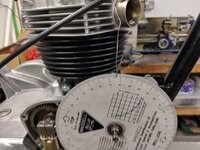
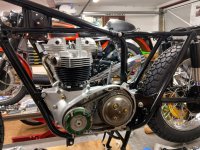
I hate working on the floor and so I wanted to get the bike on a lift before going any further. I had to juggle a few things around but finally managed it this week. This T150 Trident has been in this state for about 7 years now, for some reason I just can't get motivated enough to finish it, I suppose I should try and sell it.
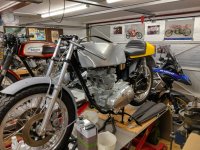
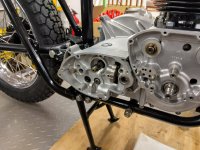
T120C off the floor, much easier to work on now.
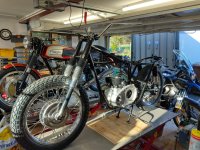
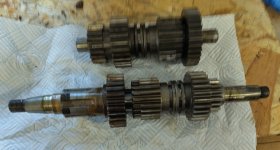
The gearbox components are in really good condition so I thought I'd start with that. I'm guessing that because it's a competition bike it hasn't done many miles and has hopefully been maintained as a race bike should be.
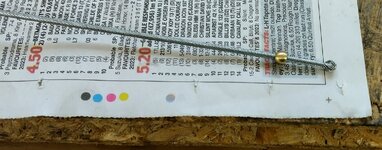
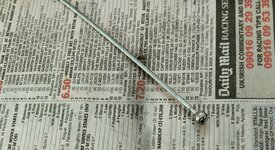
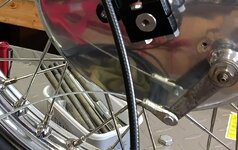
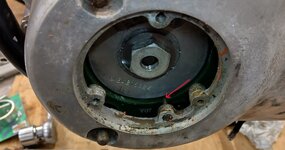
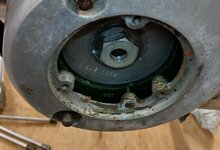
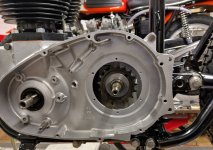
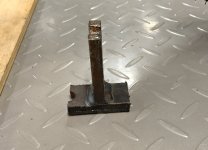
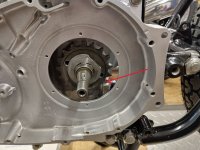
The mainshaft high gear goes in first and then the sprocket, tab washer and reataining nut are fitted to hold it in place. I haven't tightened the nut up yet, the manual says to fit the drive chain, put it into top gear, apply the rear brake and tighten the nut. I don't like that method, it puts a lot of strain on the chain. I prefer to sprag the sprocket against the lower frame rail, I'll make up a suitable length of bar and take some pictures. The nut, which is hard to make out, is just hand tight yet.
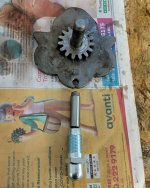
Then the camplate and detent plunger are fitted with the camplate set to between 2nd and 3rd gears. The main thing that gives gearbox trouble on old Triumphs is a worn plunger, Triumph changed the design a few times and there are aftermarket ones that use a rolling ball. I always fit a new plunger. housing and spring, they're not expensive.
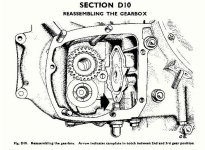
The factory workshop manual says that the entire gear cluster can then be inserted as an assembly, So that's 12 separate parts loosely assembled in your left hand whilst trying to fit two selector forks into the camplate and then the spindle throught the selector forks into the back wall of the crankcase with your right hand whilst trying not to dislodge the layshaft thrust bearing that's merely held in place by a dab of grease and is completely hidden from view. Unfortunately they don't mention which profanities work best. They should have a list, with part numbers.
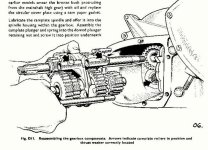
When it's finally all in place the temptation is to try and see the that the thrust washer is still correctly seated by pulling everything back out slightly. DO NOT DO THIS! Because the bloody thing will stick to the adjacent gear and pull off it's mounting peg and then you can go through the whole process again.
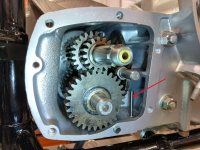
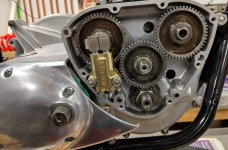
Gear cluster finally in place.
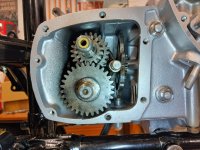
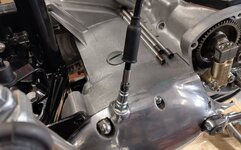
The upright tube is the oil level tube. It's a two-part item, unscrewing the whole thing drains the gearbox oil, unscrewing the inner part allows oil to drain down the tube when filling so as to achieve the correct level. On most British bikes the correct level is up to the layshaft centre-line.
I stripped down the inner gearbox cover and cleaned it up with 0000 wire wool. I placed it loosely into position to check that the layshaft was fully seated and that the thrust washer hadn't come adrift whilst fitting the gear cluster. All good so far.
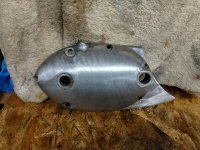
Next up the outer gearbox cover. This was a bit battered and scratched, I wanted to tidy it up a bit without making it look super shiny and new, it's hard where to draw the line but it's getting there.
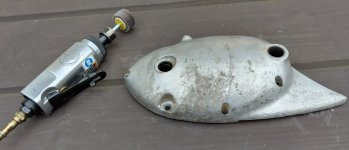
60 grit flap wheel.
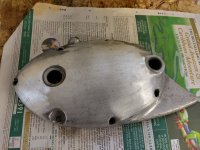
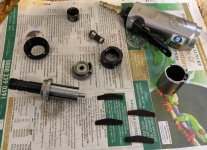
And then the die-grinder packed up. I'm not sure why, it's not had a lot of use and it was an expensive item. I took it apart but couldn't see anything obvious so I put it back together and it spins but it's not right. I have an old Sealey one which I'll use to finish this cover with.
120 grit.
T120C off the floor, much easier to work on now.
The gearbox components are in really good condition so I thought I'd start with that. I'm guessing that because it's a competition bike it hasn't done many miles and has hopefully been maintained as a race bike should be.
The mainshaft high gear goes in first and then the sprocket, tab washer and reataining nut are fitted to hold it in place. I haven't tightened the nut up yet, the manual says to fit the drive chain, put it into top gear, apply the rear brake and tighten the nut. I don't like that method, it puts a lot of strain on the chain. I prefer to sprag the sprocket against the lower frame rail, I'll make up a suitable length of bar and take some pictures. The nut, which is hard to make out, is just hand tight yet.
Then the camplate and detent plunger are fitted with the camplate set to between 2nd and 3rd gears. The main thing that gives gearbox trouble on old Triumphs is a worn plunger, Triumph changed the design a few times and there are aftermarket ones that use a rolling ball. I always fit a new plunger. housing and spring, they're not expensive.
The factory workshop manual says that the entire gear cluster can then be inserted as an assembly, So that's 12 separate parts loosely assembled in your left hand whilst trying to fit two selector forks into the camplate and then the spindle throught the selector forks into the back wall of the crankcase with your right hand whilst trying not to dislodge the layshaft thrust bearing that's merely held in place by a dab of grease and is completely hidden from view.
Unfortunately they don't mention which profanities work best. They should have a list, with part numbers. When it's finally all in place the temptation is to try and see the that the thrust washer is still correctly seated by pulling everything back out slightly. DO NOT DO THIS! Because the bloody thing will stick to the adjacent gear and pull off it's mounting peg and then you can go through the whole process again.
Gear cluster finally in place.
The upright tube is the oil level tube. It's a two-part item, unscrewing the whole thing drains the gearbox oil, unscrewing the inner part allows oil to drain down the tube when filling so as to achieve the correct level. On most British bikes the correct level is up to the layshaft centre-line.
I stripped down the inner gearbox cover and cleaned it up with 0000 wire wool. I placed it loosely into position to check that the layshaft was fully seated and that the thrust washer hadn't come adrift whilst fitting the gear cluster. All good so far.
Next up the outer gearbox cover. This was a bit battered and scratched, I wanted to tidy it up a bit without making it look super shiny and new, it's hard where to draw the line but it's getting there.
60 grit flap wheel.
And then the die-grinder packed up. I'm not sure why, it's not had a lot of use and it was an expensive item. I took it apart but couldn't see anything obvious so I put it back together and it spins but it's not right. I have an old Sealey one which I'll use to finish this cover with.
120 grit.
Last edited:







 )
)

![triumph-speed-twin5t-1937[1].jpg](https://www.ukgser.com/community/data/attachments/381/381568-db3b27d80a279cdb7c771447dd8900e6.jpg?hash=YxAOI01Nvq "triumph-speed-twin5t-1937[1].jpg")





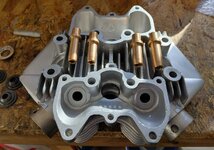
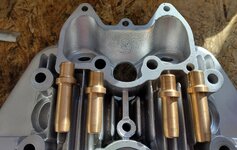
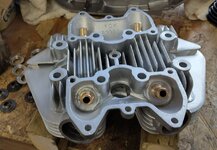
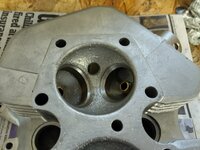
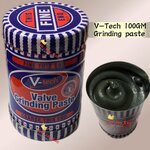
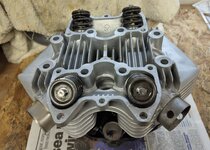
 (the valve stem tips look heavily indented but they're not as bad as they appear to be, just lightly marked as is normal)