Africa in 5 months

Fancy going across DRC then?

Head for Zambia or Uganda, though I don't know what the current levels
of insurgency are like away from Kinshasa. Either option will be a chalenge :D

Otherwise there is the boat around to Walvis Bay option, if it exists

Or get Namibian passports..... they don't need visa's for Angola!

Good luck lads, maybe an 'incentive' at the Angolan Embassy could help?
 
Do the Congo

After our session in the mud, our trip from Kinkala to Brazzaville was over in a flash. The road was excellent, and being a weekend, relatively quiet. We made straight for Hotel Hippocampe, where it is known they offer refuge to weary overland travellers such as ourselves. The owners Olivier and his wife Catharine let us stay despite the hotel being closed for renovations, and we gladly accepted.

We spent the next 5 days cleaning EVERYTHING. The bikes, our gear, ourselves, everything. Our little New Years eve party was possibly the sorriest New Years on the planet. Since we didn't know anyone, our little nightly venture turned out to be duller than a bag of hammers. It basically comprised a few beers at our "local". When I say local, I mean a few broken plastic chairs in a derelict building mainly frequented by the soldiers based at the garrison across the road. As we found out the following evening, the Congolese choose to rather celebrate this holiday on the 1st. This would explain the quiet scenes we were encountering the night before, and the manic street scenes we bore witness to the following evening. It wasn't pretty and we didn't have our party hats on.

So the next step of our journey was to get into Kinshasa, literally only 1km away. This happens to be on the other side of the mighty Congo River. There is a car ferry which does the trip twice a day, and we heard it was running for a change (except on Holiday and Sundays). While we didn't rush to cross, we were also conscious that our DRC visas were to expire on the 4th. So on the 3rd, while Russell was fixing his panniers (again) I went down to the ferry port to have a look and enquire about the crossing the next day. I was told by numerous people that the next day was a public holiday in DRC, and the ferry won't be running. I rushed back to the digs, told Russell about this and immediately took our passports to the DRC embassy to plead my case. I asked them for an extension date on our visas, by just one day. Computer says no. The woman said I need to apply for a new visa. I said ok, I want to apply for a new visa. She said no, this has to be done in your country of residence. My mouth was going dry as I started to panic. If we couldn't go, this would mean we would be stuck in The Republic of Congo for weeks trying to either get new visas for DRC, or try and ship the bikes around somehow - all which was way too much to contemplate. After about 45 minutes of begging and pleading, she said if we leave now, we should be able to catch the last ferry of the day. I said that it had probably left already, to which retorted, it always leaves late. I sprinted back to the hotel and we packed up so fast, everything had our sweat dripping all over it. We rushed down to the terminal only to be told the ferry had left already, on time for once. I now had the proper dry mouth panic sweats. After a few deep breaths, we then started chatting to a few of the fixers there and told them we wanted to go tomorrow, but we were aware there was no car ferry. Was there some other way? In typical African style, they said, no problem, motorbikes can go on the smaller boats, which will be running tomorrow. Russ and I had our reservations, but we had to at least try.

So we went back to Hippocampe, and had a very nervous nights sleep. The next morning we went down to the port and it was all very quiet, as expected.* But there was no panic, we were expecting the worst. We hung around for a while and spotted one boat that would be suitable (out of about 5 that were moored there), and asked around. It seemed the owner of that boat was open to a little business. He saw dollar signs and we were willing to pay, but it was on and off and on and off and on the whole morning. We finally thought we were going to do this and Russ started the process of getting our passports stamped out when this man we hadn't seen before came bursting out of one of the buildings yelling there was no way we were going, showing signs like we would be handcuffed if we tried. I tried to explain that the main chef said it was ok, but he said HE was the main chef. The mouth started to go dry again at this point. But just as suddenly as it kicked off, it was all calm again and it was back on. As it turned out he was the local chief of police and the boat owner had a few words with him on the side. They weren't quiet words, but they seemed to quell his anger all the same.

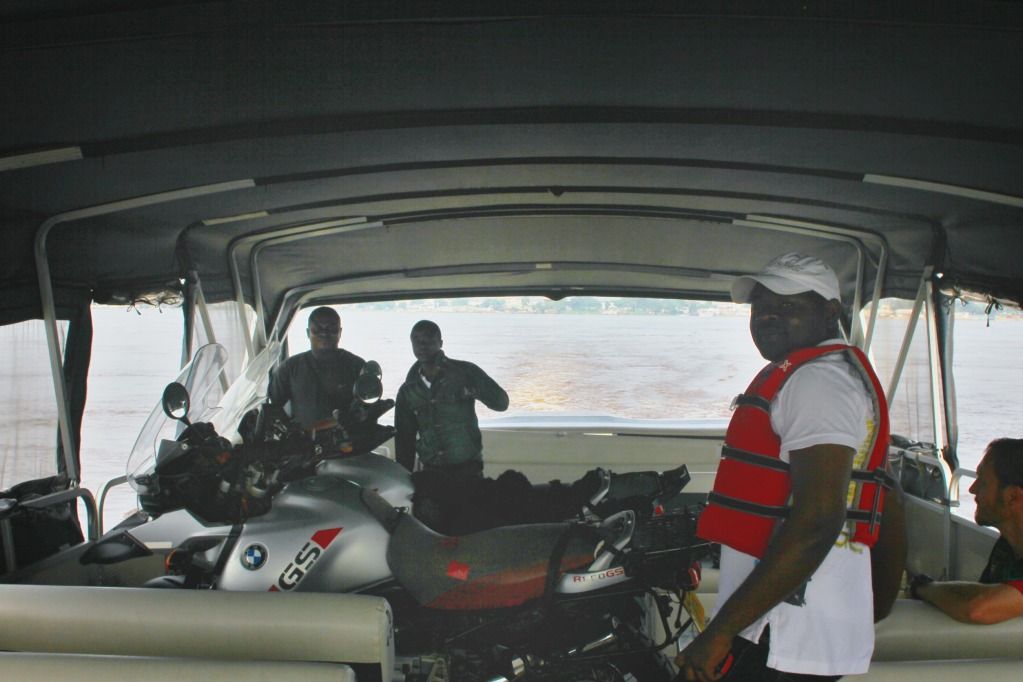
There was also quite a strong sense of urgency about everything, we're not sure why. The boat owner wanted our money but I didn't want to pay until the bikes were on the boat. Fortunately these porters, who knew they were going to get some serious cash out of us ignored everyone and both bikes and all our gear were on the boat in a blink of an eye. We paid the owner and the porters and suddenly the engines were running, we were moving and on our way! We couldn't believe it, but we knew it wasn't over yet. The crossing was over very quickly and there was only time for one quick picture. On the other side, we met an equally eager group of new porters who also had a nose for dollars, and the bikes were off and up the jetty onto terra firma faster than you can say "Democratic Republic of Congo".
Russ and I just stared at each other in disbelief. As we were gathering our wits along with our documents to be presented to the DRC officials, we heard in crisp clear English, "are those UK plates?". We turned around to see a gentleman in a suit walking towards us. Upon further discussion, we were fortunate enough to meet the UK ambassador to the DRC.* He gave me his card and offered help should we need it, and some advice on things to see along the route to Matadi. It was all quite surreal. As it turns out, we did need his help, but that's another story.

For the next hour or so, Russ and I went through a fairly lengthy but relaxed check-in procedure. There was the usual form filling in, and the usual extra questions that all Francophone countries seem to ask: father's name, mother's name, occupation, place of birth, favourite fruit, etc.
We did have our DRC visas very closely examined. They checked and double checked the expiration date, but they finally stamped us in. I then searched out the customs officer to stamp our Carnets. She was found sitting outside her office receiving a manicure by one of the mobile street "beauticians" that work the streets of Kinshasa. They're obviously not beauticians, but I have no idea what else to call them So I had to hang around for 5 minutes or so for the services to be rendered. Once done, she unlocked her office and, with a bit of coaching from me, both carnets were filled in, stamped and done. We were in!

The relief was immense! We felt like we'd won the lottery. Before we left Brazzaville, Olivier gave us some advice on a suitable place to stay in Kinshasa, which was the St Anne Catholic Mission, quite close to the ferry terminal. We asked around and went straight there. It is truly a haven in a sea of expensive chaos, and we are definitely very fortunate to be staying here while the next chapter of our trip unfolds, The Quest for the Angolan Visa. More information to come!

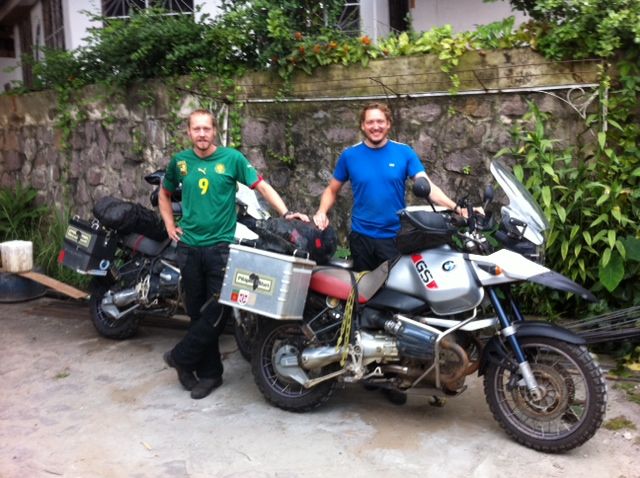
Us at Hippocampe just before we left. Do we look nervous?! Thanks to Olivier for taking the pic and emailing it to us!
photo-29.jpg


GS's squeezed on the passenger boat with Brazzaville getting smaller in the background:
photo-28.jpg
 
Absolutely loving this trip report chaps. Top stuff and it sounds like you're having the time of your lives.

One thing though - you haven't explained how you got your support trucks and camera bikes across the Congo river..... :nenau :aidan
 
Great pics & really informative live story telling.....thoroughly enjoying this and wholly jealous....:thumb2

Keep it up lads, enjoy & be safe.....:D
 
Muddy Waters

Here are a few vids of us "enjoying" the roads in Rep of Congo.

A tricky detour on a detour:
<iframe width="853" height="480" src="http://www.youtube.com/embed/610utZlPOQs?rel=0" frameborder="0" allowfullscreen></iframe>

Another mud hole to try and get around:
<iframe width="640" height="480" src="http://www.youtube.com/embed/L6awI3f_FxQ?rel=0" frameborder="0" allowfullscreen></iframe>
 
Give us an update lads :)

Looks like you have been having a fine old time :beerjug:
 
Farck!!!

A GS how she is meant to be rid!

Unless one has experienced the true nature of taking a heavy old girl through unfeasible slippery mud 10,000 miles from home, it's hard to get across just how sphincter tightening it is!

There are some who can ride a fully laden GSA across deep zero traction mud - I am not one of them, though God knows I have tried often enough!!
 
DRC and the curse of the Angolan visa

The plan was to head straight down to Matadi on the DRC border, where we would pick up our Angolan visas, but we had heard that people had recently been turned away and told to return to Kinshasa. We decided to stay in Kinshasa and try get the visa there. This would mean a few more days in one of the world's most dirty, dangerous and expensive cities.

photo-30.jpg

Our digs, the St Annes Catholic Mission, a haven in a sea of chaos.

During our previous unsuccessful Angolan visa attempt in Brazza, they had asked for a typed letter of application, colour passport photocopies, yellow fever certificates and sworn statements that we would not stay on in Angola (unlikely). They also wanted copies of our onward Namibian visa, which we said was not required for UK citizens. Clearly not enough for them, they then asked for a letter from the Namibian embassy saying we did not need visas. Basically they just did not want us there.

With this in mind we hit the Angolan embassy in Kinshasa with every piece of documentation we thought could possibly be requested. But no, we did not even get that far, they just were not issuing overland visas. We could get a visa if we flew in, but not if we rode in. We explained our situation and were told the best solution was to ride back home the way we had come.

We popped round the corner the to UK embassy to see if they could help. We had met the Ambassador 2 days previously and he had said that he was on good terms with the Angolan Ambassador. The embassy was pretty quiet, in fact they were quite surprised to see us; "We don't get many tourists here".
They were very supportive, but said we would not hear anything until Monday.
Awesome, weekend in Kinshasa.

On Monday the UK embassy said they were working on the problem and the Angolans had agreed we could come round on Tuesday and a visa would be issued. We pulled round early Tuesday morning and joined the usual scrum that is referred to as a queue here. We eventually made it to the back office where we could speak to someone who vaguely knew what was going on. Again no, visas are not being issued. Apparently the wrong people had been spoken to and the answer in no uncertain terms was 'no'.

Angola can shove their visa were the sun don't shine. If they dont want tourists, we'll take our money elsewhere.

Looking on a map there are not many feasible overland options apart from going through Angola, its pretty much your only choice. You can ship to Namibia, which will take weeks. Fly to East Africa, which will cost an arm and a leg. Or ride to Lubumbashi in south east DRC which is just a short hop to Zambia. The Kinshasa-Lubumbashi road is not really an option for us. The 2000km of muddy tracks is one of africa's most notorious roads. Being the rainy season it would take about a month. The video at the end of this post sums it up well.

We have had enough adventure recently, so we did what any sane person would do. We decided to throw money at the problem. A very helpful Belgium travel agent put us on to a friend of hers who runs a air cargo company. We popped round to the company and they said they can fly the bikes to Lubumbashi and take us on the same flight. Awesome. Nervously we brought up the subject of cost. Free, no charge. We stood there speechless with our jawson the floor. There must be a catch...

We returned the next day to drop of the bikes, still nervous that there was a catch. The bikes were drained of fuel, weighed and loaded.

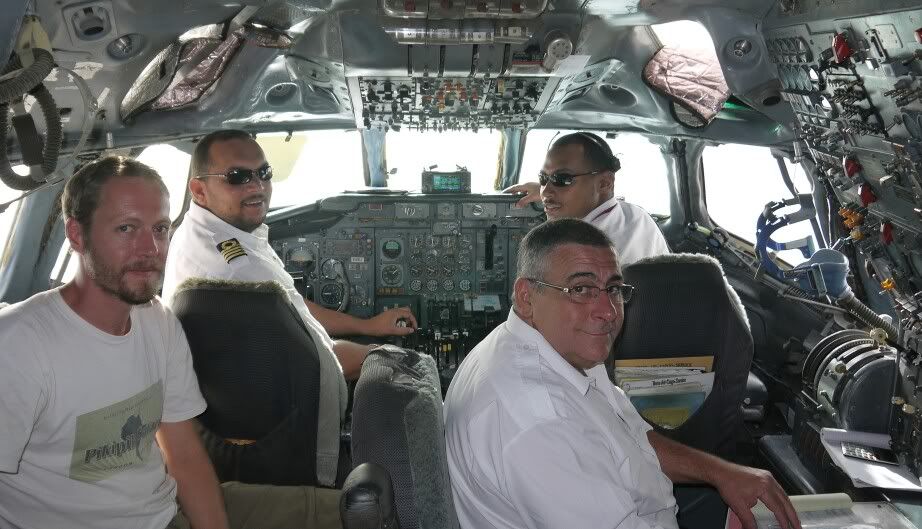
They even picked us up from our digs, the St. Annes Catholic Mission, and brought us to the airport. Still nervous that there was a catch, we boarded the DC8 and were shown our seats in the cockpit. Only as we took off did we actually realise that everything was good. Our 3 pilots were great, seriously professional until the auto-pilot kicked in and then the jokes flowed thick and fast. The in-flight meal of sandwiches contained the 2 rarest ingredients in the Congo, both ham and cheese.

P1000895_edit0.jpg

Our pilots on the DC8

2012-01-12105143_edit0.jpg

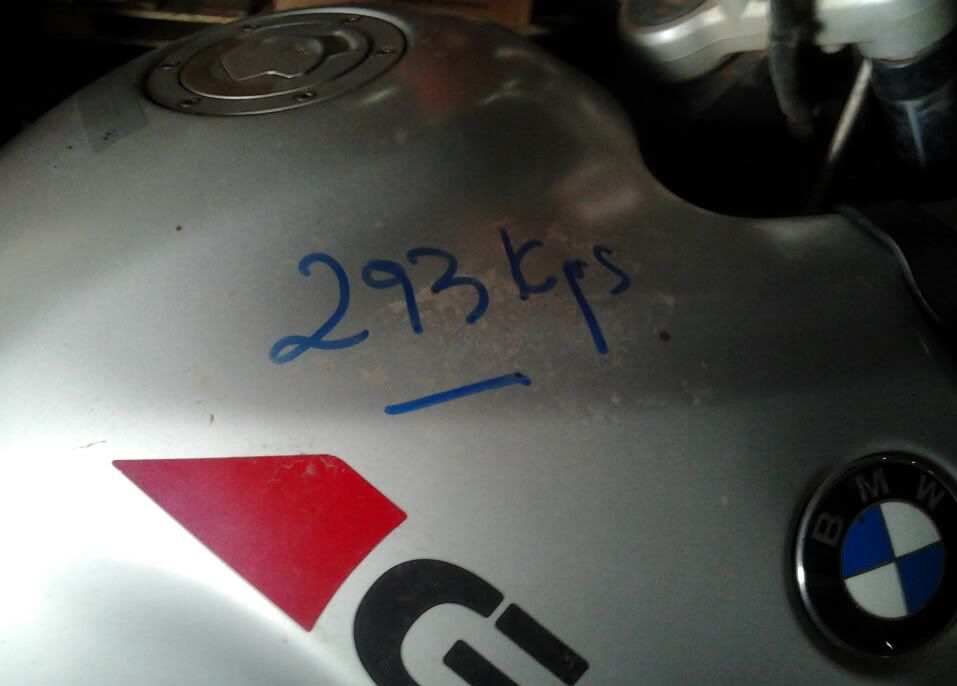
293kg, dry weight fully loaded

We owe these guys so much, without their help we would probably still be stuck in Kinshasa. However, it has completely changed our route. Suddenly we find ourselves in south eastern Africa leaving behind francophone africa. It is also a more established overland route, so things should get easier.


More on that Lubumbashi "road"
<iframe width="560" height="315" src="http://www.youtube.com/embed/kkq8YtGG6gI" frameborder="0" allowfullscreen></iframe>
 
Riders

Ah yes, it's easy to forget there's a whole world of problems out there when you're on an adventure of a lifetime. Actually, we're in Africa, who are we kidding - we are regularly exposed to the problems these people experience as part of their every day lives.

And so on a quite day on a lonely Zambian highway in the middle of nowhere we zoomed passed yet another local motorcycle putting along merrily. One thing made me give this particular rider a double-take. Aside from the fact that he was actually wearing a helmet, I thought I recognised the logo on his backpack. I came to stop and asked him to do the same as he approached me. He obliged and after confirming the logo of the backpack was for Riders For Health, I rather redundantly asked him if he worked for Riders for Health. He did indeed and he introduced himself as Kenneth. We shook hands and I told him how we were supporting his charity for our trip. I gave him my card with my email address and told him about our website.

After a very brief discussion under a heavily bruised sky, Kenneth said to me, "Can I go now?". This man clearly had important medical business to attend to so I reluctantly said goodbye. You go, Kenneth!

In the space of a few minutes with this chance encounter, I was swiftly reminded of how this trip is not just about the good times. It was also testimony that Riders for Health are out there, getting on with their business despite the interruptions of some crazy mzungu biker in the middle of nowhere.

This is also an excellent opportunity to remind all of you fine people that these guys operate solely on charitable support. A small amount of foreign currency goes a long way out here, trust me. Except for the beers, those could always be cheaper. So here's a quick reminder of the link to our <a href="http://www.justgiving.com/pikipikisafari" title="Charities" target="_blank">donations</a> page.

Kenneth's need to get going is palpable:
<img src="http://i1100.photobucket.com/albums/g419/Aidjay/photo-36.jpg" alt="Kenneth" />
 
Zamawi

Yes, I'm doing it again. But Zambia and Malawi would do well to join forces. Zambia is empty, but has potential, whereas Malawi is overpopulated, and could do with some more uncultivated wide open space.

After our unbelievable turnaround in the DRC, overnight we found ourselves on practically the other side of the continent. During the planning stages, we optimistically thought we might make it to Zambia, but realised quite early on that this was unlikely. Suddenly there we were. Whilst Russ was inside dealing with the paperwork at the border crossing, I was having the usual banter with the fixers and money changers around the bikes. I asked one of the guys what Zambia was like and if it was similar to DRC? His response was, "Ah no! Those Zambians are organised!" And so they were.

There was a millisecond of confusion as we entered into Zambia, as we suddenly realised that we now had to ride on the left hand side of the road. There were no signs to that effect, but the on-coming traffic was a bit of a giveaway.

And organised it was! The road suddenly improved, there was signage, and cars would unbelievably wait until the path was clear before attempting to overtake.

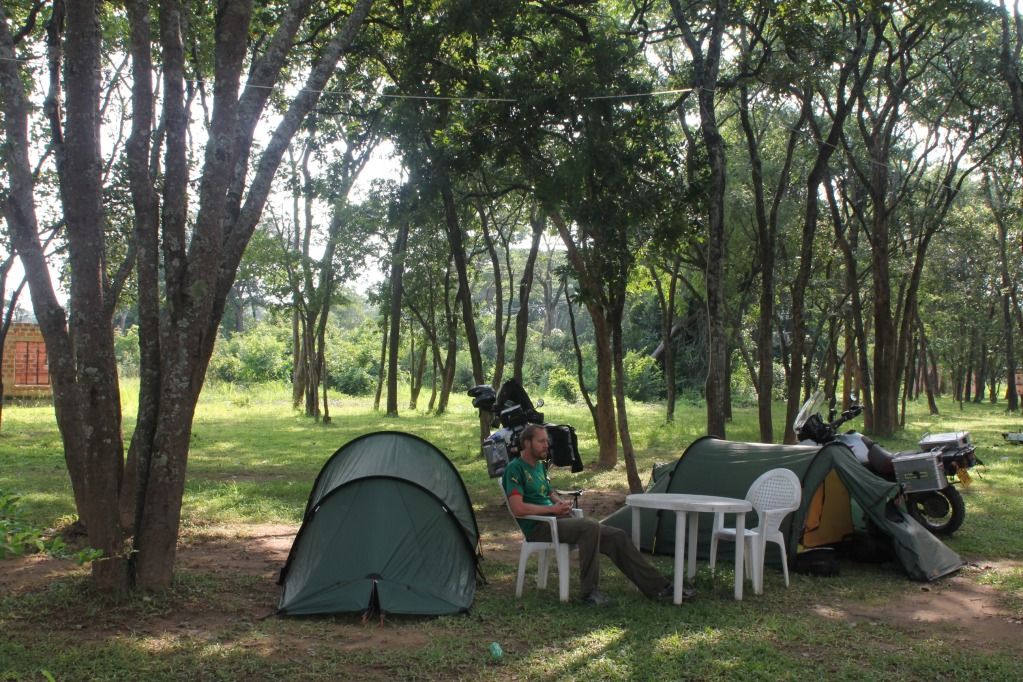
Russell's GPS indicated a campsite about 50km from the border and we made straight for it. This campsite was organised. It actually catered for campers, which is something we had not seen since Morocco. We were hosted by a retired Brigadier General of the Zambian army that had been posted all over the world on secondment to the UN. He had some very interesting stories about the various armies he encountered on his placements, and we chatted the evening away.

The next day we made for Lusaka. 78 days. That's how long we had been riding without encountering rain. But we knew it would never last. And so on day 79 the heavens opened and we were pelted by a true African rain storm. Fortunately they are normally short lived, and by the time we reach Lusaka, we were dry - mostly.

We made for a backpackers and relaxed into comfortable surroundings. We were umm-ing and ah-ing on where to go next. With the sudden change in geographical location, we had made no concrete plans for this part of the world. After a little deliberation with the map spread-out, we decided to head for Malawi as we heard the roads were good and it was inevitable we would encounter rains regularly.

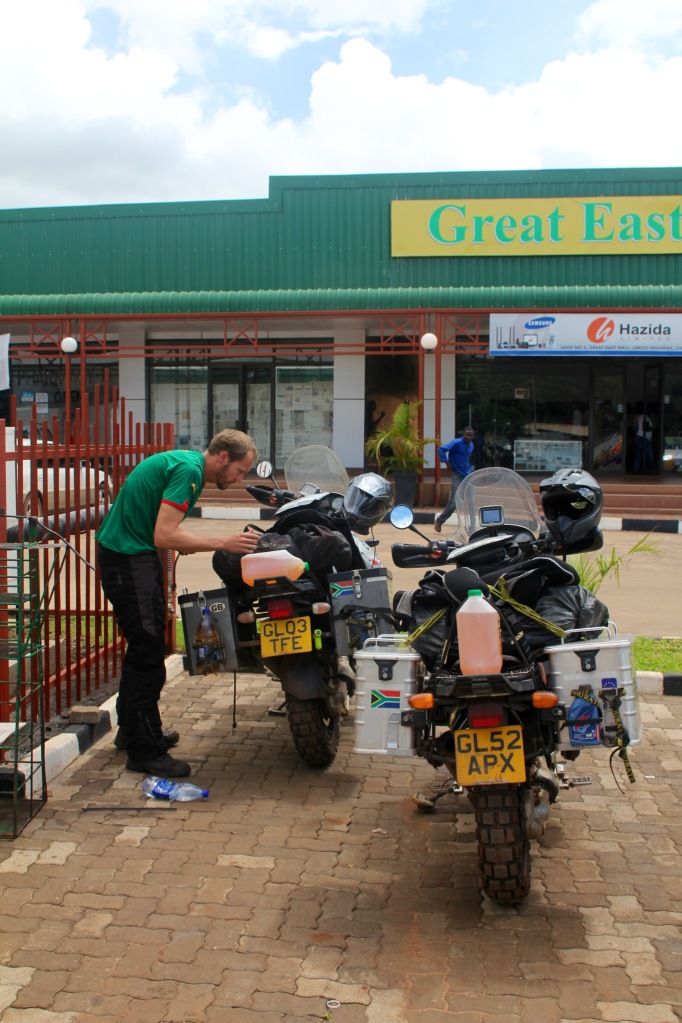
We headed east on the very quiet Great Eastern Road to Chipata. The scenery was stunning, rolling green hills, beautiful valleys and big skies. And of course, a few rain showers. We overnighted at another backpackers in Chipata and were informed by the owner that there was a fuel shortage in Malawi. Heeding his warning, we purchased a couple of 5 litre jerry cans and filled up the bikes to the max, including our jerries.

The border crossings were now becoming ridiculously easy and we whizzed through the formalities. We made for Lilongwe, and headed straight Mabuya Camp, a well known establishment with the overland fraternity. On our way there, the kilometre-long queues at each of the filling stations rang true the warning we received back in Zambia. We were a little worried, as we knew we would need more fuel.
And for the first time since Mali, we met other overlanders. There was Pete, the nut-bag cyclist who spent 2 months pedalling his way through the DRC and Lutz the German in a Landy taking the slow road to Cape Town.


We topped up our tanks with our reserves and made enquiries about how we could find more. It was confirmed there was no fuel in the pumps, but we could find it on the black market. We parted with a wad of Kwatcha, and procured another 5 litres each. It wasn't cheap, but we needed it.

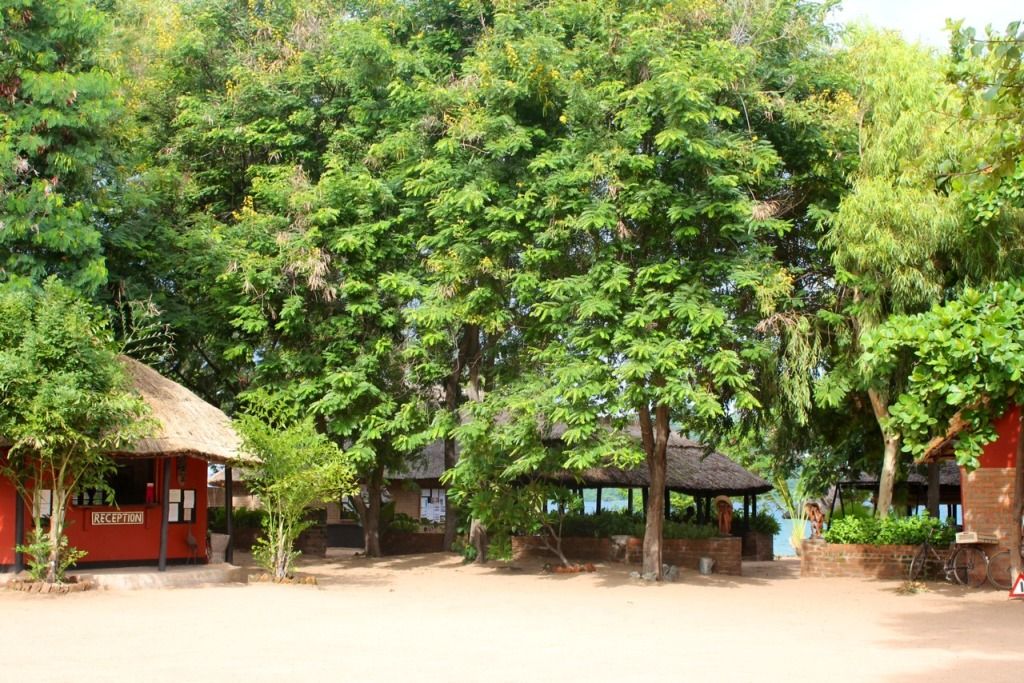
The Lake was calling. This was our prize and we headed for a little gem of a spot called Cape Maclear. We decided to splash out and checked into one of their nicer rooms where we promptly stayed for a week. What do you do in the same place for a whole week? Nothing. We used the intermittent rain showers and overcast skies as an excuse to sleep, read, eat, sleep and sleep. We also met a few interesting characters including two young English chaps who have driven down the eastern side of the continent in a Toyota Hilux Surf. They sound like they were having a ball.

With our much needed rest over, we hit the road again and headed for Blantyre. The roads were littered with pedestrians and animals and it made for slow and frustrating travel.

We went to Blantyre with a mission, we need to stock up on general provisions and we urgently need to track down some Malawian Gold. That's right, petrol. We were in luck, Blantyre was flush with fuel and we filled up rather leisurely. We stayed at this very weird and exceptionally popular backpackers called Doogles. It's down a very dodgy back road behind the bus rank, but the strange part is the massive bar full of alcoholic expats drinking away their expat packages. It was a Tuesday night and the party carried on till well into the early hours. We hadn't witnessed such drunken carnage since our leaving do.

And so our Malawian adventure came to an end. We loved the lake and ever-changing scenary and vowed to one day be back, just not in the rain season.

Our first night in Zambia. It was organised:
photo-32.jpg


Stocking up on fuel close to the Malawian border:
photo-31.jpg


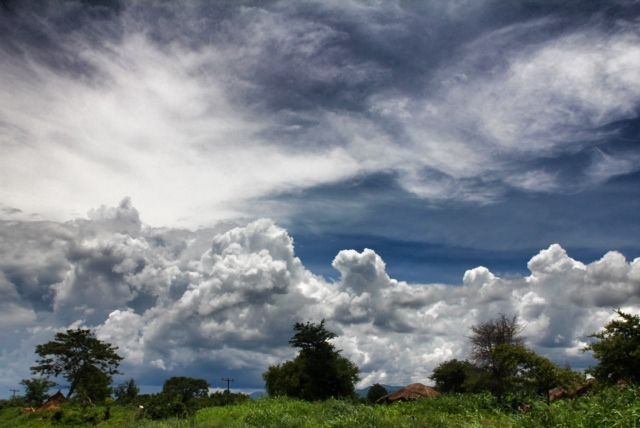
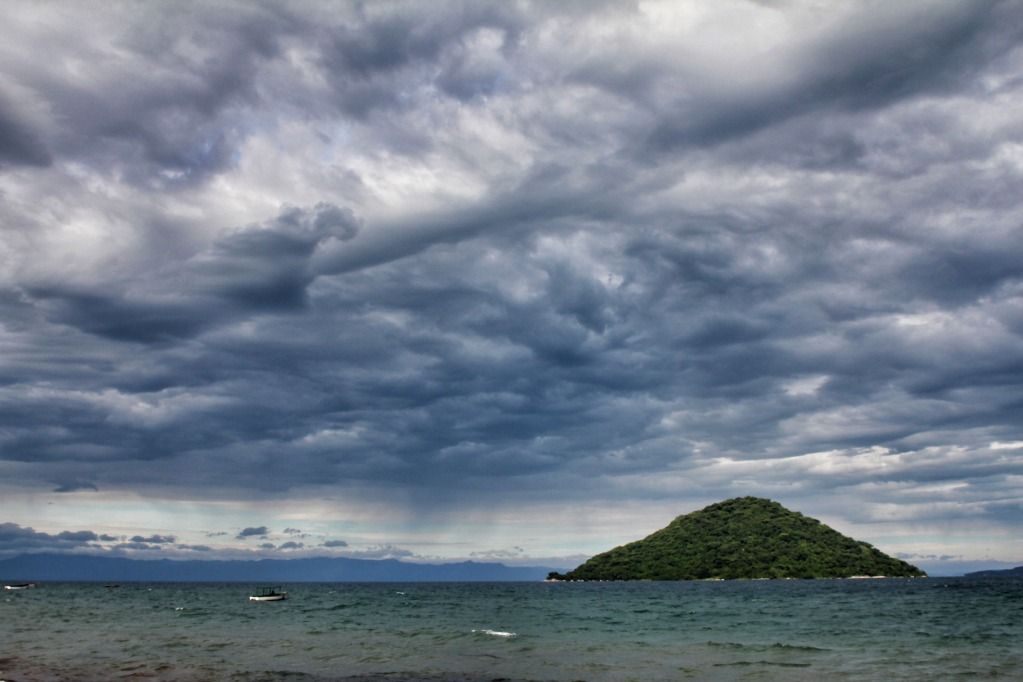
The Malawian skies were in competition with its Zambian neighbour:
photo-35.jpg


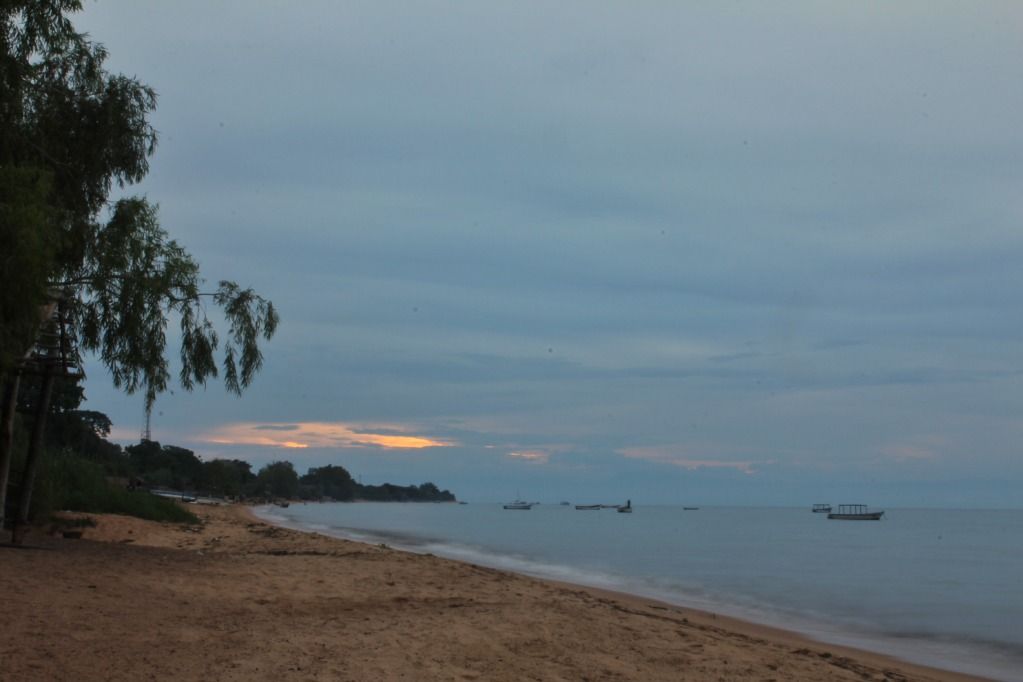
Our chilled out beach at Cape Maclear:
photo-37.jpg


Fat Monkey at Cape Maclear. Our home for a week:
photo-38.jpg


Dramatic skies and choppy waters, i.e. a typical day:
photo-39.jpg
 
Zimbabwe

It has been 25 years since my family left Zimbabwe, I was about 8 years old at the time. With all the negative press I was quite nervous about returning back for my first time.

From Blantyre, Malawi we made a quick blast through Mozambique via the Tete corridor into Nyampanda, Zimbabwe. Border formalities were painless, the usual immigration and customs followed by a final once over from "Interpol", plain clothes police who check all your documents.

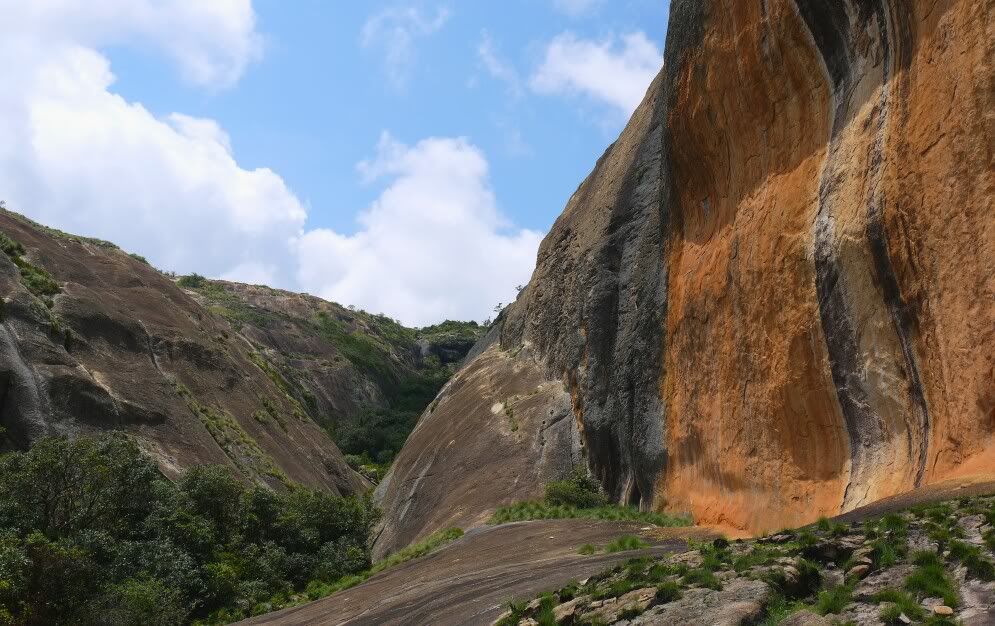
We had good roads down to Harare with spectacular scenery. Zimbabwean countryside is very distinctive, large dolomite boulders are scattered amongst Baobab trees and african scrublands. We spent an awesome weekend in Harare with the Dawson's, friends of Adrian. Their hospitality was fantastic, many braais were had with us feasting on Zimbabwe's legendary steaks. Compared to other capital cities we have encountered on our trip, Harare seems cleans and ordered. The infrastructure has clearly taken a beating over the last 20 years, but its easy to imagine how it was in its heyday.

P1000989_edit0.jpg


P1000949_edit0.jpg


It's clear that the people here have suffered alot over the years, though the country has now recovered from hyper inflation that ravaged it in 2008. Much of the economic stability has been attributed to the replacement of the Zimbabwean dollar with a tri-currency system; US dollar, South African Rand and the Botswanan Pulla. USD notes reign supreme but with no US coins in circulation change is issued in Rands, credit notes or other products. For example, I bought a sandwich for $1.50, paid with a $5 note and recieved change in the form of three $1 notes, two ZAR 2 coins (40US cents) and a sweet (10US cents). Business is booming for people manufacturing sweets.

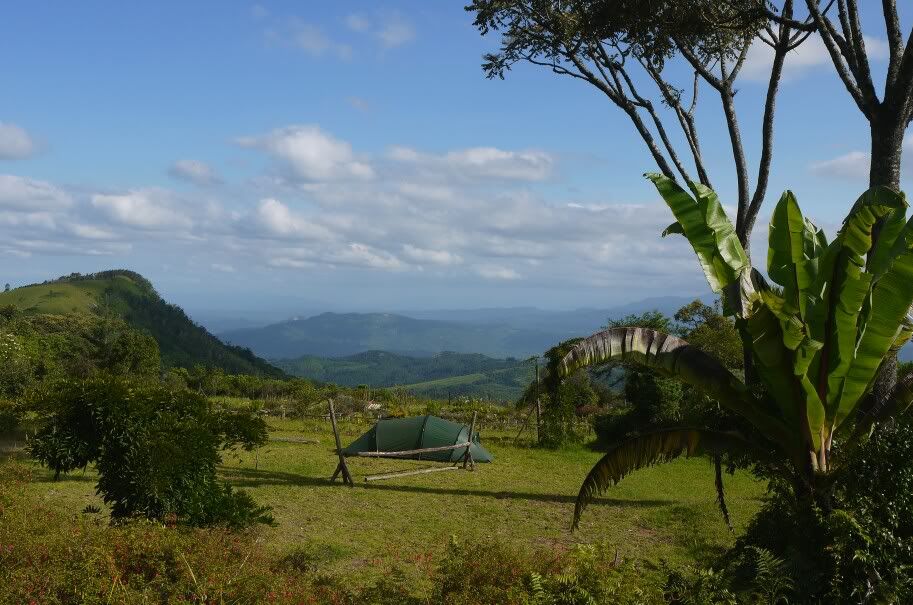
From Harare we headed to Bvumba in the eastern Highlands, were dense forested mountains overlook lush valleys with a distinct English country feel.

P1010004_edit0.jpg


Remaining in the Highlands, we dropped down a little further south to Chimanimani.
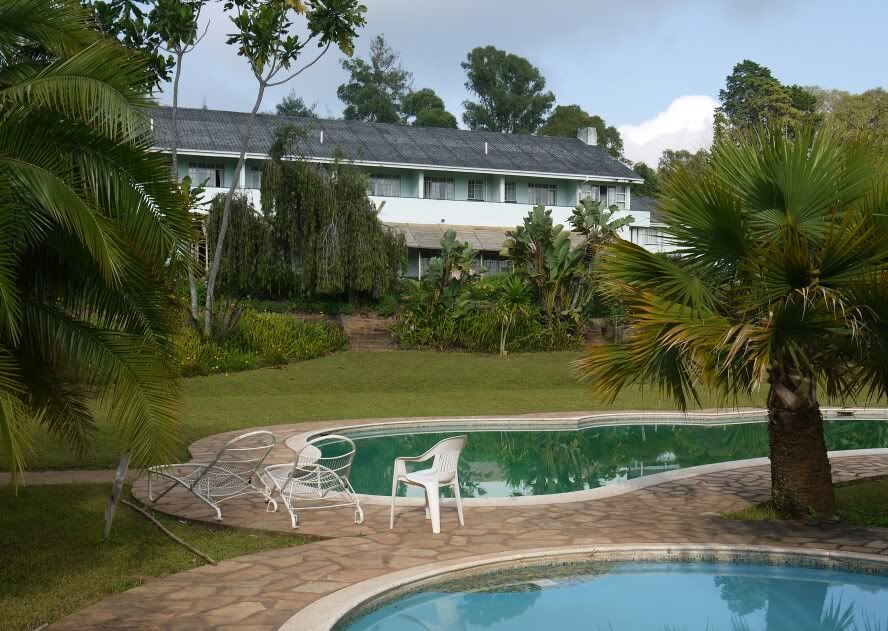
We camped at the Chimanimani hotel. This grand hotel with it's immaculate gardens was built in the 1950's, not much has changed...

P1010034_edit0.jpg


P1010025_edit0.jpg

The bridalvale falls

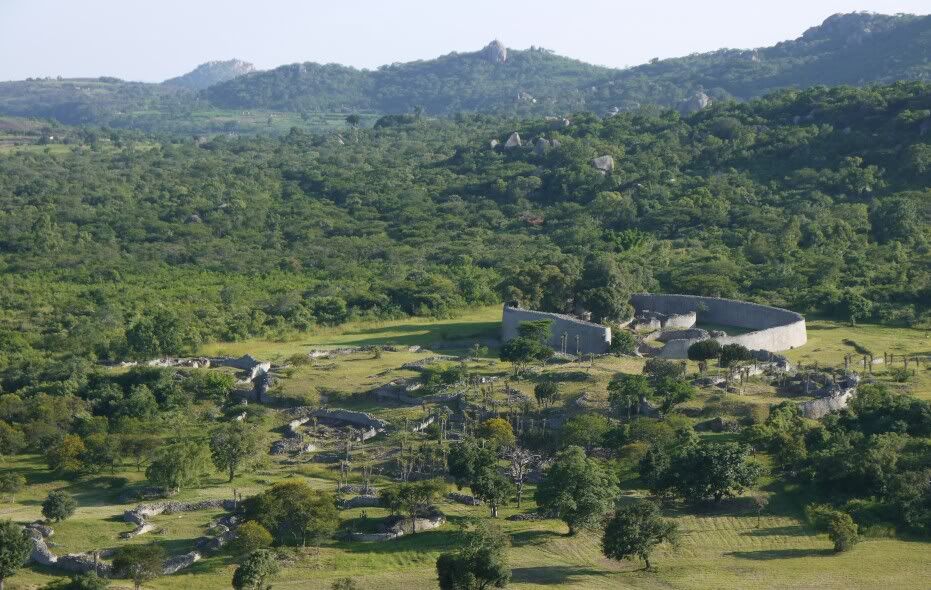
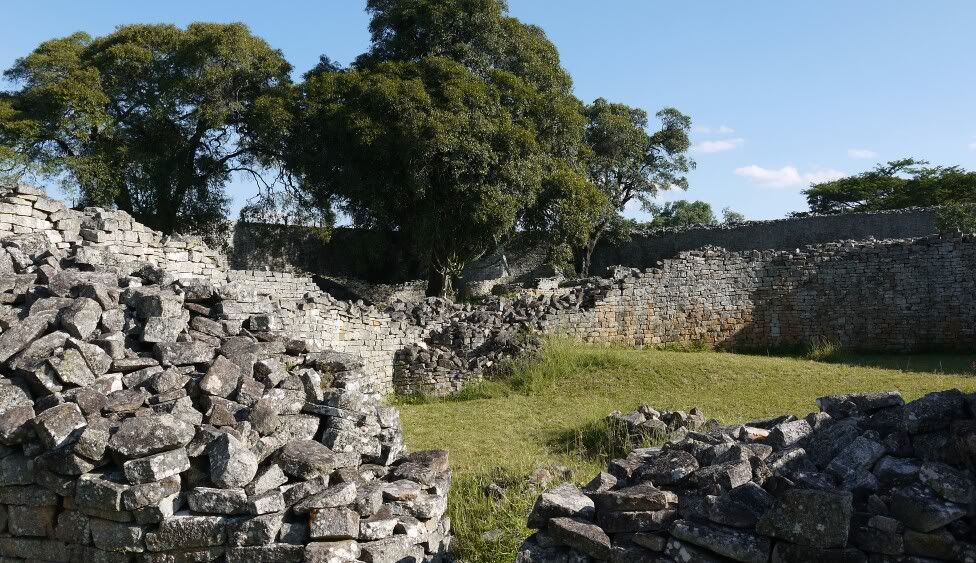
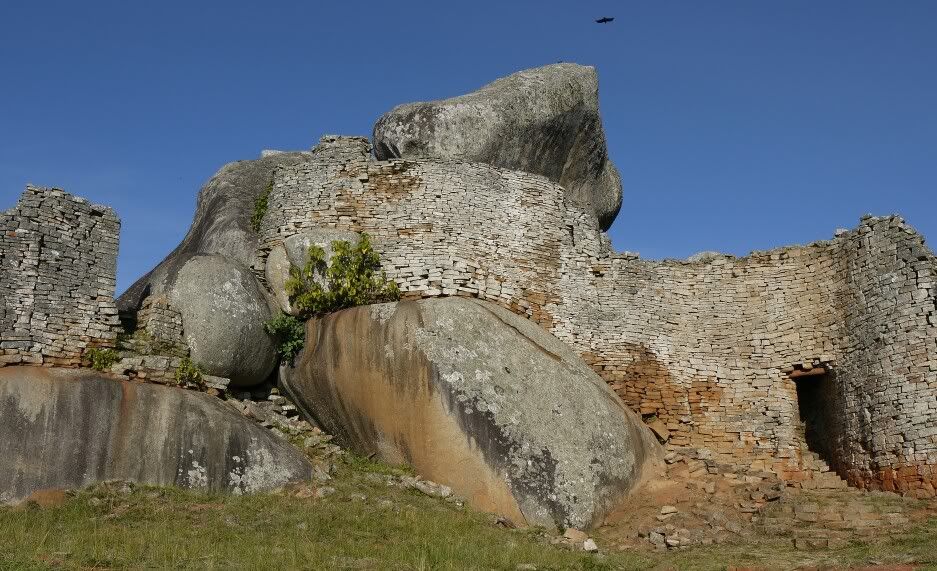
Next stop was Masvingo to visit the Great Zimbabwe ruins. The Great Zimbabwe empire existed from the 12 to 14th centuries, it then gradually died out for no apparent reason. There are 2 main enclosures, the grand enclosure with an 11m wall to protect the first queen. And the King's hillside palace built on a massive dolomite boulder. On an excellent guided tour, we learnt many other facts about the empire, such as the Shona princes proved their bravery by sleeping with their sisters on top of an old dead crocodile. That part was a bit weird.

P1010118_edit0.jpg

View from the hillside palace overlooking the grand enclosure

P1010082_edit0.jpg

The grand enclosure

P1010113_edit0.jpg

Within the hillside enclosure

We have enjoyed it in Zim. Its good to see the country is doing well , it is certainly doing better than most of the other countries we have been to.
 
Bike Mods- up to now

I'm sure most of you are keen to find out how the bikes handled, what went wrong and what we did to keep them moving. The short answer is brilliantly, nothing and not much.

But to keep this post interesting, I'll pad it out a bit.

We had no mechanical problems with the bikes that hindered our journey, however I had to make a few minor "performance enhancements".

The ABS.
Way back in October I had just packed all my luggage and tyres on the bike in a mad rush, hoping to make it to Portsmouth in time for our ferry to Santander. I climbed on and started the engine, and immediately noticed the ABS warning lights blinking alternately. Typical. With all the problems we had gone through at the very start of this journey, I just ignored this and decided to live with it. It did get very annoying though. At some point in north Africa I attempted an ABS reset, but that didn't work, so I came up with a solution. Problem solved, sort of.

Problem:
photo-44.jpg


Solution:
photo-45.jpg


Leaking oil filler cap:
Shortly after hitting the oven-like temperatures of Western Sahara and Mauritania, I started to notice oil escaping from around my oil filler cap, making quite a mess of my engine cover, left boot and left trouser leg. This was only a problem at high speed and high revs, so when we hit the dusty and congested roads of Burkina Faso and Ghana, it became less of a problem. I changed the o-ring seal, but that didn't work. I blamed the Touratech after-market filler cap and so asked SWMBO bring me a couple more spare o rings and an OEM cap when we met in South Africa for a friend's wedding. As it turns out, none of these worked. I was getting quite confused. I later spoke to a German overlander in Malawi who had a similar problem with his 1150GSA and he informed me BMW acknowledged this was a design flaw in the earlier editions of this model.
To solve the problem, I wedged a stick over the cap and tied it down to the engine bars. I went through a number of sticks of varying degrees of quality until a piece of Cameroonian bamboo driftwood stepped up to the challenge and has remained with me to date. The rags were put in to mop up any residual oil, but these proved to be redundant and have since been removed.

photo-41.jpg


Side Stand
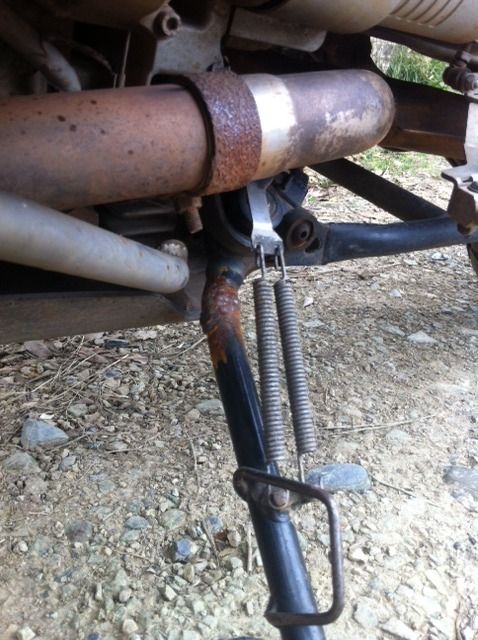
Our extremely fortunate airlift to Libumbashi was not without it's collateral damage. My bike had been tied down on its side stand a little too efficiently. This had bent the side stand out so badly that the metal had sheered. It was now my turn to procure the services of the African bush welder. We referred to these welded repairs as a cancer. Once they started, the damage would soon spread. It took me a while to find a welder in the damp town of Libumbashi, but finally a gate-builder down a muddy path agreed to play doctor. With my limited French, and the fact that he ignored my instructions anyway, the cancer started. The bodge-weld held until just before the Zimbabwe / South Africa border, when the bike toppled over rather unceremoniously on the roadside during a photo stop. After using the centre stand (with much difficulty) over the next two days, I presented my little problem to my friend Stoff when staying with him on his farm in Tzaneen. There's nothing quite like a farmer's ingenuity to solve a problem. There was much tutting, some angle grinding, some reinforcement and some quality workmanship applied. Has it stopped the cancer? All signs are positive, so watch this space!

photo-46.jpg


Tool tube
When enquiring on this forum about the best place to mount this, a lot of you said, "on the garage shelf". Well, I brought it and had to mount it somewhere. I was reluctant to have a bar welded to the pannier rail, especially by a bush welder, so I came up with the following. Not pretty, but it does the job. Plus when I get home, I can put it safely back on the shelf, where it belongs:

photo-42.jpg
 
Lovely photos guys.
Photos of Zim bring back forgotten memories too so thanks for showing. 30 years since I left.
Ride safe:thumb2
 
I spent a few months doing fieldwork in Zim in '95. Like you we camped at Chimanimani hotel, swam in the falls there and visited most places you mentioned. Beautiful country that I'd love to revisit one day, it's been horrible watching what happened to it since then. I just hope it has the chance to restore itself soon.


Back
Top Bottom